The tomato/potato psyllid has caused a few headaches for gardeners when the populations of this relatively new pest build up and they affect not only potatoes and tomatoes but also a number of other host plants such as tamarillo, capsicum,, chili and peppino. The nymphs are so small and you need a magnifying glass to see them clearly, so you may have a small population of psyllids in your back yard and not realise the problem.
To find out if you have psyllids then you can do so by planting a potato either into your vegetable garden or into say a 20cm pot or bucket. Take a potato from the kitchen that has started to sprout and plant it as above. It only has to be into a hole about 8cm deep and covered with soil or growing medium. We are going let the plant grow to maturity and then harvest what tubers have formed underneath. If the tubers are small about the size of a marble and likely re-shooting; that will tell you that you have psyllids and they attacked the potato foliage when it was still young and growing. If on the other hand the tubers harvested are of a good size but when cut them in half, there are dark rings inside or what we call Zebra lines, then yes you have psyllids and they attacked the plant later after the tubers had grown to a reasonable size.
That means next season when you grow potatoes or tomatoes you need to use controls so that you have a harvest of eatable produce.With potatoes the easy way is to plant very early your seed potatoes like back in July so that the crop is harvested before October. That should allow you to get an ok crop. With tomatoes you need to use Wallys Cell Strengthening kit of products to make the tomato plant cells so tough that the psyllid nymphs can not piece the plant to feed and inject in the toxin that causes all the problems.
Club Root is a disease that affects the brassica family causing the roots to become very distorted and so bad that they cant supply moisture and nutrients to the foliage above. So when you plant your cabbages etc and they grow quite happily at the start, then the growth slows down and comes to a stop normally before the plant has reached maturity unless it is a miniature, fast growing variety. Its a frustrating disease which is soil born and often it has got into your garden when planting purchased (or given) any seedlings that were grown in club infested soil. Once you have it then I am told it takes up to 25 years to eradicate; that is as long as, during that time, there are no host plants grown in the contaminated area. It does not affect other plants such as silverbeet, beans etc only members of the brassica family which includes swedes. It affects brassicas such as Brussels sprouts, cabbages, cauliflowers, kale, turnips, swedes and radishes, their ornamental relatives such as Cheiranthus (wallflowers), Matthiola (stocks), Aubrieta (aubretia), and cabbage-family weeds such as Capsella bursa-pastoris (shepherd’s purse). In the past steam cleaning the soil was the only known control for it. Other methods can be used such as heavily liming the soil and using a soil drench of potassium permanganate. They can help get quick maturing crops to harvest. If you have the dread disease in the soil then here is a suggestion to maybe help eradicate it.
What you do is plant a cabbage seedling into a 20 litre pot, then in the middle of your vegetable garden you sit the pot on top of some bricks so that it is not in contact with the soil. The idea here is that rain and watering will wash down into the soil below the smell of the cabbage and that will activate the dormant club root spores to swim up to where the roots of the cabbage are. But as the plant is above the soil and not in contact with the soil then the spores have no where to latch onto and colonise. So they fizz and die. If you have a big area you may need a few cabbages in pots spread through out the area to try and activate all the spores in the soil. The following season you could test plant a few cabbages into the area and see if they grow and if they are free of the disease. Otherwise try again the same trick of activating the spores.
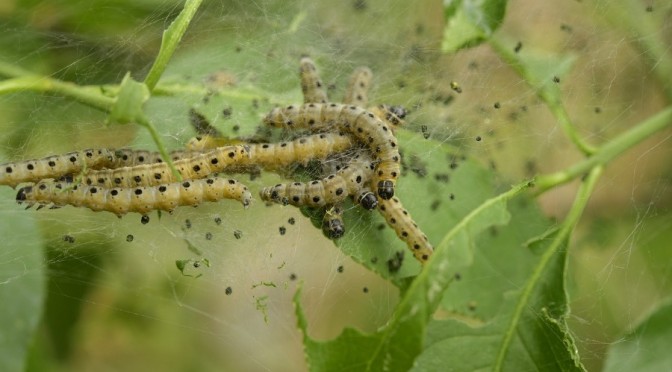
Moths are a problem in our gardens because of the eggs they lay and the caterpillars that hatch out to feast on fruit and plants. There are codlin moths which affect apples, pears and walnuts and they are every where in NZ. Then there are Guava Moths which are so far in the more northerly parts of the North Island and they affect all fruit including citrus and nuts. Finally another one called the army worm which is so far mainly in Northland but is likely to build up populations and head south to other gardens. It eats the foliage of just about every thing and is causing a lot of headaches to both commercial and home gardeners. If you can eliminate the three moths before they get to lay their eggs then your plants are fairly safe from damage. Moths are attracted by smell to find their host plants or to feed on nectar for energy. Thus a trap can be used to lure them in and kill them. In my recent book ‘Gardening with Wally Richards’ I have a chapter on moth control and part of that is this simple to make trap to catch and kill them.
Take one litre of hot water add a100 grams of sugar, one teaspoon of marmite, half a tablespoon of Cloudy Ammonia and half a tablespoon of Vanilla essence:
Mix well and divide the mix between two plastic milk or soft drink bottles.
Punch some holes in the side of the bottles just above the level of the mix.
Place on a stand about a couple of metres away from the tree.
At about waist height like on a small folding table.
When a number of moths are caught dispose of them and make up a new solution.
Cloudy Ammonia used to be common once upon a time from a grocery store if not so easy to find try hardware stores, there are two chains in NZ and they may have. (Bunnings and Mitre 10).
TWENTY FIVE PERCENT OFF SALE
Till the end of January we are discounting the following products by 25% to help you gain control of Insect pests and improve your soil quality.
Orders must be placed on www.0800466464.co.nz using the Code 25% in the remarks place.
I will phone you after receiving the order and deduct the 25% off the items below and also give you 10% off most other items except for bulk items.
FREIGHT: shipping charged on orders under $100 (After discounts) North Island In other words order of $100 plus after discount and not bulk items free shipping.
South Island $150.00 plus after discounts for free shipping.
Exception is for Rural delivery a charge of $3.15 on each parcel sent no matter if rest is free shipping or not.
Here are the 25% discount items:
Wallys Neem Tree Granules 1kg normal price $15.00 save $3.75 making it $11.25
Wallys Neem Tree Granules 3kg normal price $28.00 save $7.00 making it $21.00
Wallys Neem Tree Granules 10kg normal price $80.00 save $20.00 making it $60.00
Wallys Neem Tree Granules 20kg normal price $160.00 save $40.00 making it $120.00
Wallys Neem Tree Powder 1kg normal price $15.00 save $3.75 making it $11.25
Wallys Neem Tree Powder 3kg normal price $28.00 save $7.00 making it $21.00
Wallys Neem Tree Powder 10kg normal price $80.00 save $20.00 making it $60.00
Wallys Neem Tree Powder 20kg normal price $160.00 save $40.00 making it $120.00
Wallys Super Neem Tree oil 125 ml normal price $18.00 save $4.50 making it $13.50
Wallys Super Neem Tree oil 250 ml normal price $24.00 save $6.00 making it $18.00
Wallys Super Neem Tree oil 1 litre normal price $60.00 save $15.00 making it $45.00
Wallys Super Pyrethrum 100 ml normal price $28.00 save $4.20 making it $23.80
Wallys Super Fish Fertiliser 1Litre normal price $16.00 save $4.00 making it $12.00
Wallys Mycorrcin 250ml normal price $20.00 save $5.00 making it $15.00
Wallys Mycorrcin 500ml normal price $35.00 save $8.75 making it $26.25
Wallys Mycorrcin 1 Litre normal price $55.00 save $13.75 making it $41.25
Orders must be placed on www.0800466464.co.nz using the Code 25% in the remarks place.
Phone 0800 466464
Garden Pages and News at www.gardenews.co.nz
Shar Pei pages at www.sharpei.co.nz
Mail Order products at www.0800466464.co.nz
New Zealand Bill of Rights Act 1990. Part II of the Act covers a broad range of Civil and Political Rights. As part of the right to life and the security of the person, the Act guarantees everyone:
1The right not to be deprived of life except in accordance with fundamental justice (Section 8)
2The right not to be subjected to torture or to cruel, degrading, or disproportionately severe treatment or punishment (Section 9)
3The right not to be subjected to medical or scientific experimentation without consent (Section 10)
4The right to refuse to undergo any medical treatment (Section 11)
Furthermore, the New Zealand Bill of Rights Act 1990 guarantees everyone: Freedom of Thought, Conscience, and Religion.
This includes the right to freedom of thought, conscience, religion, and belief,
INCLUDING THE RIGHT TO ADOPT AND HOLD OPINIONS WITHOUT INTERFERENCE (Section 1)