Tag Archives: insect_pests

December Gardening (Wally Richards)

This week I received two emails which maybe of interest to some gardeners. The first was from a gardening couple, which read:

Hi Wally, Your advice and weekly email’s worked great. I got first in the Veggie Section and my wife won in the Rose categories. Jerry.

What can I say? If you use natural products that enhance the soil, giving the plants all the possible minerals that they may need to be healthy and stop using chemicals that are harmful to both soil, plants and yourself.

Over the years I have received a few similar stories about how gardeners have turned their gardens into award winners by simply observing and using the above information.

The second email is of concern this time of the year and it read;

Hi Wally, I have a problem with a brown beetle infestation. I was finding the leaves of my newly planted plum trees and almond tree were getting stripped bare almost. I wasn’t sure what it was but think the culprit is this brown beetle.

I have since found hundreds (literally) in one of my raised beds and quite a few wherever I have placed the garden mix I bought a month ago.

Is there something I can do to get rid of these beasties? They are now attacking my raspberry plants and feijoa trees. Because they are in the soil – and potentially quite deep (some of them were 20cm deep) – I’m not sure how to fight them. Please help!

The writer sent me an amazing photograph which shows hundreds of these brown beetles drowning in a container of water, along with photos of her plants badly damaged.

The beetle is the Grass Grub beetle and this is the time of the year that they emerge from pupating deep in the soil to feast on the foliage of a number of plants, mate and lay eggs back in lawns for future generations.

In my first book, Wally’s Down to Earth Gardening Guide, I suggest a trap to aid control of these pests.

Here is an extract from the book:

‘Grass grub adults emerge in October, and are active until about mid-December, depending on weather conditions and exactly where they are in New Zealand. The cooler the temperature, the later they emerge.

The adults will start to emerge in mild conditions, when the soil temperature reaches about 10 degrees they then mate, fly, eat and lay eggs in the short space of time between dusk and early evening.

As they tend to fly towards light, you are most likely to know they’re there when the flying beetles hit your lighted window panes.

This very attraction for the light has become one of our best weapons in controlling the pest in its adult stage. You can set up a grass grub beetle trap by placing a trough, such as the one used when wall-papering, directly underneath a window near a grassed area.

Fill the trough with water to about two-thirds of its capacity, then place a film of kerosene on top of the water. Put a bright light in the window, the beetles fly towards the lit window, hit the glass and fall into the trough.

The kerosene acts as a trap, preventing the fallen beetles from climbing out.

You can extend this method to areas away from the house by using a glass tank, such as might be used for an aquarium.

Place the empty tank into a tray containing several inches of water (and the kerosene), and position a light inside the glass tank.

By adding a sheet of ply or something similar over the top of the tank, you will ensure that the light shines only through the sides of the tank above the waiting water and kerosene.

It is better to use a dome-shaped battery-powered light rather than an ordinary torch for this job as the bigger light makes the trap more effective.

If the tray and tank are raised off the ground and placed on something like a table, you will get an even better result.

However you set up your beetle trap, this is a very good method to dispose of the pests. Simply get rid of all the beetles caught the next morning.

Run this system (call it Wally’s Grass Grub Beetle Catcher, if you like) from just before dusk to about 2 or 3 hours after sunset.’

Spraying the plants that are been attacked with Wallys Super Neem Tree Oil will help to also control the populations.

This should be done late in the day after the sun is off the plants. When a beetle chews on a leaf they get some Neem into their gut and that shuts off their ability to eat.

Problem arises, if there are hundreds of beetles then there needs to be hundreds of bites.

With the likelihood of more beetles emerging every day it is an on going battle over the next month or two.

Another way is to go outside just after dark with a torch and check your plants for beetles.

If you see a good number on any plant then a spray at that time with Wallys Super Neem Tree Oil and Wallys Super Pyrethrum added, sprayed to hit the beetles rather than the plant itself.

Another very good natural spray to use late in the day is a solution of Wallys 3 in 1 for Lawns.

This is a combination of Eucalyptus oil and Tea Tree oil, nice to use and deadly on pests.

If you repeat your nightly spraying and use a light trap also, then you will make a big dent in the grass grub beetle populations and thus suffer less damage to your plants and lawns.

The season is still poor weather wise which helps keep insect populations lower than normal but care should be taken with your potatoes and tomatoes by placing Neem Tree Granules on the soil in the root zone and spraying the plants occasionally with Wallys Super Neem tree Oil.

Visit your local garden center to obtain some good ideas for Xmas Presents.

Phone 0800 466464
Garden Pages and News at www.gardenews.co.nz
Shar Pei pages at  www.sharpei.co.nz
Mail Order products at www.0800466464.co.nz


New Zealand Bill of Rights Act 1990. Part II of the Act covers a broad range of Civil and Political Rights. As part of the right to life and the security of the person, the Act guarantees everyone:

1 The right not to be deprived of life except in accordance with fundamental justice (Section 8)

2 The right not to be subjected to torture or to cruel, degrading, or disproportionately severe treatment or punishment (Section 9)

3 The right not to be subjected to medical or scientific experimentation without consent (Section 10)

4 The right to refuse to undergo any medical treatment (Section 11)

 Furthermore, the New Zealand Bill of Rights Act 1990 guarantees everyone: Freedom of Thought, Conscience, and Religion.
This includes the right to freedom of thought, conscience, religion, and belief,
INCLUDING THE RIGHT TO ADOPT AND HOLD OPINIONS WITHOUT INTERFERENCE (Section 1)
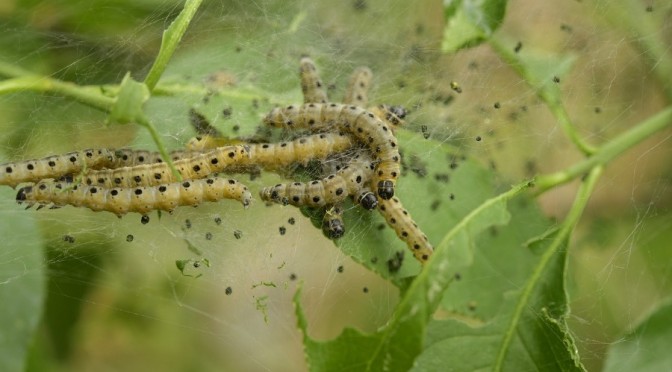
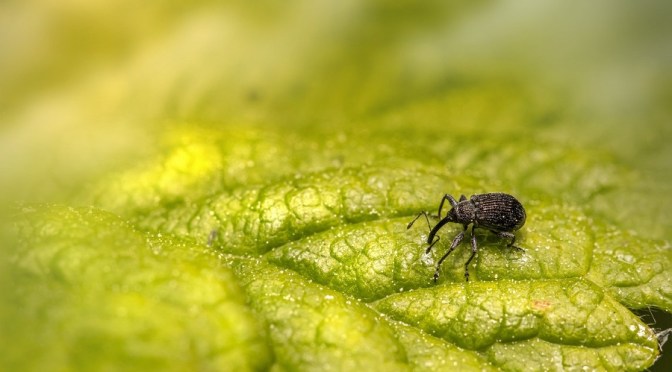
More tips on beating those pests in your garden (Wally Richards)

It is a new gardening season and once it warms up the pest populations will quickly grow.

So far the temperatures have been below what would be normal for this time of the year and considering we are only a few weeks away from Labour Weekend it is most strange.

Temperatures have a great bearing on insect pest activity and population growth.

An ideal spring is an early one with 2-3 weeks of nice warm temperatures which attract the pests out of hiding to get on with their lives. Then a sudden cold snap for a week will bowl most of them out of our gardens and then delay the problems they cause till after the new year.

As the weather/temperatures are not great yet it means they are marking time for better days.

If we place controls in now and over the next few weeks we will be able to stop, confuse and eliminate a lot of the pests before their populations start to build.

This can be achieved by quick elimination of the pests that are lurking about on our plants by the use of the quick knock down spray; Wallys Super Pyrethrum.

For General use at 1ml to 2 litres of water (5ml to 10 litres of water) It is very concentrated and very cost effective.

Best used just prior to sunset when bee activity has ceased.

The spray will stay active through the night affecting any pest insects that come into contact with the residue.

Next day it will become inactive within 2 hours of direct sunlight.

You can also use Wallys Super Pyrethrum at 2.5ml per litre for a spray under eaves for spider  or indoors for flies etc.

Contains: 28g/litre pyrethrins in the form of an oil in water emulsion

A 1ml pipet is supplied in addition to the measure which is on the side of the Bottle.

Note the container has 100mils which makes up 200 litres of normal garden spray strength.

If not all the made up spray is used, then place the sprayer in a dark cupboard to keep it ready for future use.

The next step in pest control is to hide your plants so the pests dont know that they are there.

Of course you cant lift the plants and hide them some where but seeing many pests find their host plants by the smell of them, then we can disguise the plant’s smell by an over riding stronger smell.

Wallys Neem Tree Granules are perfect for this and even I have been surprised by the many comments from Landscapers and gardeners about how their pest problems have reduced by simply scattering Wallys Neem Tree Granules over the soil near plants, shrubs and even trees.

Ideal in a glasshouse to stop whitefly from smelling your tomato plants.

Placed under your citrus trees and Rhododendrons it will not only disguise the smell of the plants but also clean up any pests in the canopy. Repeat another application 3 months later.

On fruit trees that maybe attacked by either Codlin Moth or Guava Moth I suggest to also make some little bags out of old curtain netting, fill with the Neem Granules and hang in the tree at the four cardinal points about your height, high.

Moths flying around at night will not be able to smell the fruit so easily and so fly on by not knowing there is a ideal place to lay their eggs.

Another excellent control is a lure and trap which can be a from a color or a smell.

Wallys Sticky Yellow White Fly traps are ideal for both inside a glasshouse and outside hanging by plants such as tomatoes.

It always amazes me how many small adult pests are caught on these yellow sticky pads.

That in its self stops hundreds of eggs being laid and the resulting damage to your plants.

Then there is also another way to control moth problem by which you set up a moth lure to attract them and kill them.

Take one litre of hot water add a 100 grams of sugar, one teaspoon of marmite, half a tablespoon of

Cloudy Ammonia and half a tablespoon of Vanilla:

Mix well and divide the mix between two plastic milk or soft drink bottles. (500 mils approx each)

Punch or drill some holes (big enough to allow a moth in) in the side of the bottles just above the level

of the mix. Place on a stand about a couple of metres away from the tree. At about waist height like on a small folding table.

When a number of moths are caught dispose of them and make up a new solution.

Ideal for both codlin and guava moths.

Then we can have control of the psyllid pest which effects and destroys our tomatoes, potatoes and tamarillos and to a lessor extent, capsicums, chilies, peppino and okra.

If you had psyllid problems on your tomatoes last season this is what you do.

When you plant your tomato seedling water it in with a solution of Wallys Silicon and Boron Soil Drench, used at 10ml per litre of water apply about a 150mls of the solution into the soil to water the seedling in. You will repeat this again two weeks later.

This gets the silicon into the plant through the roots and the plant takes it up readily because of the boron.

You then mix Wally Silicon Cell Strengthener Spray used at 5ml per litre of non-chlorinated water and

Mixed with Wallys Silicon Super Spreader used at just 1mil per 5 litres of non chlorinated water.

(Comes a 100ml bottle makes 500 litres of spray, use the 1ml Transfer Pipet supplied to measure)

Mix these two products into a one litre Trigger sprayer which will be 5mils of Wally Silicon Cell

Strengthener Spray with quarter a mil of Silicon Super Spreader which drives the spray into the tomato plant. Spray the young plants each week till about a metre tall.

The spray keeps ok so just place out of direct sunlight to use again next time, after giving the contents a shake.

Once a metre tall spray 2 weekly and then when you reach the stage when there is a good fruit set spray once a month for any new growth.

Done correctly you will wipe out all the psyllids in your back yard or glasshouse and be free of the pests next season until they find their way back from the neighborhood.

Remember that a lot of pests are brought home on plants obtained from elsewhere including places you purchased from.

Root mealy bug is a curse insect as is root nematodes both suck goodness out of the roots of plants they are feeding on. On container plants and out doors they can be treated with Wallys Neem Tree Powder sprinkle a little on to the potting mix then cover with a little more potting mix

On lawns you can do the same but in gardens where the pests are just use Wallys Neem Tree Granules. Often gardeners are surprised at how good the treated plants are after a few weeks of application.

Thats because they dont have the pests sucking out their goodness anymore.

Here is to a reduced pest problem this season.

Phone 0800 466464
Garden Pages and News at www.gardenews.co.nz
Shar Pei pages at  www.sharpei.co.nz
Mail Order products at www.0800466464.co.nz


New Zealand Bill of Rights Act 1990. Part II of the Act covers a broad range of Civil and Political Rights. As part of the right to life and the security of the person, the Act guarantees everyone:

1The right not to be deprived of life except in accordance with fundamental justice (Section 8)

2The right not to be subjected to torture or to cruel, degrading, or disproportionately severe treatment or punishment (Section 9)

3The right not to be subjected to medical or scientific experimentation without consent (Section 10)

4The right to refuse to undergo any medical treatment (Section 11)

 Furthermore, the New Zealand Bill of Rights Act 1990 guarantees everyone: Freedom of Thought, Conscience, and Religion.
This includes the right to freedom of thought, conscience, religion, and belief,
INCLUDING THE RIGHT TO ADOPT AND HOLD OPINIONS WITHOUT INTERFERENCE (Section 1)

Beating those insect pests in your garden (Wally Richards)

Having a neat summer for a change has brought a problem for many gardeners and that is the number of insect pests such as leaf hoppers, whitefly and vegetable beetles that are ravaging our gardens. When one finds hundreds of these types of pests attaching our plants; the plants will be suffering and in some cases will succumb and die. A common problem is that we may repeat spray our plants for control but never seem to get on top of the problem. I had an example of this recently with leaf hoppers and discovered why when I decided to pull out an area of bracken ferns nearby. The ferns were covered in leaf hoppers, young fluffy bums and adults. By getting rid of this source or breeding plant I then was able to get control over my preferred plants. If the breeding ground happens to be over the fence you either need to get permission to control there or just hang in with lots of repeat sprays till winter knocks them back..

I had a lady call me the other day to say that everything was ok in her garden till the owner of the section next door decided to clear the vegetation to build. Within days all those pests that were living on the weeds and plants next door, invaded her gardens.

The safe way to maintain some sort of control is to place Neem Tree Powder on the soil in the root zone of plants and then to do repeat sprays, late in the day using Wallys Super Neem Tree Oil and Wallys Super Pyrethrum. Only spray just before dusk when the pests are settled for the night and the sun is down so foliage is not damaged by the oil.

Repeat sprays would be between every 3 to 7 days till the situation is under control or till the weather turns cold and nature knocks back the breeding cycles.

Just one of the things we gardeners have to face on a good summer.

GLYPHOSATE AND KIDNEY FAILURE

Using the herbicides containing glyphosate such as Zero, Roundup etc are a cheap convenient way of killing weeds and unwanted plants but there can be a price to pay that you are not aware of.

Generally speaking if you wear protective clothing, rubber gum boots, a chemical protection mask and eye shield, rubber or vinyl gloves; you are reasonably protected. If you are using a back pack sprayer you should have on a raincoat so any leakage does not run out and down your back/spinal cord. The eye shield is important as minute droplets can enter through your eyes.

Do you remember this statement by our esteemed Prof Michael Baker (whom appears on TV frequently) on the 29th February 2020? He said “The virus can also infect you via your eyes. It basically likes to land on mucus membranes, and then, from your eyes, go down to your nose anyway. So I think people should not bother with face masks.”

Thank you professor and also harmful chemicals can enter through both exposed skin and eyes. Best to have a shower straight after using any chemicals to reduce and dilute. Clothing worn should be washed separately and not with other clothes.

Then the main problem is the amount of glyphosate in our food chain and from overseas studies there is a lot in cereal crops, plant based oils such as soya. Glyphosate from Roundup Ready GE crops (not grown in NZ but in processed food stuffs imported.

Hence why I am publishing this article I received this week..

Ways to Remove Glyphosates from the Gut

While watching a mitochondrial summit video, Don Huber PhD, who has been studying glyphosates and their effects on the human body and the earth for many years, said that there are some ways to remove Glyphosate from the body, and especially the gut.

The bacteria that are in raw apple cider vinegar, sauerkraut and other ferments will degrade Glyphosate in the gut all the way down to carbon dioxide, water and phosphorus.

And for those that don’t consume much ferments, he said that humic fulvic acids are good too, and move glyphosate through the feces rather than the kidneys which is really good. He said in Brazil 1/4 of the people working in the sugar cane field die of glyphosate toxicity, which some would call end stage kidney failure. Other crops were mentioned like rice and wheat, and not just in South America. When glyphosate chelate with the minerals in crops like these it is too big for the kidneys to filter, so it plugs them up.

There are many other problems with Glyphosate that he discusses too. He explains and shows how many diseases have increased since glyphosate has been used. I would suspect it’s not just the glyphosate.

You cannot escape glyphosate completely, even if you eat all organic. It really is important to learn safe ways to detox in today’s world. One simple way is to eat sauerkraut and other ferments with each meal, and drink ACV (Apple Cider Vinegar) with water before meals, and even after meals. Make sure it’s raw, organic apple cider vinegar with the mother. I think Bragg’s is the best brand. (UPDATE: I now prefer Fillsingers, tastes more like apples).

It will also increase your stomach acid therefore help in digestion. ACV is likely the best thing for acid re-flux as well. While Fulvic humic acid may be a great thing, it is not cheap. (MBL is ).

 It is far more affordable to learn to make things like sauerkraut and other ferments if you don’t already. It is not very hard to put water, salt and cabbage in a jar!

Problems ring me at 0800 466464
Email wallyjr@gardenews.co.nz
Web site www.gardenews.co.nz

Photo: Erik_Karits @ pixabay.com