Tag Archives: HSNO

RECKLESS GENE TECHNOLOGY BILL AN ATTACK ON LOCAL DEMOCRACY, FARMERS, AND COUNCILS (GE Free Nthland Media Release)

Protecting Our Democratic Right to Be GE-Free

GE Free Northland  (in food & environment)

12 February 2025     Media release

Whangarei, Far North, Kaipara, and Auckland communities share the concerns of many New Zealanders about the controversial Gene Technology Bill, quietly released just days before Christmas 2024.

The Bill proposes removing all ethical considerations and the Precautionary approach to outdoor GE/ GMO applications and the authors of the Bill have failed to adequately consult with the farming sector.  In addition, the Bill proposes stripping local councils of their authority and jurisdiction in regard to outdoor GE experiments, field trials, and releases.

Removal of the authority of these councils would destroy what they have worked hard to achieve – much needed additional protection for the biosecurity of particular regions and the wider environment. These were put in place to address significant risks that would be faced by farmers and other ratepayers.

The Northland and Auckland Region, along with the Hastings District, are established GE Free food producing zones that provide protection from outdoor GE field trials, and releases.

“The Northland /Auckland Councils collaborated in a fiscally responsible manner to meet the needs of farmers and other ratepayers,  after robust public consultation over a period of many years. “

“The councils wisely prohibit the release of any Genetically Modified Organisms (GMOs) and make any EPA approved outdoor GE experiments and field trials a Discretionary activity, subject to liability provisions including the posting of bonds,” said GE Free Northland spokesman Martin Robinson.

“We fully support council rules without which GM free primary producers, including conventional, IPM, and organic, would be at risk of serious financial consequences, if not the complete loss, of their valuable enterprises, in the case of GE contamination from EPA approved activities,” said Robinson.  “We urge concerned Northlanders and Aucklanders to make a submission opposing the Gene Technology Bill by the deadline of 17 January 2025.”

The proposals in the Coalition government’s plans to remove the rights of councils to prohibit GMO activities are in clauses 248 to 253 of the Bill* (1).

“This is a political fight any government would be foolhardy to pick, given the huge backing from the Northland and Auckland communities, the significant biosecurity risks, the concerns of Kiwi farmers, and the importance of our existing valuable GE free status, says GE Free Northland spokesman Martin Robinson.

Councils’ concerns about GE relate mainly to uncertainties over the economic, environmental, biosecurity, and socio-cultural risks, including risks to farmers and other primary producers.*(2)

Without a strict liability regime, unsuspecting third parties and local authorities are at risk of GE contamination. This would result in them being unable to sell their produce on the export market. The issue of liability for any adverse effects of GMOs grown in the area needs to be resolved before any outdoor experiments are permitted in Auckland/Northland Peninsula.

Instead of there being provisions in this Bill to compensate farmers for GE contamination, the opposite is proposed. Farmers and growers whose crops or stock are adversely affected must pay the clean up costs and suffer the losses of cancelled export orders. This would mean the loss of access to key markets and the current non-GMO market premiums they earn.  

There has been no economic cost-benefit analysis carried out in the Bill on the effects of GE contamination on our primary sector exports. 

“Farmers cannot afford to experiment with their income and livelihood. There’s no hardcore evidence to suggest anything is practical or feasible with this technology.  Co-existence between GE and other crops is impossible without significant contamination threshold levels, as documented in North America and other countries.”

“Agriculture in New Zealand is worth around $56 billion in exports. Why would anyone in their right mind want to gamble all of that on something that might not even work and is highly likely to cause irreversible harm,” said horticulturist Zelka Grammer, GE Free Northland chair.

Analysis of the Bill has been carried out by a team of researchers from the University of Canterbury headed by Professor Jack Heinemann. Their area of expertise includes the biosafety of GMOs and risk assessment protocols. *(3)  This analysis indicates that a robust scientific case has not been made for the proposed reforms to gene technology law and that we would be much better off sticking with the current laws under the HSNO Act (1996). 

The right of communities to decide was confirmed by a landmark Environment Court decision in 2015. This decision gave councils the power, under the RMA, to control the outdoor use of GMOs in their regions.

The National Party’s previous attempt to take away communities’ ability to ban or control GM releases in their territories was strongly opposed by farmers and all councils from South Auckland to Cape Reinga as well as Hastings District Council and its ratepayers.*(4)

GE Free Northland urges NZ First to no longer support the unscientific, unsafe, and economically risky proposals in this Bill, and to respect the right of councils to choose sustainable integrated planning. *(5)

“NZ’s reputation in the global marketplace must be protected. GE crops have failed to perform overseas, with lower yields, higher herbicide use, and the creation of herbicide resistant invasive “super weeds”.

“This combined with ongoing consumer and market aversion to GE food means that this is not the path NZ should go down. We must continue to protect our valuable “Northland, Naturally brand” and high value agricultural economy against GMO contamination,” said Grammer. 

The operative Northland “Regional Policy Statement”, Regional Plan, the Auckland Unitary Plan, and the Whangarei and Far North District Plans all have strong precautionary and prohibitive GE/GMO provisions, policies, and rules in place in keeping with the wishes of local farmers and other ratepayers. *(6)

Northland Regional Council is holding a workshop today at Whangārei council chambers in response to widespread concerns about the proposed legislative changes. *(7)

ENDS

Contact: Martin Robinson 09 409 8650

Mobile:  027 347 8048

Zelka Linda Grammer

email: linda.grammer@gmail.com

*(1)

The explanatory notes in the Gene Technology Bill state:

“Subpart 9—Amendments to Resource Management Act 1991 Clauses 246 to 254 amend the Resource Management Act 1991 (RMA). In particular, these clauses— • define genetically modified and Regulator (clause 247): • prohibit a regional council or territorial authority from performing its functions under sections 30 and 31 of the RMA in a manner that treats genetically modified organisms differently from other organisms, including in regional plans, district plans and regional rules (clauses 248 to 253).”

 All councils from south Auckland to Cape Reinga in Far North/ Te Tai Tokerau have precautionary and prohibitive GE/GMO provisions, policies, and rules- set up in keeping with the wishes of local farmers and other ratepayers, in order to protect our regions biosecurity, wider environment, economy, and existing GM free farmers/ primary producers, including conventional, IPM, regenerative,and organic.

Hastings District Council has achieved outright prohibition of all outdoor GE/GMO experiments, field trials, and releases for the duration of the District Plan.

*(2)

Whangarei District Council “Genetic Engineering Review” webpage, detailing the good work of the Northland/ Auckland INTER COUNCIL WORKING PARTY ON GMO RISK EVALUATION & MANAGEMENT OPTIONS

https://www.wdc.govt.nz/Council/Council-documents/Reports/Genetic-Engineering-Review

“Three major reports commissioned by the working party have identified a range of risks involved with the trialing and release of GMOs. They also include approaches to managing those risks. 

GMO Reports [link to documents]

Environmental risks

  • GMOs becoming invasive and affecting other species including native flora and fauna
  • the development of herbicide or pesticide resistance creating ‘super-weeds’ or ‘super-pests’
  • long term effects on ecosystem functioning.

Socio-cultural risks

  • effects on Maori cultural beliefs of whakapapa, mauri, tikanga
  • ethical concerns about mixing genes from different species including human genes
  • concerns about the long term safety of genetically engineered food. 

Economic risks

  • loss of income through contamination (or perceived contamination) of non-GMO food products
  • negative effects on marketing and branding opportunities such as ‘clean and green’ or ‘naturally Northland’
  • costs associated with environmental damage such as clean-up costs for invasive weeds or pests.

Associated with these risks are limited liability provisions under the Hazardous Substances and New Organisms (HSNO) Act 1996. “

*(3)

A comprehensive analysis of the Bill by Professor Jack Heinemann, an international expert in the biosafety of organisms created by gene technology, and his colleagues indicates that a robust scientific case has not been made for the proposed “reforms” to gene technology law.

See

Centre for Integrated Research in Biosafety submission to the Parliament Health Select Committee on the Gene Technology Bill 2024.

https://www.researchgate.net/publication/388526356_INBI_submission_to_health_select_committee_gene_tech_bill_2024

*(4)

Hastings District Council

1 August 2018 Media Release

“Council and Iwi welcome GMO decision”

https://www.hastingsdc.govt.nz/our-council/news/archive/article/1038/council-and-iwi-welcome-gmo-decision

*(5) NZ First

Despite their reservations about a number of extreme proposals, NZ First supported the first reading of the Bill. Their support of the Bill is at odds with what they signed up to in the Coalition agreement, that is to “Liberalise genetic engineering laws, while ensuring strong protections for human health and the environment”.* 

https://assets.nationbuilder.com/nationalparty/pages/18466/attachments/original/1700778597/NZFirst_Agreement_2.pdf?1700778597

“Coalition Agreement between the National Party and the New Zealand First Party”

Primary Sector

• Liberalise genetic engineering laws while ensuring strong protections for human health and the
environment

The Gene Technology Bill in its current form removes strong protections for human health and the environment, as well as undermining our biosecurity and proposing the removal of ethical considerations and the Precautionary approach.  NZ First has previously had a strong precautionary GE/GMO policy.

*(6)

  1. Northland operative Regional Plan and RPS provisions

Regional Policy Statement

  • 6.1.2 Policy – Precautionary approach -p112
  • 2.6 Issues of significance to tangata whenua – natural and physical resources -p26

Proposed Regional Plan

  • Rule C.1.9.1 Genetically modified organisms in the coastal marine area – permitted activities – p 107
  • Rule C.1.9.2 Genetically modified organism field trials – discretionary activity– p 107
  • Rule C.1.9.3 Viable genetically modified veterinary vaccines – discretionary activity – p 107
  • Rule C.1.9.4 Genetically modified organism releases – prohibited activity– p 108
  • Policy D.1.1 When an analysis of effects on tāngata whenua and their taonga is required – p 235
  • Policy D.5.32 Precautionary approach to assessing and managing genetically modified organisms -p 275
  • Policy D.5.33 Adaptive approach to the management of genetically modified organisms -p 275
  • Policy D.5.34 Avoiding adverse effects of genetically modified organism field trials -p 275
  • Policy D.5.35 Liability for adverse effects from genetically modified organism activities -p 275
  • Policy D.5.36 Bonds for genetically modified organism activities -p 276
  • Policy D.5.37 Risk management plan for genetically modified organism field trials -p 276
  • Objective F.1.15 Use of genetic engineering and the release of genetically modified organisms – p 294

The Northland RPS includes Precautionary policy 6.1.2 and Method 6.1.5, as well as the GE/GMO issue correctly identified as an Issue of Significance to Northland tangata whenua/ issue of concern to Northland communities…and the specific concerns of Maori regarding the risks of outdoor use of GE/GMOs to indigenous biodiversity

(as directed by Judge Newhook on 12 April 2018, the wording of Policy 6.1.2 and Method 6.1.5 has the following wording

“Policy 6.1.2  – Precautionary approach

Adopt a precautionary approach towards the effects of climate change and introducing genetically modified organisms to the environment where they are scientifically uncertain, unknown or little understood, but potentially significantly adverse.

This is confirmed by method 6.1.5 in the Northland RPS which states that: 

“6.1.5 Method- Statutory Plans and Strategies

The regional and district councils should apply 6.1.2 when reviewing their plans or considering options for plan changes and assessing resource consent applications.

Explanation:

Method 6.1.5 implements Policy 6.1.2″

(ENDS excerpt from Judge Newhook’s 12 April 2018 decision)

see also

Policy D.1.1 of the Proposed Regional Plan includes a reference to genetic engineering. The policy requires effects on tāngata whenua to be addressed in resource consent applications where specified effects or activities are likely, including release of GMO’s to the environment.

*(7)

Northland Regional Council Workshop  Wednesday, 12 February 2025   Council Chambers, Rust Avenue,

“12.45 – 1.45pm 3.0 Recent Central Government Legislative Changes

Reporting Officers: GM Environmental Services, Ruben Wylie, and Policy
and Planning Manager, Tami Woods”

Further information:

According to an independent study by  the New Zealand Institute of Economic Research (NZIER), New Zealand’s primary sector exports could be reduced by $10 – $20 billion annually, if GMOs were to be released into the environment.  The report was commissioned by Organics Aotearoa New Zealand (OANZ) to evaluate the cost of proposed regulatory changes governing gene technology.  OANZ says that the costs, as well as supposed benefits of deregulating gene technology, need to be carefully considered.

The NZIER study authors note that the proposed changes to the regulations as outlined by Wellington bureaucrats at the Ministry of Business, Innovation & Employment (MBIE), do not include a Regulatory Impact Statement, economic assessment, cost-benefit analysis or address the practicality of “co-existence” of GE and non GE crops..given the known vectors for GMO contamination (seeds, pollen, vegetative material, soils, waterways, machinery, animals, insects, extreme weather events).

The report was commissioned by Organics Aotearoa New Zealand (OANZ) to evaluate the cost of proposed regulatory changes governing gene technology.  OANZ says that the costs, as well as supposed benefits of deregulating gene technology, need to be carefully considered.

26 November 2024 OANZ media release

Media Statement: “NZ exports risk multi-billion dollar hit if GMO rules deregulated”

https://www.oanz.org/new-blog/NZ%20exports%20risk%20multi-billion%20dollar%20hit%20if%20GMO%20rules%20deregulated

“OANZ’s commissioned NZIER Economic Report that clearly highlights the economic risks to the country” (26 November 2024)
https://www.oanz.org/new-blog/NZ%20exports%20risk%20multi-billion%20dollar%20hit%20if%20GMO%20rules%20deregulated?rq=nzier

26 November 2024 NZ Farmers Weekly

“Gene shift could cost exporters billions: report “

“Researchers flag lack of research from MBIE on financial impact of opening doors to gene editing.”

29 August 2024

“Let’s cut the crap on gene technology”

by Professor Jack Heinemann

https://www.concernedfarmersnz.org/news/get-out-there-n9t2h-2c3pz-4tsby-ek7wx-e3res-nnleb

Summary recommendations for the Gene Technology Bill- by Physicians & Scientists for Global Responsibility (NZ) .

https://psgr.org.nz/component/jdownloads/send/1-root/166-gtbill-3pager

11 Feb 2025 • Ashburton Guardian

Gene tech bill “a slap in the face to farmers, experts”

https://www.guardianonline.co.nz/news/gene-tech-bill-a-slap-in-the-face-to-farmers-experts/

Concerned Farmers NZ

www.concernedfarmersnz.org

30 January 2025

The Risks of GMO Deregulation to NZ Farmers”

https://www.concernedfarmersnz.org/news/nzier-report-on-potential-cost-of-regulatory-change-54pya-ngzgb

“There is no ban on gene technology in NZ. This misleading hyperbole is used to obscure a failure to engineer products that will have a market or social value that exceeds the cost of compliance with reasonable regulations.”  

– Professor Jack Heinemann, Genetics/ Molecular Biology, Canterbury University, and director- Centre for Integrated Research in Biosafety

National Party previous attempts to strip local councils of their authority and jurisdiction, falsely claiming that council plans (Northland, Auckland, Hawke’s Bay, etc) prohibited ethical and humane medical research in the laboratory

Radio NZ     2 September 2016

“Environment Minister accused of GMO beat-up”

https://www.rnz.co.nz/news/political/312414/environment-minister-accused-of-gmo-beat-up

“Minister eyes law change to end councils’ control over GMOs”

Northern Advocate

5 September 2016
https://www.nzherald.co.nz/northern-advocate/news/minister-eyes-law-change-to-end-councils-control-over-

Imminent 1080 drop at Milford Sound: a local is concerned at the lack of communication with tourists on the health risks regarding drinking water

Impending Milford Sound 1080 drop (Southland Cleddau area)

By Sacha Stevenson

1080 – It’s nothing new to most Kiwis. Opinions are divided.

The last aerial drop of 1080 here was only two years ago. Before the last drop (although I wasn’t working in Milford at the time) there was some community consultation, including a Q & A session with the Department of Conservation (DoC) – the lead agency involved with the drop in this region. I understand some local workers and one Iwi objected, but the drop went ahead anyway, including into the public water supply catchment area.

The next drop in the Southland Cleddau/Milford Sound area is scheduled for between Aug 1st and Dec 2019 and, just like the Sept 2017 drop, this again includes dropping 1080 into the water supply.

(See map below clipped 4 July 2019 from the online DOC map.)

In my opinion, the community here has not had an honest open forum to voice their say on the next scheduled drop (and every opinion is valid) but much worse, even if we get to have our say, chances are high that the tourists will be left uninformed.

There are many aspects to this topic, many already discussed. One of the main aspects here being in regards to the Public Health Unit (PHU) VTA Permission and conditions statement and its lack of implementation here in Milford Sound, and the effect it may have on locals and tourists. I’m not a lawyer, but I see this as a legal and moral failing in our duty to protect tourists (and locals).

The Ministry of Health (the Ministry) is responsible for ensuring that the provisions of the Hazardous Substances & New Organisms (HSNO) Act are complied with where it is necessary to protect public health. The Public Health Unit (PHU) is legislated by the Ministry of Health, to approve permission and attach conditions to interested parties applying a VTA (Vertebrate Toxic Agent) in a public place. This applies especially to drops into (or near) a public water supply. Public Health South (PHS) processes and approves permissions for the Fiordland area.

Permission is required because VTAs (of which 1080 is one) are toxic to humans through acute poisoning and chronic exposure. 1080 is considered a hazardous substance, for good reason. (See link to 1080 effects at p7.)

The PHU have issued a mode HYPERLINK “https://www.health.govt.nz/system/files/documents/publications/guidelines-issuing-permission-for-using-vertebrate-toxic-agents-march13.pdf”l statement form (see p32 onwards) with examples – which includes one for where a VTA is to be dropped into a public water supply.

Some things stand out for me with the model PHU permissions:

1)  Full disclosure to users is expected, with signs and warnings (which would logically be placed at the point of possible consumption)(see conditions 19 & 20 pg47 of VTA permission guide.)

2)  An alternate water supply should be offered, if requested, until testing has been completed. (Case example – Condition 25 p67 note ii and conditions 25 – 32 of VTA permission guide.)

Bowen River valley and public water supply catchment area (see red circled area)

map cleddau milford etc

Figure 1: (Map clipped 4 July 2019 from the online DOC map.)

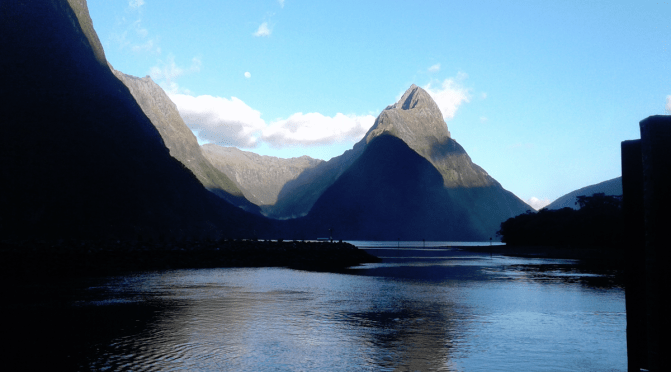
Milford Sound is one of NZ’s iconic tourist locations. We have between 500 to 5000 guests per day visiting the Fiord, hosted by various companies across the different seasons. The large majority of tourists are foreign nationals, many of whom don’t speak or read English very well.

However, I’ve had contact with the public water supply company in the last week, confirming that they’ve had no warning about the upcoming use of 1080. (As at 24th July)

Not a good start.

Despite the lack of communication from DoC (the lead agency for this particular drop) and from the aerial application contractor, many of the workers here in Milford know the drop is now imminent.

I understand that some of the companies here are planning to make bottled water available for their staff, but none of them (as far as I know) are planning to offer bottled water to the tourists, or even to put notices up in the terminal or on the vessels to warn them of the 1080 drop – so they can choose for themselves whether they would like to drink the tap water or not.

I believe in ‘free will’ and I can understand some people believe the Government/DoC scientists when they say the water will be safe to drink. But there have been around 3% of positive tests for 1080 in water over the years, with at least 4 positive tests in drinking water, albeit in low concentrations. (See TBFree HYPERLINK “https://ospri.co.nz/assets/Uploads/Documents/How-1080-Breaks-Down-in-Soil-Water.pdf” info, p3.)

Knowing that 1080 is teratogenic (may cause birth defects) and with my partner being pregnant, I wouldn’t wish her to have any exposure whatsoever to 1080. I assume no foreign national in her position would wish to be exposed to that risk either. (See MOH Guidelines p7 re known 1080 effects.)

I am shocked that it appears that no one in Milford, including DoC, Milford Sound Tourism NZ (MST – the port operational company),  Milford Sound Infrastructure ((MSI – the public water supply company), or the tourist companies providing vessels and the drinking water aboard them, is planning to at least inform the tourists that the water they may drink in the terminal and on board the vessels may potentially have a birth defect causing agent in it.

It is probably true that signs will likely be erected along the road into Milford, as we have seen done in various locations around NZ. But it is wrong to conclude that because those signs are at the rest areas, that foreigners will equate that with the drinking water in the terminal and on the boats being also potentially contaminated. One must remember, that many visitors can’t read English for a start, plus many come from areas where it is obvious that one doesn’t drink from any tap. Is it obvious here?

I would expect the duty of care and a minimum standard would mean that we’d firstly err on the side of caution. I would also assume that foreign governments would want us to set the minimum standard bar rather high when it comes to looking after the health and welfare of their citizens. As we would hope they do for our citizens when they’re abroad.

We know that the US and China for example, among others, take the safety of their citizens travelling overseas very seriously.

To add to the issues, Fiordland is a unique area in terms of its topography and rainfall. The Bowen River catchment valley is rather like a giant granite bath, with very little top soil, and average rainfall of 7000mm per annum. Together with winter temperatures, ice and snow melt, this will likely increase the risk of 1080 arriving at the intake at the same time and breaking down much more slowly. Further, according to TBFree HYPERLINK “https://ospri.co.nz/assets/Uploads/Documents/How-1080-Breaks-Down-in-Soil-Water.pdf” NZ:

Biodegradation of 1080 is faster in warmer conditions (20degC), but still occurs at 5degC. At cooler temperatures rates of degradation are slower…..”

Landcare Research not HYPERLINK “https://www.landcareresearch.co.nz/__data/assets/pdf_file/0019/209134/Protocol-for-1080-testing-in-water-4th-Edn.pdf”s (at 3.1) that:

Urgent samples for 24-hour turnaround testing may be sent unfrozen to the testing laboratory, but they must be chilled to 4°C and placed on ice as soon as possible after collection.

Looking closer at Landcare’s testing regime (at 4.0): “Results will be available no later than 9.30 a.m. on the following day.” This means, at a minimum, no water should be drunk in Milford for 24hrs.

Do we need reminding that there is no antidote to 1080 poisoning?

It really seems easy to avoid the vast majority of the risks in this case. Just don’t drop 1080 in the water catchment area, meaning no 1080 to be aerially dropped in the Bowen River valley area of Milford Sound.

If DOC is so determined to go-ahead with the poison drop in the catchment area, then full disclosure to tourists should be made and an alternate drinking water supply offered (as per the model PHU statement example of 1080 in a public water supply).

It’s embarrassing that we call our country ‘Open and Inclusive’, ‘Clean Green’ etc and yet treat foreigners with this sort of disrespect.

For more info regarding our area, check out online the 2017 Southland  HYPERLINK “https://www.epa.govt.nz/assets/Uploads/Documents/Hazardous-Substances/1080-reports/1080-Operational-Reports/8c05e9d3da/2017-Southland-Cleddau-Report.pdf”Cleddau HYPERLINK

and the 2017 Southland  HYPERLINK “https://www.epa.govt.nz/assets/Uploads/Documents/Hazardous-Substances/1080-reports/1080-Operational-Reports/ff456e54d8/2017-Southland-Cleddau-Map.pdf” which shows the GPS flight path of the 2017 1080 drop into the water catchment area.

Also of interest, according to the above Cleddau report; NO non-target species monitoring was undertaken. The water quality testing (pg 6 of DOC’s operational report 5.2.2) revealed the presence of 1080 at 1ppb.

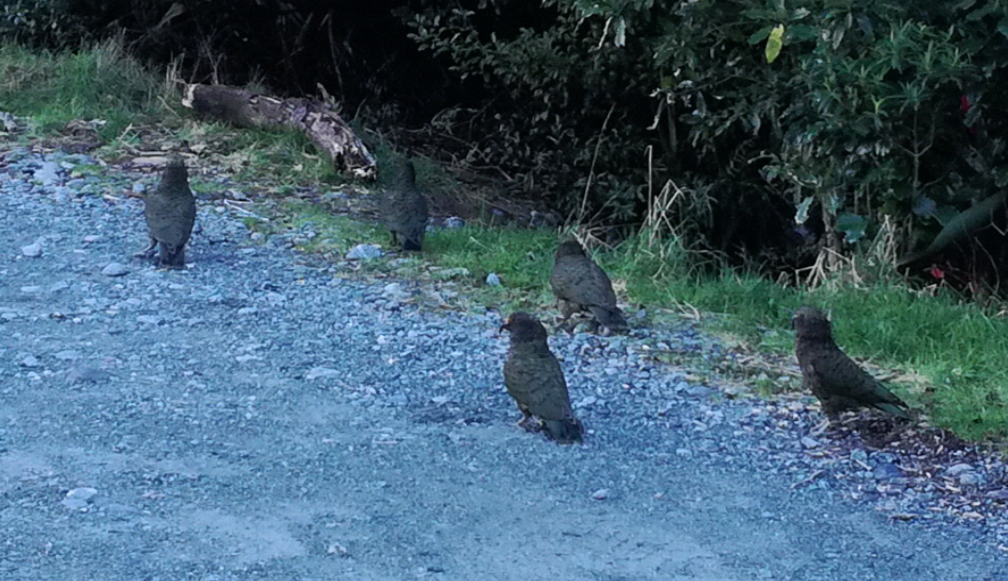
I can tell you that as of writing, we have quite a few Kea (approx 20) hanging out in and around the village here in Milford.

Kea in Milford Sound, down near Deep Water Basin May 2019 Photo Sacha Stevenson
Kea in Milford Sound, down near Deep Water Basin, May 2019 (Photo: Sacha Stevenson)

Plenty of Wekas here as well, plus I’ve seen the odd NZ Falcon eating road kill on the drive into Milford.

Weka at Deep Water Basin July 2019 Photo Sacha Stevenson
Weka at Deep Water Basin July 2019 (Photo: Sacha Stevenson)

I wonder how they will fare with the ‘Clean Green’ 1080 pellets raining down in the near future. Will anyone know if they’ve been affected?

To conclude: yes, opinions on the use of 1080 differ here, but no locals  I’ve talked to think tourists shouldn’t at least be fully informed of what might be in their drinking water, to allow them their ‘Free Will’ to drink the local water or not.

Increase the peace

S Stevenson

Skipper – Milford Sound

An update to this article can be found at this link.


RELATED: EWR links to articles on 1080 in water. Search for other articles on 1080 poison at the categories drop down box at the left of the news page.

If you are new to the 1080 poisoning program, here is a good article to start with …

WHY ARE PEOPLE SO CONCERNED ABOUT 1080?

A must watch also is Poisoning Paradise, the doco made by the GrafBoys (banned from screening on NZ TV, yet a 4x international award winner). Their website is tv-wild.com. Their doco is a very comprehensive overview with the independent science to illustrate the question marks that remain over the use of this poison. There are links also on our 1080 resources page to most of the groups, pages, sites etc that will provide you with further information.

Check out the 1080 pages at the main menu, particularly the sub tab, ‘suspected 1080 poisoning cases’. Finally, remember what the retired MD Charlie Baycroft said recently …‘if you die from 1080 poisoning, nobody will know  because the Ministry of Health is bullying NZ Doctors into not testing for 1080′. EWR


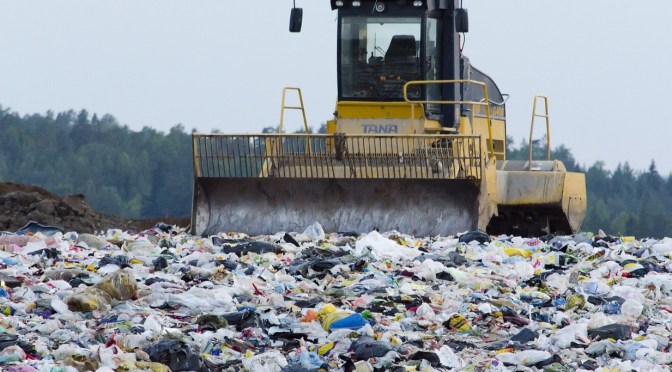
Is there 1080 in your landfill? According to a 2019 OIA request DoC alone has buried 100 tonnes in NZ’s landfills

“It is common practice to dump excess 1080 pellets after 1080 drops have finished (Re Stewart Island dump, see article).When 1080 toxin was first discovered in ground water the source of the toxin was traced to a landfill site above. Un-spread 1080 baits had been buried in the landfill and the toxin had leached out of the baits and seeped down into the ground water where it remained as toxic as the day it was dumped. No breakdown of the poison had taken place over all that time” … these are only DoC’s figures … “OSPRI has traditionally dropped more 1080 poison than DoC. Regional Councils account for around 12% of 1080 use too.”

(Something you likely didn’t know – see comments for a video from TVNZ’s Seven Sharp program on how an old West Coast landfill washed out to sea & back to shore again during a flood).

Copy of 26994348_2051229438490705_794147738856288614_n

By Carol Sawyer

DoC HAS BURIED ENOUGH 1080 POISON IN OUR LANDFILLS TO KILL 4.3 MILLION PEOPLE ( 2016-2018 ) – 100 TONNES OF UNUSED 1080 BAITS!!!

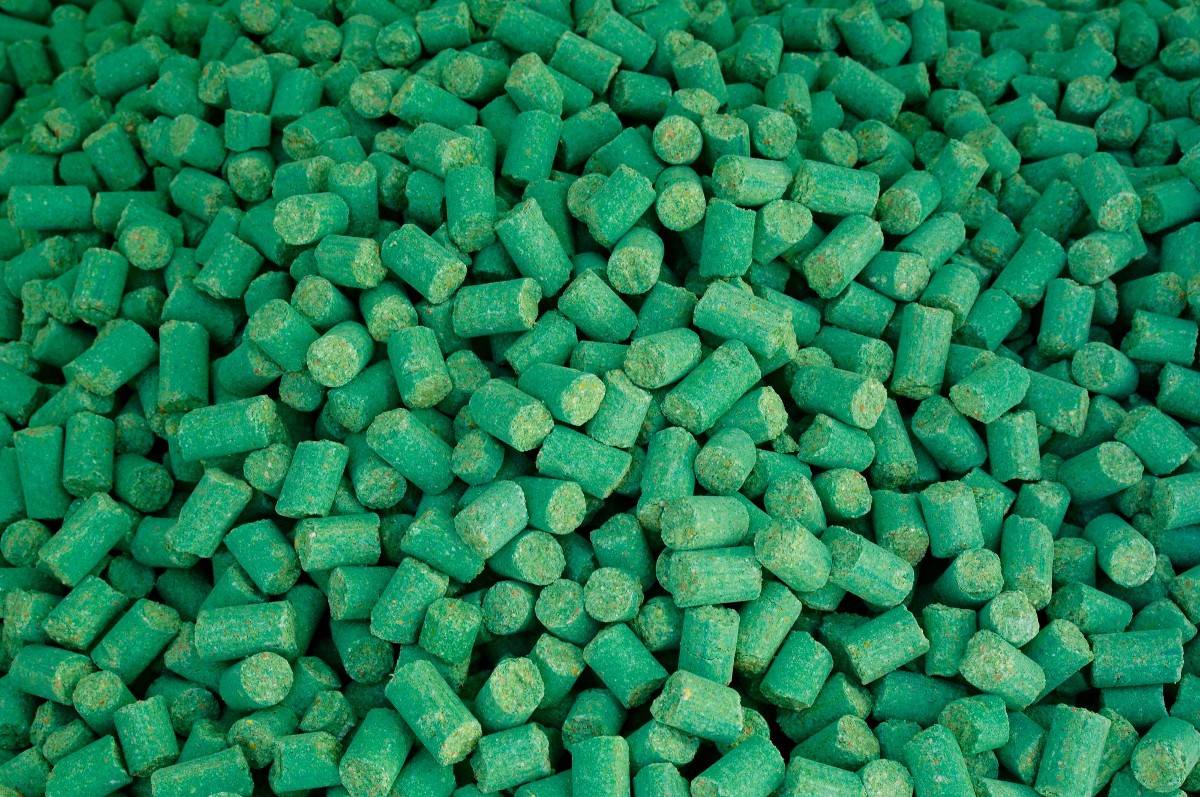
resized pelletsIn the past three years, it appears at least 100 tonnes of unused 1080 poison baits have been sent to landfills by the Dept of Conservation! (See OIA results below) That amount of 1080 baits contains enough 1080 poison to possibly kill the whole population of New Zealand. 1080 leaching into our groundwater, never mind the expense of trucking unused baits all round the country again. … read on.
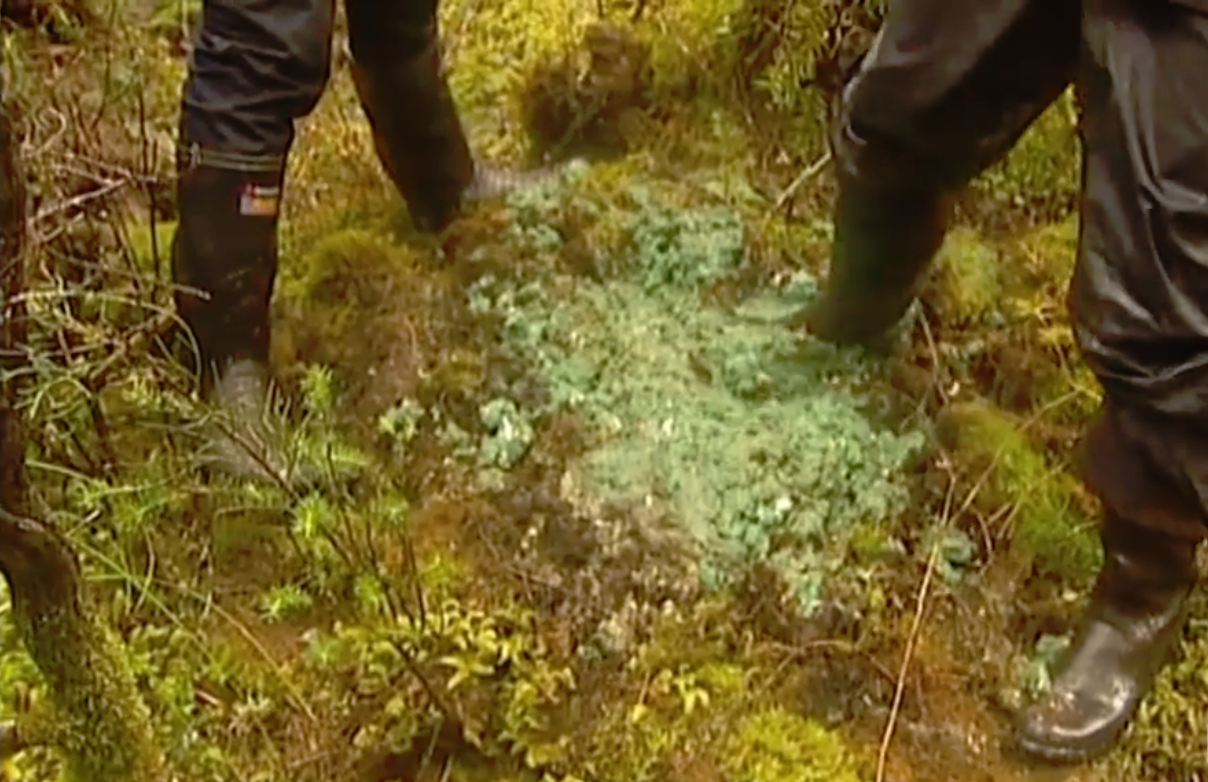
These are only the DoC ” Battering the Birds” * programme’s figures of course. OSPRI has traditionally dropped more 1080 poison than DoC. Regional Councils account for around 12% of 1080 use too.

100 tonnes of 1080 baits contain enough pure 1080 poison ( 150kgs ) to kill between approximately 1 million and 4.3 million X 70 kg humans, and make the same number of people very ill. ( Human LD50 is 0.5 to 2 mg/kg bodyweight )

NB: “Based on fatal or near-fatal cases of human poisonings, the dangerous dose for humans is 0.5-2.0 mg/kg BW” (Negherbon 1959)

I don’t see the 600kgs, stated in the second OIA response attached, included in their latest response, 21.2.2018 ! ( see John Veysey’s letter below )

PLUS THERE ARE ANOTHER 66.6 TONNES THEY HAVEN’T INCLUDED IN THEIR OIA RESPONSE ATTACHED ( see third OIA response, included in body of post below ) – These were baits targeted for the 33,000 ha aerial 1080 drop at Makarora in 2015.

The pre-feed was dropped at Makarora but the poison was not. Bad timing, and initial faulty flight charts, ( by HeliOtago Ltd presumably ), meant the drop was postponed and then foiled by the onset of winter.

DoC Wanaka announced the poisoning would happen the following Spring but this never eventuated. The poison was dumped. They have conveniently left this out of the latest OIA response, and pretended they haven’t kept records.

Just as well WE do !!!

*******************************************************

LETTER TO EDITOR, OTAGO DAILY TIMES, JULY 2018 – NOT PUBLISHED

FB post, August 16, 2018 : John Veysey of Coromandel sent me this letter by email today. It wasn’t published so I will post it here as it is well worth reading.

“Dear Sir,

A pile of 1080 pellets was found dumped on Stewart Island. This evoked shock and horror from the local MP, Sarah Dowie.

Which only goes to show how effectively DOC has covered their tracks in the past.

It is common practice to dump excess 1080 pellets after 1080 drops have finished.

When 1080 toxin was first discovered in ground water the source of the toxin was traced to a landfill site above. Un-spread 1080 baits had been buried in the landfill and the toxin had leached out of the baits and seeped down into the ground water where it remained as toxic as the day it was dumped. No breakdown of the poison had taken place over all that time.

It is understood by contractors that, at the end of every 1080 drop, there will likely be excess toxic baits to be got rid of. You never hear of any baits being returned to the factory. For decades now council-run, public landfill sites have been used to dump unwanted 1080 baits. These dumps are invisible to the naked eye but can be traced through the paper-work.

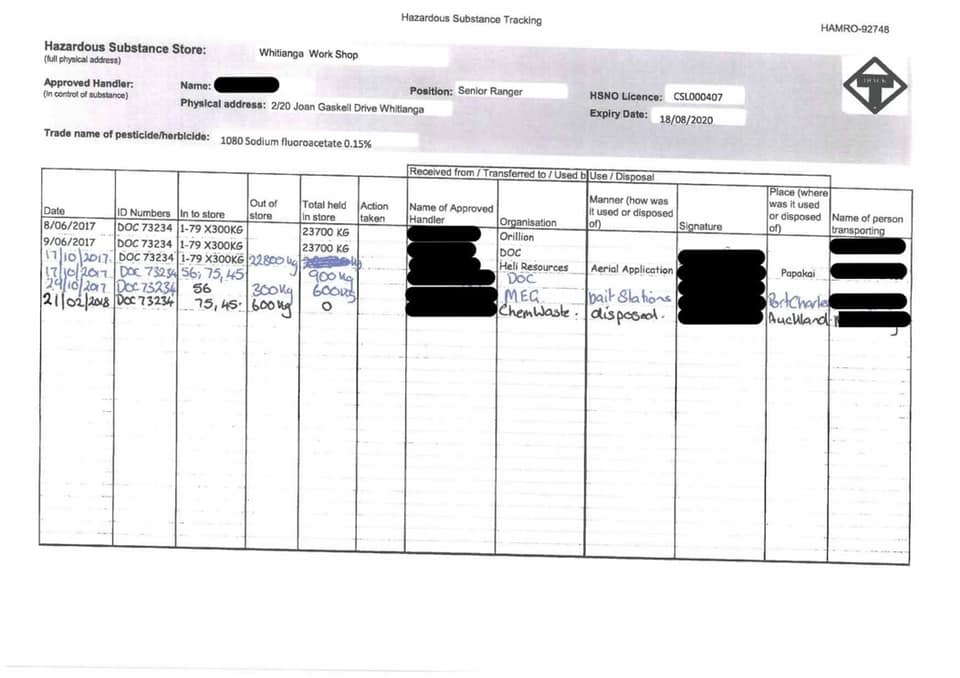
A 1080 drop in our area ( Coromandel ) last year left nearly a tonne of unused 1080 when it was finished. DOC’s hazardous substance tracking form shows us that not all of this was dumped. 300 kgs was given to a Quenton Potae, a private individual living in Kennedy Bay just over the hill. The left-over 600kgs was dumped in a landfill in Auckland.

Quenton Potae is not the only local private individual to have been given 1080 pellets in our area in the last 12 months. A group of life-style-blockers just up the road from us applied for and were given 100’s of kgs of 1080 pellets to chuck around their properties. Most of them are absentee-landowners whose annual contribution for pest control will be considerably reduced with the free 1080. The cost for those of us living downstream has been life-changing.

During the last 40 years of my life I have managed to enjoy a sub-poverty-line income by sustaining myself on wild meat. To-day my way of life is not possible. Wild meat is no longer safe to eat.

John Veysey

Coromandel “

stewart 75 kg dumped
A large quantity of 1080 found dumped on Stewart Island in 2018 (see link above)

20842288_1979981688948814_3505421277803625296_n
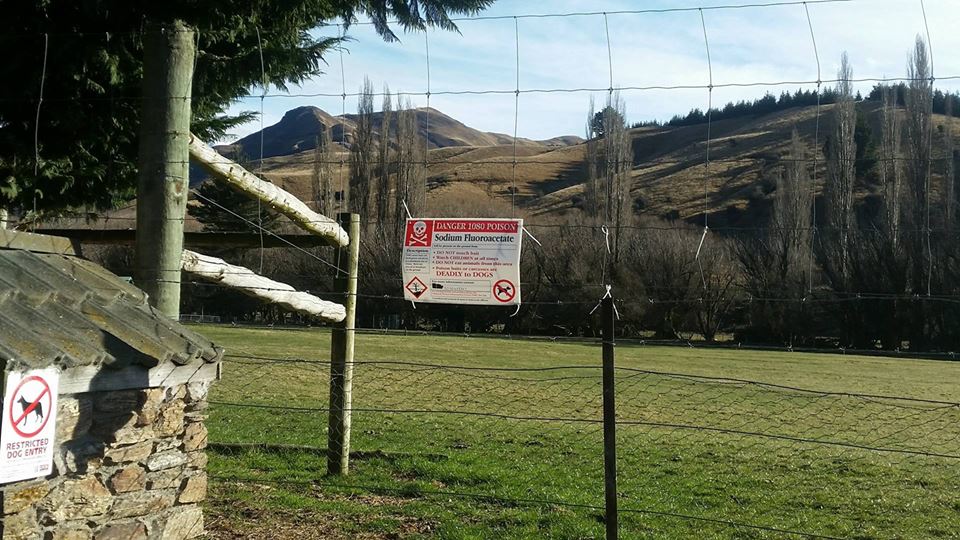
Signs like these are common in New Zealand, farmers throw 1080 around with no with-holding periods for stock grazing the paddocks which raises questions about the  presence of 1080 in our food chain  Photo Credit: Carol Sawyer (not the farm mentioned in the article)

******************************************************************

And another 66 tonnes !!

This was on FishnHunt Forum, April 1, 2017

“Dear Mr Thompson

OFFICIAL INFORMATION REQUEST

I refer to your official information request dated 22 January 2017, asking the following questions about the 2015 cancelled Makarora 1080 operation:

  1. What was the financial cost of the 1080 baits that were dumped from this abandoned operation?

DOC does periodically need to dispose of 1080 bait because it has chemically or physically broken down and therefore is no longer fit for purpose. Following the cancellation of the Makarora operation, the cost of the toxic bait disposed of in this condition was $82,334. (1)

  1. How much bait in weight was dumped from the abandoned 2015 Makarora poison operation?

Approximately 66,000 kilograms of 1080-laced bait was planned to be used for the Makarora operation…………..

  1. Where was the unused 1080 poisoned baits dumped?

(1) Bulls..t ! At $3.13 per kg the cost is $206,580 !

Disposal of toxic bait is done in accordance with the appropriate HSNO (Hazardous Substances and New Organisms) regulations using landfills consented for this purpose. The toxic bait intended for the Makarora operation was disposed to landfill in the Manawatu- Wanganui region.

53274719_151539055858004_2367444659988332544_n

53270648_151539072524669_4021671461734318080_n

https://www.facebook.com/100008110062331/posts/2312196039060709/

 EWR Note: Whilst it’s acknowledged there will be landfills that do dispose of the poisonous baits correctly and according to regulations,  can we be assured of 100% foolproof protection of our water supplies? Really? In Marton alone which had its landfill size quadrupled (or close to quintupled) in 2015, the leachate was being trucked & disposed of in the WWTP in keeping originally with a gentleman’s agreement at the time of sale by Council to a private owner. Locals noticed that the trips by the trucks to the plant were happening at night time even & far more frequently than was officially claimed, too much for the plant to cope with. See Comment Regarding Leachate Disposal at the link. The consent is to be reconsidered in March 2019 note. A google search reveals little change reported by mainstream since 2015.

*DoC’s Predator Free programme is known as “Battle for the Birds” when in fact they are killing all varieties, natives included, within the drop zones. Remember the incidence documented about the LandCare scientist’s kill estimate of 10K birds in a single aerial 1080 drop in 2002.


For further articles on 1080, use categories at left of the news page.

If you are new to the 1080 poisoning program, a must watch is Poisoning Paradise, the doco made by the GrafBoys (banned from screening on NZ TV, yet a 4x international award winner). Their website is tv-wild.com. Their doco is a very comprehensive overview with the independent science to illustrate the question marks that remain over the use of this poison. There are links also on our 1080 resources page to most of the groups, pages, sites etc that will provide you with further information to make your own informed decision on this matter.

If you are pro poisoning of the environment, EnvirowatchRangitikei is not the place to espouse your opinions. Mainstream would be the place to air those. This is a venue for sharing the independent science you won’t of course find there.

We don’t endorse violence.