Tag Archives: greenhouse

Only a few weeks until the shortest day – prepare for the new season in the garden (Wally Richards)

The year is slipping away and now there are only a few weeks till the shortest day which heralds in a new season for gardening.

While its quiet gardening wise you have ample time on those nice days to prepare for the coming season of gardening.

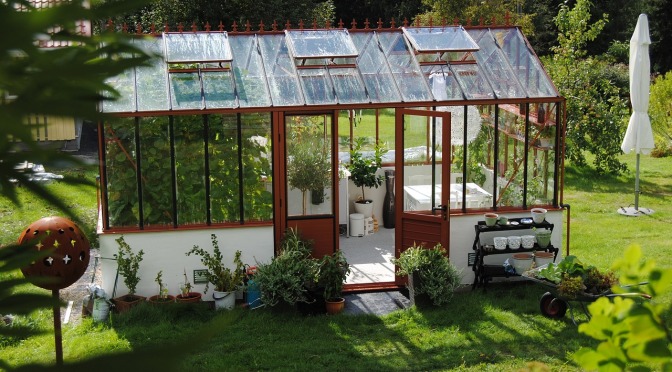
Lets start off by those that are fortunate to have a glasshouse or tunnel house and to get it ship shape and ready for growing in soon.

Likely there has been insect problems over the past season and that is very normal as a glass house provides ideal conditions for pests to breed.

You may have some plants still in there growing either coming to the end of their days or not too bad.

What I am going to suggest is a simple way of fumigating your glasshouse but in doing so the plants in there may or may not survive.

It is better to leave any plants that are coming to the end of their days inside to be fumigated and kill the pests on them rather than take them outside and then the pests can colonise your outside plants.

If you have the odd plant in a container that you do not want to lose then best take them out while you are fumigating the house.

Any plants taken out should be placed in a good light but sheltered place and spray them all over; later in the day near dusk, with Wallys Super Neem Tree Oil with Wallys Super Pyrethrum added.

Also in case of root mealy bugs in the mix sprinkle some of Wallys Neem Tree Powder onto the top of the growing medium.

This, with later watering, will fix any pests in the mix feeding on the plants roots.

Place 2-3 tablespoons of Wallys Sulphur Powder onto a heath shovel or spade sitting in the middle of the glass house on the ground. In a larger tunnel house or glasshouse you would need to have more than one sulhpur burning to give a good coverage from the fumes.

A metal plate could be used instead if preferred as long as it is metal and cant catch on fire.

Close all vents leaving the door open for you to leave once lite.

The sulphur powder is not easy to light and you need a very strong flame such as used for killing weeds.

Otherwise dampen a little of the pile of sulphur with some Methylated Spirits and light that.

A fire Starter may also be used. Once the sulphur gets burning it is very difficult to put out.

Once alight it is time for you to get out as the fumes will make it difficult to breathe and you dont want to die with the pests.

Close the door behind you and leave closed up for about 24 hours.

Then open door and vents and any plants you left in the house give them a light sprinkling with water from the hose. It may help save some on them.

After a few hours close down the vents and door as you dont want any stray pests finding their way back in.

Its a good ideal to build up a smell in the house to deter pests from entering by sprinkling Wallys Neem Tree Granules over the floor or soil.

Hang some fresh yellow sticky white fly traps in the house to catch any flying pests.

If you grow in soil in the glasshouse and have any concerns about diseases in the soil then apply Terracin to the soil as a drench and a couple of weeks later a drench with Mycorrcin.

Your glasshouse is now ready for the coming season and you can start germinating or planting seedlings after the 21st of June.

In the gardens outside keep the weeds down while they are slow to grow.

I prefer to use a sharp carving knife and slice below the crown of larger weeds in under the soil.

This leaves the rest of the roots to decompose in the soil and feed the soil life and plants.

Smaller weeds just scrape the blade of the knife over the soil and wipe them out.

Whitefly and pests on citrus trees are easy to control by placing Wallys Neem Tree Granules under the tree from trunk to drip line and in about 6-8 weeks all the pests feeding on the tree or on the roots will be gone.

There will be a lot of pests from last season harboring over in your gardens so later in the afternoon when the sun is off the plants spray Wallys Neem Super Tree oil with Wally Super Pyrethrum added over and under the leaves of plants where there was infestations earlier.

Good idea to add some Raingard and MBL to the spray as well.

If you have not done so yet spray all cold sensitive plants with Vaporgard, spray on frost protection.

Vacant vegetable gardens can be planted into a green crop.

Ones that can be used for different advantages are:

Blue Lupin – a quick growing, nitrogen fixing crop suited to cooler climates.

Barley – adds protein, nitrogen and organic matter to strengthen the soil structure.

Oats – used to combat soil erosion and to help break up hard clay soils.

Mixed grain – adds nitrogen and organic matter to the soil as well as helping to prevent wire worm.

Mustard – cleans up harmful soil fungi and provides good control of wireworm and nematodes, which often ruin root crops such as potatoes and carrots.

Mustard is a good weed suppressant suited to cooler climates but do not use this crop if you are planting cauliflower, broccoli and other brassica in the same area the next season.

It is not a good time of the year to re-pot house plants as going into a larger container may cause over watering and damage.

This time of the year small drinks of water just to moisten up the mix of potted plants indoors.

Warm water is nice for them also.

Keep warm and dry..

This week special is 3kilo bag Wallys Neem Tree Granules 25% off or $7.00 off the price of the bag

and 25% off  Wallys Sulphur powder 500 grams or $4.50 off the normal price.
Order on line at www.0800466464.co.nz and dont forget to put in remarks THIS WEEKS SPECIAL
offer end next Sunday.
I will phone you after receiving the order in regards to method of payment and shipping

Phone 0800 466464
Garden Pages and News at www.gardenews.co.nz
Shar Pei pages at  www.sharpei.co.nz
Mail Order products at www.0800466464.co.nz

New Zealand Bill of Rights Act 1990. Part II of the Act covers a broad range of Civil and Political Rights. As part of the right to life and the security of the person, the Act guarantees everyone:

1The right not to be deprived of life except in accordance with fundamental justice (Section 8)

2The right not to be subjected to torture or to cruel, degrading, or disproportionately severe treatment or punishment (Section 9)

3The right not to be subjected to medical or scientific experimentation without consent (Section 10)

4The right to refuse to undergo any medical treatment (Section 11)

 Furthermore, the New Zealand Bill of Rights Act 1990 guarantees everyone: Freedom of Thought, Conscience, and Religion.
This includes the right to freedom of thought, conscience, religion, and belief,
INCLUDING THE RIGHT TO ADOPT AND HOLD OPINIONS WITHOUT INTERFERENCE (Section 1)
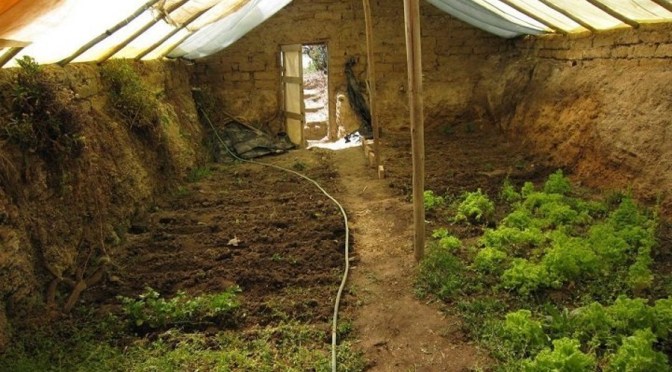
Image by Helena from Pixabay

GROW YEAR ROUND WITH AN UNDERGROUND GREENHOUSE

Excellent info thanks to The Seed Guy @ Facebook. Not an idea I’ve ever seen before. Brilliant if you wish to cover your plants. Becoming a necessity now with all the overhead spraying going on. EWR


If eating Fresh Vegetables and Fruits Year Round is important to You and Your Family, you might consider building an Underground Greenhouse. It will keep the temperatures warmer in the Winter and help prevent overheating in the Summer; making it possible to grow your garden vegetables year round.

For the vast majority of the country, 4 feet below the surface will stay between 50° to 60°F even if the weather above the ground gets to 10°F or colder. This is what they call the thermal constant, and what the Underground Greenhouse is based on.

The original design for an Underground Greenhouse was invented in Bolivia, and was called a Walipini, an Aymara Indian word which means “a warm place.” A Walipini is a rectangular shaped Greenhouse that is dug down 6-8 feet deep in the ground. The longest area of the rectangle will face towards the south (in the Northern Hemisphere) to take advantage of the most sunlight.

The design of the Underground Greenhouse isn’t that complicated, as it can be as simple as a hole with plastic sheets laid on top. The roof seals in the heat and insulates the area to keep a warm, moist environment for your fruits and vegetables.

The location of your Walipini will depend on how big you want it to be. You’ll need enough space to grow your plants and have a small area to walk into your greenhouse. The bottom of the Greenhouse will need to be at least 5 feet above the water table in your area. The recommended size for an Underground Greenhouse is 8 x 12 feet.

When planning where your Greenhouse will be located, remember that your roof will need to receive light during the winter, also. This means that you will have to make sure that trees or buildings don’t block it during the winter time when the sun is in the South. In most cases, your Underground Greenhouse should be set up East to West, with the roof facing South to take advantage of the Winter Sun.

Once it’s decided where your Underground Greenhouse will be located, you can start digging. Plot out the area above ground to keep track of where you should be digging. While you’re excavating, dig at least 2 feet deeper than your desired depth. Keep your soil close by to help prop up the roof.

The walls of your Underground Greenhouse should have a minimum 6-inch slope from the roof to the floor. This will greatly reduce the amount of crumbling and caving that will occur with the soil. You can also layer the walls with a clay to prevent erosion, or use bricks to stabilize the walls of the building.

While you’re digging the hole, dig an extra 2 feet below the desired depth. You’ll fill this area with stone or gravel and then 8 inches of soil. Ideally, you’d lay larger stones and gravel on the bottom layer and the gravel would become progressively smaller until you reach the soil.

The bottom of the greenhouse should be slightly sloped from the center to the edges. Along the perimeter, you should leave a space of 2-3 feet just filled with gravel. This is designed to help the water drain more easily. Many people have also created open gravel wells in the corners of the greenhouses that allows them to collect the water. This will allow you to draw a bucket into the hole and pull out water if you find you have too much.

Once the floor is filled in with the drainage system, and the soil required for growing, the doors can be installed. Place the door frame at the base of the ramp and fill in the areas around the door as much as possible with dirt and clay. Filling in these gaps will prevent heat loss in your greenhouse.

Many times, people will use 2-inch door frames that have holes drilled into the top middle and bottom of each side. They will then use wooden stakes, dowels or rebar to secure the door frame into the soil wall.

The angle of the roof will make a big difference on the sun’s ability to heat your greenhouse. Ideally, the roof should be facing directly at the winter solstice at a 90 angle. This angle will maximize the heat during the winter solstice and minimize the heat during the summer solstice.

Now, you can use that extra soil that you have left over to create a berm. The berm is basically an extension of the north wall of the greenhouse. This allows you to control the angle of the roof by adding or taking away dirt. Build up the berm to continue the slope that you used on the wall. If you’re using bricks – continue using them on the berm.

The most economical, durable material for your roof is 4-inch PVC pipe. Using PVC elbow pieces, joiners, etc, you can create a flat roof frame that will cover your Underground Greenhouse.

After you’ve created a PVC frame, lay it in place on the top of your hole. Then lay plastic sheeting across the top of the frame and make sure that it extends past the edge of the frame by at least 1 foot. This flap will prevent run off water from the roof from running back into the greenhouse itself.

Once the plastic material is put on top of the roof frame, move inside and tack another layer of plastic wrap along the inside of the roof frame. This internal plastic sheeting will create a 4-inch barrier between the inside and outside of the roof, and will act as an insulator that will keep the heat in more effectively.

You’ll want to make sure that you leave a few inches of plastic hanging down on the lower (south) end of your roof. This will force moisture that collects on the roof to drip off above the drainage system or on top of your plants instead of at the base of the roof. If you allow the moisture to run to the base of the roof frame, it may affect the soil at that location and break down your wall, etc.

Ventilation is always crucial. You have 3 options, such as: Installing two doors, one at each end; installing a vent roughly the size of the door at the top of the back wall; or installing a chimney at the center of the back wall. Good Luck on your Greenhouse.

If you LIKE US on our Facebook page, you will be able to see more of our great Gardening Articles, New Seed Offerings and healthy Juice Recipes. Thank you and God Bless You and Your Family.

SOURCE

The Seed Guy @ Facebook (follow The Seed Guy to purchase seeds if you’re in the US plus more great info on gardening)

https://www.facebook.com/theseedguy

Photo: The Seed Guy @ Facebook

Go here for other posts