Tag Archives: fruit_trees

DEALING WITH SUMMER PESTS IN THE GARDEN (Wally Richards)

Gardening should be a pleasant pastime and not just another chore that has to be done. If you find it a chore then maybe there are too many things you are doing and the pleasure of working with plants and the soil is lost.

There are things that we gardeners must do to keep everything growing healthy and looking good. I am always are looking for ways to do tasks quickly and simply so more time can be spent doing the gardening things that give satisfaction and gratification. Enjoyment comes from preparing an area and planting it with seeds or seedlings then watching them develop and grow for harvesting to eat or flower to enhance your home.

Summer time temperatures allow pest insects to multiply quickly and infest your plants. If their populations become too great then it is a real chore to try and get them under control. In fact it is better to start control methods as early as possible making life easier in the long term. By spreading Wallys Neem Tree Granules over the soil under trees, shrubs and established plants will greatly help reduce and prevent insect populations building up. There are soil pests that we don’t see which are feeding on the roots of plants, sapping the plant’s energy causing loss of vigor. Mealy bugs, root nematodes, grass grubs and slaters can be controlled and eliminated by scattering the Neem Granules in the plant’s root zone. Gardeners and Landscapers often comment to me that a few weeks after applying the Neem Granules the plants are looking much better. Simple reason is the pests feeding on the roots have gone and the plants are happy. Wallys Neem Granules can be used around your roses, vegetable plants and flowering annuals.

Wallys Neem Tree Powder which is the same as the granules just a smaller, even particle size are ideal to use in the planting hole of seedlings, along with sowing of seeds and in particular with carrot seeds to prevent carrot fly damage. With carrots you side dress to row when the carrot tops are a few centimeters tall as well as when sowing the seeds. Container plants are often a home for mealy bugs which feed on the roots and later come upstairs as adults to feed on the foliage.  The ones on the foliage are easy to control with Wally Super Pyrethrum but you need to place Neem Powder on top of the growing medium. As the powder breaks down it will develop grey mould which is the natural breakdown happening. It is unsightly so after applying the powder cover with a little growing medium. Out of sight, out of mind. If you want a top quality lawn then it is a good idea to sprinkle Wallys Neem Tree Powder over the lawn at a rate of 50 grams per Square Metre.  If your lawn is infected by grass grubs each year then in Autumn when the autumn rains have moistened the soil you spread the Neem powder over the lawn after it has been recently cut. Then lightly water the area to wash the powder down off the grass onto the soil. If you have a roller then its a good idea to roll the lawn to press the powder into the soil.

When you find there are pest insects on any of your plants outdoors you can make up a spray using Wallys Super Neem Tree Oil with Wallys Super Pyrethrum added. Just on dusk when the bees have stopped working for the day you spray the plants under and over the foliage.  The pyrethrum is a quick knock down and it will kill the flying insects such as white fly and leaf hoppers. The Neem Oil will, as an anti-feedent on the foliage, stop the pests feeding on the plants after which they will starve to death in a few days. Often gardeners find that the sprays work, but it is only a short time before the insect pests are back. The reason being is they are on other plants in the area and re-infesting back onto your treated plants. You need to spray the other plants they are coming from. If those plants happen to be over the fence then that is a problem that can only be solved with winter or you getting the ok from the neighbor (who likely is not a gardener) to spray their plants as well.

Gardeners that live in the country and have possums, rabbits and hares to contend with can do the following: plants that are been eaten spray with Wallys Neem Tree Oil just before dark. Wallys Neem Tree oil being the real thing and not some vegetable oil with the Neem properties added, has a horrible taste which with its smell will deter possums and rabbits. Once you find that the varmints have stopped eating your plants then instead of having to respray to keep control and keep them away, simply scatter Wally Neem Tree Granules around and the smell of them should keep your plants safe. A point when using the spray mix of Wallys Neem Oil and Pyrethrum and you have unused spray then you can pour the left over liquid into a container and store in a dark cupboard. Rinse the sprayer out thoroughly jetting some clean water through the nozzle to be sure all the spray has gone. Next time you use you can take the stored spray and if need be add more of the products and water.

To look after the soil and the beneficial microbes plus fungi that live in the soil which help our plants feed and grow, mix Wallys Super Fish Fertiliser with Wallys Mycorrcin in a watering can and water the area around or over your preferred plants such as vegetables, fruit and roses. This will help to greatly increase the soil life (as long as you are not watering with chlorinated tap water). Here is an interesting possibility: as the combination of the fish fertiliser and Mycorrcin has a distinct smell you could try spraying the mix over fruit trees when the birds are attacking the fruit. A product that used to be available years ago from Canada called Alaska Fish Fertiliser which had quite a smell to it did deter birds from ripening fruit. If you find it successful let me know.

TWENTY FIVE PERCENT OFF SALE

Till the end of January we are discounting the following products by 25% to help you gain control of Insect pests and improve your soil quality.

Orders must be placed on www.0800466464.co.nz using the Code 25% in the remarks place.

I will phone you after receiving the order and deduct the 25% off the items below and also give you 10% off most other items except for bulk items.

FREIGHT: shipping charged on orders under $100 (After discounts) North Island In other words order of $100 plus after discount and not bulk items free shipping.

South Island $150.00 plus after discounts for free shipping.

Exception is for Rural delivery a charge of $3.15 on each parcel sent no matter if rest is free shipping or not.

Here are the 25% discount items:

Wallys Neem Tree Granules 1kg normal price $15.00 save $3.75 making it $11.25

Wallys Neem Tree Granules 3kg normal price $28.00 save $7.00 making it $21.00

Wallys Neem Tree Granules 10kg normal price $80.00 save $20.00 making it $60.00

Wallys Neem Tree Granules 20kg normal price $160.00 save $40.00 making it $120.00

Wallys Neem Tree Powder 1kg normal price $15.00 save $3.75 making it $11.25

Wallys Neem Tree Powder 3kg normal price $28.00 save $7.00 making it $21.00

Wallys Neem Tree Powder 10kg normal price $80.00 save $20.00 making it $60.00

Wallys Neem Tree Powder 20kg normal price $160.00 save $40.00 making it $120.00


Wallys Super Neem Tree oil 125 ml normal price $18.00 save $4.50 making it $13.50

Wallys Super Neem Tree oil 250 ml normal price $24.00 save $6.00 making it $18.00

Wallys Super Neem Tree oil 1 litre normal price $60.00 save $15.00 making it $45.00


Wallys Super Pyrethrum 100 ml normal price $28.00 save $4.20 making it $23.80


Wallys Super Fish Fertiliser 1Litre normal price $16.00 save $4.00 making it $12.00

Wallys Mycorrcin 250ml normal price $20.00 save $5.00 making it $15.00

Wallys Mycorrcin 500ml normal price $35.00 save $8.75 making it $26.25

Wallys Mycorrcin 1 Litre normal price $55.00 save $13.75 making it $41.25

Orders must be placed on www.0800466464.co.nz using the Code 25% in the remarks place.

Phone 0800 466464
Garden Pages and News at www.gardenews.co.nz
Shar Pei pages at  www.sharpei.co.nz
Mail Order products at www.0800466464.co.nz

New Zealand Bill of Rights Act 1990. Part II of the Act covers a broad range of Civil and Political Rights. As part of the right to life and the security of the person, the Act guarantees everyone:

1The right not to be deprived of life except in accordance with fundamental justice (Section 8)

2The right not to be subjected to torture or to cruel, degrading, or disproportionately severe treatment or punishment (Section 9)

3The right not to be subjected to medical or scientific experimentation without consent (Section 10)

4The right to refuse to undergo any medical treatment (Section 11)

 Furthermore, the New Zealand Bill of Rights Act 1990 guarantees everyone: Freedom of Thought, Conscience, and Religion.
This includes the right to freedom of thought, conscience, religion, and belief,
INCLUDING THE RIGHT TO ADOPT AND HOLD OPINIONS WITHOUT INTERFERENCE (Section 1)

For other gardening posts see ‘gardening’ in categories (left side of page)

Check out our sister site truthwatchnz.is for other news

Photo: pixabay.com
DEALING WITH CODLIN, GUAVA MOTHS and ARMY WORM IN YOUR GARDEN (Wally Richards)

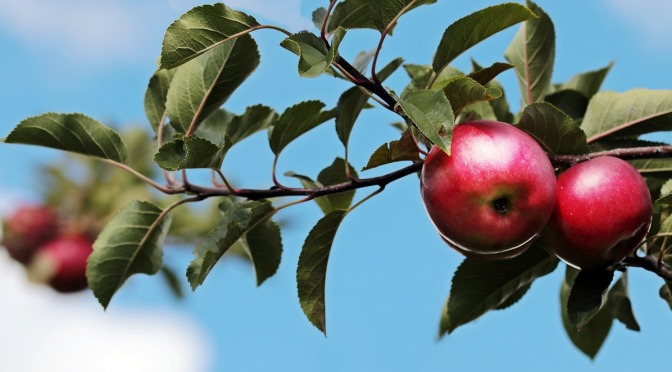
It is that time when fruit is setting and soon to be attacked from the grubs of moths; Codlin and Guava.

Guava moth is mostly in the upper north island but there has been a few cases in other areas likely as a result of fruit been brought south from infected areas.

So share with family and friends as there is nothing worse than losing your crop to these two pests.

There are two moths in New Zealand that attack fruit namely, Codlin Moth which have apples, pears and walnuts as their host fruit. Guava Moth which has ALL fruit and nuts as their host.

The Codlin Moth is seasonal active while there is fruit on their host plants but the Guava Moth is all year around going from one host tree to another including citrus.

Both are relatively easy to control so that you can obtain a reasonable amount of your crop as long as you follow my proven advice. Firstly let us understand how these two pests operate.

Being moths they only fly at night and they find their host tree by the smell of the forming and ripening fruit. So if they cannot smell your tree/fruit they will fly on by to a tree they can smell.

This is the first step in reducing the damage to your fruit by disguising the smell of the tree/fruit.

To do this you need an overriding smell that negates the smell of the tree’s fruit.

Wallys Neem Tree Granules scattered on the ground underneath the tree from the trunk to the drip line.

Then by making some little bags out of curtain netting we hang more of Wallys Neem Tree Granules in the tree on the lower branches about head high at the four cardinal points.

So we use the Wallys Neem Tree Granules as described after flowering and when the fruit has formed to a reasonable size. One application then is all that is needed for each crop to disguise the fruit as the granules last over 2 months, slowly breaking down..

The next step in control is to prevent any grubs that hatch out near your fruit from eating their way into the fruit. Once a grub enters the fruit you have lost the battle cause even if you use a poisonous systemic insecticide to kill it?

What is the point as its going to die inside the fruit and be useless.

No you need a non toxic substance on the outside of the fruit that is going to prevent the grub from eating its way in.

Wallys Super Neem Tree oil with Raingard is the perfect answer.

You spray the fruit, not the tree so there is a coating of Wallys Neem Tree Oil on the skin of the fruit protected from washing off in rain with Wallys Raingard (lasts for 14 days before reapplying.)

The Neem Oil is an anti-feedent which means when the young grub takes its first bite it will get some Neem Oil in its gut and will never eat again starving to death fairly quickly been so young.

On your mature fruit you will have a little pin pricked scar that where it took its one and only bite.

So all you do is just spray the maturing fruit every 14 days that are relatively easy to reach and spray.

Fruit that are more difficult to spray will likely be eaten by birds later on anyway and as long as you are getting a nice amount of fruit to harvest that is all that really matters.

Then there is also another way to control moth problem by which you set up a moth lure to attract them and kill them.

Take one litre of hot water add a100 grams of sugar, one teaspoon of marmite, half a tablespoon of Cloudy Ammonia and half a tablespoon of Vanilla:

Mix well and divide the mix between two plastic milk or soft drink bottles.

Punch some holes in the side of the bottles just above the level of the mix.

Place on a stand about a couple of metres away from the tree.

At about waist height like on a small folding table.

When a number of moths are caught dispose of them and make up a new solution.

Cloudy Ammonia used to be common once upon a time from a grocery store if not so easy to find try hardware stores, there are two chains in NZ and they may have it.

If you do all three procedures for control or at least the first two then you should be able to once again enjoy your own fruit.

The Codlin Moth traps are useful as if you monitor them they trap the male codlin moths which tells you it is the time to start using the Wally Super Neem Tree Oil spray on your apples etc.

If after a month you find no new male moths in the trap you can stop spraying as it is all over for the season. (That is unless you have Guava moths in your region).

Guava moth pheromone traps are a waste of time because they are all year round so there is no time to start or stop control sprays as with the Codlin Moth………..

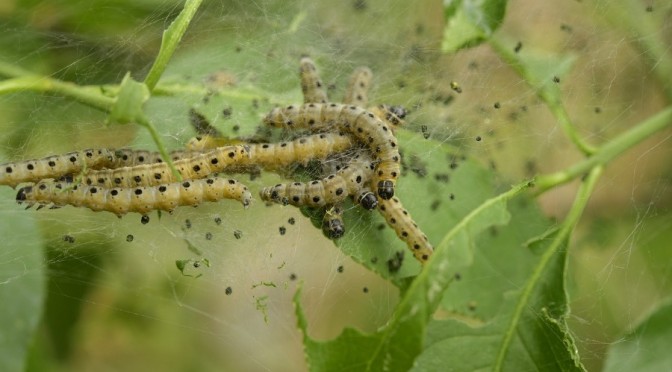
Army worms are the caterpillars of the  Fall Army worm Moth and these hungry little pests can devastate crops of vegetables and lawns.

Some of the methods mentioned above such as disguising the smell of your vegetable by using Wally Neem Tree Granules would likely help.

The liquid trap may also help catch a few of the moths.

My thoughts are to set up a Insect Killer trap safely outside (it is powered by 230 volts) so must be sheltered from rain.

The UV light shining out over your back yard will attract night flying insects and they will be electrocuted on the high voltage static electricity on the grid.

Same thing that used to be in old butcher shops for flies, nowadays there are smaller modern ones.

Also called a Bug Zapper.

Regular sprays of your lawn and plants that the army worm is devouring using Wallys Super Neem Tree Oil with Raingard added should also help control them.

Phone 0800 466464
Garden Pages and News at www.gardenews.co.nz
Shar Pei pages at  www.sharpei.co.nz
Mail Order products at www.0800466464.co.nz


New Zealand Bill of Rights Act 1990. Part II of the Act covers a broad range of Civil and Political Rights. As part of the right to life and the security of the person, the Act guarantees everyone:

1The right not to be deprived of life except in accordance with fundamental justice (Section 8)

2The right not to be subjected to torture or to cruel, degrading, or disproportionately severe treatment or punishment (Section 9)

3The right not to be subjected to medical or scientific experimentation without consent (Section 10)

4The right to refuse to undergo any medical treatment (Section 11)

 Furthermore, the New Zealand Bill of Rights Act 1990 guarantees everyone: Freedom of Thought, Conscience, and Religion.
This includes the right to freedom of thought, conscience, religion, and belief,
INCLUDING THE RIGHT TO ADOPT AND HOLD OPINIONS WITHOUT INTERFERENCE (Section 1)

Image by NoName_13 from Pixabay

Pollination in your garden (Wally Richards)

Most plants flower to produce seeds so their line will continue through their off spring.

When it comes to our gardening efforts we want plants such as tomatoes, zucchini and pumpkins to produce fruit which in every case contain the seeds for the next generation of those plants.

When pollination does not happen then the fruit will only develop a little and then rot.

Pollination is the act of transferring pollen grains from the male anther of a flower to the female stigma.

The goal of every living organism, including plants, is to create offspring for the next generation. One of the ways that plants can produce offspring is by making seeds.

Every year I receive enquiries about what is wrong with my zucchini/pumpkin/melon/cucumber?

They flower and the fruit appears and then it goes yellow and rots?

The reason is that the female stigma did not receive a few grains of pollen from the male flower anther.

When it comes to the likes of pumpkins, melons and zucchini I always hand pollinate to be sure of a fruit set.

Best done in the morning where you check your plants for female flowers.

That is the flower that has the embryo fruit behind the petals.

When you find one or more then you look for a young male flower (which does not have the embryo fruit) but has anther that is covered with pollen.

I prefer to pick the male flower and remove the petals exposing the anther.

Then I rub the anther against the stigma and thus pollinating it and setting the fruit.

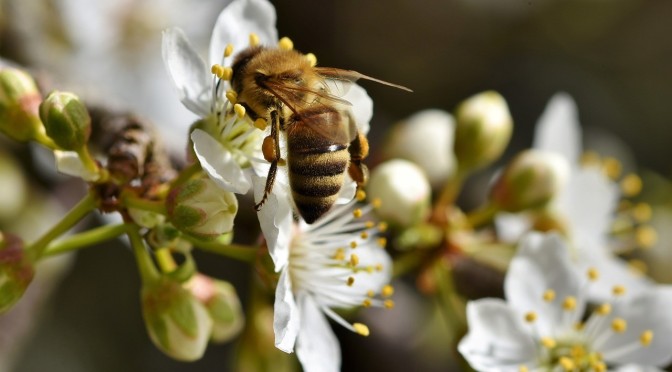
Bees, bumble bees and some other flying insects may do this for you as there is a little nectar that the flowers produce to encourage the flying insects to visit and move pollen from flower to flower.

Now things don’t always work as you would like them to work and sometimes a fruiting plant does not produce any flowers.

This can happen if the plant does not get enough direct sunlight, there is not sufficient energy to produce flowers,

It can also happen if the plant is well fed and well watered instead of flowering it will vegetate producing lots of new foliage minus any flowers.

I call them Fat Cats, well fed and very lazy.

If this is the case with any Curcubitaceae family member which is a large family that includes melons, cucumbers, zucchini and squashes you can take male pollen from say a pumpkin flower and fertilize a female zucchini flower to set the fruit.

It could also mean that there is a lack of potash so it pays to sprinkle some Wally’s Fruit and Flower Power onto the soil at the time flowering should start.

Then we have Self-pollinating, self-fertile and self-fruitful all mean the same thing.

You can plant a self-fertile tree and expect it to pollinate itself and set fruit alone (for example, peaches, pie cherries, apricots).

Self-fertilization, fusion of male and female gametes (sex cells) produced by the same individual.

Self-fertilization occurs in bisexual organisms, including most flowering plants, numerous protozoans, and many invertebrates.

Tomatoes are not pollinated by bees instead it is air movement on a sunny day that will do the job.

In a glasshouse or even outdoors its a good idea in the middle of a sunny day give the plants a gentle shake to set the fruit.

To grow tomatoes in the cooler months or though winter you need types that will produce pollen in the colder times to have fruit set. Summer growing tomatoes will survive with protect but may not produce fruit.

Winter ones are Russian Red and Sub Arctic Plenty (from Kings Seeds) World’s earliest tomato. Bred for the U.S. Greenland military bases to endure extremely cold climates.

Producing concentrated clusters of medium, good flavored, red fruit that ripen almost simultaneously. A very small plant with compact habit so excellent for anyone interested in growing in pots. Determinate.

Blossom end Rot on tomatoes is the dark patch under the fruit that is the result of lack of moisture to move the calcium at fruit set time.

The fruit sets but the bottom has the dark patch.

After picking the bottom part can be cut off and the rest of the tomato eaten.

If not done the whole tomato will rot on vine or in a container after picking.

Tomatoes grown in containers are prone to this problem as they dry out quickly in hot weather and need watering like two or three times a day. Alarge saucer under the container that is full of water will help.

Corn is another one that depends on lots of sun and a bit of a breeze to move the pollen from the male stalks at the top down onto the ‘silks’ of the female cobs.

Planting lots of sweet corn plants near but not too close to each other will help.

On a still sunny day you can shale the plants to allow the pollen to drift down onto the silks.

Corn varieties will easy cross pollinate if grown near to each other so keep your pop corn, ornamental corn and maize types well away from your sweet corn.

To sum up with fruiting vegetables and fruit we want them to be pollinated and set fruit for our food chain.

But in our flower garden the reverse applies we don’t want the flowers to be pollinated because once that happens the petals fall off and a seed pod forms.

If like on lilies you were to carefully cut off the male anthers to prevent pollination then your flowers would last a lot longer.

Once the flowers on a plant have set then if you cut them off the plant (we call it dead heading) then the plant is likely to produce more flowers as it wants to produce seeds.

We do that with roses to encourage a second flush and not only do we cut off the dead flower and rose hip (that is the seed pod) we cut back the stem a little to encourage new growth which can also produce new flowers.

Some gardeners use a small soft brush to collect pollen from male flowers to Fertilise the females and that is a nice way of achieving fruit set.

Fruit trees that flower but produce no mature fruit because of a lack of pollinators such as honey bees or bumble bees it pays to use a brush between some of the flowers on a sunny day to set some fruit on the lower branches.

Idea of planting flowering plants to attract honey bees may bring then to your bee loving plants but not to your fruit tree as bees are selective and generally speaking will work one type of flower only at any given time.

Bumble Bees are not so discrmitant and will work several different types of flowers as available.

Figs are very different: The crunchy little things that you notice when eating a fig are the seeds, each corresponding to one flower. Such a unique flower requires a unique pollinator. All fig trees are pollinated by very small wasps of the family Agaonidae.

The pollinators of fig tree flowers are tiny gall wasps belonging to several genera of the hymenopteran family Agaonidae. Gravid female gall wasps enter a developing syconium through a minute pore (the ostiole) at the end opposite the stem)

The wasp is long gone by the time the fig crosses your lips. Figs produce a chemical called “ficin” that breaks down the wasp bodies.

Nature is so resourceful.


Phone 0800 466464
Garden Pages and News at http://www.gardenews.co.nz
Shar Pei pages at http://www.sharpei.co.nz
Mail Order products at http://www.0800466464.co.nz

New Zealand Bill of Rights Act 1990. Part II of the Act covers a broad range of Civil and Political Rights. As part of the right to life and the security of the person, the Act guarantees everyone:

1The right not to be deprived of life except in accordance with fundamental justice (Section 8)

2The right not to be subjected to torture or to cruel, degrading, or disproportionately severe treatment or punishment (Section 9)

3The right not to be subjected to medical or scientific experimentation without consent (Section 10)

4The right to refuse to undergo any medical treatment (Section 11)

Furthermore, the New Zealand Bill of Rights Act 1990 guarantees everyone: Freedom of Thought, Conscience, and Religion.
This includes the right to freedom of thought, conscience, religion, and belief,
INCLUDING THE RIGHT TO ADOPT AND HOLD OPINIONS WITHOUT INTERFERENCE (Section 1)

Photo: pixabay.com

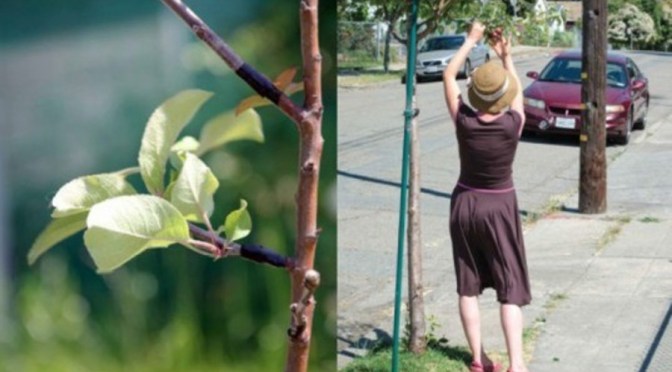
Heard about the “Guerilla Grafters”?

A group of food freedom fighters are sneaking out in the middle of the night (and sometimes in broad daylight) grafting fruit-producing limbs onto sterile urban trees, specifically bred not to bear fruit.

Known as the “Guerilla Grafters,” their mission is to provide free, healthy food where it’s needed most – urban food deserts.

Ever wonder why none of the trees in big cities produce anything useful, like nuts or fruit? According to the Guerilla Grafters, it’s because they are intentionally bred not to.

City planners specifically select sterile varieties of many common fruit trees (apples, pears, plums, cherries) because of their beauty to decorate their streets.

READ MORE

https://returntonow.net/2020/05/30/guerilla-grafters-secretly-graft-fruit-bearing-branches-onto-sterile-city-trees/?fbclid=IwAR3YCYSz_9_sx9hYDJY5AciuHFJ7nK3u-5lnBUqxvYwDdCNRiA8GYyCGTJw

Photo: returntonow.net

Note: all of our CV related info is now published at https://truthwatchnz.is/