Tag Archives: flowers

Pollinating your plants (Wally Richards)

I wrote an article on pollination and published in February this year as a number of gardeners were concerned that fruit was not setting and in particular zucchini and pumpkins and now we have a new season in front of us it would be a good time to repeat the subject.

Besides there are a lot more new subscribers to my weekly email due I think to the gardening sessions I do with Rodney Hide on Radio Reality Check through the Internet. https://realitycheck.radio/

So here we go……..

Most plants flower to produce seeds so their line will continue through their off-spring.

When it comes to our gardening efforts we want plants such as tomatoes, zucchini and pumpkins to produce fruit which in every case contain the seeds for the next generation of those plants.

When pollination does not happen then the fruit will only develop a little and then rot.

Pollination is the act of transferring pollen grains from the male anther of a flower to the female stigma.

The goal of every living organism, including plants, is to create offspring for the next generation.

One of the ways that plants can produce offspring is by making seeds.

Every year I receive enquiries about what is wrong with my zucchini/pumpkin/melon/cucumber?

They flower and the fruit appears and then it goes yellow and rots?

The reason is that the female stigma did not receive a few grains of pollen from the male flower anther.

When it comes to the likes of pumpkins, melons and zucchini I always hand pollinate to be sure of a fruit set.

Best done in the morning where you check your plants for female flowers.

That is the flower that has the embryo fruit behind the petals.

When you find one or more then you look for a young male flower (which does not have the embryo fruit) but has anther that is covered with pollen.

I prefer to pick the male flower and remove the petals exposing the anther.

Then I rub the anther against the stigma and thus pollinating it and setting the fruit.

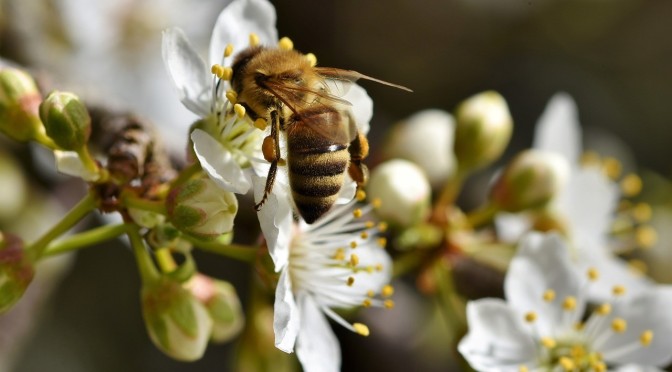
Bees, bumble bees and some other flying insects may do this for you as there is a little nectar that the flowers produce to encourage the flying insects to visit and move pollen from flower to flower.

Now things don’t always work as you would like them to work and sometimes a fruiting plant does not produce any flowers.

This can happen if the plant does not get enough direct sunlight, there is not sufficient energy to produce flowers.

It can also happen if the plant is well feed and well watered instead of flowering it will vegetate producing lots of new foliage minus any flowers.

I call them Fat Cats, well feed and very lazy.

It could also mean that there is a lack of potash so it pays to sprinkle some Wallys Fruit and Flower Power onto the soil at the time flowering should start.

NOTE This… any Curcubitaceae family member which is a large family that includes melons, cucumbers, zucchini and squashes you can take male pollen from say a pumpkin flower and fertilize a female zucchini flower to set the fruit.

Then we have Self-pollinating, self-fertile and self-fruitful all mean the same thing.

You can plant a self-fertile tree and expect it to pollinate itself and set fruit alone (for example, peaches, cherries, apricots).

Self-fertilization, fusion of male and female gametes (sex cells) produced by the same individual.

Self-fertilization occurs in bisexual organisms, including most flowering plants, numerous protozoans, and many invertebrates.

Tomatoes are not pollinated by bees instead it is air movement on a sunny day that will do the job.

In a glasshouse or even outdoors its a good idea in the middle of a sunny day give the plants a gentle shake to set the fruit.

To grow tomatoes in the cooler months or though winter you need types that will produce pollen in the colder times to have fruit set.

Summer growing tomatoes will survive with protection but may not produce fruit.

Winter ones are Russian Red and Sub Arctic Plenty (from Kings Seeds) World’s earliest tomato.

Bred for the U.S. Greenland military bases to endure extremely cold climates.

 Producing concentrated clusters of medium, good flavored, red fruit that ripen almost simultaneously.

A very small plant with compact habit so excellent for anyone interested in growing in pots. Determinate.

Blossom end Rot on tomatoes is the dark patch under the fruit that is the result of lack of moisture to move the calcium at fruit set time.

The fruit sets but the bottom has the dark patch.

After picking the bottom part can be cut off and the rest of the tomato eaten.

If not done the whole tomato will rot on vine or in a container after picking.

Tomatoes grown in containers are prone to this problem as they dry out quickly in hot weather and need watering like two or three times a day.

A large saucer under the container that is full of water will help.

Corn is another one that depends on lots of sun and a bit of a breeze to move the pollen from the male stalks at the top down onto the ‘silks’ of the female cobs.

Planting lots of sweet corn plants in groups but not too close to each other will help.

On a still sunny day you can shake the plants to allow the pollen to drift down onto the silks.

Corn varieties will easily cross pollinate if grown near to each other so keep your pop corn, ornamental corn and maize types well away from your sweet corn.

To sum up with fruiting vegetables and fruit we want them to be pollinated and set fruit for our food chain.

But in our flower garden the reverse applies we don’t want the flowers to be pollinated because once that happens the petals fall off and a seed pod forms.

If like on lilies, you were to carefully cut off the male anthers to prevent pollination then your flowers would last a lot longer.

Once the flowers on a plant have set then if you cut them off the plant (we call it dead heading) then the plant is likely to produce more flowers as it wants to produce seeds.

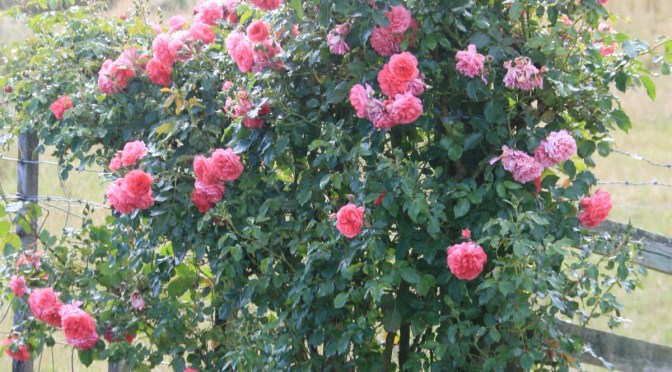
We do that with roses to encourage a second flush and not only do we cut off the dead flowers and the rose hips (that’s the seed pod) we cut back the stem a little to encourage new growth which can also produce new flowers.

Some gardeners use a small soft brush to collect pollen from male flowers to fertilise the females and that is a nice way of achieving fruit set.

Fruit trees that flower but produce no mature fruit maybe because of a lack of pollinators such as honey bees or bumble bees it pays to use a brush between some of the flowers on a sunny day to set some fruit on the lower branches.

Idea of planting flowering plants to attract honey bees may bring then to your bee loving plants but not to your fruit tree as bees are selective and generally speaking will work one type of flower only at any given time.

Bumble Bees are not so selective and will work several different types of flowers as available.

Figs are very different: The crunchy little things that you notice when eating a fig are the seeds, each corresponding to one flower.

Such a unique flower requires a unique pollinator. All fig trees are pollinated by very small wasps of the family Agaonidae.

The pollinators of fig tree flowers are tiny gall wasps belonging to several genera of the hymenopteran family Agaonidae.

Gravid female gall wasps enter a developing syconium through a minute pore (the ostiole) at the end, opposite the stem.

The wasp is long gone by the time the fig crosses your lips. Figs produce a chemical called “ficin” that breaks down the wasp bodies.

Nature is so resourceful.

Phone 0800 466464
Garden Pages and News at www.gardenews.co.nz
Shar Pei pages at  www.sharpei.co.nz
Mail Order products at www.0800466464.co.nz

New Zealand Bill of Rights Act 1990. Part II of the Act covers a broad range of Civil and Political Rights. As part of the right to life and the security of the person, the Act guarantees everyone:

1The right not to be deprived of life except in accordance with fundamental justice (Section 8)

2The right not to be subjected to torture or to cruel, degrading, or disproportionately severe treatment or punishment (Section 9)

3The right not to be subjected to medical or scientific experimentation without consent (Section 10)

4The right to refuse to undergo any medical treatment (Section 11)

 Furthermore, the New Zealand Bill of Rights Act 1990 guarantees everyone: Freedom of Thought, Conscience, and Religion.
This includes the right to freedom of thought, conscience, religion, and belief,
INCLUDING THE RIGHT TO ADOPT AND HOLD OPINIONS WITHOUT INTERFERENCE (Section 1)
Pollination in your garden (Wally Richards)

Most plants flower to produce seeds so their line will continue through their off spring.

When it comes to our gardening efforts we want plants such as tomatoes, zucchini and pumpkins to produce fruit which in every case contain the seeds for the next generation of those plants.

When pollination does not happen then the fruit will only develop a little and then rot.

Pollination is the act of transferring pollen grains from the male anther of a flower to the female stigma.

The goal of every living organism, including plants, is to create offspring for the next generation. One of the ways that plants can produce offspring is by making seeds.

Every year I receive enquiries about what is wrong with my zucchini/pumpkin/melon/cucumber?

They flower and the fruit appears and then it goes yellow and rots?

The reason is that the female stigma did not receive a few grains of pollen from the male flower anther.

When it comes to the likes of pumpkins, melons and zucchini I always hand pollinate to be sure of a fruit set.

Best done in the morning where you check your plants for female flowers.

That is the flower that has the embryo fruit behind the petals.

When you find one or more then you look for a young male flower (which does not have the embryo fruit) but has anther that is covered with pollen.

I prefer to pick the male flower and remove the petals exposing the anther.

Then I rub the anther against the stigma and thus pollinating it and setting the fruit.

Bees, bumble bees and some other flying insects may do this for you as there is a little nectar that the flowers produce to encourage the flying insects to visit and move pollen from flower to flower.

Now things don’t always work as you would like them to work and sometimes a fruiting plant does not produce any flowers.

This can happen if the plant does not get enough direct sunlight, there is not sufficient energy to produce flowers,

It can also happen if the plant is well fed and well watered instead of flowering it will vegetate producing lots of new foliage minus any flowers.

I call them Fat Cats, well fed and very lazy.

If this is the case with any Curcubitaceae family member which is a large family that includes melons, cucumbers, zucchini and squashes you can take male pollen from say a pumpkin flower and fertilize a female zucchini flower to set the fruit.

It could also mean that there is a lack of potash so it pays to sprinkle some Wally’s Fruit and Flower Power onto the soil at the time flowering should start.

Then we have Self-pollinating, self-fertile and self-fruitful all mean the same thing.

You can plant a self-fertile tree and expect it to pollinate itself and set fruit alone (for example, peaches, pie cherries, apricots).

Self-fertilization, fusion of male and female gametes (sex cells) produced by the same individual.

Self-fertilization occurs in bisexual organisms, including most flowering plants, numerous protozoans, and many invertebrates.

Tomatoes are not pollinated by bees instead it is air movement on a sunny day that will do the job.

In a glasshouse or even outdoors its a good idea in the middle of a sunny day give the plants a gentle shake to set the fruit.

To grow tomatoes in the cooler months or though winter you need types that will produce pollen in the colder times to have fruit set. Summer growing tomatoes will survive with protect but may not produce fruit.

Winter ones are Russian Red and Sub Arctic Plenty (from Kings Seeds) World’s earliest tomato. Bred for the U.S. Greenland military bases to endure extremely cold climates.

Producing concentrated clusters of medium, good flavored, red fruit that ripen almost simultaneously. A very small plant with compact habit so excellent for anyone interested in growing in pots. Determinate.

Blossom end Rot on tomatoes is the dark patch under the fruit that is the result of lack of moisture to move the calcium at fruit set time.

The fruit sets but the bottom has the dark patch.

After picking the bottom part can be cut off and the rest of the tomato eaten.

If not done the whole tomato will rot on vine or in a container after picking.

Tomatoes grown in containers are prone to this problem as they dry out quickly in hot weather and need watering like two or three times a day. Alarge saucer under the container that is full of water will help.

Corn is another one that depends on lots of sun and a bit of a breeze to move the pollen from the male stalks at the top down onto the ‘silks’ of the female cobs.

Planting lots of sweet corn plants near but not too close to each other will help.

On a still sunny day you can shale the plants to allow the pollen to drift down onto the silks.

Corn varieties will easy cross pollinate if grown near to each other so keep your pop corn, ornamental corn and maize types well away from your sweet corn.

To sum up with fruiting vegetables and fruit we want them to be pollinated and set fruit for our food chain.

But in our flower garden the reverse applies we don’t want the flowers to be pollinated because once that happens the petals fall off and a seed pod forms.

If like on lilies you were to carefully cut off the male anthers to prevent pollination then your flowers would last a lot longer.

Once the flowers on a plant have set then if you cut them off the plant (we call it dead heading) then the plant is likely to produce more flowers as it wants to produce seeds.

We do that with roses to encourage a second flush and not only do we cut off the dead flower and rose hip (that is the seed pod) we cut back the stem a little to encourage new growth which can also produce new flowers.

Some gardeners use a small soft brush to collect pollen from male flowers to Fertilise the females and that is a nice way of achieving fruit set.

Fruit trees that flower but produce no mature fruit because of a lack of pollinators such as honey bees or bumble bees it pays to use a brush between some of the flowers on a sunny day to set some fruit on the lower branches.

Idea of planting flowering plants to attract honey bees may bring then to your bee loving plants but not to your fruit tree as bees are selective and generally speaking will work one type of flower only at any given time.

Bumble Bees are not so discrmitant and will work several different types of flowers as available.

Figs are very different: The crunchy little things that you notice when eating a fig are the seeds, each corresponding to one flower. Such a unique flower requires a unique pollinator. All fig trees are pollinated by very small wasps of the family Agaonidae.

The pollinators of fig tree flowers are tiny gall wasps belonging to several genera of the hymenopteran family Agaonidae. Gravid female gall wasps enter a developing syconium through a minute pore (the ostiole) at the end opposite the stem)

The wasp is long gone by the time the fig crosses your lips. Figs produce a chemical called “ficin” that breaks down the wasp bodies.

Nature is so resourceful.


Phone 0800 466464
Garden Pages and News at http://www.gardenews.co.nz
Shar Pei pages at http://www.sharpei.co.nz
Mail Order products at http://www.0800466464.co.nz

New Zealand Bill of Rights Act 1990. Part II of the Act covers a broad range of Civil and Political Rights. As part of the right to life and the security of the person, the Act guarantees everyone:

1The right not to be deprived of life except in accordance with fundamental justice (Section 8)

2The right not to be subjected to torture or to cruel, degrading, or disproportionately severe treatment or punishment (Section 9)

3The right not to be subjected to medical or scientific experimentation without consent (Section 10)

4The right to refuse to undergo any medical treatment (Section 11)

Furthermore, the New Zealand Bill of Rights Act 1990 guarantees everyone: Freedom of Thought, Conscience, and Religion.
This includes the right to freedom of thought, conscience, religion, and belief,
INCLUDING THE RIGHT TO ADOPT AND HOLD OPINIONS WITHOUT INTERFERENCE (Section 1)

Photo: pixabay.com

Spring in the garden: things we might miss or forget (Wally Richards)

It is an very interesting spring and start to the new season.

Most of us are saying where is spring? It is already into October and not much springy in the air.

Mind you before the Polar Blast that had us adding another layer of clothes and lighting the fire we did have some not too bad days.

Hopefully those mild days were sufficient to bring some of the pests out of their winter hiding places to be stuck dead by the cold blast.

If in spring we have an early start with sunny days and warm temperatures, then it turns to custard with a few days of bitter cold then all the pests that came out will shiver to death and our pest problem will be significantly reduced.

It then will be into the new year before their numbers multiply and cause problems.

It is now not long before Labour Weekend arrives and that is the New Zealand Traditional time for planting out the tender plants such a tomatoes and Impatiens.

More tender plants such as cucumbers should not be planted till the weather really settles otherwise they just sit there and sulk.

If you do early plantings of non-hardy plants then only do a couple or so and then two to three weeks later another little planting.

Follow that pattern and you cant go wrong.

It is a timely reminder to check grafted fruit trees, ornamentals and roses.

Grafted means they are growing on a similar family plant’s root stock.

This is done for several reasons such as preventing suckering, giving what is supposed to be a better plant such as High Health in Roses and also to determine the end result size of the tree.

The root stock can and often does start producing foliage and if that is allowed to grow then the energy from the roots is grabbed by the root stock’s development and likely at some time the tree that is grafted onto the root stock will fail and die.

Normally it is fairly easy to see the union where the tree is

connected to the root stock.

So any foliage that appears there on the root stock should be rubbed off or cut off to prevent it growing bigger.

Sometime the foliage may appear from under the soil near the trunk. Once again remove.

I have come to understand that grafted stone fruit trees are very likely to have curly leaf disease as the graft is a weakening aspect of the tree’s health and vigor.

I learnt this week an interesting thing; apparently if a person receives a transplant organ then over time that person may start to develop characteristics and even memories of the donor.

Which make s me wonder if a grafted tree starts to show aspects of the tree it is grafted too?

Dwarf stone fruit are the worst to have curly leaf problems.

If you grow a peach, nectarine or plum from a stone then apparently because it is on its own root system it will be far less likely to have curly leaf disease and maybe also less or none of other problems.

With roses we some times see what is often called a water shoot which is a strong upward shoot from near the base.

I think the recommendation is to cut them off but on one occasion I let it grow and with some cosmetic pruning over a couple of seasons turn a bush rose into a standard.

A reader today asked about her compost bins which are made out of tanalised timber.

She asked ‘Would the tanalised timber be harmful to the compost and would it be ok to use the compost on the vegetable garden’?

Tantalized timber has some nasty chemicals in them (Ask any older builder that has worked with tantalized timber for years about how they are faring)

I also learnt from a building inspector that tantalized fence palings that I screwed to my steel warehouse

(To attach steel cages onto for gas bottles and instant gas hot water unit) would overtime eat into the steel and cause corrosion.

So if the chemical can do that to colour steel what are they going to do to your food crops that will take up the chemicals that leach into the soil/compost?

Not a healthy outlook for sure.

The answer is to give the tantalized wood that has been cut to the right size a couple of coats of acrylic paint before assembling to seal the chemicals in.

This is also applied to raised gardens when using tantalized timber.

Container plants indoors and outdoors over winter required much less water but now as the day light hours increase and temperatures rise they will require more moisture.

A problem arises though in that the growing medium, when it became dry causes tension that does not allow the water to penetrate.

So when you water not all the mix/root system gets any moisture and you have a dry spot.

Water rather than staying in the mix a lot of it will run out into the saucer.

There are two ways to solve this problem.

Container that are not too large should be taken and plunged into a tub of water submerging the whole pot. It will start to bubble away which is the air being forced out of the medium as the water replaces the dry air pockets.

When the pot stops bubbling lift up and let the surplus water drain out before returning to its saucer.

That means next time you water the plant will get all the benefit.

If you have a large container that you cannot plunge into a tank of water then what you do is this.

Fill your watering can with warm water and then give a good squirt of dish washing liquid into it.

Lather up with your hand to make the water nice and soapy.

Water the soapy water into the container mix and this will break the tension and allow water to wet the whole mix till the same happens again.

Hanging baskets are prone to having tension and not getting a proper drink. This is especially so with hanging baskets outdoors.

Plunge into a tub of water and watch them bubble. During the summer outdoor baskets should be plunged once a month.

Another big problem with container plants is root mealy bugs and the easy way to fix is to sprinkle a little of Wallys Neem Tree powder over the mix then cover with a little more potting mix.

The powder with become mouldy as it breaks down and look unsightly.

Under a layer of fresh mix you will not see it.

Something extra which  I received this week that you may find interesting/shocking?

https://www.debtclock.nz/?utm_campaign=20221007_newsletter_jordan&utm_medium=email&utm_source=taxpayers

Someone has to pay for this and its not the ones that have caused this debt.

Phone 0800 466464
Garden Pages and News at www.gardenews.co.nz
Shar Pei pages at  www.sharpei.co.nz
Mail Order products at www.0800466464.co.nz


New Zealand Bill of Rights Act 1990. Part II of the Act covers a broad range of Civil and Political Rights. As part of the right to life and the security of the person, the Act guarantees everyone:

1The right not to be deprived of life except in accordance with fundamental justice (Section 8)

2The right not to be subjected to torture or to cruel, degrading, or disproportionately severe treatment or punishment (Section 9)

3The right not to be subjected to medical or scientific experimentation without consent (Section 10)

4The right to refuse to undergo any medical treatment (Section 11)

 Furthermore, the New Zealand Bill of Rights Act 1990 guarantees everyone: Freedom of Thought, Conscience, and Religion.
This includes the right to freedom of thought, conscience, religion, and belief,
INCLUDING THE RIGHT TO ADOPT AND HOLD OPINIONS WITHOUT INTERFERENCE (Section 1)
Image by Eszter Miller from Pixabay

COMING UP ROSES (Wally Richards)

A gardener this week phoned me asking about roses and what should he be doing this time of the year?

He suggested that I should write an article about roses so here is a copy of a past article I wrote over 5 years ago and revised now:

There is something special about roses that gardeners like.

It could be the shape and form of the flowers; it maybe the exotic perfumes some varieties have; or it could be something in our genes, because roses must be the oldest cultivated ornamental plant in the history of the world.

In Nature things such as leaf diseases (black spot, rust etc) and insect pest attacks on plants is part of life but when it comes to the rose enthusiast these natural occurrences are like the end of the world.

Woe betide a blemish to the foliage or an aphid feeding on the newly forming flower buds in spring.

It is war and every chemical of mass destruction will be mixed and used to control and eradicate.

The goal is the perfect bloom (with a tear drop of dew on a petal) framed by perfect foliage of a dark rich green. Picture perfect and hopefully with a divine scent to boot.

For those that show their roses at their annual local rose show or in the national rose shows the perfect specimen is the ultimate challenge.

I remember in days gone by when chemicals; that have since been banned because of the damage they did to the environment and to our health, such as Shield for Roses.

These would be used religiously by gardeners on their beloved roses biweekly.

Alternating with Super Shield and applications of Rose Fertiliser and Nitrophoska Blue.

If the rose sprays did not do what was expected there were other lethal chemicals to use, Captan, Bravo, Orthene, Target and Maldison. (All banned now as far as I am aware)

To say that the health of the roses was compromised would be an understatement and every season instead of the perfect rose the plants would be a very sore sight.

Years ago I recognised the problem that the chemicals were doing to the soil life and the immune systems of the roses and wrote articles on the matter.

I remember a Garden Centre owner in the Taranaki region telling me how she read my articles on roses and followed the advise. Within a couple of seasons she had turned the sickly roses in her home garden into lovely roses.

The local rose society members visited the gardens and were amazed at how healthy her roses were and wanted to know what chemicals she was using to have them looking so great.

Her reply was no chemicals which the members had problems believing because they had been indoctrinated into Shield, Nitrophoska etc as the ultimate tools of rose perfection.

The products made the companies that sold them a lot of money but did nothing for the health of the roses or the health of the users.

Here is a little logic I remember as a boy visiting my uncles farm in Taranaki where my auntie had a few rose bushes between a paddock and the gravel driveway.

Besides the dust on the plants in a dry summer and the occasional cow or possum nibbling the foliage they were very healthy.

They had some horse or cow manure thrown at them from time to time and cut back in the winter along with a bit of a tidy up.

Another aspect was that being in the country the plants were not suffering from chemicals in the water such as Chlorine. Just rain water from the sky or the tank.

I remember another rose enthusiast who also told me that his parents were great collectors of roses and had over the years several hundred specimens on their farm property which he was also involved in their care.

He told me how over the years of growing up how wonderful and healthy the plants had been.

As ‘new’ things were introduced to assist with the rose care, the health of the roses deteriorated so more stronger chemicals were used to no avail.

His parents passed and it was then his sole responsibility to care for the sick inheritance.

No matter what he used, how much he sprayed the roses only got worse and one winter after another poor health season he was seriously considering plowing all the roses into the ground as they were hopelessly sick and some had already died.

He told me he read an article I wrote about rose health and a program to follow and decided to give it a go for one last attempt.

What happened was that season there was a marked improvement in the roses, not up to their former glory but certainly heading in the right direction.

Then in the following season most of the roses turned to their full health state and a phone call to thank me was made. He said that my advise was the best gift to his deceased parents ever.

It is just common sense really, work with Nature not against it.

Chemicals are designed to kill and control; they can kill both the good as well as the bad plus adverse side effects as we commonly see with our own human pharmaceutical concoctions.

Chlorine in water is bad news for soil life so if you have this poison in your tap water then see about removing it with a 10 micron carbon bonded housing and filter. Email me for more info if interested.

Next stick to natural things to feed your roses (and other plants) this includes all animal manures including sheep manure pellets, blood & bone, compost that is not made from green waste.

(I know people that have lost their roses to compost containing herbicides from green waste)

The compost is used to cover over the blood & bone etc.

For extra minerals use Wallys Unlocking your Soil twice a year and Ocean Solids once a year.

Apply a little Fruit and Flower Power once a month during flowering season.

Spray your roses 2 weekly with Magic Botanical Liquid (MBL) This will do more for your roses health than anything that I know of.

Once a month spray them with Perkfection starting in Spring when there is a good show of leaves. Perkfection can be added to every second spray of MBL.

Any sign of aphids spray just before sunset with Wallys Super Pyrethrum, it is a quick knock down control.

During season any sign of leaf diseases spray with potassium permanganate at a quarter teaspoon per litre of water.

Here is something that you may find interesting; a Peer reviewed study about climate change that was released recently

see https://www.aei.org/carpe-diem/there-is-no-climate-emergency-say-500-experts-in-letter-to-the-united-nations/

It confirms my thoughts that adverse weather events have been happening every since weather was recorded.

The difference is the Media coverage now compared to say 50 years ago when you only found out about floods and droughts in the news paper.

Pushing the Fear Button for control and to make us poor.

Phone 0800 466464
Garden Pages and News at www.gardenews.co.nz
Shar Pei pages at  www.sharpei.co.nz
Mail Order products at www.0800466464.co.nz

New Zealand Bill of Rights Act 1990. Part II of the Act covers a broad range of Civil and Political Rights. As part of the right to life and the security of the person, the Act guarantees everyone:

1The right not to be deprived of life except in accordance with fundamental justice (Section 8)

2The right not to be subjected to torture or to cruel, degrading, or disproportionately severe treatment or punishment (Section 9)

3The right not to be subjected to medical or scientific experimentation without consent (Section 10)

4The right to refuse to undergo any medical treatment (Section 11)

 Furthermore, the New Zealand Bill of Rights Act 1990 guarantees everyone: Freedom of Thought, Conscience, and Religion.
This includes the right to freedom of thought, conscience, religion, and belief,
INCLUDING THE RIGHT TO ADOPT AND HOLD OPINIONS WITHOUT INTERFERENCE (Section 1)

Photo: envirowatchrangitikei

Use This Companion Planting Chart to Help Your Garden Thrive

From livelovefruit.com

Most people plant their gardens with little thought as to what plants grow well together. The secret to an amazing garden, though? Companion planting! 

Companion planting not only takes nutrient uptake into consideration, but it also brings into account crop protection, pest management and positive hosting (aka. increasing the population of beneficial insects that will help manage your harmful pest population). 

For this very reason I created an interactive companion planting chart that will help you plant the perfect garden (and maybe even make your neighbors a little jealous!). But before we get into that, we need to understand what companion planting is, and why it works so successfully!

Image by congerdesign from Pixabay

Growing Edible Flowers in Your Garden

From almanac.com

So many flowers are not only beautiful but also completely edible, adding color and flavor to salads, soups, pastas, drinks, and desserts. In fact, in ancient times, flowers were grown more for scent and flavor than looks alone. Here are 15 edible flowers that are also easy to grow.

For centuries, humans have foraged or cultivated flowers and flower buds for food, drink, and medicine. Think of squash blossoms in Italian food, chamomile or jasmine tea, and rose petals in Indian food. Some are spicy, and some herb-y, some are fragrant. All are colorful.

Flowers You Can Eat

We’re seeing a renewed interest in edible flowers. There are hundreds of common wild and cultivated plants with petals and buds which are edible. Not only are these flowers pretty in the garden, but they will add color, diversity, and new flavor to your meals.

READ MORE

https://www.almanac.com/growing-edible-flowers-your-garden

Photo: Couleur @ pixabay.com

Things to do in the garden right now (Wally Richards)

GARDENING TASKS

Now that we are halfway through Spring and quickly heading towards the first month of Summer (December) there is a fair bit to do in our gardens so lets run a check list in case some things are missed. It will depend on what you have in your gardens as to whether any or all things concern you.

Roses: generally at this time we have new foliage, buds and some flowering taking place. If there is any sign of black spot or rust, spray the roses and soil underneath with a solution of potassium permanganate mixed at ¼ a teaspoon to a litre of non chlorinated water and spray. (It may stain walls etc temporarily). Repeat weekly till new foliage is clean.

Food for Roses ; ideal is horse manure, blood & bone otherwise sheep manure pellets with the blood & bone. These should be covered with some purchased compost. Add to this a sprinkling of Fruit & Flower Power once a month. If you want good roses avoid soil damaging fertilisers such as rose fertiliser and nitrophoska. Bio Boost is also a good natural slow release one and very well priced.

If you have roses that need recovery from past chemical sprays such as Shield (now banned) the chemicals will have broken down the natural immunity of your roses. You may like to start a recovery spray program which I wrote about originally just on 10 years ago.

On the first of the month mix the following at their label rates per a litre of water, PerKfection Supa for Roses, Magic Botanic Liquid, Mycorrcin & Wallys Neem Tree Oil. Spray late in the day just before sunset. Then on the 15th of the month repeat spray all the above except for PerKfection Supa. Only water with non chlorinated water so you don’t harm the beneficial soil life including the gardeners best friend, earthworms.

In some cases the health improvement of your roses will be quickly noticed; although some may have the additional problem of inherently poor breeding and always be a sickly specimen (even if they have brilliant flowers).

Lawns; I have had a number of inquiries about lawn problems starting with moss in lawns. Dont waste your money on sulphate of iron as it only burns the top of the moss which then it quickly comes back. Instead, jet spray the moss with Wallys Moss & Liverwort Control. It kills the moss completely without damaging the grasses. If there is a spongy feeling when walking on the lawn that indicates a thatch problem. Simply spray the lawn with Thatch Busta to clean up the thatch. (Do the moss killing first, wait about 2 weeks then the Thatch Busta.)

Bare patches in the lawn indicate the root damage caused by grass grubs in the autumn/winter period and these same grubs are now down deep, pupating to emerge shortly as beetles. They are too deep to do anything about them at this time so don’t waste your money on treating. The horse has gone so no need to close the gate.

Another bare patch problem with holes in the lawn indicate that porina caterpillars are at work eating at the base of the grass in the evening (while they are safe from birds) to return to their tunnels before dawn. A simple spray over the lawn with Wallys Neem Tree Oil will stop the damage and cause them to starve to death. In areas where porina are a problem treat the lawn this way every 3 months.

When the grass grub beetles emerge they are going to eat the foliage of several plants so after you have noticed holes in the leaves go out after dark with a torch and have a look. If you have beetles then spray then with a mix of Wallys Super Pyrethrum and Wallys Neem Tree Oil. Repeat nightly.

Also a bright light in a window facing the lawn with a trough two thirds full of water with a film of kerosene floating on the top; placed directly under the window pane, will trap lots of beetles (maybe a few Codlin Moths too) They fly at the bright light hit the pane and fall into the water where the kerosene stops them from escaping.

Feed the beetles to the chickens next morning or flush down the toilet.

Weeds; they certainly grow at this time of the year and as long as you deal to them before they set seed they are not too much of a problem.

In fact weeds are a excellent asset to your garden soils as they have taken up goodness which can be returned to great advantage. You could pull the weeds out, shake the soil off them and lay them back down on the soil. That is good but even better; with a sharp knife slice through the weeds just below soil surface. This leaves the roots in the soil to rot and provide food for the soil life and it does not disrupt the beneficial fungi in the soil. The foliage can be laid on the soil surface where it will be quickly devoured by the soil life and worms. Your soil will build up humus quickly if you spray the dying weeds with Mycorrcin.

Doing these things (sure it takes a bit of time but it is so therapeutic and anti-stressful) will over time make for dream gardens and plants.

Citrus; its a good time to sprinkle Wallys Neem tree Powder underneath the citrus trees from the trunk to the drip line. This will help prevent insect damage. If you have chook manure give a good sprinkling of that otherwise any animal manure or sheep manure pellets along with blood & bone. Cover with compost. Sprinkle Fruit and Flower Power once a month. A spray of Wallys Liquid Copper with Raingard added in the spring and autumn will help with any citrus diseases. If the trees are looking a bit sad add Perkfection Supa to the copper spray.

In cases where wet feet have rotted roots treat the area with Terracin to suppress the pathogens and help save the tree. Three weeks later drench the soil with Mycorrcin.

Note always use non-chlorinated water which is easily achieved with a special carbon bonded filter on your outside tap. (Cost $140)

Pear Slugs; In warmer areas and later in cooler areas the pear slugs will attack pear and plum trees, they eat small holes in the foliage and look like a black slug. Simply spray the tree with Wallys Liquid Copper to control. Remember be nice to your gardens by being natural.

For something different

I wonder why over 50 NZ Doctors and medical professionals would put their careers and incomes in jeopardy by making a stand?

You may not have heard of this group they call themselves NZ Doctors  Speaking  out With Science and they have some interesting things to say.

https://nzdsos.com/2021/10/08/the-rise-of-totalitarianism/?fbclid=IwAR1xBsoLwdGK5PGR86jXeovLleI3Tef3F5SO23riJyvahjW1aZ3hLCyEZu0

Phone 0800 466464
Garden Pages and News at www.gardenews.co.nz
Shar Pei pages at  www.sharpei.co.nz
Mail Order products at www.0800466464.co.nz

New Zealand Bill of Rights Act 1990. Part II of the Act covers a broad range of Civil and Political Rights. As part of the right to life and the security of the person, the Act guarantees everyone:

1The right not to be deprived of life except in accordance with fundamental justice (Section 8)

2The right not to be subjected to torture or to cruel, degrading, or disproportionately severe treatment or punishment (Section 9)

3The right not to be subjected to medical or scientific experimentation without consent (Section 10)

4The right to refuse to undergo any medical treatment (Section 11)

 Furthermore, the New Zealand Bill of Rights Act 1990 guarantees everyone: Freedom of Thought, Conscience, and Religion.
This includes the right to freedom of thought, conscience, religion, and belief,
INCLUDING THE RIGHT TO ADOPT AND HOLD OPINIONS WITHOUT INTERFERENCE (Section 1)

Let food be thy medicine and medicine be thy food.

QUESTION MORE

If you do not want to receive the weekly articles anymore (or other emails from us) then click the unsubscribe link below.
Regards Wally Richards

Image by summa from Pixabay