
Tag Archives: digital ID

UK government is designing and installing a Digital Identity Panopticon
By Iain Davis
via expose-news.com
By her own admission, the UK Home Secretary, Shabana Mahmood, aims to create a digital identity Panopticon using AI and technology to constantly monitor citizens.
The UK government’s digital identity system will use biometric data, such as facial recognition, to create unique identity tokens, enabling real-time monitoring and predictive analysis of individual behaviour.
Continue reading UK government is designing and installing a Digital Identity Panopticon
Managed Retreat & The Smart City Agenda
From Samantha Edwards @ Counterspin
Counterspin New Zealand, Apr 9, 2023
The Samantha Edwards Report #3
We are about to be ushered into the age of “Managed Retreat” into Smart Cities, – otherwise known as “Resilient Cities”, or “Sustainable Cities”. The age of globalist tyranny like never before. This agenda has nothing to do with the climate. It’s ALL about control, tracking, and surveillance. This documentary takes us through several aspects of the truth about Smart Cities, and their associated technologies.
Continue reading Managed Retreat & The Smart City Agenda
Larry Fink JUST EXPOSED The WEF’s Plan in 2026…
From Luke Mikic @ youtube
Larry Fink of Blackrock is the new CEO of the WEF. They’re currently gathered at Davos. Nothing’s changed it appears and they are still after your money, focused on limiting free speech and intent on the construction of a Digital Prison (for you not them).
Continue reading Larry Fink JUST EXPOSED The WEF’s Plan in 2026…
How to Escape the Encroaching Control Grid (Catherine Austin Fitts)
From Children’s Health Defense
VIDEO AT THE LINK
Here, at CHD.TV, we’re kicking off 2026 with a special screening of Catherine Austin Fitts’ speech from last year’s Moment of Truth conference and the panel “How to Escape the Encroaching Control Grid” which took place at the same gathering. After watching, you are sure to feel empowered — aware of digital threats and ready to take action.

Other recent headlines
Andrew Bridgen Meets Vaccine-Injured Actor & Writer Barry Duffield (FreeNZ)
Your Kids Are Being Poisoned for Profit (Dr Tenpenny clip)
My Personal Strategy for Surviving What’s Coming Pt 1 (Jason Christoff)
My Personal Strategy for Surviving What’s Coming Pt 2 (Jason Christoff)
6G Is Coming — And Your Body Will Be Part of the AI-Run Network (well so ‘they’ are expecting)
Venezuela & the ‘Peace President’ – info from the truth tellers
Dr Rima Labow revealed ‘the plan’ back in 2012
UN is targeting homeschooling through national governments (predictably)
Photo Credit: pixabay.com

‘Your iPhone is now your Co-operative bank card’ + your passport
A Nokia CEO said at Davos in 2022, cell phones will be built directly into our bodies within a decade. (Davos where the not-elite jet every year ignoring their ‘carbon footprint’ in aircraft piloted by unjabbed pilots). The linked article tells how Schwab’s offsider Yuval Harari describes humans as ‘hackable animals’. Nice. We’ve been hearing it frequently haven’t we as they ramp up the big slide into digital ID? For our convenience of course. Not. We know it is all about control. They are obsessed with tracking and tracing each one of us to the nth degree (those of us left that is). So here we have the Co-operative bank giving you options with your iPhone. Some of you will think, yay this makes banking even easier. Some of you will think, just another step down the slippery slope. Depends whether you are reading lamestream or independent.
Awake Christians will be alerted by the scenario of phones being built into their bodies (witness the scriptures and Revelation 13:17). And even moreso at the recent revelations about who is being targeted by the NZDF in their practice drills.
Join the dots. Remember this article from 2024?
The plan you thought was conspiracy … beginning July 2025
(Controversial document considered fake by some however discussion on that is included. Such info I keep on the back burner so to speak).
Also these 2020 articles below
The NZDF have practiced with international troops as far back as 2015 to ‘quell civil unrest’.
NZ is spending $20 billion on military hardware while 43K remain homeless
EWNZ
The info below can be accessed at the Co-operative bank’s website.
Go here to read about passports:
“Apple Watch and iPhone owners in the United States will now be able to carry a copy of their U.S. passport on their device, which they can then use at TSA checkpoints across more than 250 U.S. airports when traveling domestically.”







The Digital ID is a Prison: Zero privacy or freedoms, total mass surveillance & total control (Big Brother Watch)
Is ‘owning nothing & being happy’ ringing any bells for you? 15 minute cities? Mandatory this that and the other thing including medical procedures ? … EWNZ
These three things the Government is saying about digital ID…❌Don’t add up (Big Brother Watch)
From Global GeoPolitics @ substack
Video shared by Big Brother Watch:
These three things the Government is saying about digital ID…❌Don’t add up (Big Brother Watch).
Digital I.D. is the gateway to zero privacy, zero freedoms, just total mass surveillance and control. Apart from paying for prison infrastructure, you will have still have to fork out for the smartphone to connect you to the prison.
Popular Information is powered by readers who believe that truth still matters. When just a few more people step up to support this work, it means more lies exposed, more corruption uncovered, and more accountability where it’s long overdue.
If you believe journalism should serve the public, not the powerful, and you’re in a position to help, becoming a PAID SUBSCRIBER truly makes a difference. Alternatively you can support by way of a cup of coffee:
buymeacoffee.com/ggtv
https://ko-fi.com/globalgeopolitics
Image by Ashby C Sorensen from Pixabay

Dr. Vernon Coleman: Britain Is Half Way Into the Great Reset – Here’s the Proof
From Exposing the Darkness @ substack
“It’s all part of a plan. The plan. As I’ve been saying for decades, nothing is happening by accident. There are no coincidences.”
The idea that life was better `then’ than it is now is widely derided as merely an example of nostalgia winning over reality.
But you don’t have to look through the retrospectoscope while wearing rose tinted spectacles, to realise that things really were better 50, 60 or even 70 years ago. The older I get the more bewildered I become by the contrast between then and now. A year or two ago I decided that health care was at its best in the 1970s when GPs, often pastoral in style, visited patients in their homes and were available on call day and night for every day of the year, including Christmas Day.
But it isn’t just health care that was better back in the 1970s.
Everything was better then.
Today, we live in persistent and unremitting (and often terrifying) chaos. To the naïve and innocent the chaos is a result of incompetence, greed and indifference.
But the chaos isn’t accidental. It is, rather, a result of the malignant aspirations and lethal actions of conspirators who want to control our lives.
The 70s were better than today. But so were the 60s. And the ‘50s.
I am now convinced that life in the 1950s was safer, kinder and in every way better than life today. As we head into the second quarter of the 21st century. I can’t remember when I last heard a politician tell the truth. And I can’t think of anyone in public life whom I admire.
We live in a world of chaos and misery and fear but none of the chaos and misery is happening in isolation or by accident. The old are persuaded to hate the young. The young are persuaded to hate the old. Men and women are put at loggerheads. Racial tension is deliberately created. And so on and so on.
It’s all part of a plan. The plan. As I’ve been saying for decades, nothing is happening by accident. There are no coincidences.
Whenever a government does anything which seems strange or inexplicable all you have to do is ask yourself: `How does this fit in with the Agenda?’ or `How does this benefit the conspirators?’ You will quickly find yourself understanding exactly what is happening and why. We are in a race to Net Zero and from there into the inhumane, unimaginable horrors of the Great Reset. And we’re already half way there.
The clue is that everything bad is happening everywhere – in every country. Digitalisation, social credit schemes, euthanasia, re-wilding, food shortages – all are happening all around the world. Economies are crashing everywhere. Politicians all around the world seem incompetent or crooked or both (I find it impossible to name one leading politician in the world who doesn’t match that description). Undemocratic organisations, led by unelected individuals, are taking more and more power. Fear is being used as a tool to create obedience and compliance. New laws are being introduced to limit our freedom though we are, of course, told that they are being introduced to protect us, in some curious way from some imagined or created threat. The EU (created by World War II’s left over Nazis don’t forget) and the UK are desperate for the third world war to start. They are doing everything they can to stop the peace process in Ukraine. They want more war. They know that a nice big war is the quickest way to kill a few hundred million. They claim that Russia wants to invade Europe and Britain. Why? Why on earth would Russia want to invade countries which have massive debts, too many immigrants and no natural resources worth stealing? What do Britain, France and Germany have that Russia could possibly covet?
The new laws are introduced so fast that the police cannot keep up with them, and victims of wrongful arrests have been paid big chunks of money. Tax legislation is now so absurdly complicated that even tax inspectors don’t understand what the rules are.
And Britain is in the vanguard of countries being pushed remorselessly into the Great Reset. It is clear to me that Britain is being run by a cabinet of sociopaths who care nothing for the people who elected them (and pay them) but put all their effort into pleasing the conspirators who now control everything.
And yet at least 95% of the population have no idea what is happening to them – or how the future is going to look.
If you live outside the UK you should get down on your knees and give thanks that you don’t live in the UK. Even Canadians and Australians are better off than the British. Even the French are better off than the British.
In the UK, where I am unfortunate enough to live and work, I feel as though I’m living in France in the 1940s – a member of the Resistance, fighting bad people who have taken over my country. The evidence that we are living in a constructed nightmare is unavoidable. The people pretending to run the country (but themselves being run by manipulative conspirators) make Joe Biden and Boris Johnson look like saints – and that takes some doing.
The recent Labour Government budget, announced last week, proves to me without a shadow of doubt that the Labour Party’s plan is to destroy Britain. The budget was, it seems to many, based on a fraud. Reeves and Starmer knew that it wasn’t necessary to take another £26 billion in tax. But they took it anyway. Was it, I wonder, the biggest financial fraud in history?
Labour’s policy is to tax everyone who works, and give billions away in benefits to skivers and immigrants. It seems to me that the Labour Government exists solely to waste taxpayers’ hard earned money, to create bankruptcies and unemployment. To destroy the economy. To destroy people’s lives.
Rachel Reeves’s budget gave so much money to out of work skivers that a working family would need to earn £71,000 a year to beat the income of a family on benefits. Immigrants with ten children are £20,000 a year better off after the Labour Budget. The people organising small boats to bring in immigrants will have to buy bigger boats. When does the invasion end? When Britain is standing room only?
So families who don’t earn £71,000 (roughly twice the average wage) would be better off if they gave up work and sat at home watching TV and playing video games. There is now a real incentive to give up work and become a professional layabout. Jobless mothers, rejoicing in a budget which will give them thousands and thousands of pounds of free money every year, have sworn to have more children so that they are given more tax free money. And how much of that money will be spent on the children and how much will be spent on Netflix, etc?
The long term plan is obviously to bring in Universal Benefit whereby everyone receives a small weekly payment from the State and stays at home and watches TV – totally dependent upon the State for everything. The only people with jobs will be the politicians and the civil servants. Everything else will be done by computers and robots as the population is cut by 90%.
Everyone with an interest in finance (except for politicians and, in particular, those politicians involved in managing a nation’s money) knows that if you increase taxes too much the resulting amount of money raised will fall rather than rise. This is shown in something called the Laffer Curve. `Every time we have raised taxes on the rich,’ said economist Arthur Laffer, `three things have happened: the economy underperformed, the share of tax revenues from the rich fell and the poor got hammered. When we cut taxes the reverse happened.’
When chancellors get too greedy and push up taxes to unacceptable levels taxpayers respond in a number of ways. Sometimes they simply work less, refuse overtime or take on fewer contracts. And sometimes they emigrate. The end result is the same: the tax raised will fall when taxes rise too much.
Britain’s net migration figures show that trained, educated tax payers are leaving Britain in bigger numbers than ever. As illiterate immigrants pour in, demanding free money and accommodation, so the taxpayers disappear. The only people campaigning for more immigration are the far left cultists who have no jobs, pay no tax and are intent on the destruction of the country which feeds them. They shout `racist’ and `fascist’ at those who oppose them but in truth they are racists and fascists.
Britain’s faux Government, a Vichy Government for the conspirators, must know this. Surely, no one can be as stupid, as incompetent or as dishonest and amoral as Starmer and Reeves appear to be.
On 26th November 2025, Reeves delivered a budget which many believe was based on a lie. Reeves stole £26 billion from taxpayers on the basis that the £26 billion was needed to balance a black hole in the accounts. The £40 billion she took a few months ago was not, we were told, enough. But things were more complicated than they appeared. It seems that the budget was designed to appease back bench Labour Party MPs who were worried that their jobs were at risk. They wanted a far left wing budget to save them.
And Reeves, worried about her own job, presented a budget which appeared designed to save those MPs from the contempt in which the country holds Prime Minister Starmer and, more importantly, to save her own job.
And so Reeves took another £26 billion in a bizarre smorgasbord of taxes even though it seemed clear that the tax grab would push hundreds of thousands of companies into bankruptcy and millions into long term unemployment. The suicide rate (already high) will rocket as depressions spread. If the evil euthanasia bill is pushed through and becomes law the anxious and the depressed will be queuing up outside the government `kill by doctor’ clinics.
It was a budget designed to destroy. And to delight the conspirators.
And having grabbed the £26 billion, ostensibly to fill a hole in the budget, she proceeded to give away a huge chunk of it in more benefits payments for the shirkers, the immigrants and the layabouts whose greed and laziness is already ruining the country. She gave billions of pounds of taxpayers money to families (many of them uninvited visitors) who had loads of children. Doesn’t giving away the money that was raised prove that there was no big black hole in the accounts?
Reeves claimed, of course, that she was merely playing at Lady Bountiful with other people’s money. But how much of the money she collected and then distributed to the shirkers will be used to improve the lot of children and how much will be spent on Netflix subscriptions and bigger TV sets?
Immediately after the budget, single mothers cheerily announced that they would immediately get pregnant and have more children.
Astonishingly, when Kemi Badenoch MP, the leader of the opposition in the British Parliament dared to go off piste and dared to criticise Reeves (in one of the most excoriating, honest and captivating speeches seen in the House of Commons for decades) she was widely attacked in the mainstream media. This was a perfect example of the power the conspirators exert over the media. No one dare criticise anything the conspirators want.
The bottom line is that if it was as unnecessary and fraudulent as I suspect then the latest Reeves budget should be cancelled and Reeves should be sacked and arrested. The best word to describe her is shameless. It is scarcely believable that she has the gall not to resign. She raised 26 billion in taxes and produced a budget which will cause millions of job losses and much distress and despair – seemingly to please back bench Labour MPs and ensure she keeps her own job.
But I think there was more to this budget. I think it was part of the conspirators’ plan to destroy the British economy – and to destroy Britain.
It seems possible that the budget was based on a fraud that would have put an entrepreneur in court. Britain doesn’t have a big black financial hole after all.
Naturally, when confronted, both Starmer and Reeves denied everything. Deny, deny, deny. They weren’t there at the time. The dog ate the accounts. It wasn’t Rachel Reeves who delivered the budget, it was some AI fake.
No one in politics takes responsibility anymore. They deny, deny and deny again even though they must know that no one believes the denials.
There have been loud calls for Reeves to resign (and for Starmer to go with her).
But if Reeves had any sense of decency she would have resigned when the truth about her dodgy CV was published. She should have resigned after the fiasco with the rented house and the paperwork she somehow didn’t complete. (Check out those stories online.)
But now there is a bigger reason for Reeves and Starmer to go.
If last week’s budget in the UK was based on a lie the consequences are disastrous.
This is worse than the self serving nonsenses that came before. A budget built on a lie doesn’t just affect the reputation of a Chancellor without much of a reputation for integrity – it affects everyone and will cause great misery and distress.
If it is really true that Reeves and Starmer both knew that there was no big black hole in the UK’s accounts then the huge tax rises weren’t necessary. They were introduced so that Reeves could give billions to scroungers and the work shy. Were the tax rises political rather than financial? Did Reeves want to please economically illiterate back bench MPs so that she could keep her own job? If so, £26 billion is a big price to pay for one woman to keep her job.
But the fake budget was also designed, I believe, to please the conspirators.
The end result of the Labour Government’s budget is to transfer billions from hard working strivers to skivers and immigrant families. Government and private debt is doomed to rise. Inflation will go up. Growth will go down. Companies will go bust. The unemployment figures will soar. The bond markets aren’t going to like any of this (though it seems the banks were bribed to applaud quietly as reward for no new bank tax). The truth is, as always with modern governments, is pushed into a cupboard under the stairs but this budget will lead not to a recession but to a bigger depression than was seen in the 1930s.
How long can Starmer allow Reeves to keep her job? Maybe he’ll make Lammy Chancellor. Or his chum Angie Rayner will get the job. After all she had to resign after a misunderstanding over her own tax affairs so she has some experience of the tax system. Or maybe the International Monetary Fund will take over.
You’d have to have had your brain taken out and put back in the wrong way round not to realise that Starmer, Reeves, Lammy and co are operating on behalf of the conspirators who want to destroy everything and drag us into the Great Reset. The lies never stop coming. Just a little while ago Kinnock, a health minister, claimed that vaccines are 100% safe and ignored my challenge for a debate.
Hidden behind the Budget horror was the news that Lammy, who is the Minister of Justice (and who posed for pictures wearing a judge’s wig and a silly grin) has decided that jury trials are a nuisance and should be abolished.
He wants government appointed judges to decide who is guilty and who isn’t. The automatic right to appeal will be lost if Lammy gets his way. If that doesn’t reek of WEF influence then what does? Abolishing juries and replacing them with selected judges fits in exactly with the conspirators’ plans.
Here are some things you might not know about the appalling Lammy – Britain’s Minister of Justice, and the man who wants to change the traditional right of defendants to be tried by a jury of their peers.
Lammy (who has no medical qualifications) was an enthusiastic supporter of the covid-19 vaccine. Just what the conspirators wanted.
He was a vociferous opponent of the British people’s referendum to leave the EU. Just what the conspirators wanted. Like many other Labour MPs he was not afraid to stand shoulder to shoulder with Goldman Sachs in opposing the will of the British people. Immediately after the referendum, Lammy called on Parliament to vote against the people’s clear decision to leave the European Union. He claimed that the referendum was advisory and not binding, implying that he and other MPs knew better than 17.4 million Britons. In the weeks and months that followed, Lammy, a keen tweeter, became an increasingly hysterical opponent of the decision by the British people and an enthusiastic proponent of a second referendum. (Since he had claimed that the first one was not binding he was presumably demanding a second chance for the British to vote and to be ignored.)
Lammy claimed that he was raised in a family dependent upon tax credits. However, tax credits were not introduced until he was 31-years-old.
On a radio programme, Lammy said that it is possible for someone born male to develop a cervix.
Lammy (always quick to use the `race’ card) attacked the BBC for wondering about the colour of the smoke likely to appear from the Vatican when the cardinals met to choose a Pope. The BBC had reported that the smoke would be white or grey and Lammy appeared to regard this as potentially racist. The Vatican has, of course, recorded the choosing of a new Pope with this smoke signal for some time.
Lammy claimed (in 2012) that absent fathers were a key cause of knife crime. He said that most young people who have stabbed someone to death come from single parent families. In 2019, he was outraged when a newspaper columnist suggested that the absence of fathers might be associated with the stabbing epidemic in London.
Lammy suggested that the British government should send letters to all black British people apologising for slavery. There was no suggestion that the British government should send letters to all white British people thanking them for abolishing slavery.
Lammy appeared on a programme called Mastermind on British television. When asked for the name of the Nobel Prize winner for Physics in 1903, the former Minister for Higher Education and Skills suggested Marie Antoinette. He did not, however, mention her work for the cake industry. On the same programme he claimed that the large prison in the middle of Paris was called Versailles and said, in response to another question, that Henry VII came after Henry VIII.
In March 2016, Lammy was fined £5,000 for making 35,629 nuisance calls (via a computer).
And in 2025, Lammy went fishing and forgot to buy a licence. He wasn’t taken to court or fined – though you or I would probably be prosecuted if we `forgot’ to get a licence. Instead, a spokesperson said that there had been administrative oversight. And that was that.
Do you think Lammy came up with the idea of getting rid of juries all by himself? No, nor do I. It all sounds the sort of thing that fits in with the `you will own nothing and be happy’ philosophy. If Lammy’s plans are implemented then ordinary people will be removed from the justice system and will become mere prison fodder for carefully appointed and selected judges.
Juries provide some protection against tyranny and miscarriages of justice. Juries are rarely criticised but judges often are. The really odd thing is that not long ago Lammy argued that juries are a `fundamental part of our democratic settlement’. Suddenly his view has changed completely. It stinks.
I don’t think Lammy is a suitable person to be an MP, let alone Minister of Justice. But then there is no one in Government who has any sense of decency. These are not good people. From the moment when Starmer accepted £100,000 of freebies (and other Ministers did the same) it was clear that these people are amoral. I can’t help wondering how many members of the Labour Government would be classified as sociopaths. None of them seems truly human, do they?
Starmer, Reeves, Lammy et al are the people ruining Britain. They have already taken us a good way into the Great Reset. Britain is heading for bankruptcy. There is no real health care. The transport system has collapsed. The justice system has been destroyed. Farming is finished. Our seas and rivers are full of sewage. Britain’s absurd and cruel energy crisis has been deliberately created by the sanctions on Russia, the closure of North Sea exploration and the utterly wicked net zero policy. Most old people on the British State pension receive £176.45 per week and NOT the much higher figure quoted by politicians and journalists. That’s the full State Pension for people who have worked all their lives: £176.45 per week. It is actually impossible to live on that and yet millions are forced to try. Our streets and parks are full of rats. Our hotels are full of asylum seekers. Our skies are Gatesian grey with the stuff they are spraying into the stratosphere to dim the sun. Nothing works any more.
The Labour Government is shameless, greedy and self-serving and ministers seem to consider they are entitled to do whatever they like to the country which has given them power. These are the people we are expected to trust. I wouldn’t trust any one of them to clean a car without stealing the wing mirrors.
If Starmer and Reeves stay in control much longer then Britain will find itself under the management of the International Monetary Fund. Believe me, that won’t be fun. The pavements of our towns and cities will be packed with sorry looking individuals clutching small pieces of cardboard upon which are scrawled begging messages. They will starve to death because there won’t be anyone left with any money to put into their begging bowls.
Please don’t think I’m kidding. I’m not. (And please remember all the other predictions and forecasts I’ve made. Over the last few decades, no one has issued more accurate warnings.)
And, of course, we must remember that Starmer, the worst political leader any country has ever had, seems desperate to unravel Brexit and take us back into the EU – an organisation which I have proved was created by Nazis and is, with the exception of the United Nations, the most dangerous, oppressive and undemocratic organisation in the world.
NOTE
To find out what sort of future we all face please read `They want your money and your life’ by Vernon Coleman. You can buy a copy via the bookshop on www.vernoncoleman.com Time is rapidly running out for those of us who do not want to disappear into the Great Reset.
Copyright Vernon Coleman December 2025
Age Verification in Australia: a very important interview with Maria Zeee

Quietly introduced last June, From December 27, Every Internet Search Will Require Digital ID Verification in Australia
The noose tightens … by degrees … EWNZ
From David Strom
via Robin Westenra @ substack
I did not know this until I ran across a post on X, but come December 27, 2025, every internet search any person makes will require Digital ID verification before it can be completed.
If the search engine provider fails to check for your ID, they face a $50 million fine. For each “breach” of the law.
Needless to say, I am pretty sure that search engines will comply with the law.
Australians will soon be subjected to mandatory age checks across the internet landscape, in what has been described as a huge and unprecedented change.
Search engines are next in line for the same controversial age-assurance technology behind the teen social media ban, and other parts of the internet are likely to follow suit.
At the end of June, Australia quietly introduced rules forcing companies such as Google and Microsoft to check the ages of logged-in users, in an effort to limit children’s access to harmful content such as pornography.
But experts have warned the move could compromise Australians’ privacy online and may not do much to protect young people.
“I have not seen anything like this anywhere else in the world,” said Lisa Given, professor of Information Sciences from RMIT, who specialises in age-assurance technology.
“As people learn about the implications of this, we will likely see people stepping up and saying, ‘Wait a minute, why wasn’t I told that this was going to happen?’”
From December 27, Google — which dominates the Australian search market with a share of more than 90 per cent — and its rival, Microsoft, will have to use some form of age-assurance technology on users when they sign in, or face fines of almost $50 million per breach.
The search results for logged-in users under the age of 18 will be filtered for pornography, high-impact violence, material promoting eating disorders and a range of other content.
Despite the apparent magnitude of the shift, it has mostly gone unnoticed, in stark contrast to the political and media fanfare surrounding the teen social media ban, which will block under-16s from major platforms using similar technology.
It’s for the children, you see. Because of course it is. Everything is for the children.
Read at the link below
Image by Oleksandr Pidvalnyi from Pixabay
Your Car Tracks a LOT More Than You Think
By g.calder
via expose-news.com
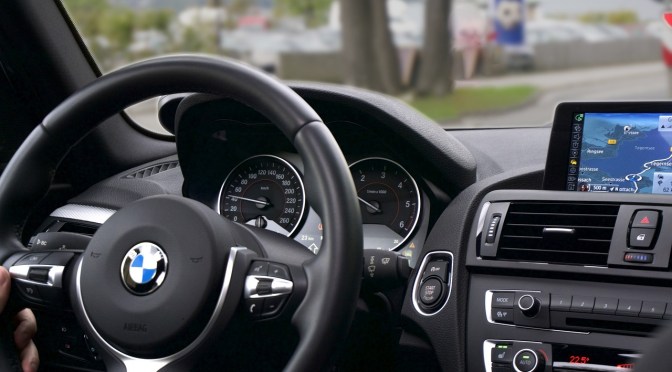
Everybody is aware of how invasive smartphone data collection is, and many know how to limit it. But very few people realise that their car is doing the same thing – sometimes even more aggressively – and with fewer legal safeguards than mobile devices.
Inside, your car is a sensor farm. GPS saves your every move, cameras record facial expressions, microphones can listen in to phone calls, accelerometers record behavioural metrics, and the infotainment system stores everything from your phone. It’s a goldmine for third parties. The features that make the driving experience safer and slicker also pipe personal data to manufacturers, insurance companies, marketers and data brokers. The Mozilla Foundation even called cars the worst product category for privacy reporting that all 25 of 25 major car brands failed basic privacy tests – and some even admitted sharing data with marketing partners without additional consent.
Here’s what’s happening, and what you can do about it.
What Your Car Quietly Collects
Some of the data harvested by your vehicle makes sense, such as GPS data for navigation or tyre pressure monitoring for safety. Other tools keep you in lane, call emergency services, and prevent collisions, but also generate rich datasets about where you go, how you drive, and even who’s in the cabin. Precise location history, in-car microphone recordings, and driving behaviour are stored and transmitted to manufacturers, and third-party brokers. Most of this is buried in default settings and app permissions, masked as convenient connectivity to users.
All of this was approved through the Biden Infrastructure Bill in 2021, along with the infamous vehicle “Kill Switch” that can shut down the vehicle remotely. That, too, is still in play.
You can check exactly what data is collected by your vehicle using websites such as Privacy4Cars or VehiclePrivacyReport.
You Can Restrict It – But There’s a Catch
Car makers can share or sell driving data and in-car collections for analytics, insurance pricing, advertising, and product development. While it’s possible to toggle certain sharing in vehicle menus, disabling some analytics also restrict features that drivers actually want such as live traffic or emergency calling options. Regaining privacy often means giving up conveniences you already paid for.
Infotainment platforms and connected services may also have their own pipelines and policies too. The end result is a confusing patchwork where opt-outs in one place don’t necessarily carry over, and ultimate privacy can be hard to achieve.
Why Is It Legal?
The Supreme Court in the US did rule that GPS tracking of a vehicle constitutes a search under the Fourth Amendment, which means that law enforcement must get a warrant before tracking your car. But, amazingly, that ruling only applies to government surveillance. Corporate data collection by private companies, including car makers and insurance companies, aren’t bound by the same constitutional limits.
So, while the police need a warrant, entities profiting from your data do not. Accepting the terms and conditions at the dealership or when first using the car’s infotainment system means you’ve probably already consented to it, too.
How Cars are More Invasive Than Phones
Smartphones collect location, Bluetooth beacons, and in-app events that can be linked to advertising ID or user accounts. App permissions, OS prompts and platform rules give tyou some visibility and control, and you can set location settings to Only While Using, revoke background access, and reset advertising IDs. But car data settings are more opaque and much trickier to navigate, with controls scattered between the dealer, the manufacturer, companion apps and more.
Many people expect their phones to track them and have learned to simply manage those settings, which often come with clearer guidelines on when something is and is not actively monitoring their activity. Generally, people do not expect their cars to create a profile that is just as valuable – and in some cases even more actionable – for third parties.
They Say You Can Opt Out, But It’s Not Always True
Turning off location services or clicking to opt out does not necessarily mean you’re in the clear. Independent research and investigative journalists have found that some connected vehicles continue to transmit telemetry for diagnostics, safety updates, or “system performance” even when privacy settings are disabled.
And because the manufacturers control the software, there’s no public way to check what’s really being sent in the background. For many drivers, the only option is to trust the manufacturer’s promise – something that Mozilla’s 2023 report tells us is unwise given that every tested car brand failed basic privacy checks.
In short, some brands’ default settings mean that the only true fix is choosing a different car.
Final Thought
Analytics can save lives when the vehicle spots a crash, routes drivers around storms, or highlights a mechanical failure in the car. But it crosses into profitable surveillance when the same hardware also feeds businesses that create driver profiles, tailor prices, and targets individuals without clear consent. Privacy needs to be treated like a core safety feature too. Take time to audit your settings, restrict app access, wipe your data before service or sale, and make sure you know what will be recorded and sold before you buy your next car.
Join the Conversation
Did you know how invasive car data collection can be? Have you checked settings in your own car? What else is tracking us without our knowledge? Most of us are so focused on phone tracking that we forget what else is profiling us. Add your thoughts at the link/source.
Photo credit: pixabay.com
There are over 11,000 data centres worldwide; where are they and why do they want them?
from Visual Capitalist
via expose-news.com
Visual Capitalist has mapped where in the world the approximately 11,000 to 12,000+ operational data centres are located. What do they need all these data centres for?
“Data centres are the backbone of the digital economy, storing, managing and processing the world’s data. In this graphic, we visualise the countries with the most data centres as of November 2025, revealing where the world’s digital infrastructure is concentrated,” Visual Capitalist said and produced the image below.

What do they plan to use all these data centres for? The following recently published articles give us some idea. To read the full article, follow the hyperlink in the subtitle.
We’re Making Utter Fools Of Ourselves While Claiming To Have Reached The Apex Of Wisdom
Society seems to be rushing headlong toward replacing God and humans with “giant statistical prediction machines” in a trend that seems as inevitable as it is concerning. Last week, an Axios report heralded the rise of “chatbot Jesus” and AI pastors. The day following that report a video advertising a service to turn deceased loved ones into eternal virtual companions went viral.
These ominous news bits come on the heels of Sam Altman’s announcement that ChatGPT would now offer erotica to its adult customers (and Elon Musk’s xAI already offered similar degenerate features). But as much as society is bent on its rushing, there’s an age-old warning that should cause humanity to pause: We become like what we worship.
Paul McCartney to Release Silent AI Protest Song After UK Relaxes Copyright Protections for Tech Firms
Legendary Beatles singer Paul McCartney will be releasing a silent music track next month in protest of the United Kingdom relaxing copyright protections for tech firms to push generative AI.
Artists have alleged that a recent change in copyright law “would make it easier to train AI models on copyrighted work without a license”.
“Under the heavily criticised proposals, UK copyright law would be upended to benefit global tech giants. AI companies would be free to use an artist’s work to train their AI models without permission or remuneration,” the artists said, adding that changes “would require artists to proactively ‘opt-out’ from the theft of their work – reversing the very principle of copyright law.”
Twitch Imposes Face Scans for UK Users to Comply with Government’s Censorship Law
British Twitch users are waking up to a new form of surveillance disguised as “safety.” The platform, owned by Amazon, has begun enforcing a requirement that forces viewers to undergo facial recognition scans before accessing mature-rated streams in the United Kingdom.
The change, made to satisfy the UK’s controversial Online Safety Act, effectively links biometric identification to entertainment and sets a precedent that privacy advocates have long warned could normalise state-aligned digital tracking.
Launching a High Court Challenge Against Australia’s Social Media ID Check Law
A High Court showdown looms as Australians question whether privacy and free speech can survive the nation’s new digital gatekeepers.
The Online Safety Amendment (Social Media Minimum Age) Bill 2024, scheduled to take effect on December 10, 2025, will require all users to prove they are over 16 before accessing major platforms such as Facebook, Instagram, TikTok, YouTube, X, and Snapchat. To comply with this, people will have to give up their privacy by verifying with a government-issued ID.
Australia’s online digital ID checks and under-16 social media ban are now facing a constitutional challenge, with a coalition of Australians led by NSW Libertarian MP John Ruddick preparing to contest the new law in the High Court.
EU’s Weakened “Chat Control” Bill Still Poses Major Privacy and Surveillance Risks, Academics Warn
The European Union stands poised to vote on one of the most consequential surveillance proposals in its digital history.
The legislation, framed as a measure to protect children online, has drawn fierce criticism from a bloc of senior European academics who argue that the proposal, even in its revised form, walks a perilous line. It invites mass surveillance under a veil of voluntarism and does so with little evidence that it will improve safety.
Life Under Digital ID: A Global Analysis with Solutions
Above Phone has produced a report that answers the following questions about digital ID programmes:
- How are they being rolled out?
- Where will they be mandatory?
- What will life be like with digital ID?
- How much time do we have?
- What can we do about it?
To access a copy of the report, you will need to sign up for Above Phone’s emails by providing a name and email address.
Last week, Hakeem Anwar, founder of Above Phone and Take Back Our Tech, joined Derrick Broze to discuss his new deep dive into the latest developments on digital IDs from around the world. Anwar outlines where digital IDs are advancing the fastest, where they are yet to roll out, and what you need to know to be prepared. You can watch this interview on Voluntary Tube, Substack (transcript available), BitChute or Odysee.
Taiwan Warns of Security Risks and Political Bias in Chinese AI Models
Taiwan’s NSB identified alarming cybersecurity vulnerabilities in five Chinese AI models, including unauthorised data harvesting, location tracking and forced privacy policy acceptance.
These AI models can generate malicious scripts and exploit vulnerabilities, posing risks of remote cyberattacks, and systematically push CCP narratives.
Lawsuit Claims Google Secretly Used Gemini AI to Scan Private Gmail and Chat Data
When Google flipped a digital switch in October 2025, few users noticed anything unusual. Yet, according to a new class action lawsuit, something significant had changed beneath the surface.
Plaintiffs claim that Google silently activated its artificial intelligence system, Gemini, across its communication platforms, turning private conversations into raw material for machine analysis.
The lawsuit accuses Google of enabling Gemini to “access and exploit the entire recorded history of its users’ private communications, including literally every email and attachment sent and received.”
And More …
Biometric Update provides some further reasons why they require so many data centres :
- Suprema teases plan for new AI-powered access control solution at partner event: ‘Automation will define the future of AI in security’ says Suprema Founder
- Zurich Airport rolls out EES biometric border control with secunet
- IATA: Replace physical airport barriers with biometric digital ID to save costs
- Amadeus’ on-the-move airport biometrics corridor roll out at scale in Indonesia
- German govt signs EUDI Wallet collaboration agreement with over 75 companies
- Mattr leads work on digital credential issuance platform for NZ govt agencies
- Law enforcement warned of ‘existential’ threat from ubiquitous technical surveillance
- ICE’s license plate app quietly expands a nationwide surveillance web
- Major AI, DPI initiatives to support Africa single digital market unveiled
- Mandatory identity verification for UK companies goes live
- Shipping association presents new identity exchange for secure KYC
Featured image: Server Racks With Plexus Lines And Connection Dots In The Warehouse. Source: Getty Images

Header photo credit: pixabay.com

World Economic Forum Openly Says Those Who Submitted To The Covid Lockdowns Will Also Accept Social Credit Scores And Carbon Calculators
From The WinePress
“COVID-19 was the test of social responsibility – A huge number of unimaginable restrictions for public health were adopted by billions of citizens across the world.”
The following report was first published on October 1st, 2022, on winepressnews.com.
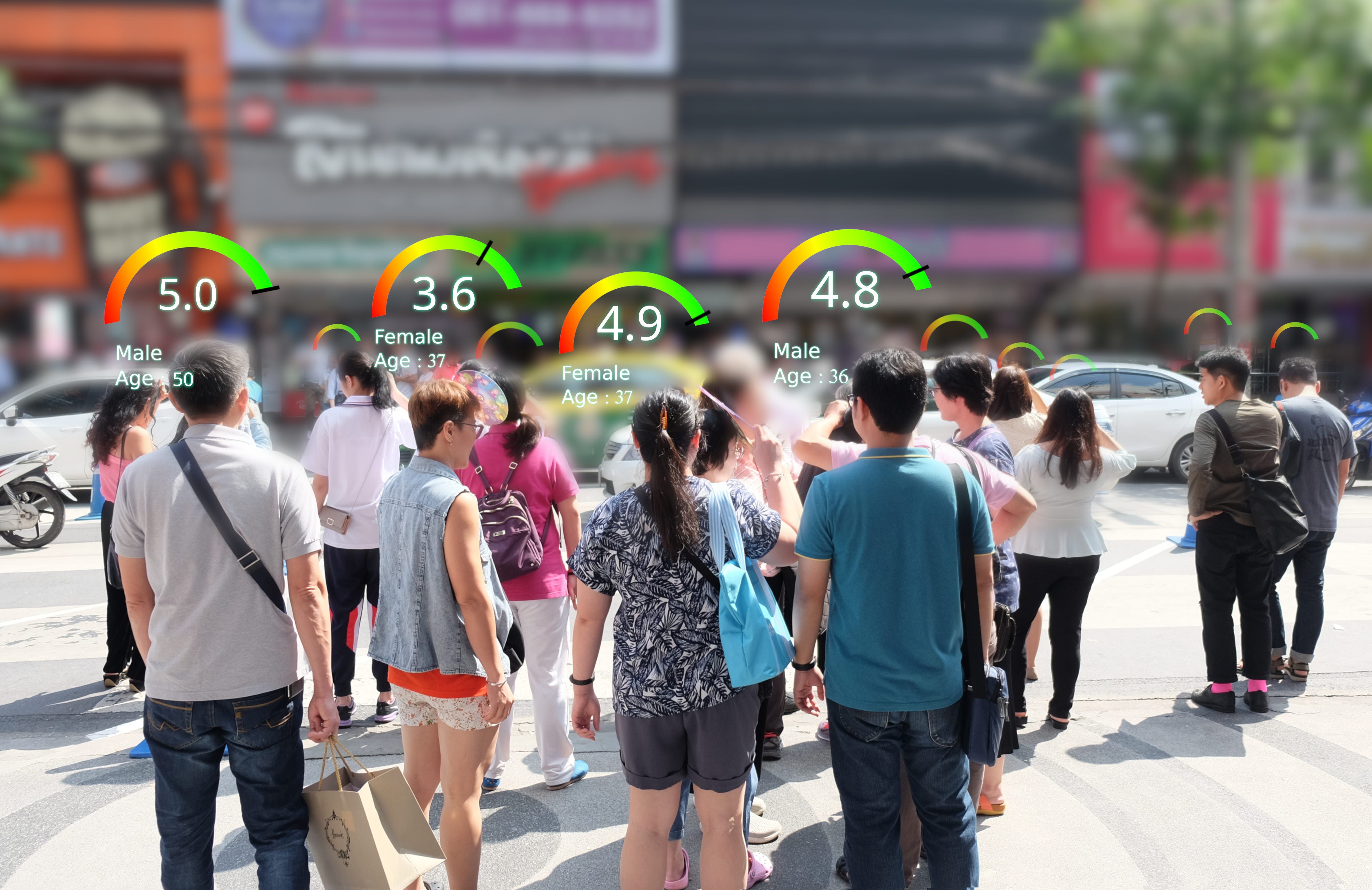
Due to the fact that billions of people worldwide all voluntarily submitted themselves to hefty Covid-19-related restrictions, practices (masking, social distancing, death of the handshake, Zoom calls), job closures, payment forbearance, curfews, lockdowns, isolations, quarantines and more; the World Economic Forum (WEF) is now stating that this pandemonium was just a “test of social responsibility,” and that these same people will accept a social credit score system.
Published on September 14th, the WEF published an article titled “‘My Carbon’: An approach for inclusive and sustainable cities,” written by Kunal Kumar, Mission Director for Smart Cities Mission and Ministry of Housing and Urban Affairs of India, and Mridul Kaushik, who worked as an analyst for Cisco for several years.
The two authors lay out the steps towards the world’s populous accepting a social credit score system that is carbon-based. This is what China currently uses, which applies a retroactive score to individuals based on what they say and do, which therefore determines what they can and cannot do in society.Subscribe
The authors begin their article by asserting that nearly three-quarters of the world’s cities account for the total carbon emissions, and with 40% of that number coming from individuals and their actions. And even though many communities have tried to implement sustainability goals, they say they have had “limited success” because of political and social discourse, ignorance on the issues, and the inability to monitor “My Carbon” emissions.
“My Carbon,” as the WEF calls it, is the pseudonym for this social credit-carbon calculator they wish to come to pass.
The authors layout three key “significant developments” within the last decade that could help in “shaping the future towards smart and sustainable cities.”
The author’s first tenet is the subservience of the masses during the Covid-related restrictions and lockdowns. They wrote:
“COVID-19 was the test of social responsibility – A huge number of unimaginable restrictions for public health were adopted by billions of citizens across the world. There were numerous examples globally of maintaining social distancing, wearing masks, mass vaccinations and acceptance of contact-tracing applications for public health, which demonstrated the core of individual social responsibility.”
In other words, if the masses willingly submitted themselves to the “new normal,” why would they not conform to these new proposals to perfectly surveil everyone’s life?
From there, the authors introduce point number two, “Fourth Industrial Revolution technology breakthroughs.” In short, because of all the artificial intelligence and smartphone addictions, the authors, without saying the words, necessitate the need for a carbon-based social credit score:

“Advances in emerging technologies like AI, blockchain and digitization can enable tracking personal carbon emissions, raise awareness and also provide individual advisories on lower carbon and ethical choices for consumption of product and services. The World Economic Forum’s Scale 360 initiative demonstrates the use of fourth industrial revolution technologies across the whole life cycle of products and services.
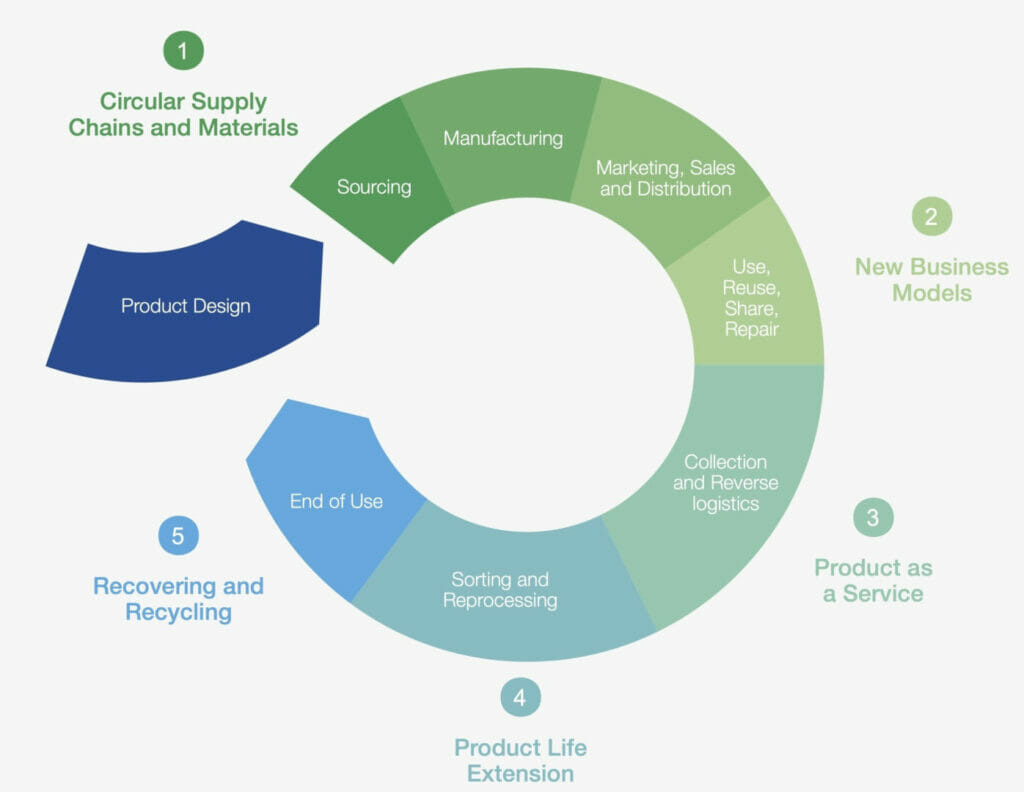
“There have been major advances in smart home technologies, transport choices with carbon implications, the roll-out of smart meters in providing individual choices to reduce their energy-related emissions, the development of new personalized apps to account for personal emissions, and better personal choices for food and consumption-related emissions. AI can also help strengthen circular economy business models like product as a service models, demand predictions, and smart asset management by combining real time and historical data from products and users.
“There is a significant number of programs and applications enabling citizens to contribute towards carbon emissions by providing them in-depth awareness on the choices of personal carbon for food, transport, home energy and lifestyle choices.
“These energy efficiency apps give suggestions and statistics regarding greenhouse emissions and offer ways to reduce your personal footprint. Keeping track of energy consumption in the home and motivating people to make lifestyle changes and to contribute your share towards the betterment of the environment.”
The third point the author’s present is even more ‘education’ and “raised awareness” on the issue of climate change, building-off on the increasing number of people (namely the younger generations) who are actively calling for mitigation in their own lives to stop climate change. Citing a detailed poll via the Pew Research Center, “80% of citizens say they are willing to change how they live and work to combat the effects of climate change.” The sample size, however, was less than 20,000 people interviewed internationally.
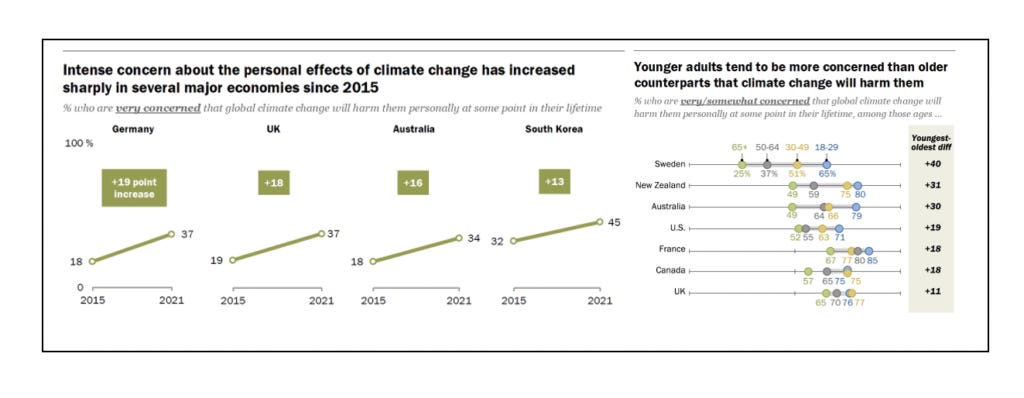
Notwithstanding, people like Bill Gates have said that the collective masses will simply not conform to these climate-related initiatives, though subtly implying the methodology as to how it will be implemented: “Bill Gates Says You’ll Never Solve Climate Change By Making People Consume Less, Subtly Implying Depopulation Instead.”
Nevertheless, bearing all three points in mind, the authors conclude this:
“The three trends provide strong evidence towards enabling a social movement for “My Carbon” initiatives by enabling public-private partnerships to help curate this program. It is suggested to drive a three-way approach to shape this movement.
“Such economic action will need policy enablement from city leadership through extensive discussion between stakeholders to arrive at a fair and inclusive approach.
“The levers of Cognitive Enablement and Social Norms will be much more impactful through citizen engagement programs and learnings from the above-mentioned trends need to be captured to design these programs. Innovative AI and machine-learning capabilities would help capture embedded emissions in goods and services, and could help in providing individuals with tailored and timely advice on how to reduce their lifestyle emissions.
“Finally, it is significant that all stakeholders across the value chain come together and contribute towards achieving a net-zero future by leaving no one behind.”
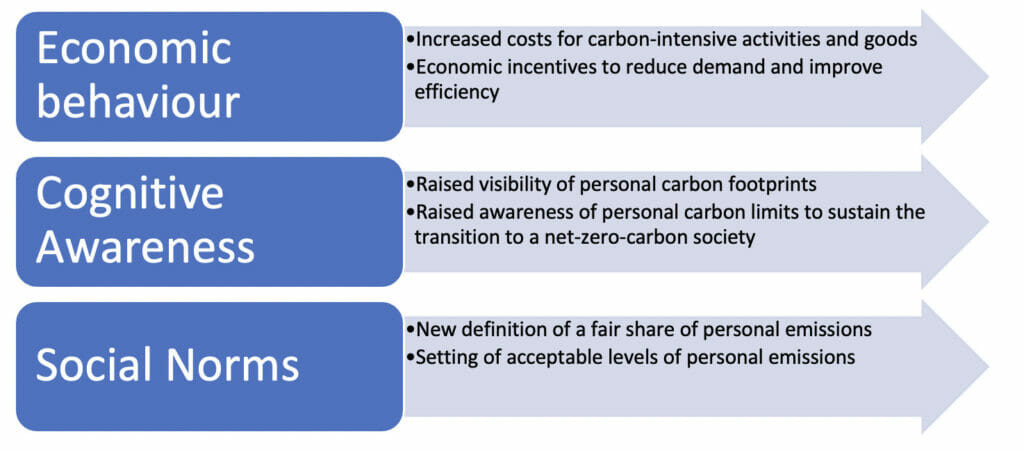
Furthermore, as a sidenote, the WEF additionally notes some of the other underlying initiatives attributable to them to bring these social credit scores to pass, to usher in this new system per smart city life by 2030.

“In a major step, nine cities and more than 70 organizations in 10 different sectors have come together to build further momentum for a new multi-year initiative: Net Zero Carbon Cities.
“Together with the Forum, they have created a vision for the future and launched a new framework to help cities rethink urban ecosystems, ensuring that they are greener, efficient, resilient, circular and more equitable.
“From policy-makers to businesses, city administrators, civil society and the financial sector, the World Economic Forum is convening a range of stakeholders with a role to play if global cities have a chance of reaching the net-zero carbon goal by 2030.”

Own Nothing And Be Happy Is Being Rebranded As “Affordable Living As A Service” (ALaaS), As AI Increasingly Kills Careers
The WinePress News is a reader-supported publication. To receive new posts and support my work, consider becoming a free or paid subscriber.Subscribe
AUTHOR COMMENTARY
As sad as this is, the WEF is telling the truth and are 100% correct: the willfully ignorant sheeple will absolutely fall in lockstep with these initiatives. And as the WEF has just admitted, the propaganda is only going to increase. But by the same token, I believe mass trigger events must be created in order for the sheeple to be coerced into doing so. Economic collapse, famine, disease, cyberattacks, death, and war will surely do the trick, as the people will be groveling for the government to save them.
The video has since been deleted because of YouTube’s absurd termination of my channel, but, prior to a single lockdown in the states, on March 14th, 2020, I bashed the Covid rhetoric and exposed the wonderful and marvelous actions of the people. The masses were petrified and stocking up on toilet paper over a made-up “everything virus” that supposedly claimed only several thousand lives worldwide, out of a population of roughly 7.8 billion! I am not trying to whet my own whistle here, but I have the actual right to bash this stuff, unlike all the shills that found it was popular and trendy to make fun of Covid by the summertime.
All of this could have been averted if people stood-up and resisted this nonsense:
Proverbs 12:24 The hand of the diligent shall bear rule: but the slothful shall be under tribute.
Proverbs 28:1 The wicked flee when no man pursueth: but the righteous are bold as a lion.
But, I have a saying: “liars love being lied to.”
Proverbs 17:4 A wicked doer giveth heed to false lips; and a liar giveth ear to a naughty tongue.
It was and is hilariously obvious fake all this garbage was and still is, and yet the people ate it up like candy on Halloween. And after all of this, do you realize the sheer amount of people that still believe this “virus” is real?! But I digress.
But this is one of the very reasons why I wrote “Are You Awake? Are You Ready For What’s Coming? Do You Loathe The Honeycomb??” – in an attempt to try and make sure people are awake to what is happening and what will happen, and how to be on the right side of things. I encourage you to read it again if need be.
The point is, what the WEF is saying is a very sad and pathetic truth: the masses will absolutely conform to this with no resistance. And if there is some similitude of backlash, it will be because the controlled-opposition liars in the media will “hack” people’s brains to complain; for the masses have no brains: the media is their mind.
Beit so, it should be noted that this massive deception, just like the Covid War (where hardly anyone stood up and resisted this malarky), is because THE LORD is purposefully deceiving the people, leading them to their own destruction, for their wickedness and hatred of his word.
Isaiah 5:7 […] and he looked for judgment, but behold oppression; for righteousness, but behold a cry.
RELATED

Other news this week
So much news, it’s where to start?!
Insider Blows Whistle on Canada’s Shocking Euthanisia Methods: ‘Drowned to Death’
Canada Pushes to Begin Euthanizing Children
The U.S.A. JUST ROLLED OUT FULL SCALE Digital ID
Albert Benavides Speaks Out Against mRNA With James Roguski
“Mom” forces her child to attempt “change” gender
Deaths by Dates Down Under — Dispatch #002
ChatGPT just confirmed: All of the fully vaxxed/unvaxxed studies show vaccines cause autism
We’ve Lost Our Minds: The INSANE New Way People Think About Health & WEIGHT LOSS
From Analog to Digital to Cellular: The Complete Guide to Technological Capture

Other news this week
DISTURBING: Canadian Man Devastated After Government EUTHANIZES Both Grandmothers
OUTRAGE: UK Court FORCES Vaccination on Baby Against Mother’s Wishes
How Much Trouble Are We Really In?
DISTURBING: New Medical Study Praises Canadian Euthanasia’s ‘Real Impact’ on Organ Harvesting
Warning: 3 Hidden Ways the Medical System May Give You DEMENTIA
Biometric Consent is the Digital ID
Latest Embalmer Insights – What’s Changing in the CLOT Findings?
Other News Updates
Here is a catch up summary of various topics too numerous to publish individually:
The Dr Ardis Show: Cataracts: What Your Doctor Won’t Tell You (Part 1)
Is the Depopulation Plan Real?: YES and Let’s Not Mince Words: IT IS A GLOBAL GENOCIDE AGENDA
How to Stay Out of the Digital ID Trap
Time to Discuss Alzheimer’s Disease: Aluminium is no longer the elephant in the room
CDC study shows there is no scientific rationale for vaccine mandates for kids attending school
Digital Concentration Camps: How Biometrics Are Making Our Homes Virtual Prisons in Preparation for the Next “Lockdowns”
From healthimpactnews.com
All visitors have to register via biometrics, such as palm scans, face scans, eye scans, etc., before they are allowed to enter. Once they enter, they are continually monitored via cameras and microphones that monitor one’s biometrics while on the premises. Anyone who approaches the premises is picked up by cameras that immediately seek to identify who the person is before allowing entrance.
Did I just describe how one visits a friend or relative who is incarcerated in a jail, prison or mental ward, or did I just describe how new “smart homes” operate?
Actually, both. And that’s the point.
The public is voluntarily surrendering their privacy for the sake of “convenience” and “security,” while not understanding that what they are trading in for these “conveniences” and illusions of “security” is the ability for government agents to lock them down in their own homes, just as they lock down prisoners in jails, hospitals, mental institutions, and other places of incarceration.
READ AT THE LINK
If you enjoy our posts, check out our sister site truthwatchnz.is

Speak Up Now, It is Almost Too Late
The World Health Organisation has announced an agreement with the European Union to develop a digital health certificate. WHO has stated that they will use the “EU Digital COVID Certificate” as a model to establish a global digital health certificate otherwise known as a vaccine passport (you can follow the reaction on Twitter here).
This brings to mind the conditions imposed on daily life during pandemic lockdowns which were enforced using vaccine passports. Restrictions on movement and participation which are now known to have had an overwhelmingly damaging effect on society. An article in the authoritative UK Daily Telegraph on 4th June headlines “Painful lockdowns a global policy failure that must never be repeated“. According to new research, we will be suffering drastic effects on the economy, educational outcomes, and mental and physical health for years to come as a result.
READ AT THE LINK
Speak Up Now, It is Almost Too Late
Photo: hatchardreport.com

WHO, EU announce partnership creating ‘global system’ of digital vaccine passports
So there’s more than one way to keep folk in their 15 minute cities …
The digital system ‘will help facilitate global mobility and protect citizens across the world from on-going and future health threats, including pandemics,’ according to the WHO.
GENEVA (LifeSiteNews) — The World Health Organization and the European Union announced their collaboration on global digital vaccine passports at a joint press conference in Geneva on June 5.
“In June 2023, WHO will take up the European Union (EU) system of digital COVID-19 certification to establish a global system that will help facilitate global mobility and protect citizens across the world from on-going and future health threats, including pandemics,” the WHO press release states.
“This is the first building block of the WHO Global Digital Health Certification Network (GDHCN) that will develop a wide range of digital products to deliver better health for all.”
‘The first building block of the global WHO system becomes operational in June 2023 and aims to be progressively developed in the coming months,’ the WHO press release states.
“The COVID-19 pandemic highlighted the value of digital health solutions in facilitating access to health services,” WHO director-general Dr. Tedros Ghebreyesus said during the press conference. “While the emergency phase of the COVID-19 pandemic is now over, investment in digital infrastructure remains an important resource for health systems and for economies and societies at large.”
The WHO has stated that they will use the “EU Digital COVID Certificate” as a model to establish a global digital health certificate.
“One of the key elements in the European Union’s work against the COVID-19 pandemic has been digital COVID-19 certificates. To facilitate free movement within its borders, the EU swiftly established interoperable COVID-19 certificates (entitled ‘EU Digital COVID-19 Certificate’ or ‘EU DCC’),” the WHO press release reads.
“With this collaboration, WHO will facilitate this process globally under its own structure with the aim to allow the world to benefit from convergence of digital certificates.”
During the height of the Covid crisis, the EU Digital COVID Certificate made it so that EU citizens could only travel to other member states if they provide proof of vaccination, recovery, or a recent negative COVID test. In some EU countries like Austria, citizens were essentially segregated from society if they refused to take to COVID injections.
PETITION AT LINK

Ending your right to free speech – ‘digital ID required’ by 2027 for you to access the internet
From nationaldefensemagazine.org
via technocracynews.com
TN has examined this topic in detail several times. Ultimately, the only people who will be able to hop on the Internet, regardless of the entry point (5G, 6G, fiber optic, private of public WiFi) will first have to be definitively identified. This will require a personal, registered ID comparable to an electronic passport. No digital ID? You don’t use the Internet. Got ID? Every activity is tracked, catalogued and saved. The military is paving the way for this. ⁃ TN Editor
The Defense Department has finally laid out its plan for protecting its cyber networks after years of pledging to make it a commitment.
The Office of the Chief Information Officer released “The DoD Zero Trust Strategy” in November — which laid out metrics and deadlines for the department to achieve full zero trust adoption by 2027. Cybersecurity experts said the government and private sector should work together to leverage resources to successfully enter the new regime.
“Cyber physical threats to critical infrastructure really are one of our biggest national security challenges that we’re facing today, and that the landscape that we’re dealing with has gotten more complex,” Nitin Natarajan, deputy director at the Cybersecurity and Infrastructure Security Agency, said during a MeriTalk event in October.
Cyber attackers have more resources than they have in the past, and it’s less expensive to do a lot of damage to an unsecure system, he said. It’s not just lone wolf hackers, but nation states and cyber terrorists who can pose a threat.
For example, the 2019 SolarWinds cyber attack, which swept past the defenses of thousands of organizations, including the federal government, has been linked to Russia-backed operatives.
The new strategy’s basic tenet is that treating organizations’ security like a moat around a castle doesn’t keep out bad actors.
“Mission and system owners, as well as operators, increasingly embrace this view as fact. They also see the journey to [zero trust] as an opportunity to affect positively the mission by addressing technology modernizations, refining security processes and improving operational performance,” the document said.
Zero trust culture requires every person within a network to assume that it is already compromised and requires all users to prove their identities at all times.
The strategy lists technologies that can help cultivate a zero trust environment such as continuous multi-factor authentication, micro-segmentation, advanced encryption, endpoint security, analytics and robust auditing.
While these various technologies can be used to implement this basic premise, it essentially means that “users are granted access to only the data they need and when needed.”
The strategy revolves around four pillars: accepting the culture of zero trust, operationalizing zero trust practices, accelerating zero trust technology and department-wide integration. The strategy notes that while IT departments across the Pentagon may need to purchase products, there is no one capability that can solve all their problems.
“While the objectives prescribe ‘what’ shall be done in furtherance of the goal, they do not prescribe ‘how,’ as DoD Components may need to undertake objectives in differing ways,” the strategy read.
For the technology pillar, the Pentagon’s zero trust strategy calls for capabilities to be pushed out faster while reducing silos. Capabilities that promote simpler architecture and efficient data management are also important, according to the document.
While many methods can be used to authenticate users, the integration pillar calls for creating an acquisition plan for technologies that can be scaled department-wide by early fiscal year 2023.
One technology development already underway is the Thunderdome, a $6.8 million contract awarded to Booz Allen Hamilton earlier this year. The technology would protect access to the Secure Internet Protocol Router Network, the Pentagon’s classified information transmitter, according to a Defense Information Systems Agency press release.
It won’t be possible to completely retrofit every legacy platform with technology such as multi-factor authentication, the strategy points out. However, the services can implement safeguards for these less modern systems in the interim.
The securing information systems pillar will also require automating artificial intelligence operations and securing communications at all levels.
Automating systems is an important part of zero trust, said Andy Stewart, senior federal strategist at digital communications company Cisco Systems and a former director at Fleet Cyber Command/U.S. Tenth Fleet. If the processes behind zero trust don’t work well, people can struggle to use the technology and adopt the zero trust mindset.
“Zero trust is about raising the security, but it also means, ‘How do I operate more efficiently?’” he said. “The user experience should get a vote.”
While the strategy marks a turning point for the effort, the Pentagon started down the road of zero trust years ago. Its 2019 Digital Modernization Strategy mentioned that zero trust was an emerging initiative concept it was “exploring.”
Accepting more rigorous cybersecurity measures through the zero trust mindset is something the Marine Corps has been working on through education and raising awareness, said Renata Spinks, assistant director and deputy chief information officer of information, command, control, communications and computers and acting senior information security officer.
“We spend a lot of time educating, because if people know what they’re doing and why they’re doing it … it has been my experience that they will get on board a whole lot sooner than resisting,” she said
The 2021 zero trust mandate from President Joe Biden’s administration was “a godsend” because it gave justification for personnel inside the Marine Corps who may not have understood the necessity of some of the IT initiatives, she said.
A successful zero trust implementation will reduce threats to some of the most critical types of capabilities that warfighters will be relying on in the future: cloud, artificial intelligence and command, control, communications, computer and intelligence.
The military needs the help of defense contractors to protect sensitive data, Spinks noted. Industry can help the military’s IT personnel understand how to work with the type of data that they will be providing and to how much the military will need access.
“Zero trust will not be zero trust successfully if we don’t get help in managing identities,” she said.
The Marine Corps recently hired a service data officer who could use input from contractors about how much access the military will need to figure out the best ways to classify and manage the service’s data, she noted.
Having access to secure data anywhere will help military members and personnel in the defense industrial base who are working outside of business hours and in remote locations, according to the Pentagon’s strategy.
The push for zero trust is different from some cybersecurity initiatives because it has muscle behind it, Spinks added. Leadership has provided policies and procedures and are willing to be held accountable, she said.
“Cybersecurity is not an inexpensive venture. But I think what truly drives it is the vicious adversary and all of the activity across not just the federal government, but even at the state and local levels,” she said.
Better cybersecurity practices will also be needed to secure supply chains, Natarajan noted. Making them more resilient, especially in critical technologies such as semiconductors, has been a focus at the Pentagon in recent years.
“We know that this is being used by malicious cyber actors really to exploit a lot of third party risk after going after an organization’s supply chain,” he said.
That’s another reason why the government can’t work alone, he added.
“As we look at this, we’re looking at this not just from a sector perspective but also looking at this from national critical functions,” he said.
CISA released cybersecurity performance goals for companies to measure themselves in October. Though the performance goals don’t cite zero trust specifically, the goals are intended for companies to use regardless of their size.
“We’re really looking at these to be that minimum baseline of cyber protections that will reduce the rest of critical infrastructure operators,” he said. “But at the end of the day, by doing that we’re also impacting national security and the health and safety of Americans throughout the nation.”
The private sector in turn needs the government’s investment in education and resources to build up its cyber workforce.
“Cyberspace involves not just the hardware and software, the technology, your tablets, your iPhones, your technology, but it involves people. People developed cyberspace. People use cyberspace. We are in cyberspace,” Kemba Walden, principal deputy director of the National Cyber Director’s Office, said during the MeriTalk event.
Not yet at full operating capacity, the National Cyber Director’s Office was established in 2021 to take the lead on cyber issues at the federal level, including the first national cybersecurity strategy.
Just as important as the broad strategy will be the national workforce and education document that will be released after the cybersecurity strategy, Walden said.
“We took a look and recognized that 700,000 or so U.S. jobs with the word cyber in it are left unfilled,” she said. That number comes from market research firm Lightcast’s 2022 report based on 2021 data.
“As a national cyber and national security lawyer, that frightens me,” she said. “That is a national security risk from my perspective.”
In recent years, organizations such as Joint Cyber Defense Collaborative and the National Security Association’s Cybersecurity Collaboration Center have sprung up to gauge the needs and collect feedback from large enterprises, she said.
“Those are the types of collaborative efforts that I think are necessary in order to evolve public-private collaboration and information sharing overall,” she said.
Ultimately, the benefits of zero trust trickle down to the warfighter, according to the document.
For example, the Pentagon’s joint all-domain command and control effort — which aims to link sensors and shooters while using artificial intelligence to make decisions — relies on that data being secure. If it falls into the wrong hands, military leaders can’t achieve information dominance, the strategy notes.
“We need to make certain that when malicious actors attempt to breach our zero trust defenses; they can no longer roam freely through our networks and threaten our ability to deliver maximum support to the warfighter,” Chief Information Officer John Sherman said in the strategy.
SOURCE

An Enzyme Called Luciferase Is What Makes Bill Gates’ Implantable Quantum Dot Microneedle Vaccine Delivery System Work
Bill Gates who is not a health expert by any stretch of the imagination…who has bought WHO… curious name too isn’t it? Luciferase. EWR
From nowtheendbegins.com
Bill Gates is building something that we call the Human Implantable Quantum Dot Microneedle Vaccination Delivery System, and it is composed of multiple things. At its center we have the COVID-19 vaccination that he wants to give every human on earth, there will be quantum dot microneedles, a digital identification mark from ID2020, and a human implantable device for buying and selling cryptocurrency with a patent number of #060606. The digital ID will come in the form of something called an Immunity Passport. All of these things, and all being funded by one man, Bill Gates, represents in total at the very least a stunning forerunner to the Mark of the Beast world system. That’s at the very least estimation, taken to its logical end, it very well could be the actual Mark of the Beast system.
via bythebloodofthelamb



You must be logged in to post a comment.