Tag Archives: David_Seymour

First mention of the Atlas Network in NZ Parliament (think Seymour)

From The Daily Blog

Remember Seymour in an interview denied any connection to Atlas which is not true. He called it conspiracyEWNZ


The Article 2/2/25:
By Martyn Bradbury


Last night [1 Feb] during the reading of ACTs Bill to dump the Productivity Commission, Labour mentioned the Atlas Network for the first time in Parliament…

Whose interests are ACT actually serving here by silencing the Productivity Commission?

The Atlas Network is an international far right think tank whose extreme policy platform seeks to attack public servants, push for radical privatization, dismantle regulation protecting workers and the environment and champions Landlords over renters.

That sounds remarkably similar to this Government. Who is behind the ACT Party and their policy? The Atlas Network sounds exactly like the policy platform of this new Government and the ACT Party, the Taxpayers’ Union and The NZ Initiative all have links to the Atlas Network so I ask , who is really pulling the strings here?

…the Atlas Network are an international far right think tank and George Monbiot has done an expose on how the Atlas Network influences UK politics and TDB has highlighted the links between them and NZ politics.

Look at the Atlas International play book and ask yourself if it sounds familiar…

A crash programme of massive cuts; demolishing public services; privatising public assets; centralising political power; sacking civil servants; sweeping away constraints on corporations and oligarchs; destroying regulations that protect workers, vulnerable people and the living world; supporting landlords against tenants; criminalising peaceful protest; restricting the right to strike.

…watch how each of these extremist free market agendas are being slowly and quietly implemented. The new draconian gang powers

Atlas Network also gets mentioned by the Public Health Communication Centre who note the connections between Tobacco Lobbyists and the Atlas Network…

Tobacco Company Political connections Evidence of industry links
British American Tobacco Casey Costello (NZ First Party) formerly Chair and member of Tax Payers’ Union Board. Now Minister with responsibility for the Smokefree Environments and Regulated Products Act 1990; vaping; smokeless tobacco; oral nicotine.1 Guardian investigation reported TPU received funding from British American Tobacco


TPU has links with the Atlas Network, which has received tobacco industry funding.


In 2023, a TPU staff member received an Atlas Network competition prize. TPU was described as an Atlas Network partner.

…it also notes that Nicola Willis is a former Nazgul at the NZ Initiative…


British American Tobacco

Imperial Brands Australasia

Nicola Willis, Deputy leader National Party, formerly Board Director New Zealand Initiative NZI list tobacco companies British American Tobacco and Imperial Brands Australasia as members.

…at some point the mainstream media are going to have two investigate the influence of the Atlas Network over the Political Right in NZ.

It’s good that Labour has started that questioning.

Where are the Greens and the Māori Party?

Atlas Network

SOURCE

Photo credits: The Daily Blog


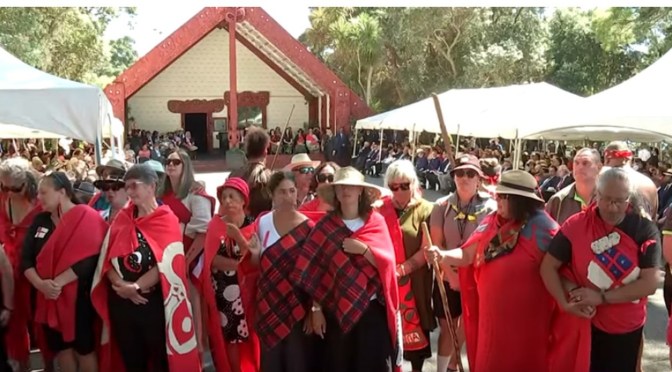
Seymour gets a clear message from Ngāpuhi at Waitangi: Mics snatched, backs turned

Turning their backs, a clear message it’s said, to stop talking and sit down. “We’ve always heard sentiments from our elders to be mindful and to be careful of the messages our children hear. Our tamariki were there, and they were watching.”

Stuff reports that there was hui by Ngāpuhi up to even the night before Seymour’s party arrival. They resorted at the very last minute to the lesser option for the reception given. Plan one had been to march them onto the marae, then march them straight back off without letting them speak at all.

Much criticism and talk around this silencing of Seymour, however, think about your opportunities given by them for speaking at their various venues and ‘consultations’. At local council it is a mere few minutes, and time up is time up with little if any feedback as to whether your concerns are taken on board. Same when making submissions. The entire system is not geared for dialogue. Your voice is very very limited.


From Stuff, NZ’s MSM

“We were expecting fireworks around Waitangi commemorations, and indeed they came. David Seymour, the man behind the Treaty Principles Bill, made his way onto the Treaty Grounds on Wednesday, where he was heckled, had his microphone taken away and had hosts literally turn their backs on him. Senior political correspondent Jenna Lynch was there. “| Subscribe: https://bit.ly/2JPg8oB Read more: For full coverage visit http://www.Stuff.co.nz Subscribe to our channel: https://bit.ly/2JPg8oB


The Regulatory Standards Bill that Act has tried 4 times prior to introduce, is currently flying under the radar

Note: submissions close Monday 13 January … thanks to  Steve Snoopman for alerting me to this …

“Attempts to introduce the legislation in 2006, 2009 and 2011 failed. Commentators at the times recognised the intentions of the Business Roundtable to introduce a legal straitjacket. It is of huge concern that this legislation which has been rebuffed four times as being a dangerous constitutional shift is practically guaranteed passage.”
Noel O’Malley, Lawyer

Two articles on topic:

  1. From the Otago Daily Times … by lawyer Noel O’Malley:

Is anybody taking notice of the Regulatory Standards Bill?

A draft Bill put out for consultation late last year has Noel O’Malley somewhat concerned.

Such is the attention being paid to the Principles of the Treaty of Waitangi Bill, now before the justice select committee, it seems very little attention is being paid to the Regulatory Standards Bill now open for consultancy*.

Submissions on the Bill will close on January 13, one week after they close on the Principles of the Treaty of Waitangi Bill.

Presumably, it will then be referred to the House for a first reading.

David Seymour, the sponsor of the Bill, claims the low wages experienced in New Zealand are caused by low productivity, which in turn is caused by “poor legislation”.

The answer, he claims, will be found in the Regulatory Standards Bill.

For those not familiar with the content of this Bill, a lot of backstory is required.

The Regulatory Standards Bill was conceived by the (then) Business Roundtable (now the New Zealand Initiative).

Act New Zealand has made four attempts to introduce a version of this Bill since 2006, failing each time, as under scrutiny, its dangerous consequences became clear.

Commentators at the times recognised the intentions of the Business Roundtable to introduce a legal straitjacket.

Attempts to introduce the legislation in 2006, 2009 and 2011 failed.

Likewise a Bill to this effect, introduced by Seymour in 2021, with the support of the National Party, was condemned as a dangerous constitutional shift undermining public and collective rights and threatening parliamentary sovereignty.

This recognises the ideology of Act in place of alternative principles embodied in Te Tiriti, international obligations, community wellbeing together with climate and environmental protections.

Passage of the Bill is contained in the Act Policy Programme, which, under the National-Act coalition agreement, National has agreed to support, unlike the Treaty Principles Bill.

It is of huge concern that this legislation which has been rebuffed four times as being a dangerous constitutional shift is practically guaranteed passage.

Preliminary advice on the Bill has been provided by the Ministry of Regulation, established by Seymour and of which he is the minister.

This advice highlights the proposals presented omit any mention of Te Tiriti and its role as part of good law-making, thus avoiding how the Crown will meet its obligations under the proposed legislation.

Even a cursory examination of the Bill leaves no doubt of the intent to promote individual and property rights over all others, constrain regulatory powers, and reduce the government’s ability to implement environmental protections, social safeguards and Te Tiriti-based initiatives.

The Bill goes further to establish a regulatory standards board, removing the role of the courts to consider complaints from the public about existing regulations which include legislation which is inconsistent with one or more of the Bill’s principles.

One can conceive complaints about recognition of collective Māori rights, environmental protections or social safeguards on the basis of inconsistency with individual rights, unrestricted property rights, equality before the law and imposition of taxes and levies.

As Melanie Nelson wrote in E Tangata (15.12.24), we are being asked to submit feedback on two sets of sweeping constitutional changes without fully grasping the impact of these extensive proposals on our lives and the country.

“Do we want a minor party’s libertarian ideology to shape the boundaries of legislation, government actions and judicial interpretations to significantly influence who we are as a nation, what we collectively stand for?”

* A draft version of the Regulatory Standards Bill is now out for consultation. A final version of the Bill has yet to be introduced to the House.

• Noel O’Malley is a Balclutha lawyer and past president of the Otago District Law Society.

SOURCE

2. From E-TANGATA by Melanie Nelson:

The ‘dangerous’ bill flying under the radar

New Zealand stands at a pivotal moment in its constitutional development. Not one but two key bills, both driven by the Act Party, signify a profound new direction for the country, writes Melanie Nelson.

Much has been said about the significant impacts of the Principles of the Treaty of Waitangi Bill.

Meanwhile, its long-standing companion, the Regulatory Standards Bill, is advancing quietly through government processes, with limited public awareness, minimal media coverage, and little parliamentary debate.

Consultation on the proposed Regulatory Standards Bill opened on November 19, the day the hīkoi arrived at parliament. The consultation period ends the week after submissions close on the Treaty principles bill.

Both bills, if progressed, will result in significant constitutional reforms with profound implications for New Zealand.

They propose comprehensively changing the nation’s legislative and political environment by embedding rigid legal frameworks that prioritise individual and property rights, constrain regulatory powers, and reduce the government’s ability to implement environmental protections, social safeguards, and Tiriti-based initiatives.

Restricting legislative freedom: A legal straitjacket in the making?

The focus on the Treaty principles bill has overshadowed its dull but dangerous regulatory cousin.

The Regulatory Standards Bill is the brainchild of the Business Roundtable (now the New Zealand Initiative). The Act Party has tried three times, since 2006, to introduce a version of this bill — failing each time it was put under scrutiny, as its dangerous consequences became clear.

Yet, this latest attempt seems to be sailing through with little to no scrutiny so far.

READ AT THE LINK


Photo: Getty Images

Dr Carwyn Jones: It’s critical to submit on the principles bill – due tomorrow Tues 7 Jan. 2025

From Dr Carwyn Jones

The proposed Treaty principles bill fundamentally changes the meaning of Te Tiriti, and should be opposed through submissions as well as protest, writes Dr Carwyn Jones.

The Principles of the Treaty of Waitangi Bill is now before the justice select committee, and open for submissions.

The proposed law aims to redefine “the principles of the Treaty of Waitangi”, a concept that’s been used in New Zealand law and government since 1975.

Here’s Carwyn Jones explaining what’s in the bill, what happens now it’s had a first reading, and how to make a submission.

The first reading of a bill is one stage in the law-making process. It’s the first opportunity that MPs have to debate the proposed law and to vote on whether it progresses to the next stage.

The three parties in the coalition government (National, New Zealand First, and Act) agreed to introduce this bill and vote to support it at this first reading stage.

The bill therefore passed this stage with all the MPs of the coalition parties supporting it (68 votes) and all the MPs from the opposition parties voting against it (54 votes).

What are the coalition government’s proposed principles of the Treaty that are set out in the bill?

The bill proposes three new principles to replace the principles that are now in use. The established principles include partnership, active protection, redress, mutual benefit, and equity. The three new principles proposed by the coalition government are set out in clause 6 of the bill:

  • Proposed principle 1: The Government of New Zealand has full power to govern, and Parliament has full power to make laws. They do so in the best interests of everyone, and in accordance with the rule of law and the maintenance of a free and democratic society.
  • Proposed principle 2: The Crown recognises the rights that hapū and iwi had when they signed the Treaty/te Tiriti. The Crown will respect and protect those rights. Those rights differ from the rights everyone has a reasonable expectation to enjoy only when they are specified in Treaty settlements.
  • Proposed principle 3: Everyone is equal before the law and is entitled to the equal protection and equal benefit of the law without discrimination. Everyone is entitled to the equal enjoyment of the same fundamental human rights without discrimination.

What is the problem with the proposed principles?

The main problem with the proposed principles is that they do not reflect the agreement made in Te Tiriti o Waitangi. The bill presents a false picture of Te Tiriti.

Under Te Tiriti, Māori leaders granted the British Crown the authority of kāwanatanga (governmental authority in relation to British subjects in New Zealand). This authority is limited by the ongoing exercise of Māori authority, guaranteed in Te Tiriti as tino rangatiratanga.

The new “Principle 1” proposed in the bill ignores the guarantee of tino rangatiratanga.

The effect of the proposed “Principle 2” also ignores the guarantee of tino rangatiratanga. This newly created principle means that Te Tiriti o Waitangi offers no recognition or protection of Māori rights. Under that principle, Māori rights would depend on settlement legislation or recognition by some other instrument that applies to everyone.

Not only does this make tino rangatiratanga subordinate or subject to kāwanatanga, but it also erases the recognition of Māori rights altogether. This is contrary not only to Te Tiriti, but to international standards set out in the United Nations Declaration on the Rights of Indigenous Peoples.

The proposed “Principle 3” also seeks to erase Māori from Te Tiriti. Article 3 of Te Tiriti is a promise made specifically to Māori that Māori would enjoy the rights and privileges of British subjects. Te Tiriti does not make such a promise to anyone else.

There are, however, plenty of mechanisms within the New Zealand legal system that are aimed at protecting all citizens from discrimination and ensuring equality before the law. The new “Principle 3” does not add anything to those protections.

All it would do is remove a mechanism that helps Māori enjoy the equal rights and equal protection of the law.

The proposed principles are also completely different from established principles that have been used for decades as the main way in which the government tries to give effect to its obligations under Te Tiriti.

But the bill won’t change Te Tiriti itself, will it?

The bill cannot, of course, change the words that were written in 1840 and agreed to as Te Tiriti o Waitangi. However, the bill is seeking to fundamentally change the legal meaning and effect of Te Tiriti.

Has the government engaged with Māori about this bill?

No. Through this bill, the government has proposed to fundamentally change the meaning of Te Tiriti without any engagement with its treaty partner.

Is the bill likely to become law?

The coalition agreements state that the government will support the bill to pass the first reading stage. Now that stage is complete, there is no further commitment to support the bill to become law. National and New Zealand First have indicated that they will vote against the bill becoming law. If they maintain that stance, then it seems unlikely that this bill will become law.

However, despite their stated opposition to the bill, those two parties both agreed to include this bill in the coalition agreements, and they supported the introduction of the bill and voted in support of it at the first reading. There are no guarantees that they will oppose the bill at later stages of the process, particularly if they perceive some political advantage to supporting it.

In any case, the Act leader, David Seymour, has been clear that, even if this bill doesn’t become law, it will have laid the foundation to propose similar laws and/or referendums in the future.

What will happen if the bill does become law?

If the bill becomes law, a referendum will be held that would ask voters whether they support the law coming into force. If a majority of voters agree, then the law will come into force six months later.

That would mean that the newly created principles in the bill would replace the established principles that the courts and government have been working with for decades.

The new interpretation of the principles would apply whenever the concept of “the principles of the Treaty of Waitangi” arises in the context of other legislation. This would create considerable uncertainty in the law. It’s likely that prolonged and costly litigation would result, as the meaning and application of these new principles are worked out.

As noted above, the new principles would also effectively erase the recognition of tino rangatiratanga and remove the primary mechanism by which government provides for Indigenous rights here in Aotearoa.

What has the Waitangi Tribunal said about the bill?

The Waitangi Tribunal has issued a two-part report which addresses both this bill and the government policy to review references to “the principles of the Treaty of Waitangi” in 28 pieces of legislation. Part 1 of the Tribunal’s Ngā Mātāpono report can be found here. Part 2 can be found here.

The Waitangi Tribunal was highly critical of both the process and content of the bill.

In terms of process, the Tribunal noted, among other things, the lack of engagement with Māori:

This complete disempowerment of Māori in a process to rewrite the principles is unprecedented. It goes against the tenets of good government that Māori are entitled to expect as citizens, let alone as the Crown’s Treaty/te Tiriti partner. This exclusion from any say in a process to abrogate fundamental rights is extremely prejudicial, and the impacts will not fade for a long time even if the Bill does not proceed beyond the select committee.

In relation to the proposed “Principle 1”, the Tribunal stated:

In our view, Principle 1 is not consistent with the words, meaning, or intent of article 1 of the Treaty/te Tiriti. Rather, it is a statement of a new principle that bears no relation to article 1, overstates the kāwanatanga of the Crown, and ignores the two spheres of Crown and Māori authority that the Treaty/te Tiriti established, where overlaps must be resolved by good faith cooperation between the partners.

In relation to the proposed “Principle 2”, the Tribunal stated:

We find that principle 2 is the complete antithesis of article 2, and Cabinet’s approval of it for the Bill breaches the Treaty/te Tiriti. If enacted, Principle 2 would formally revoke in a statute the promises and guarantees the Queen made to Māori in 1840. It tramples underfoot the mana of the Treaty/te Tiriti and the mana of all Māori. It would have devastating prejudicial impacts . . .

The Tribunal also found that Principle 3 bears no resemblance at all to the texts and meaning of Article 3 for several reasons, including the following:

The Crown’s solemn promises in article 3 were made to Māori, not ‘everyone’, in recognition of their agreement to the Crown’s kāwanatanga and pre-emption powers.

. . .

Māori face barriers to equality that others do not, and many of those barriers were of the Crown’s making, which means that Māori do not always have a level playing field with other New Zealanders, and equitable treatment is required to ensure outcomes that are more equal. Equality without equitable treatment does not capture the promises made in Article 3 or the meaning of the Treaty/te Tiriti as a whole.

People in a modern liberal democracy can and do have different rights. Both officials and the Associate Minister interpreted the right to equality to mean that whenever the Treaty/te Tiriti is relevant to interpreting the law, it “cannot be done in a way that means people do not enjoy the same rights”. In our view, that is not equality, that is a negation of legitimate rights with assimilative intent.

Overall, the Tribunal concluded:

If this Bill were to be enacted, it would be the worst, most comprehensive breach of the Treaty/te Tiriti in modern times. The Crown would be turning the clock back to 1877 and the decision in Wi Parata that the Treaty/te Tiriti is a ‘simple nullity’. If the Bill remained on the statute book for a considerable time or was never repealed, it could mean the end of the Treaty/te Tiriti.

What have Ministry of Justice officials said about the policy underlying the bill?

The Ministry of Justice prepared a Regulatory Impact Statement on this policy. This is a standard process designed to assist the cabinet in considering new laws or other proposed regulations. They provide a high-level summary of the problem being addressed, the options and their associated costs and benefits, the consultation undertaken, and the proposed arrangements for implementation and review. The Regulatory Impact Statement on the Treaty principles policy can be found here.

In relation to the policy underlying the Principles of the Treaty of Waitangi Bill, the Ministry of Justice advised:

The final content of the principles in the proposed Bill is yet to be determined and it might be possible to develop principles that align with established law and the spirit and intent of the Treaty/te Tiriti.

However, their description in the policy proposal is inconsistent with the Treaty/te Tiriti. It does not accurately reflect Article 2, which affirms the continuing exercise of tino rangatiratanga. Restricting the rights of hapū and iwi to those specified in legislation, or agreement with the Crown, implies that tino rangatiratanga is derived from kāwanatanga. It reduces indigenous rights to a set of ordinary rights that could be exercised by any group of citizens.

An interpretation of Article 2 that does not recognise the collective rights held by iwi and hapū, or the distinct status of Māori as the indigenous people of Aotearoa New Zealand, calls into question the very purpose of the Treaty and its status in our constitutional arrangements.

The status quo also provides a higher degree of certainty about what the Treaty principles are and how they operate in New Zealand law. The existing principles have been developed over years of jurisprudence and by the actions of successive Governments. Defining the principles of the Treaty/te Tiriti in legislation might provide a level of clarity about the intent of Parliament when it refers to the principles, but it could also introduce more uncertainty into our constitutional arrangements because it would unsettle the established jurisprudence about the effect of the principles.

What happens next?

The bill has been referred to the justice select committee. This is a committee made up of 11 MPs that includes representation from all the parties in parliament. The committee will gather information and prepare a report on the bill for the House of Representatives. That report may include recommendations for changes to the bill.

The justice select committee is due to report back to the House by May 14, 2025. MPs will consider the committee’s report and then will vote to determine whether the bill continues to the next stage of the law-making process.

How can I have my say on the bill?

The select committee will call for public submissions on the bill to inform their report. Anyone can make a submission on the bill. There is no required form of submission, and they do not need to be long or detailed.

If you wish to make a submission, one approach might be to set out whether you support or oppose the bill, then provide the reasons for your position, and then suggest specific recommendations of changes to the bill, if you have any.

Submitters can also ask to speak to the committee. This could be in person or online. The committee will decide who it will hear from and how that will be managed. If you do wish to speak, individuals will usually only be allocated five minutes to speak to the committee and organisations may be allocated 10 minutes.

There is guidance on making a submission here. Following the online submission process on parliament’s website and using the online submission form is a relatively easy way of making a submission.

The justice select committee page is a good place to view the bill, see when submissions open, watch the proceedings of the committee, and find other information about the bill. The justice select committee page can be found here.

Why should I bother making a submission when the government has already said the bill won’t become law?

It is important that there is strong and visible opposition to the bill so that it is clear to politicians that there is no political advantage in progressing it. Groups who are opposed to recognising Te Tiriti and Māori rights are campaigning to try to persuade the National Party, in particular, to continue its support for the bill. Just as we did with hīkoi, we need to continue to demonstrate the overwhelming opposition to this bill.

Dr Carwyn Jones (Ngāti Kahungunu) is Pūkenga Matua (Lead Academic) of Ahunga Tikanga (Māori Laws and Philosophy) at Te Wānanga o Raukawa, and Honorary Adjunct Professor, Te Kawa a Māui (School of Māori Studies) at Te Herenga Waka Victoria University of Wellington.

E-Tangata, 2024

SOURCE

RELATED
Seymour’s principles of privatisation

Photo credit: supplied to E-TANGATA

Major Alert: New Zealand Government is Enshrining ‘Medical Mandates’ in Law

From Hatchard Report

There is a revolution in progress, and it is not a bloodless revolution.

The Gene Technology Bill introduced to Parliament this week includes the following provisions:—

  • Mandatory medical activity authorisations: for a human medicine that is or contains gene technology that has been approved by at least two recognised overseas gene technology regulators.
  • Emergency authorisations: when there is an actual or imminent threat to the health and safety of people or to the environment, for example, threat from a disease outbreak, or an industrial spillage. The Minister responsible for the Gene Technology Act (the Minister) will have the power to grant an emergency authorisation.

This article is also available as a PDF to download, print, and share and as an audio version.

These clauses bypass the medical choice provisions of the New Zealand Bill of Rights. 

They violate the conclusions of Phase 1 of the Royal Commission on the pandemic which found that vaccine mandates hurt people and the economy.

They pre-empt the findings of Phase Two of the Royal Commission which has yet to examine the safety of COVID-19 vaccines produced via gene editing.

It empowers the Minister to make health decisions affecting all Kiwis on the say-so of foreign gene regulators of his choice.

The Bill is being passed under Fast Track legislation designed to prevent public discussion of its controversial provisions and adequate understanding of its impact by MPs. There is no time sensitive need for this.

The Bill ignores the experience and lessons of the last five years of the pandemic which has been a gene technology disaster responsible for 30 million deaths worldwide. Its logic is therefore incomprehensible even to well-informed observers, but it appears to find echoes in a dark history:

“The sun shines” wrote Christopher Isherwood in his 1930s Berlin Stories “and Hitler is the master of this city. The sun shines, and dozens of my friends are in prison, possibly dead.” As are too many of my friends recently, young and old alike.

Following the 1933 Nazi acquisition of power, Germany underwent a rapid and sweeping revolution that reached deep into the fabric of daily life. At the beginning, it occurred quietly and out of sight of most of the population. At its core was ‘enabling’ legislation that empowered the government and its appointees (read: regulators) to take far reaching decisions on behalf of the whole population. Its core aim was Gleichschaltung—coordination—designed to bring citizens, government ministries, universities, cultural and social institutions inline with Hitler’s extreme beliefs and attitudes.

Today we are facing efforts aimed at global coordination of technology, including biotechnology, food tech and information technology. The New Zealand government appears very willing to play a leading role in this revolution, whatever the implications. We have reported on these previously at length (hereherehere and here). 

In addition to the prospect of government reimposition of medical mandates, the Bill does not require labelling of gene altered foods. As this flies in the face of all the canons of food safety and traceability established over the last 100 years, the only possible motivations are either a desire to deny consumers any right to preferences, or a wish to avoid any safety monitoring or culpability. Not only will we be unable to exercise medical autonomy, but we will no longer know what we are eating. This is an extraordinary and frightening prospect and not just for those who struggle with allergies. Food choice is not the prerogative of the government or bioscientists no matter how sure of themselves.

Something absolutely fundamental and personal is being taken away from us

This Bill is being promoted and steered by Judith Collins, with the full support and encouragement of the Prime Minister Chris Luxon and the leader of the ACT Party David Seymour. Collins is a lawyer and long time Parliamentarian, she will fully understand the import of the Bill. As a previous leader of the National Party who lost an election, it is hard to escape the suggestion that Collins may be taking satisfaction from the imposition of her will on those who rejected her leadership. We have all heard stories of waiters who piss in the awkward customer’s beer and laugh behind their backs. I am sorry to draw such a gross comparison, but my sense of outrage demands it.

The Gene Technology Bill seeks to institute a revolution, it spits in the face of the public who suffered during the pandemic and who voted in a new government with the thought that things might change. Instead we appear to have more of the same or worse. The refusal of Health New Zealand to publish up to date health statistics such as those for cancer incidence, speaks volumes about a government determined to avoid any accountability, even at the expense of public health. For the record, US insurance data reveals that cancer incidence has had a steady and unremitting upward trajectory since the introduction of COVID-19 vaccines. Ignored by our government and worse: covered up.

There is a time for everything and a season for every purpose under Heaven. A time to be born and a time to die, Now is the time to lobby your MP and let them know exactly what you think. Time to make our voice heard.

Please write to your MP before the summer break brings consideration to a close and put a note in your diary to follow up afterwards. This fight is winnable.

SOURCE

Photo Credit: pixabay.com

More on David Seymour’s links to the Atlas Network – from ‘conspiracy’ to fact ?

“Whether we’re fighting for Te Tiriti or against new coal mines, for tax reform and fair pay, to protect Te Taiao or even just to keep NZ’s stop-smoking programme on track – we all face the same well-funded and well-organised ideological opposition”.

Further to our previous article revealing David Seymour’s links to the Atlas Network, I came across this one recently at Substack by Torfrida Orme (posted at Tapatahi Substack) and was intrigued to see Seymour’s Waitangi 2024 interview with Mihingarangi Forbes. It’s earlier on in the piece with relation to the Treaty Principles Bill, soon after it was introduced.

In it he shifts uncomfortably when asked ‘does the Act Party have any links to the Atlas Network?’ (@ 13 mins this topic begins)

He replies ‘no’, but resorts to the now time-worn and fizzled go-to … ‘conspiracy theory’. Trying unsuccessfully to heap shame on Mihingarangi for descending to such ‘low quality’ information, casting aspersions upon her journalistic ability. Her ability IMO towers well above today’s lamestream endeavours.

Seymour’s own links to Atlas are easily-verifiable by his historical job stints at two Canadian Atlas-affiliated think tanks.

He is clearly there on page 6 of Atlas’s own review document of 2008.

Why is seeing Seymour’s links important now?

Because we appear to have a repeat scenario such as happened in Australia, particularly with regard to the Treaty Principles Bill here and Aussie’s referendum with respect to an indigenous voice in Parliament. (Video links all in the article). Rather than promoting equality for all, it is becoming more apparent that he really is inciting racial division. Going by the Aussie playbook at least. Race is another time-worn tactic. It is the ace card of those who seek to divide and rule. It’s how GB retained control over so many millions in India for so long.

“In all our varied campaigns we are up against the same powerful groups trying to keep hold of their resources. It’s in their interest that we are fragmented.”

The last thing these corporate pariahs want is environmentalists messing up their mining plans. Isn’t it all making sense now?

The article below by Torfrida Orme is a must read IMO.

Remember (quote):

“we all face the same well-funded and well-organised ideological opposition”.

EWNZ


ATLAS – how a right-wing global network is building influence in Aotearoa

Over the last six months it’s become so much clearer what we’re up against.

Whether we’re fighting for Te Tiriti or against new coal mines, for tax reform and fair pay, to protect Te Taiao or even just to keep NZ’s stop-smoking programme on track – we all face the same well-funded and well-organised ideological opposition.

As we plunge into fight-back, it’s worth spending some time to find out more about this opposition, why it seems to have appeared now and how it functions.

READ AT THE LINK


NOTE:

There are some aspects of the source article we don’t agree with however the main thrust is Seymour’s links to Atlas and their agenda. Re climate change. We do recognize there is a change in climate however who is behind that, in our opinion, is not you & I and our alleged use of ‘fossil fuels’, rather it is the well documented practice of weather modification. (Read Elana Freeland’s books on topic and if you can’t do that at least visit our geoengineering pages, main menu). See also Sen Malcolm Roberts exposé. The other aspect I have reservations about is the Fabian Socialists. Barry Smith spoke often of them (including the Mont Pelerin Society). Their original logo is a wolf in sheep’s clothing. Read more here. It is quite a web we have to negotiate to get to the truth of things, even moreso in the past few years. There will always be differences of opinion and it’s best we don’t play into the hands of those who seek to maintain rule over us, by building walls in response to their divisive tactics. Rather we need, now more than ever, to put aside those differences (agree to disagree) and unite. They are a few thousand, we are a few billion. They are culling us and intend to continue. EWNZ


Seymour’s principles of privatisation

by Ryan Ward
@ E-TANGATA

This totally makes sense. Drawing attention here to the Atlas Network & the Mont Pelerin Society. Perchance you are wondering who they are, I’ve included videos below the article, interviews on topic from Central News UTS and discussions with Dr Jeremy Walker (Australia) who has written extensively on topic. He is also interviewed by DOC Studios @ Youtube, with a particular focus on NZ. Shining a light on Seymour’s connection to the network. EWNZ


“…why those opposing the bill should be taking every opportunity to hammer home to the public the corporate ties held by Seymour and his backers and their intention to extract Aotearoa’s resources and siphon the profits to the wealthy here in New Zealand and to international corporations. It’s not about equality, it’s about opening up New Zealand to corporate exploitation.”


David Seymour’s Treaty principles bill is now in select committee phase, and open for submissions.

National and New Zealand First claim they won’t support it going further, but public opposition will need to be clear and overwhelming to ensure it doesn’t proceed.

If the bill went to referendum, current polling suggests it would have a good chance of passing, with 36 percent of the public supporting redefining the Treaty principles, and 30 percent undecided.

For those opposed, there are a few important things to consider, writes Ryan Ward.

We can expect an all-out propaganda campaign in favour of the bill.

This will be led by right-wing lobbying groups like Hobson’s Pledge, the Taxpayer’s Union, Groundswell, and others. Hobson’s Pledge has already indicated they have tens of thousands of submissions in favour of the bill ready to go and will be soliciting many more. They and other lobbying groups will also blitz the media with ads and messaging in favour of the bill.

David Seymour has been laying the groundwork for this campaign all along. His consistent and careful messaging surrounding the bill has framed its goal as providing equal rights to all New Zealanders, rather than giving special rights to different groups depending on their ancestry.

He has repeated this message over and over. According to Seymour, it’s about democracy and fairness.

This political messaging will be extremely difficult to counter using the predominant oppositional messaging which focuses on the bill’s racism or ignorant interpretation of the translation or meaning of the Treaty.

It will not be enough to loudly proclaim that the bill is racist toward Māori (it is very much so) or that Seymour is ignorant of the true meaning of the Treaty (he is not).

As evidenced by his dismissal of expert opinion and the haka and protest in parliament, and his minimisation of the hīkoi last week (possibly the largest protest in New Zealand’s history), Seymour is unmoved by factual argument or large shows of public disapproval. (A petition against his bill currently has just over 290,000 signatures, more than the 246,000 people who supported Act in the last election.)

By framing his bill in terms of “equality for all”, David Seymour has shrewdly tapped into the existing racial biases that have successfully torpedoed recent attempts to provide more representation and equity for Māori.

Much of the campaign messaging in the last election by Act, National, and New Zealand First railed against ideas of “co-governance” and unequal treatment of Māori at the expense of the rest of New Zealand. Seymour and his backers will continue to use this divisive rhetoric to turn the public against Māori and in favour of the bill. The recent Voice referendum in Australia and our own recent election results indicate that the public is very vulnerable to this type of dishonest and divisive political messaging.

Getting sucked into the race-war rhetoric that Seymour and his backers are trafficking in has been a losing strategy so far. It puts the opposition on the defensive: the disingenuous arguments about equality for all New Zealanders seem to place Seymour and his bill on an obvious moral high ground and are very difficult to counter effectively.

As Seymour said at the bill’s first reading: “The challenge for people who oppose this bill is to explain why they are so opposed to those basic principles.” We already know how difficult it is to win against such disingenuous framing.

Those opposing the bill need to find another political message that will resonate with the public. A simple message that can’t be co-opted by leveraging entrenched racial biases and relying on the public to understand complex legal and translational arguments.

A recent editorial in the Spinoff by Rupert O’Brien pulls the curtain back on Seymour’s dissembling language of equality and provides an offensive rather than a defensive oppositional rhetorical strategy.

O’Brien notes that while most of the discussion and analysis of the bill has been related to whether it accurately interprets the meaning of Te Tiriti, the real motive behind the bill is related to Act and its backers’ long-term strategy of deregulating business and opening up New Zealand to corporate investment, extraction, and exploitation.

As O’Brien writes, Act and their benefactors “know that it [Te Tiriti] stands as a major obstacle in their goal of deregulation and promoting laissez-faire economics.”

“They aim to achieve deregulation by, in part, turning government departments into state-owned enterprises (corporatising) and subsequently selling these as going concerns on the private market (privatising) . . .

“The Treaty principles have proved a significant roadblock to both corporatisation and privatisation in the past and present a clear threat to any plans of future development of public assets to the private sector.”

This is likely the real, though unspoken, reason that Seymour and his backers are pushing so hard to redefine the Treaty principles. By framing the bill as a means for equality for all New Zealanders, and then inflaming the race-war rhetoric that results from the justified outrage from Māori, Seymour can avoid discussing the real reasons behind the bill and his ties to domestic and international corporate interests that will profit handsomely from opening up Aotearoa to unregulated corporate development. Industries such as gas and mining have been long stymied by the legal interpretation and enforcement of the Treaty.

Focusing on the race war stops the public from “following the money”, as the saying goes.

But the money has been followed. And it leads to domestic and international right-wing lobbying and funding groups whose main goal is to enact policy that results in upwards wealth transfer and corporate exploitation. Many of Act’s largest donors are individuals such as Graeme Hart and the Gibbs family, who profited handsomely from the privatisation of New Zealand’s public sector in the 1990s under National.

There is a reason why Seymour desperately wants to keep the real motivations for his Treaty principles bill secret. The public generally don’t look favourably on politicians and political agendas that are blatantly in favour of corporate interests at the expense of the rest of us. If the real reason for the bill were made clear and widely known, the current framing would crumble, and the equality-race-war rhetoric would no longer likely be an effective strategy to win public support for the bill.

This is why an oppositional strategy focused only on the race-war rhetoric will fail, and why those opposing the bill should be taking every opportunity to hammer home to the public the corporate ties held by Seymour and his backers and their intention to extract Aotearoa’s resources and siphon the profits to the wealthy here in New Zealand and to international corporations.

It’s not about equality, it’s about opening up New Zealand to corporate exploitation.

By making this crystal clear to the public, and focusing relentlessly on a simple oppositional message, we can unite Aotearoa and turn the tide against Seymour and his reinterpretation of the Treaty principles.

Ryan Ward is a Senior Lecturer in the Department of Psychology at the University of Otago.

E-Tangata, 2024


VIDEO & OTHER LINKS BELOW: (content warning, the DOC Studios videos do contain a few expletives)

The Atlas Network: Big oil, climate disinformation and constitutional democracy (includes Dr Jeremy Walker) From Central News UTS

David Seymour and Debbie Ngawera Packer on Q&A | Jeremy Walker on if Atlas is involved (Dr Walker begins at 1hr 11 mins)


Further info from Dr Jeremy Walker who has written extensively on topic drawing the public attention to the Atlas Group (posted @ Central News UTS) :

Further resources and tips on Atlas from Dr Jeremy Walker. Please disseminate where useful. Some tips on research methods for researching the Atlas Network’s global reach and organisation in specific countries and regions. A key insight was provided to me by Mirowski and Plewhe’s (2009) Road from Mont Pelerin, which defines a “neoliberal” as one of the membership of the global Mont Pelerin Society and/or of the thinktanks of the Atlas Network (p. 4). That book focuses mainly on the ‘economic ideas’ of Hayek, Friedman et al. in Western countries, but as my book More Heat than Life (2020) shows, these ‘ideas’ were paid for by oil money from the beginning, and promoted by oil money via the ever-growing network of thinktanks modelled on the original, the IEA (London) which almost from the beginning was supported by Big Oil, uranium, banking etc, as its seems most of the later clone ‘thinktanks’ are or were where we have any data. The senior exec directors of Atlas orgs are often MPS members. DeSmog has a list of MPS members including the date they were admitted as at 2013. You will find Alan Gibbs under the UK section. https://www.desmog.com/wp-content/uploads/files/Mont%20Pelerin%20Society%202013-membership-listing_Redacted.pdf

Very interesting names on it, including Charles Koch who has ploughed untold millions into the Network, also for example Aust PM John Howard. Wayback machine is vital, Atlas posted their global directory on their website until c. 2021. https://web.archive.org/web/20210824142756/https://www.atlasnetwork.org/partners/global-directory

There is plenty to learn from searching the Atlas site itself. You should also use Wayback to explore deleted material from individual websites. On the basis of that list a team of researchers based at DeMontford has compiled this very important database which: “contains the name and roles of board members, supervisory board members, academic advisory boards, and CEO’s of all think tank organisations that are part of the Atlas Network/Atlas Economic Research Foundation between January 2021 and December 2022. The dataset covers each continent under separate sections for individual continent analysis. https://figshare.dmu.ac.uk/articles/dataset/Atlas_Think_Tank_Main_Employers/22217050?file=39486961

Search for academic literature on neoliberalism, Mont Pelerin Society, and the names in the MPS directory, but Atlas Network as such as very limited exposure. As far as I know no one has published on the basis of this archive, like the MPS records, at the Hoover Institution. https://oac.cdlib.org/findaid/ark:/13030/c80k2f0h/

DeSmog has the best resources on various thinktanks and the hacks that work for them, but yet to fully incorporate the Atlas dimension as they have only recently grasped this. Eg. ‘the Koch network’ is more or less on overlap of the US Atlas orgs, as oil billionaire Charles Koch has been on the Atlas board to my knowledge since 1987, and is a key funder of George Mason University where the head office is based. Also useful is SourceWatch, LittleSis https://www.desmog.com/databases/

Robert Brulle’s paper’s on the funding of climate denial orgs in the US is very useful, although likewise confined to the US and not cognisant until recently that nearly all the orgs named are in fact Atlas affiliates, spinoff orgs, and/or staffed and funded by the same set of ‘philanthropies’, including Donor’s Trust (set up by Atlas HQ to disguise donors identities) and the various Scaife and Koch foundations, as well as others named in Jane Mayer’s Dark Money (Olin, Bradley). https://scholar.google.com/citations?hl=en&user=PlB0bM4AAAAJ&view_op=list_works&sortby=pubdate

Esp these two: https://assets-eu.researchsquare.com/files/rs-178750/v1/77e68e86-364d-45b5-b426-b0355e605d70.pdf?c=1631873834https://www.activist360.co/wp-content/uploads/2019/12/Institutionalizing-Delay-Climatic-Change.pdf

Below are links to an online version of my book, and two subsequent pieces showing the method above used in the Australian context and some of the sources in the bibliography may be useful. Walker, J (2023) Silencing the Voice: the fossil-fuelled Atlas Network’s campaign against constitutional recognition of Indigenous Australia, Cosmopolitan Civil Societies,15(2). (Open Access) https://epress.lib.uts.edu.au/journals/index.php/mcs/article/view/8813

Walker, J (2022) Freedom to burn: mining propaganda, fossil capital and the Australian neoliberals. https://www.researchgate.net/publication/359443471_Freedom_to_Burn_Mining_Propaganda_Fossil_Capital_and_the_Australian_Neoliberals

In Slobodian, Q & Plehwe, D (eds) Market Civilisations: Neoliberals East and South, Princeton University Press. https://press.princeton.edu/books/hardcover/9781942130673/market-civilizations

Walker, J (2020). More Heat than Life: the Tangled Roots of Ecology, Energy and Economics, Palgrave. https://archive.org/details/walker-more-heat-then-life.-the-tangled-roots-of-ecology-energy-and-economics-2020/page/259/mode/2up?q=atlas

Image Credit: By Glenn Davies – Own work, CC BY 4.0, https://commons.wikimedia.org/w/index.php?curid=136317457