Tag Archives: Citrus

FRUIT TREE TIME (Wally Richards)

About this time each year; fruit tree nurseries lift the new season Delicious fruit trees out of the ground and either wrap the roots or bag them into planter bags, secured with twine as the roots have been cut.

It is very important that as soon as the tree is out of the ground the roots need to be covered and kept moist. If the bare roots are left too long they dry and the up lifted tree dies.

Every now and then I hear from a gardener that purchased a deciduous fruit tree (or ornament including roses) planted them and later in the spring the tree will leaf up and likely flower then nothing.

The reason being is the tree was already dead but had enough sap to be able leaf and flower before it ran out of steam having dead roots that cant take up moisture etc.

Like wise if you cut a branch off a flowering deciduous tree now that has flower buds on it and place the branch into a vase of water then it will flower later on when it is ready to do so.

The branch is clinically dead with enough sap and vigor to flower.

Gardeners often don’t realise that they had purchased a dead tree because it had appeared to come to life then faded.

Ideally you return the dead tree to the place you purchased it from with your docket as proof of purchase for a replacement or a refund.

Likewise when you are buying deciduous plants you must keep the roots covered and moist till planted and even then if the soil is dry then regular watering is needed.

Evergreen fruit trees such as citrus and feijoa are often available all year round but the best time to buy and plant is in the autumn/winter period as they have a new season of spring to establish before going into summer.

Citrus trees must have a free draining soil as they will died of root rot in heavy wet soils.

I have found the best way to overcome this problem is: you plant the young tree into 50 to 100 litre plastic drum or plastic rubbish tin.

You drill 50mm holes using a circular drill saw, four in the bottom and four in the sides at the cardinal points about 100mm up from the base.

You then bury the container about a third into the soil where you want it to grow.

Use compost to plant into the container along with blood & bone, sheep manure pellets or any manures available.

I personally dont like citrus fertiliser as it is acidic, harms the soil life and does not have sufficient potash in it.

There are varieties of fruit trees that suit most climates in NZ even some types of apricots that don’t require the chilling of winter as found in areas of the south island.

Some fruiting types require more maintenance than others having seasonal pests or diseases.

The most hassles free and great producers, from a fairly early age are Nashi pears and Feijoa and prior to the guava moth in the north of NZ were fairly pest free.

Nashi may in the middle of summer have some damage to the foliage from the pear slug pest which are easily controlled by sprays of Wallys Liquid Copper.

A tree ripened Nashi pear is so juicy and delicious when grown naturally.

Feijoa is another favorite of mine and there are a number of types readily available in NZ garden centres these days. Here are some examples:

Unique; (my favorite) An early season, prolific bearer of fruit from a young age.

This variety produces medium sized fruit with smooth, soft, and juicy flesh. A truly self-fertile variety.

Triumph; Produces medium to large sized oval fruits with firm skin, juicy and moderately soft flesh and an excellent sharp flavour.

Flesh somewhat gritty but with good seed-to-pulp ratio. Ripens late in the season. Good pollinator for Mammoth. Needs a pollinator. Which means you need two to have good crops.

Mammoth; Produces large, soft, round to oval fruit, with thick, somewhat wrinkled skin. The flesh is slightly gritty, and the quality and flavour are very good.

A strong growing tree of upright habit, it will grow up to 3 metres tall. Bears larger fruit with a pollinator (Triumph is a good option).

Anatoki; An early season variety with lush dark green leaves on a very attractive plant. It produces exceptionally sweet round fruit. Needs a pollinator.

The tree is quite vigorous, with large deep green foliage.

Apollo; A vigorous and productive variety that produces a medium to large oval fruit with smooth, thin, light green skin. Ripens mid to late season. Flavour very pleasant, quality excellent. This is an upright, spreading tree that will grow up to 2.5 metres tall. Semi self-fertile.

Bambina A dwarf variety, with thin edible skin surrounding sweet aromatic pulp bursting with flavour. Bambina is a good choice when planting in a pot. Self-fertile.

Wiki Tu; Producing huge fruit on a dwarf growing (2.5m), Wiki Tu is an easily managed, slow growing tree. The sweet and meaty fruit has a firm texture and good keeping qualities.

A mid-late season fruiting variety, it is partially self fertile, though is best with another variety nearby for cross pollination.

Remember Feijoa are gross feeders so a good dose of blood and bone and animal manure should be applied under the tree in the root zone in the spring.

As they start to bud up in the spring give them a monthly dose of Wallys Fruit and Flower Power till harvest.

Now here is an interesting thing in regards to stone fruit and in particular nectarines and peach both of which suffer in spring with the curly leaf disease which can reduce or completely lose the crop.

A few years ago I spoke to an elderly lady gardener who told me that see had an orchard with both nectarine and peach trees and never any curly leaf disease.

The reason being she grew them from stones (stones or seed from inside the fruit) This meant they were not grafted and grew on their own roots.

She told me also one time she purchase one each of the super dwarf nectarine and peach and planted them in her orchard. These two had bad curly leaf disease every season but it never spread to her other stone fruit trees.

My conclusion is that it is the graft that makes the trees weaker and hence the reason for being attacked.

Maybe thats the reason with grafted roses that always have problems

Also if you do plant stones or pips (from pip fruit) where they are going to grow and mature it only takes two to three seasons before they are bearing a small crop of fruit and of course they have cost you nothing.

So choose a nice fruit and plant the stone or pip which maybe similar as the parent but not exactly the same. Mark where you plant it with a stake as it may take a while for it to germinate.

Phone 0800 466464
Garden Pages and News at www.gardenews.co.nz
Shar Pei pages at  www.sharpei.co.nz
Mail Order products at www.0800466464.co.nz


New Zealand Bill of Rights Act 1990. Part II of the Act covers a broad range of Civil and Political Rights. As part of the right to life and the security of the person, the Act guarantees everyone:

1The right not to be deprived of life except in accordance with fundamental justice (Section 8)

2The right not to be subjected to torture or to cruel, degrading, or disproportionately severe treatment or punishment (Section 9)

3The right not to be subjected to medical or scientific experimentation without consent (Section 10)

4The right to refuse to undergo any medical treatment (Section 11)

 Furthermore, the New Zealand Bill of Rights Act 1990 guarantees everyone: Freedom of Thought, Conscience, and Religion.
This includes the right to freedom of thought, conscience, religion, and belief,
INCLUDING THE RIGHT TO ADOPT AND HOLD OPINIONS WITHOUT INTERFERENCE (Section 1)

Dealing with ‘wet feet’ in your garden (Wally Richards)

Recently I have been asked why some plants (and in particular citrus trees) are loosing leaves and look like dying?

The problem is root roots and any plants, shrubs or trees that can not have their roots wet for any length of time will likely die unless some remedial action is taken during wet times..

In a few cases I have been told that a citrus tree has been happy where it is for several years and now suddenly it is suffering.

The reason is likely a change in the flow of rain water which has made the root zone much wetter than in the past.

Maybe a shed was build nearby, maybe a concrete path or drive was laid which has changed the course of water and made an area wetter that in the past.

We will talk about citrus though there are a number of other plants which are not happy with wet feet.

Citrus need to be planted on very free draining soil and one way to ensure this is to make a mound of soil about 30cm tall and plant into the mound.

One of the locations I used to live at was so wet in winter that it was a lake a foot deep .

Initially I planted in the back yard some specimens that would take up the excessive water one of which was a twisted willow.

To grow my citrus trees I cut 200 litre plastic drums in half and made some large drainage holes in the base and on the sides near the base.

I then partly buried the container into the soil.

This was to help stabilize the tree in wind so they did not blow over.

Well what happened is the roots found their way out through the holes in the bottom/sides and the citrus really took off.

In winter they were sitting in a lake of water happy as Larry with a good part of their root system above the water.

This could be a method you could use if you have a very wet section.

There is another advantage to this and that is if you move house you can with a bit of effort dig the drums out of the soil cut the extended roots and take them with you to the next location.

I have citrus than have now lived in three different locations.

With the amount of rain in many locations there could be a chance your citrus are suffering so best to check.

Yellow leaves and leaf drop are a good indication it might be wet under foot.

There is an easy way to help over come the wet and allow the soil to dry out quicker.

Take a spade and just beyond the drip line and dig a trench about one and a half spades deep.

This allows the water to flow into the ditch and quickly evaporate with sun and wind.

A big problem this time of the year is mulches over gardens and around plants.

Mulches are for keeping moisture trapped in the dry times.

In wet times they are deadly.

So if you have bark gardens, weedmat or other covers over the soil for moisture retention you need to keep an eye on the plants growing there.

If they are starting to look poorly then you may be best to remove the mulch and let the soil breathe.

You can help speed up the recovery of any plants suffering from wet feet by spraying the foliage with Perkfection at the 7 mil rate.

A month later at the 5 mil rate this will help the plant generate new roots and overcome root rots.

Winter time is also a hard time for indoor plants and losses can occur if the growing medium is too wet.

House plants do not need much water at this time and if they are sitting in a saucer that is full of water you may have a problem.

There is a simple test you can use to determine how wet or dry a container plant is.

Lift the container and if it feels very light then it needs a small drink.

If heavy forget it and check a week later.

There can be a problem also where the mix has become so dry that when you water it does not wet the mix but flows out the drainage holes.

The plant gets only a little drink but not enough.

To overcome this add some dish washing liquid to a container of warm water and water the soapy mix over the growing medium.

This breaks the surface tension and allows the soapy water to penetrate.

Next time you water the water will stay there and not run out.

Another way of doing this in summer (not now) is to plunge the container into a tub of water and watch it bubble.

When it stops bubbling it is soaked thoroughly and you lift to drain.

Watering is an art which takes a lot of thought to get it right all the time.

EARLY BIRD LAST DAYS

Problems ring me at 0800 466464
Email wallyjr@gardenews.co.nz
Web site www.gardenews.co.nz

Phone 0800 466464
Garden Pages and News at www.gardenews.co.nz
Shar Pei pages at  www.sharpei.co.nz
Mail Order products at www.0800466464.co.nz

The anticancer benefits of lemon

There was a time we all had lemon trees in our back yards, our parents/grandparents did. I think they were far healthier, mind you no or less toxic sprays and less processed food back then. Time to get the citrus trees growing again.


(NaturalHealth365) Lemon is a tasty addition to foods and beverages and also a favorite aromatherapy scent. However, the benefits of lemongo beyond its citrus flavor and uplifting aroma. Lemons, especially the peels, can also bring tremendous anticancer benefits.

Lemon peels contain key compounds that bolster the immune system to more effectively fight cancer. Science is increasingly coming to the conclusion that natural phytonutrients found in plant-based foods can outperform chemotherapy – without harmful side effects.

D-limonene in lemon offers potent anticancer properties

The main compound in lemon that’s responsible for its anticancer effect is its naturally-occurring terpenes, in particular d-limonene. The benefits of d-limonene include both the prevention and treatment of cancer.

A University of Arizona Cancer Center study assessed 43 women newly diagnosed with breast cancer. Each were given 2 grams of limonene daily between 2 and 6 weeks before they were scheduled to have surgery.

Breast tissue and blood were collected to determine d-limonene levels as well as changes to key biomarkers related to breast cancer. There was a 22 percent reduction in breast tumor markers, including cyclin D1, one of the most overexpressed proteins and genes in cases of breast cancer. It was noted that the d-limonene consumed became highly concentrated in the affected breast tissue.

READ MORE

https://www.naturalhealth365.com/anticancer-lemon-2528.html

Cup of chemicals anybody? to all the lovers of Earl Grey tea – the REAL bergamot content is ‘very small’ & the rest is chemical & natural flavouring

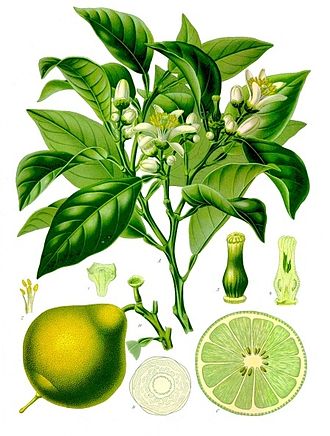
For years I’ve enjoyed Earl Grey tea. In fact it was the first non-mainstream tea I ever took a liking to, and that’s going back forty odd years now. A dear friend introduced me to it and I’ve bought it ever since.  Since it has always been very expensive compared to your common breakfast teas, almost double the price, it was reserved to enjoy only on the odd occasion. For a few years I didn’t drink it at all because my very tight budget just didn’t allow it. The expense I believe comes from the addition of subtly flavoured bergamot, an oil extract from the bergamot orange. “Citrus bergamia, the bergamot orange (pronounced /ˈbɜːrɡəˌmɒt/), is a fragrant citrus fruit the size of an orange, with a green color similar to a lime.” (Wikipedia)

Citrus_bergamia_-_Köhler–s_Medizinal-Pflanzen-184.jpg
Bergamot Orange [wikipedia]
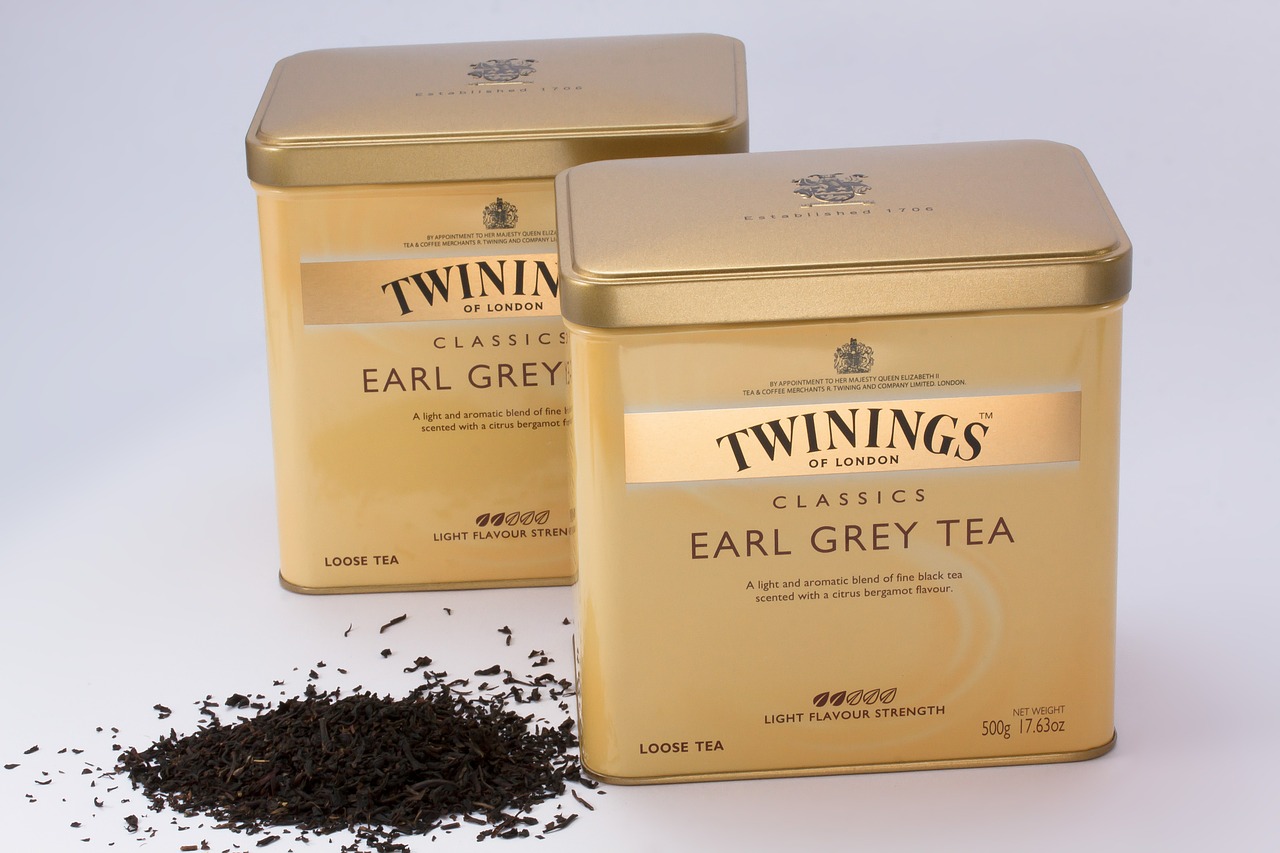
So a year or two back I began buying it again and noticed it wasn’t as strong. It took two bags to taste the bergamot. Or making a smaller cup. This led me to start reading the fine print. Yes it was labeled ‘light strength’. I contacted the Twinings Facebook page and asked what was up with the ‘light’? The answer was a little vague and I couldn’t really figure out what it meant. I did complain about the fact you could hardly taste the bergamot. Then recently I noticed a package change and the bags were sealed in a foil bag. The bergamot flavour was stronger and on examining the new pack it said 5% bergamot flavouring whereas the old packet said 3.5%. Yay, I said to myself. They’ve strengthened it. Then I began to ponder. ‘Flavouring’? Surely not? So I contacted the Facebook page again and asked is the flavouring real bergamot or imitation? I was instructed in their reply to contact Twinings using the email ad supplied. My first red flag. If it was real bergamot they would surely be proud to tell me that on Facebook for all the public to see. This was the reply I got:

In our Twinings tea bag Earl Grey products we use a combination of a granular bergamot flavouring, plus a liquid flavouring to give a strong aroma. The exact compositions of flavourings are the flavour houses’ proprietary information. However, the flavourings in Earl Grey include a small amount of bergamot extract and other natural flavouring chemicals and synthetically produced flavour materials.

So, I have replied (a week ago now) to ask what percentage of the flavouring is real bergamot? No answer yet although I suspect that will also be “the flavour houses’ proprietary information”. I will keep you posted on that one. My next email will question the cost compared to the real. (UPDATE BELOW).

black-tea-431849_1280
A small amount of bergamot extract & other natural flavouring chemicals & synthetically produced flavouring materials

I figure if they are using artificial chemical flavouring then they ought not to be charging the very high price they do. I always paid more knowing that of course bergamot will be expensive and if I wanted that flavour it was worth the price. So there you go, this is what bloody corporations do (and if you read my posts you will know I don’t generally swear but on this occasion I am. I’m kind of gutted really). They’ve cut the cost of production (and no, chemicals won’t be dearer than real bergamot otherwise they wouldn’t be going to the trouble of sourcing them) and pocketed the difference they made (from we customers). We’ve learned to identify MSG by its various other abbreviated names, however in this instance, with the artificially tweaked bergamot, we have no idea what we are drinking chemical wise, plus it is just not the real deal.

So … I don’t like the fact that I’ve been drinking bergamot flavoured chemicals, especially after recently reading of the great health benefits of Earl Grey which would only be

tea-cup-2107599_1280
Cup of Earl Grey Chemicals anybody?

present in real bergamot, (relaxing and sleep inducing were two of them) and I don’t like the fact I’ve been ripped off. If I didn’t love Earl Grey so much I’d stop drinking it. Although that may still be on the tables. I’m just weighing it all up at the moment.  I’m asking myself also, what other products have chemical flavouring rather than the real thing? It surely proves we must read the fine print. Please do watch ‘The Corporation’ movie. You’ll understand why and how corporations can subtly mislead us.

UPDATE: The next reply I got from Twinings was 14/7/2018:

“The percentage of flavouring components that are derived from bergamot in the Earl Grey blend is 4.8%.

We are unable to give a list of other ingredients as this is proprietary information.”

I then replied again on 15/7/2017:

Hello and thank you for your reply.
I would have to express my disappointment that we are paying a lot for Earl Grey tea on the understanding really that it is expensive because of the bergamot content, yet it is only a mere 4.8%.
I would really like to know how long since your company has substituted chemicals for the real thing. And if we are purchasing chemical substitutes for bergamot the tea should therefore be cheaper. I don’t imagine the chemicals will be dearer than real bergamot or your company would not be using them.
And about the chemicals that are proprietary info, how do we the consumers choose the chemicals we ingest if your company is not willing to disclose them?
Would you please tell me when the content changed from bergamot to chemicals?
Kind regards

I have heard nothing since. I expect I won’t be either.

Note also, the concentration of chemical flavouring has gone from 3% (going by the first box I saved around 1-2 years ago) to 4.5% (the box I now have) to according to the manufacturer’s email, 4.8%. When, I wonder, did it rise to 4.8% given the last email was a year ago & current labeling is only 4.5%?

The other million dollar question is: how much is ‘a small amount’ of bergamot? It must be very small I imagine, given they are not saying.

If you’re for knowing what’s in your food, do drop them a line & ask the pertinent questions as I have. Here is their email: InfoHelp.Aus@twinings.com


EnvirowatchRangitikei


Cesium 137 in Florida’s citrus – Fukushima Update Nov 2015 – Jeff Rense

https://www.youtube.com/watch?v=obGU-62pkfc

Published on Nov 19, 2015  (TheRapeOfJustice‘s channel on Youtube)

“Jeff Rense with Preston James, November 17, 2015.”

Florida’s citrus has cesium 137 in it and the whales are dying of starvation … their food irradiated. This is serious … and are we hearing about this in mainstream media? Of course not!

A short 4 minute clip updating you on Fukushima fallout.

EnvirowatchRangitikei