Category Archives: Treaty of Waitangi

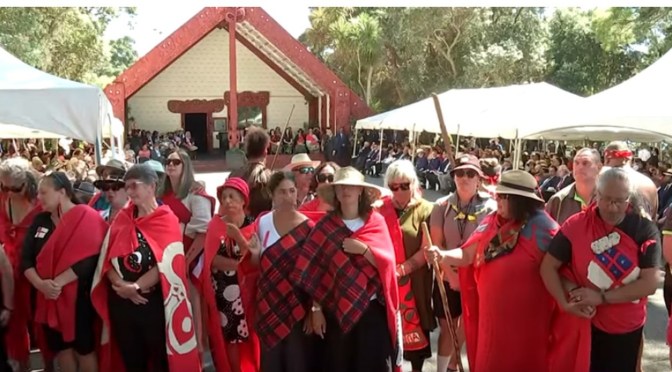
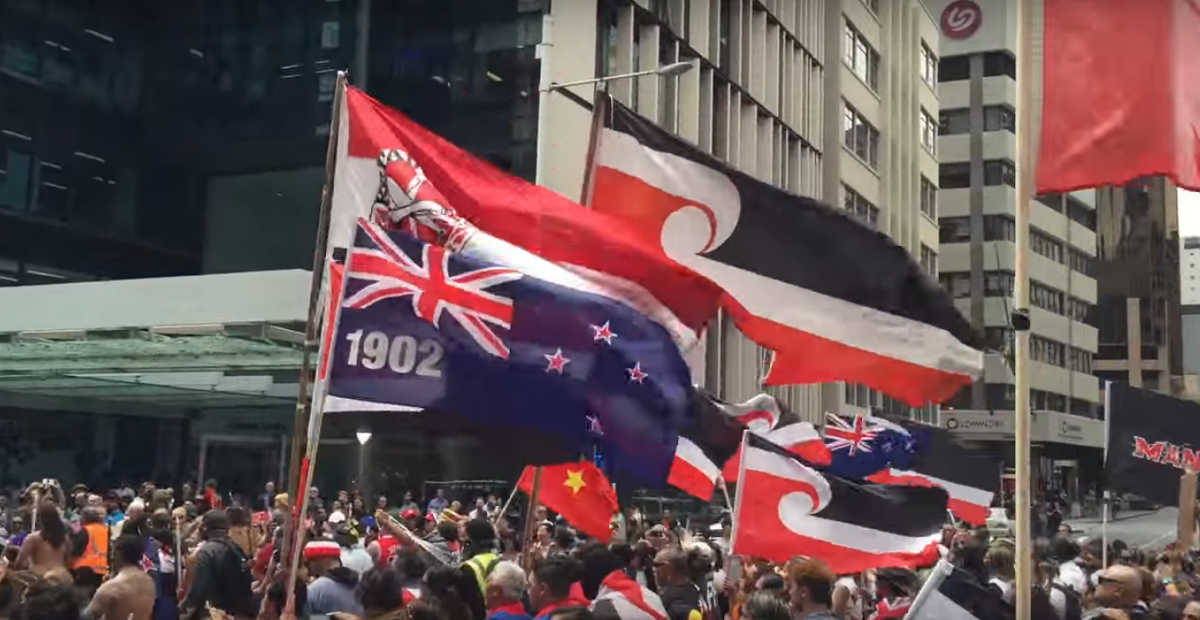
Seymour gets a clear message from Ngāpuhi at Waitangi: Mics snatched, backs turned

Turning their backs, a clear message it’s said, to stop talking and sit down. “We’ve always heard sentiments from our elders to be mindful and to be careful of the messages our children hear. Our tamariki were there, and they were watching.”

Stuff reports that there was hui by Ngāpuhi up to even the night before Seymour’s party arrival. They resorted at the very last minute to the lesser option for the reception given. Plan one had been to march them onto the marae, then march them straight back off without letting them speak at all.

Much criticism and talk around this silencing of Seymour, however, think about your opportunities given by them for speaking at their various venues and ‘consultations’. At local council it is a mere few minutes, and time up is time up with little if any feedback as to whether your concerns are taken on board. Same when making submissions. The entire system is not geared for dialogue. Your voice is very very limited.


From Stuff, NZ’s MSM

“We were expecting fireworks around Waitangi commemorations, and indeed they came. David Seymour, the man behind the Treaty Principles Bill, made his way onto the Treaty Grounds on Wednesday, where he was heckled, had his microphone taken away and had hosts literally turn their backs on him. Senior political correspondent Jenna Lynch was there. “| Subscribe: https://bit.ly/2JPg8oB Read more: For full coverage visit http://www.Stuff.co.nz Subscribe to our channel: https://bit.ly/2JPg8oB


The day the Treaty was first signed at Waitangi: exploring the differences in the English & te reo Māori versions (Claudia Orange)

For the info of international readers… today is Waitangi Day in NZ, the anniversary of the signing in 1840 of the Treaty of Waitangi, now a public holiday here. There’s much controversy currently  going on nation wide regarding the absence of PM Luxon at Waitangi this week (hmmm)… although denying it, it’s likely due to the Treaty Principles Bill currently before Parliament. Says he won’t approve it but allowed its introduction? And we have David Seymour present who is currently trying to change the said Treaty with his Bill, without any input from or consultation with the Crown’s signatories/partners … Māori. Smell a rat? I personally am with the deductions made by Australia’s Dr Jeremy Walker regarding Seymour’s connections to the Atlas Network.

And his proposed bill, it’s all having the desired effect, inciting racial division which, after all, has always been the ace card of empires.

He’s not being well received and IMHO rightly so. Plenty of coverage of the day on Youtube anyway if you’re curious to learn more, here’s one … and Claudia Orange here in her book excerpt explains the Treaty versions in both languages.  EWNZ


From 2021, by Newsroom
Featuring an excerpt from Claudia Orange’s book The Treaty of Waitangi / Te Tiriti o Waitangi: An Illustrated History

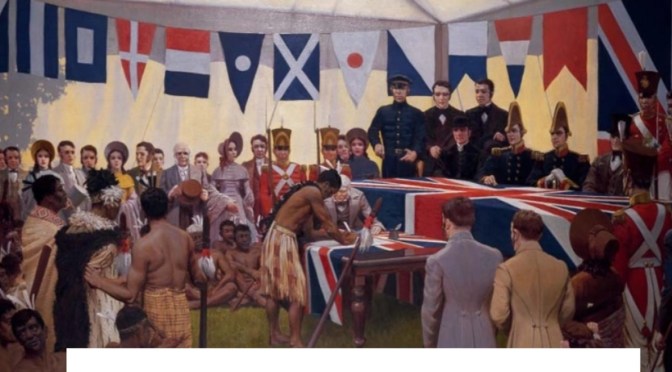
Governor William Hobson was caught by surprise. Summoned ashore late in the morning of February 6, he arrived in plain clothes but having snatched up his plumed hat. Several hundred Māori were waiting for him in the marquee, and several hundred others stood around outside. Many had arrived since the meeting the previous day, including some high-ranking women. Only James Busby and about a dozen Europeans had turned up, among them the Catholic Bishop Pompallier. Hobson, nervous and uneasy, more than once expressed concern that the meeting could not be considered a “regular public meeting” since the proper notice had not been given. He would not allow discussion, but would be prepared to take signatures.

On the table lay a tidily written treaty in te reo Māori – Te Tiriti o Waitangi – copied overnight on parchment by one of the missionaries, Richard Taylor. Rangatira were invited to come forward and sign. Just as Hone Heke was about to do so, William Colenso asked Hobson if he thought that the chiefs really understood what they were signing. “If the Native chiefs do not know the contents of this treaty it is no fault of mine,” replied Hobson. “I have done all that I could . . . They have heard the treaty read by Mr. Williams.”

Colenso agreed, but pointed out that it had not been explained adequately; he was afraid that they had not been made fully aware of the situation in which they would by their so signing be placed. Later the chiefs would hold the missionaries accountable, whereas their agreement needed to be “their very own act and deed”. Impatiently, Hobson brushed the protest aside, saying, “I think that the people under your care will be peaceable enough: I’m sure you will endeavour to make them so.”

The signing went ahead, while two rangatira kept up a running challenge in the traditional manner. Busby called each rangatira by name, probably from a list of those who had signed the 1835 Declaration of Independence. When each had signed, Hobson shook his hand, saying “He iwi tahi tātou.” According to Colenso this meant “We are [now] one people”, but Felton Mathew thought it meant “We are brethren and countrymen.” The expression greatly pleased the rangatira, who also shook hands with each of the official party; it was probably either Williams or Busby who told Hobson to express himself in this way. Both men must have known that the words would have a special meaning, especially for those who were Christian: Māori and British would be linked, under the guardianship of the Queen and as followers of Christ.

That afternoon, over 40 rangatira put their names or their moko on the parchment, affirming the agreement known as the Treaty of Waitangi/Te Tiriti o Waitangi. As the signing was drawing to an end, someone gave a signal for three thundering cheers for the Governor and Queen Wikitoria (Victoria). Patuone presented Hobson with a greenstone mere “expressly” for the Queen, and the meeting closed with Hobson retiring to the Herald, taking Patuone with him to dine. Colenso was left to distribute gifts – two blankets and some tobacco – to each person who had signed.

Several hundred New Zealand Company settlers had arrived in the Cook Strait region in January and February 1840. In March they had set up a form of government at Port Nicholson (Wellington) which, they claimed, derived its legality from authority granted by the local “sovereign chiefs”. The flag of an independent New Zealand, made on the company’s ship Tory, flew above the settlement, and a provisional constitution had been drawn up.

The chiefs at the left of this lithograph from the 1840s are Mananui Te Heuheu and his brother Iwikau. Mananui objected to Iwikau’s signing the Treaty. To the right is Apihai Te Kawau, who invited Hobson to set up his capital in Auckland. The image is taken from the Illustrated History by Claudia Orange.

Hearing of these moves, Hobson reasoned that the settlers were assuming powers of government that were the prerogative of the Crown. On May 21, he proclaimed sovereignty over the whole of the country: over the North Island on the basis of cession by chiefs who had signed the Treaty of Waitangi, and over the South Island and Stewart Island on the basis that Cook had “discovered” them. At this stage, Hobson held only the copy of Te Tiriti signed in the north, and one signed at Waikato Heads and Manukau Harbour. As for the South Island, he doubted that its “uncivilised” Māori were capable of signing any treaty. He had taken measures he deemed necessary under the circumstances, using Cook’s “discovery”, which his instructions had allowed him to use, if necessary.

Unaware of Hobson’s actions, Bunbury also proclaimed sovereignty: on June 5 at Stewart Island, by right of Cook’s discovery; and on June 17 at Cloudy Bay, by right of cession of the South Island by several ‘independent’ chiefs. The Colonial Office approved Hobson’s proclamations, which were published in the London Gazette on October 2, 1840. This was the only requirement at the time to validate sovereignty being acquired. Treaty meetings had continued after the proclamations; on September 3, the last signature was put on a copy of Te Tiriti, somewhere near Kāwhia, the copy not arriving back to Hobson until April 1841. 542 rangatira, among them 12 or more women of rank, had signed at about 50 meetings.

The differences between the two texts were crucial to a full Māori understanding – or the lack of it

Hobson had kept British officials informed throughout the signing process and had sent them copies of the Treaty. In October, he dispatched a final report, together with ‘certified’ copies of Te Tiriti and one English Treaty copy which was headed ‘translation’. He said nothing about any variations between the two texts, although it had already become apparent in April that there were differences in meaning, and therefore in Māori understanding of what they had agreed to. Hobson was aware of this.

The differences that affected the meaning were important:

ARTICLE 1
By the Treaty in English, Māori leaders gave the Queen “absolutely and without reservation all the rights and powers of Sovereignty which the said Confederation or Individual Chiefs respectively exercise or possess . . . over their respective Territories as the sole sovereigns thereof.”

By Te Tiriti in te reo, they gave the Queen “te Kawanatanga katoa o ratou wenua” – the governance or government of their land.

ARTICLE 2
By the Treaty in English, Māori leaders and people, collectively and individually, were confirmed in and guaranteed “the full exclusive and undisturbed possession of their Lands and Estates, Forests, Fisheries, and other properties . . . so long as it is their wish and desire to retain the same in their possession.”

By Te Tiriti in te reo, they were confirmed and guaranteed “te tino Rangatiratanga o o ratou wenua o ratou kainga me o ratou taonga katoa” – the unqualified exercise of their chieftainship – over their lands, settlements, and all their valued possessions.

ARTICLE 3
The Treaty in English extended to Māori the Queen’s “royal protection and imparts to them all the Rights and Privileges of British Subjects.”

By Te Tiriti in te reo, in consideration of the agreement to the government of the Queen, the rights and privileges of British subjects – “nga tikanga katoa rite tahi ki ana mea ki nga tangata o Ingarani” – were extended to all the Māori of New Zealand.

The differences between the two texts were crucial to a full Māori understanding – or the lack of it. Only 39  chiefs signed a copy of the Treaty in English, which almost certainly had a copy of the printed Tiriti in te reo with it to enable the missionary at Waikato Heads to read it to Māori. Apart from that, all Māori leaders signed a copy of the Māori language Tiriti, which did not convey the full meaning of the English text, especially the extent of sovereign powers. Only some would have been able to read Te Tiriti, even if they had been given the chance. Explanations at meetings with potential signatories might have helped, given that discussion was essential to Māori in the customary building of relationships; but the records that exist show negotiators did not comment on differences in meaning. Their aim was to secure rangatira agreement. The complexities of sovereignty, as they were increasingly being recognised under international law, were not brought up.

Thus the differences between the Māori and English texts laid the basis for different British (and later colonial) and Māori understandings of the agreement, and for the debate over interpretation that was to continue.

This is an edited extract from the newly published The Treaty of Waitangi / Te Tiriti o Waitangi: An Illustrated History by Claudia Orange (Bridget Williams Books, $39.99 ) available in bookstores nationwide.

SOURCE


RELATED:

Remembering why empires make treaties

Seymour’s principles of privatisation

The Atlas Network: Big oil, climate disinformation and constitutional democracy (includes Dr Jeremy Walker) From Central News UTS

Header Image by Bruno from Pixabay

Dr Carwyn Jones: It’s critical to submit on the principles bill – due tomorrow Tues 7 Jan. 2025

From Dr Carwyn Jones

The proposed Treaty principles bill fundamentally changes the meaning of Te Tiriti, and should be opposed through submissions as well as protest, writes Dr Carwyn Jones.

The Principles of the Treaty of Waitangi Bill is now before the justice select committee, and open for submissions.

The proposed law aims to redefine “the principles of the Treaty of Waitangi”, a concept that’s been used in New Zealand law and government since 1975.

Here’s Carwyn Jones explaining what’s in the bill, what happens now it’s had a first reading, and how to make a submission.

The first reading of a bill is one stage in the law-making process. It’s the first opportunity that MPs have to debate the proposed law and to vote on whether it progresses to the next stage.

The three parties in the coalition government (National, New Zealand First, and Act) agreed to introduce this bill and vote to support it at this first reading stage.

The bill therefore passed this stage with all the MPs of the coalition parties supporting it (68 votes) and all the MPs from the opposition parties voting against it (54 votes).

What are the coalition government’s proposed principles of the Treaty that are set out in the bill?

The bill proposes three new principles to replace the principles that are now in use. The established principles include partnership, active protection, redress, mutual benefit, and equity. The three new principles proposed by the coalition government are set out in clause 6 of the bill:

  • Proposed principle 1: The Government of New Zealand has full power to govern, and Parliament has full power to make laws. They do so in the best interests of everyone, and in accordance with the rule of law and the maintenance of a free and democratic society.
  • Proposed principle 2: The Crown recognises the rights that hapū and iwi had when they signed the Treaty/te Tiriti. The Crown will respect and protect those rights. Those rights differ from the rights everyone has a reasonable expectation to enjoy only when they are specified in Treaty settlements.
  • Proposed principle 3: Everyone is equal before the law and is entitled to the equal protection and equal benefit of the law without discrimination. Everyone is entitled to the equal enjoyment of the same fundamental human rights without discrimination.

What is the problem with the proposed principles?

The main problem with the proposed principles is that they do not reflect the agreement made in Te Tiriti o Waitangi. The bill presents a false picture of Te Tiriti.

Under Te Tiriti, Māori leaders granted the British Crown the authority of kāwanatanga (governmental authority in relation to British subjects in New Zealand). This authority is limited by the ongoing exercise of Māori authority, guaranteed in Te Tiriti as tino rangatiratanga.

The new “Principle 1” proposed in the bill ignores the guarantee of tino rangatiratanga.

The effect of the proposed “Principle 2” also ignores the guarantee of tino rangatiratanga. This newly created principle means that Te Tiriti o Waitangi offers no recognition or protection of Māori rights. Under that principle, Māori rights would depend on settlement legislation or recognition by some other instrument that applies to everyone.

Not only does this make tino rangatiratanga subordinate or subject to kāwanatanga, but it also erases the recognition of Māori rights altogether. This is contrary not only to Te Tiriti, but to international standards set out in the United Nations Declaration on the Rights of Indigenous Peoples.

The proposed “Principle 3” also seeks to erase Māori from Te Tiriti. Article 3 of Te Tiriti is a promise made specifically to Māori that Māori would enjoy the rights and privileges of British subjects. Te Tiriti does not make such a promise to anyone else.

There are, however, plenty of mechanisms within the New Zealand legal system that are aimed at protecting all citizens from discrimination and ensuring equality before the law. The new “Principle 3” does not add anything to those protections.

All it would do is remove a mechanism that helps Māori enjoy the equal rights and equal protection of the law.

The proposed principles are also completely different from established principles that have been used for decades as the main way in which the government tries to give effect to its obligations under Te Tiriti.

But the bill won’t change Te Tiriti itself, will it?

The bill cannot, of course, change the words that were written in 1840 and agreed to as Te Tiriti o Waitangi. However, the bill is seeking to fundamentally change the legal meaning and effect of Te Tiriti.

Has the government engaged with Māori about this bill?

No. Through this bill, the government has proposed to fundamentally change the meaning of Te Tiriti without any engagement with its treaty partner.

Is the bill likely to become law?

The coalition agreements state that the government will support the bill to pass the first reading stage. Now that stage is complete, there is no further commitment to support the bill to become law. National and New Zealand First have indicated that they will vote against the bill becoming law. If they maintain that stance, then it seems unlikely that this bill will become law.

However, despite their stated opposition to the bill, those two parties both agreed to include this bill in the coalition agreements, and they supported the introduction of the bill and voted in support of it at the first reading. There are no guarantees that they will oppose the bill at later stages of the process, particularly if they perceive some political advantage to supporting it.

In any case, the Act leader, David Seymour, has been clear that, even if this bill doesn’t become law, it will have laid the foundation to propose similar laws and/or referendums in the future.

What will happen if the bill does become law?

If the bill becomes law, a referendum will be held that would ask voters whether they support the law coming into force. If a majority of voters agree, then the law will come into force six months later.

That would mean that the newly created principles in the bill would replace the established principles that the courts and government have been working with for decades.

The new interpretation of the principles would apply whenever the concept of “the principles of the Treaty of Waitangi” arises in the context of other legislation. This would create considerable uncertainty in the law. It’s likely that prolonged and costly litigation would result, as the meaning and application of these new principles are worked out.

As noted above, the new principles would also effectively erase the recognition of tino rangatiratanga and remove the primary mechanism by which government provides for Indigenous rights here in Aotearoa.

What has the Waitangi Tribunal said about the bill?

The Waitangi Tribunal has issued a two-part report which addresses both this bill and the government policy to review references to “the principles of the Treaty of Waitangi” in 28 pieces of legislation. Part 1 of the Tribunal’s Ngā Mātāpono report can be found here. Part 2 can be found here.

The Waitangi Tribunal was highly critical of both the process and content of the bill.

In terms of process, the Tribunal noted, among other things, the lack of engagement with Māori:

This complete disempowerment of Māori in a process to rewrite the principles is unprecedented. It goes against the tenets of good government that Māori are entitled to expect as citizens, let alone as the Crown’s Treaty/te Tiriti partner. This exclusion from any say in a process to abrogate fundamental rights is extremely prejudicial, and the impacts will not fade for a long time even if the Bill does not proceed beyond the select committee.

In relation to the proposed “Principle 1”, the Tribunal stated:

In our view, Principle 1 is not consistent with the words, meaning, or intent of article 1 of the Treaty/te Tiriti. Rather, it is a statement of a new principle that bears no relation to article 1, overstates the kāwanatanga of the Crown, and ignores the two spheres of Crown and Māori authority that the Treaty/te Tiriti established, where overlaps must be resolved by good faith cooperation between the partners.

In relation to the proposed “Principle 2”, the Tribunal stated:

We find that principle 2 is the complete antithesis of article 2, and Cabinet’s approval of it for the Bill breaches the Treaty/te Tiriti. If enacted, Principle 2 would formally revoke in a statute the promises and guarantees the Queen made to Māori in 1840. It tramples underfoot the mana of the Treaty/te Tiriti and the mana of all Māori. It would have devastating prejudicial impacts . . .

The Tribunal also found that Principle 3 bears no resemblance at all to the texts and meaning of Article 3 for several reasons, including the following:

The Crown’s solemn promises in article 3 were made to Māori, not ‘everyone’, in recognition of their agreement to the Crown’s kāwanatanga and pre-emption powers.

. . .

Māori face barriers to equality that others do not, and many of those barriers were of the Crown’s making, which means that Māori do not always have a level playing field with other New Zealanders, and equitable treatment is required to ensure outcomes that are more equal. Equality without equitable treatment does not capture the promises made in Article 3 or the meaning of the Treaty/te Tiriti as a whole.

People in a modern liberal democracy can and do have different rights. Both officials and the Associate Minister interpreted the right to equality to mean that whenever the Treaty/te Tiriti is relevant to interpreting the law, it “cannot be done in a way that means people do not enjoy the same rights”. In our view, that is not equality, that is a negation of legitimate rights with assimilative intent.

Overall, the Tribunal concluded:

If this Bill were to be enacted, it would be the worst, most comprehensive breach of the Treaty/te Tiriti in modern times. The Crown would be turning the clock back to 1877 and the decision in Wi Parata that the Treaty/te Tiriti is a ‘simple nullity’. If the Bill remained on the statute book for a considerable time or was never repealed, it could mean the end of the Treaty/te Tiriti.

What have Ministry of Justice officials said about the policy underlying the bill?

The Ministry of Justice prepared a Regulatory Impact Statement on this policy. This is a standard process designed to assist the cabinet in considering new laws or other proposed regulations. They provide a high-level summary of the problem being addressed, the options and their associated costs and benefits, the consultation undertaken, and the proposed arrangements for implementation and review. The Regulatory Impact Statement on the Treaty principles policy can be found here.

In relation to the policy underlying the Principles of the Treaty of Waitangi Bill, the Ministry of Justice advised:

The final content of the principles in the proposed Bill is yet to be determined and it might be possible to develop principles that align with established law and the spirit and intent of the Treaty/te Tiriti.

However, their description in the policy proposal is inconsistent with the Treaty/te Tiriti. It does not accurately reflect Article 2, which affirms the continuing exercise of tino rangatiratanga. Restricting the rights of hapū and iwi to those specified in legislation, or agreement with the Crown, implies that tino rangatiratanga is derived from kāwanatanga. It reduces indigenous rights to a set of ordinary rights that could be exercised by any group of citizens.

An interpretation of Article 2 that does not recognise the collective rights held by iwi and hapū, or the distinct status of Māori as the indigenous people of Aotearoa New Zealand, calls into question the very purpose of the Treaty and its status in our constitutional arrangements.

The status quo also provides a higher degree of certainty about what the Treaty principles are and how they operate in New Zealand law. The existing principles have been developed over years of jurisprudence and by the actions of successive Governments. Defining the principles of the Treaty/te Tiriti in legislation might provide a level of clarity about the intent of Parliament when it refers to the principles, but it could also introduce more uncertainty into our constitutional arrangements because it would unsettle the established jurisprudence about the effect of the principles.

What happens next?

The bill has been referred to the justice select committee. This is a committee made up of 11 MPs that includes representation from all the parties in parliament. The committee will gather information and prepare a report on the bill for the House of Representatives. That report may include recommendations for changes to the bill.

The justice select committee is due to report back to the House by May 14, 2025. MPs will consider the committee’s report and then will vote to determine whether the bill continues to the next stage of the law-making process.

How can I have my say on the bill?

The select committee will call for public submissions on the bill to inform their report. Anyone can make a submission on the bill. There is no required form of submission, and they do not need to be long or detailed.

If you wish to make a submission, one approach might be to set out whether you support or oppose the bill, then provide the reasons for your position, and then suggest specific recommendations of changes to the bill, if you have any.

Submitters can also ask to speak to the committee. This could be in person or online. The committee will decide who it will hear from and how that will be managed. If you do wish to speak, individuals will usually only be allocated five minutes to speak to the committee and organisations may be allocated 10 minutes.

There is guidance on making a submission here. Following the online submission process on parliament’s website and using the online submission form is a relatively easy way of making a submission.

The justice select committee page is a good place to view the bill, see when submissions open, watch the proceedings of the committee, and find other information about the bill. The justice select committee page can be found here.

Why should I bother making a submission when the government has already said the bill won’t become law?

It is important that there is strong and visible opposition to the bill so that it is clear to politicians that there is no political advantage in progressing it. Groups who are opposed to recognising Te Tiriti and Māori rights are campaigning to try to persuade the National Party, in particular, to continue its support for the bill. Just as we did with hīkoi, we need to continue to demonstrate the overwhelming opposition to this bill.

Dr Carwyn Jones (Ngāti Kahungunu) is Pūkenga Matua (Lead Academic) of Ahunga Tikanga (Māori Laws and Philosophy) at Te Wānanga o Raukawa, and Honorary Adjunct Professor, Te Kawa a Māui (School of Māori Studies) at Te Herenga Waka Victoria University of Wellington.

E-Tangata, 2024

SOURCE

RELATED
Seymour’s principles of privatisation

Photo credit: supplied to E-TANGATA

Seymour’s principles of privatisation

by Ryan Ward
@ E-TANGATA

This totally makes sense. Drawing attention here to the Atlas Network & the Mont Pelerin Society. Perchance you are wondering who they are, I’ve included videos below the article, interviews on topic from Central News UTS and discussions with Dr Jeremy Walker (Australia) who has written extensively on topic. He is also interviewed by DOC Studios @ Youtube, with a particular focus on NZ. Shining a light on Seymour’s connection to the network. EWNZ


“…why those opposing the bill should be taking every opportunity to hammer home to the public the corporate ties held by Seymour and his backers and their intention to extract Aotearoa’s resources and siphon the profits to the wealthy here in New Zealand and to international corporations. It’s not about equality, it’s about opening up New Zealand to corporate exploitation.”


David Seymour’s Treaty principles bill is now in select committee phase, and open for submissions.

National and New Zealand First claim they won’t support it going further, but public opposition will need to be clear and overwhelming to ensure it doesn’t proceed.

If the bill went to referendum, current polling suggests it would have a good chance of passing, with 36 percent of the public supporting redefining the Treaty principles, and 30 percent undecided.

For those opposed, there are a few important things to consider, writes Ryan Ward.

We can expect an all-out propaganda campaign in favour of the bill.

This will be led by right-wing lobbying groups like Hobson’s Pledge, the Taxpayer’s Union, Groundswell, and others. Hobson’s Pledge has already indicated they have tens of thousands of submissions in favour of the bill ready to go and will be soliciting many more. They and other lobbying groups will also blitz the media with ads and messaging in favour of the bill.

David Seymour has been laying the groundwork for this campaign all along. His consistent and careful messaging surrounding the bill has framed its goal as providing equal rights to all New Zealanders, rather than giving special rights to different groups depending on their ancestry.

He has repeated this message over and over. According to Seymour, it’s about democracy and fairness.

This political messaging will be extremely difficult to counter using the predominant oppositional messaging which focuses on the bill’s racism or ignorant interpretation of the translation or meaning of the Treaty.

It will not be enough to loudly proclaim that the bill is racist toward Māori (it is very much so) or that Seymour is ignorant of the true meaning of the Treaty (he is not).

As evidenced by his dismissal of expert opinion and the haka and protest in parliament, and his minimisation of the hīkoi last week (possibly the largest protest in New Zealand’s history), Seymour is unmoved by factual argument or large shows of public disapproval. (A petition against his bill currently has just over 290,000 signatures, more than the 246,000 people who supported Act in the last election.)

By framing his bill in terms of “equality for all”, David Seymour has shrewdly tapped into the existing racial biases that have successfully torpedoed recent attempts to provide more representation and equity for Māori.

Much of the campaign messaging in the last election by Act, National, and New Zealand First railed against ideas of “co-governance” and unequal treatment of Māori at the expense of the rest of New Zealand. Seymour and his backers will continue to use this divisive rhetoric to turn the public against Māori and in favour of the bill. The recent Voice referendum in Australia and our own recent election results indicate that the public is very vulnerable to this type of dishonest and divisive political messaging.

Getting sucked into the race-war rhetoric that Seymour and his backers are trafficking in has been a losing strategy so far. It puts the opposition on the defensive: the disingenuous arguments about equality for all New Zealanders seem to place Seymour and his bill on an obvious moral high ground and are very difficult to counter effectively.

As Seymour said at the bill’s first reading: “The challenge for people who oppose this bill is to explain why they are so opposed to those basic principles.” We already know how difficult it is to win against such disingenuous framing.

Those opposing the bill need to find another political message that will resonate with the public. A simple message that can’t be co-opted by leveraging entrenched racial biases and relying on the public to understand complex legal and translational arguments.

A recent editorial in the Spinoff by Rupert O’Brien pulls the curtain back on Seymour’s dissembling language of equality and provides an offensive rather than a defensive oppositional rhetorical strategy.

O’Brien notes that while most of the discussion and analysis of the bill has been related to whether it accurately interprets the meaning of Te Tiriti, the real motive behind the bill is related to Act and its backers’ long-term strategy of deregulating business and opening up New Zealand to corporate investment, extraction, and exploitation.

As O’Brien writes, Act and their benefactors “know that it [Te Tiriti] stands as a major obstacle in their goal of deregulation and promoting laissez-faire economics.”

“They aim to achieve deregulation by, in part, turning government departments into state-owned enterprises (corporatising) and subsequently selling these as going concerns on the private market (privatising) . . .

“The Treaty principles have proved a significant roadblock to both corporatisation and privatisation in the past and present a clear threat to any plans of future development of public assets to the private sector.”

This is likely the real, though unspoken, reason that Seymour and his backers are pushing so hard to redefine the Treaty principles. By framing the bill as a means for equality for all New Zealanders, and then inflaming the race-war rhetoric that results from the justified outrage from Māori, Seymour can avoid discussing the real reasons behind the bill and his ties to domestic and international corporate interests that will profit handsomely from opening up Aotearoa to unregulated corporate development. Industries such as gas and mining have been long stymied by the legal interpretation and enforcement of the Treaty.

Focusing on the race war stops the public from “following the money”, as the saying goes.

But the money has been followed. And it leads to domestic and international right-wing lobbying and funding groups whose main goal is to enact policy that results in upwards wealth transfer and corporate exploitation. Many of Act’s largest donors are individuals such as Graeme Hart and the Gibbs family, who profited handsomely from the privatisation of New Zealand’s public sector in the 1990s under National.

There is a reason why Seymour desperately wants to keep the real motivations for his Treaty principles bill secret. The public generally don’t look favourably on politicians and political agendas that are blatantly in favour of corporate interests at the expense of the rest of us. If the real reason for the bill were made clear and widely known, the current framing would crumble, and the equality-race-war rhetoric would no longer likely be an effective strategy to win public support for the bill.

This is why an oppositional strategy focused only on the race-war rhetoric will fail, and why those opposing the bill should be taking every opportunity to hammer home to the public the corporate ties held by Seymour and his backers and their intention to extract Aotearoa’s resources and siphon the profits to the wealthy here in New Zealand and to international corporations.

It’s not about equality, it’s about opening up New Zealand to corporate exploitation.

By making this crystal clear to the public, and focusing relentlessly on a simple oppositional message, we can unite Aotearoa and turn the tide against Seymour and his reinterpretation of the Treaty principles.

Ryan Ward is a Senior Lecturer in the Department of Psychology at the University of Otago.

E-Tangata, 2024


VIDEO & OTHER LINKS BELOW: (content warning, the DOC Studios videos do contain a few expletives)

The Atlas Network: Big oil, climate disinformation and constitutional democracy (includes Dr Jeremy Walker) From Central News UTS

David Seymour and Debbie Ngawera Packer on Q&A | Jeremy Walker on if Atlas is involved (Dr Walker begins at 1hr 11 mins)


Further info from Dr Jeremy Walker who has written extensively on topic drawing the public attention to the Atlas Group (posted @ Central News UTS) :

Further resources and tips on Atlas from Dr Jeremy Walker. Please disseminate where useful. Some tips on research methods for researching the Atlas Network’s global reach and organisation in specific countries and regions. A key insight was provided to me by Mirowski and Plewhe’s (2009) Road from Mont Pelerin, which defines a “neoliberal” as one of the membership of the global Mont Pelerin Society and/or of the thinktanks of the Atlas Network (p. 4). That book focuses mainly on the ‘economic ideas’ of Hayek, Friedman et al. in Western countries, but as my book More Heat than Life (2020) shows, these ‘ideas’ were paid for by oil money from the beginning, and promoted by oil money via the ever-growing network of thinktanks modelled on the original, the IEA (London) which almost from the beginning was supported by Big Oil, uranium, banking etc, as its seems most of the later clone ‘thinktanks’ are or were where we have any data. The senior exec directors of Atlas orgs are often MPS members. DeSmog has a list of MPS members including the date they were admitted as at 2013. You will find Alan Gibbs under the UK section. https://www.desmog.com/wp-content/uploads/files/Mont%20Pelerin%20Society%202013-membership-listing_Redacted.pdf

Very interesting names on it, including Charles Koch who has ploughed untold millions into the Network, also for example Aust PM John Howard. Wayback machine is vital, Atlas posted their global directory on their website until c. 2021. https://web.archive.org/web/20210824142756/https://www.atlasnetwork.org/partners/global-directory

There is plenty to learn from searching the Atlas site itself. You should also use Wayback to explore deleted material from individual websites. On the basis of that list a team of researchers based at DeMontford has compiled this very important database which: “contains the name and roles of board members, supervisory board members, academic advisory boards, and CEO’s of all think tank organisations that are part of the Atlas Network/Atlas Economic Research Foundation between January 2021 and December 2022. The dataset covers each continent under separate sections for individual continent analysis. https://figshare.dmu.ac.uk/articles/dataset/Atlas_Think_Tank_Main_Employers/22217050?file=39486961

Search for academic literature on neoliberalism, Mont Pelerin Society, and the names in the MPS directory, but Atlas Network as such as very limited exposure. As far as I know no one has published on the basis of this archive, like the MPS records, at the Hoover Institution. https://oac.cdlib.org/findaid/ark:/13030/c80k2f0h/

DeSmog has the best resources on various thinktanks and the hacks that work for them, but yet to fully incorporate the Atlas dimension as they have only recently grasped this. Eg. ‘the Koch network’ is more or less on overlap of the US Atlas orgs, as oil billionaire Charles Koch has been on the Atlas board to my knowledge since 1987, and is a key funder of George Mason University where the head office is based. Also useful is SourceWatch, LittleSis https://www.desmog.com/databases/

Robert Brulle’s paper’s on the funding of climate denial orgs in the US is very useful, although likewise confined to the US and not cognisant until recently that nearly all the orgs named are in fact Atlas affiliates, spinoff orgs, and/or staffed and funded by the same set of ‘philanthropies’, including Donor’s Trust (set up by Atlas HQ to disguise donors identities) and the various Scaife and Koch foundations, as well as others named in Jane Mayer’s Dark Money (Olin, Bradley). https://scholar.google.com/citations?hl=en&user=PlB0bM4AAAAJ&view_op=list_works&sortby=pubdate

Esp these two: https://assets-eu.researchsquare.com/files/rs-178750/v1/77e68e86-364d-45b5-b426-b0355e605d70.pdf?c=1631873834https://www.activist360.co/wp-content/uploads/2019/12/Institutionalizing-Delay-Climatic-Change.pdf

Below are links to an online version of my book, and two subsequent pieces showing the method above used in the Australian context and some of the sources in the bibliography may be useful. Walker, J (2023) Silencing the Voice: the fossil-fuelled Atlas Network’s campaign against constitutional recognition of Indigenous Australia, Cosmopolitan Civil Societies,15(2). (Open Access) https://epress.lib.uts.edu.au/journals/index.php/mcs/article/view/8813

Walker, J (2022) Freedom to burn: mining propaganda, fossil capital and the Australian neoliberals. https://www.researchgate.net/publication/359443471_Freedom_to_Burn_Mining_Propaganda_Fossil_Capital_and_the_Australian_Neoliberals

In Slobodian, Q & Plehwe, D (eds) Market Civilisations: Neoliberals East and South, Princeton University Press. https://press.princeton.edu/books/hardcover/9781942130673/market-civilizations

Walker, J (2020). More Heat than Life: the Tangled Roots of Ecology, Energy and Economics, Palgrave. https://archive.org/details/walker-more-heat-then-life.-the-tangled-roots-of-ecology-energy-and-economics-2020/page/259/mode/2up?q=atlas

Image Credit: By Glenn Davies – Own work, CC BY 4.0, https://commons.wikimedia.org/w/index.php?curid=136317457


How the Treaty ‘principles’ evolved and why they don’t stand up to scrutiny

By Prof. Jane Kelsey

Analysis: ACT’s bill can be seen as the culmination of moves over several decades by the Crown to use Treaty principles to rewrite te Tiriti and justify its own power, writes Jane Kelsey.

Analysis: ACT Party leader David Seymour has said the goal of his Treaty Principles Bill is to stimulate an overdue conversation on te Tiriti o Waitangi/Treaty of Waitangi. At that level at least he has succeeded.

His proposal to rewrite te Tiriti through new legislation has certainly triggered debate – to the point where the most profound constitutional question of all has been asked on the floor of parliament: did Māori cede sovereignty when they signed te Tiriti in 1840?

But the debate has also exposed deep ignorance, among political leaders and many others, about te Tiriti and the more recent concept of Treaty “principles”.

Prime Minister Christopher Luxon fell back on Governor Hobson’s unilateral proclamations of sovereignty in 1840, which relied on what Māori scholar Margaret Mutu calls “the English draft of Hobson’s that Māori never agreed to”.

Meanwhile, Labour leader Chris Hipkins accepts there was no Māori cession of sovereignty, but that somehow the Crown has sovereignty now.

Beyond parliament, inflammatory and easily discredited disinformation about te Tiriti has circulated widely, backed by those who also advocate for the Treaty Principles Bill and its aim to cement into law a fundamental rewriting of te Tiriti.

READ AT THE LINK

RELATED:

Treaty bill plays on ignorance

Why Empires Make Treaties

Photo Credit: By Archives New Zealand from New Zealand – Reconstruction of the Signing of the Treaty of Waitangi, Marcus King, CC BY-SA 2.0, https://commons.wikimedia.org/w/index.php?curid=51249748

Remembering why empires make treaties

Claudia Orange describes the day the Treaty was first signed at Waitangi and explores the differences in the English and te reo Māori versions of te Tiriti

Excerpts from ‘The Treaty of Waitangi’ by Dame Claudi Orange, recognized authority on the Treaty. She is a distinguished historian, and the author of The Treaty of Waitangi (1987) and An Illustrated History of the Treaty (2021).

“…all Māori leaders signed a copy of the Māori language Tiriti, which did not convey the full meaning of the English text, especially the extent of sovereign powers. Only some would have been able to read Te Tiriti, even if they had been given the chance.”

“Governor William Hobson was caught by surprise. Summoned ashore late in the morning of February 6, he arrived in plain clothes but having snatched up his plumed hat. Several hundred Māori were waiting for him in the marquee, and several hundred others stood around outside. Many had arrived since the meeting the previous day, including some high-ranking women. Only James Busby and about a dozen Europeans had turned up, among them the Catholic Bishop Pompallier. Hobson, nervous and uneasy, more than once expressed concern that the meeting could not be considered a “regular public meeting” since the proper notice had not been given. He would not allow discussion, but would be prepared to take signatures.”

READ THE ARTICLE:

LINK: https://www.newsroom.co.nz/waitangi-week-february-6-1840-by-claudia-orange

Photo: Wikipedia “A later reconstruction in a painting by Marcus King, depicting Tāmati Wāka Nene in the act of signing. Hobson is falsely shown in full uniform (he was actually wearing civilian clothing).”[50]

At least $2.6 million ratepayer funds being spent because Horowhenua DC refuses to determine mana whenua

By Veronica Harrod

18 September, 2020

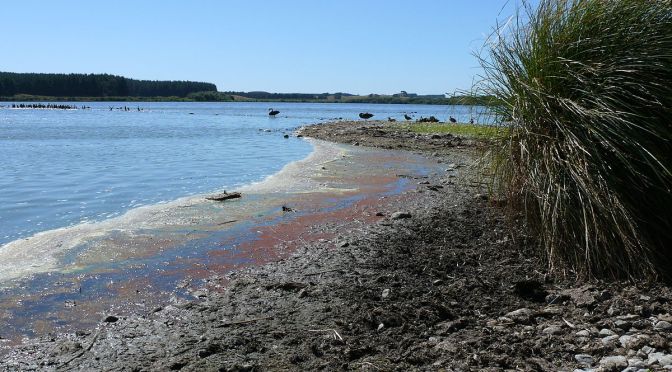
At least $2.6 million ratepayer funds being spent because Council refuses to determine mana whenua. Horowhenua District Council has committed at least $1.4 million ratepayer funding to Te Rūnanga o Raukawa and $814,500 to Muaūpoko Tribal Authority and the Muaūpoko Lands Trust in two separate agreements over Levin’s Waste Water Treatment Plant called The Pot. The agreements, worth a combined minimum total of $2.6 million, were signed by all parties prior to a decision by Manawatu Whanganui Regional Council hearing commissioners on June 2, 2020 to grant the Council a 25 year resource consent to continue storing and discharging treated waste water to The Pot, situated on ecologically and culturally important sand dunes about 4 kilometres west of Levin. In both agreements the Council says it, “takes no position in relation to who holds mana whenua, customary interests and rights, and/or rights of iwi/hapu over any area.” An Environment Ministry document titled ‘Guidelines for Consulting with Tangata Whenua under the Resource Management Act: An Update on Case Law’ states that although determining who holds mana whenua “can be a controversial issue” that “reasonable steps must be taken to identify the correct tangata whenua group. “It is the third agreement Council’s chief executive David Clapperton has signed with Te Rūnanga o Raukawa without the matter being discussed around the Council table – and the second known agreement signed by Larry Parr who is listed on Council’s webpage as chief executive officer for Te Rūnanga o Raukawa. Mr Clapperton also signed lucrative financial agreements with Te Rūnanga o Raukawa over Foxton’s Waste Water Treatment Plant and the Levin Landfill. The latest agreement was signed on behalf of Ngati Raukawa hapu including, “Ngati Kikopiri (Ngati Huia), Ngati Hikitanga and Ngati Pareraukawa. ”Ngati Raukawa hapu parties to the agreement include Pataka Moore, David Moore, Rachael Selby, Ngatokowaru Marae Committee and Ngati Kikopiri Mori Marae Committee Society in association with the Kikopiri Marae Reservation Trustees. Te Rūnanga o Raukawa, Muaūpoko Tribal Authority and Muaūpoko Lands Trust all agreed to:

1 Inform the regional council within 24 hours of signing the agreement, signed by Te Rūnanga o Raukawa on 5 March and MuaUpoko Tribal Authority on 16 April, “that their position on the Resource Consents have changed and they no longer oppose a 25-year term.”

2 Inform hearing commissioners deciding The Pot application the agreement entered into with the Council responds to, “their concerns, in particular kaitiakitanga, whanaungatanga, manaakitanga and rangatiratanga.”

3 Support the Council in, “any further matters before the hearing commissioners or any appeals” including appeals by the Council if The Pot consent was refused or conditions were imposed which limited or negated the agreement.

4 “Not participate in any way (including supporting any other party) in any process relating to the resource consents being granted, including before the hearing commissioners.”

5 “Not take or be involved in any other proceedings against” the Council or “make complaints against” the Council, “in relation to the discharges at The Pot.”

6 Assist the Council, “to talk with other submitters to try and resolve issues before the hearing commissioners or on any appeal in a manner that achieves the outcomes of this Agreement.”

7 “Work together to identify, assess and, if appropriate, assist consenting potential new areas for irrigation of treated wastewater from the LWWTP on the ‘Tucker Block’ land adjacent to The Pot” owned by the Council.The Council also committed to work with MTA to negotiate and sign a Memorandum of Partnership, “as soon as reasonably practicable, but no later than 3 months from the commencement of this Agreement.”

Let’s learn our real histories

Now I’m putting a focus today on this issue because it’s Waitangi day here in Enzed.

We live currently in a world that sees lying as ok. We used to have a world that honoured truth on paper at least, in our ideals, in our official statements whilst nevertheless serving us up history books that omitted much pertinent stuff and blatantly lied about other stuff. (Yes the old saying ‘the victors write the histories’ and write them they did). And now we have officially adopted a business model (since Rogernomics particularly) in which well, it’s ok to lie. As I used to oft repeat, watch The Corporation movie (found on our Corporations page) and see that in fact corporations, likened by the appropriate professionals to psychopathic personalities where yes, lying is the norm. Do watch it … it explains a lot about why our world has left the gold standard of truth.

So yes it’s Waitangi Day. Commemoration of that day we all ‘became one’ so to speak. Well at least that is what was said on the day it was signed along with the giving of tobacco and blankets. I’m focusing particularly on telling our true histories because so many do not know them & they sadly become the basis of a lot of misunderstanding. A post I saw this morning on FB raised objection to the selling of golliwog dolls in a coastal NZ town (and wait, I explain why in a minute). The writer expressed her objection & stated she would not be purchasing anything from the said shop and why, after which the whole post was taken down. Re posted, it then attracted the usual ‘what’s wrong with golly’ etc etc etc. This is how I commented: The term ‘wog’ actually stands for ‘wily Oriental gentleman’. My father who served in the Middle East (World War 2) told me this … it is a derogatory term for colored peoples. A racist term. It intimates that they are sly & not to be trusted. Bit like the term ‘caught red handed’ referring to Indian peoples. The ironic & shrewd twist about this is that the peoples who coined the terms were in fact the wily ones as implied, the real thieves of land and resources. That’s why they came after all. It wasn’t to help (aka civilize) I’m afraid as we’ve largely been told. The truly wily thing is that this crucial info was never taught us in schools. Such info as how Maori soldiers returned from serving in the two World Wars only to find some of their lands confiscated and given to returning white soldiers. Or, lands promised them not given. Or, that millions of acres of lands were confiscated aka stolen by the colonial government. Or that we once had segregated picture theaters. And segregated Plunket. So we grew up thinking it was all good. This is why people share this info so folk know … it’s not because they’re ‘dwelling on the past’ and ‘need to go forwards’. These histories are all well documented. This is how we end up with convos like those I see here because the folk do not have all the information. Really it’s about respect for others. Learn the real histories. By way of illustration on this point, imagine if we had never learned the history of Nazi Germany & the extermination of millions of Jews, Gypsies & homosexuals, and Grandma at Christmas time made nice cushions and embroidered them all with swastika signs she saw in a design book & gave them to her Jewish neighbors. Same thing regarding their predictable reaction. Grandma would be saying ‘what’s your problem’? Hiding the histories works like a charm. And anyway I certainly won’t be buying any gifts from that gift shop in question when I visit Waitarere. Same as I don’t anywhere else in the country. It’s the only way to make the point in a country that is now married to the business model. If the entire district sent the message they wouldn’t be buying from the said shop for the said reason then of course they’d be removed pronto. BTW my father was ‘half caste’ … he told us that folk in the 1920s would cross the street rather than talk to him & his siblings. And we were taught at school we’re ‘all one’? This friends is why we need to all learn the histories so that when any of the said stolen lands are compensated for (& note never for their true current value, just a tiny proportion) that this is Maori privilege. It’s not. The said Treaty after all did promise undisturbed possession of etc etc etc …. google it and read it for yourself.

For starters here is one history you won’t have read … I posted it here not so long ago… from snoopman.net.nz

The Masonic New Zealand Wars: Freemasonry as a Secret Mechanism of Imperial Conquest During the ‘Native Troubles’

By Steve ‘Snoopman’ Edwards

Re-Discovering the Big-Picture of Empire in Aotearoa

One hundred and forty-five years after the wars between native Māori and British imperial and colonial forces ended, most New Zealanders remain oblivious to the conflicts’ Masonic underpinnings. For those not disposed to empathize with Māori, this obliviousness works as a vector that transmits racism throughout the British-American tax haven jurisdiction of New Zealand. Furthermore, this racial prejudice persists structurally throughout the realm of New Zealand’s major and significant economic, political and cultural institutions.

This colour-based prejudice against the native people of New Zealand hides a largely ignored problem of class-stratification, or a hierarchy of privilege based on economic wealth accumulation, control of key institutions and the valourization of status addiction. It is no small irony that when the framing of discussions on racial prejudice does widen to include the phenomenon of a hierarchically class-structured society, such discourses frequently fail to nail the root cause of systemic material inequality or structural dispossession: Oligarchism.

During the period of New Zealand Wars (1845-1872), the secret society of Freemasonry was, essentially, an expression of oligarchism, which is the belief in the right of super-rich people to rule over humanity through the structural domination of resources, including institutions, covert networks and the exploitation of secret mechanisms. Historians of the New Zealand Wars and the New Zealand’s formative history have largely overlooked the instrumental role that Freemasonry played to absorb New Zealand into the British Empire. While some prominent Freemasons are mentioned in the 1940 edition of the Dictionary of New Zealand Biography published by the Department of Internal Affairs, this ‘Who’s Who’ compendium of New Zealand hardly captures the brotherhood’s secret network of key players. Freemason papers, proceedings and their lodge books, many of which were not intended for public eyes, provide some details of their esteemed brethren, ‘noble’ heroes and fallen brothers. Together, these hard-to-find works provide partial lists of those who fought in the various regiments, volunteer militia and forest rangers, as well as those embedded across New Zealand’s hymn-singing protestant political-commercial-military establishment.

READ MORE

https://snoopman.net.nz/2017/04/25/the-masonic-new-zealand-wars/


And further, some truth on the history of Ihumatao:

Ihumātao | How Fletchers Collected a Waiver Card in ‘Neo-Feudal Monopoly – The Ihumātao New Zealand Edition’


Ihumātao | How Fletchers Collected a Waiver Card in ‘Neo-Feudal Monopoly – The Ihumātao New Zealand Edition’


Image by Gerd Altmann from Pixabay


Resistance to using 1080 grows in Far North: DoC has misled the public on operations costs, consultation & perceived support

The Department of Conservation’s plan for a 1080 aerial drop in public and private forests in the Far North later this year is meeting growing resistance.

Critics say use of the poison over more than 60 years has had devastating effects on wildlife, killing indiscriminately, inflicting an “extremely cruel and inhumane death” that often takes days. Locals for Responsible Conservation also argue that it poisons water, including sources used by people.

“Poisoned animals are left to rot in the forest and waterways, and remain toxic for many, many months,” a spokesman said.

“Dropping deadly poison over our environment is not an acceptable practice, and it is not sustainable.

“There are many alternatives that contribute positively to our communities and our employment opportunities that do not risk our health and our environment.

“We support sustainable, responsible conservation that benefits local communities and respects our environment, including all creatures great and small.”

Meanwhile a reply to an Official Information Act request from Locals for Responsible Conservation, received in March, raised more questions, glossed over the risks and showed that DOC had misled the public about the cost of the operations and local support for the drop, the group said.

A number of the groups listed as having been consulted said they had not been, while others had wrongly been cited as supportive.

http://www2.nzherald.co.nz/the-country/news/article.cfm?c_id=16&objectid=12073542

Lake Horowhenua epitomises the New Zealand Government’s disdain for its indigenous people – both past and present

Lake Horowhenua epitomises the New Zealand Government’s disdain for its indigenous people – both past and present. Throughout the history of Aotearoa, Mua-Upoko has always been at the mercy of a Crown intent on suppressing the cultural and environmental concerns of the indigenous owners of this lake in order to enhance the recreational and economic pursuits of the Pakeha.
Most recently, it was the crux of a case appealed to the Supreme Court, a court supposedly attuned to the nuances of the Treaty of Waitangi. In effect, the Supreme Court has invalidated itself. And Parliament as well. By ceding sovereignty, the Chiefs of New Zealand were guaranteed by the Queen of England ‘full, exclusive and undisturbed possession’ of lands and other property they and their descendants individually or collectively possess.

The Crown’s jurisdiction, its authority to govern therefore rests upon compliance with the Treaty. Before all nations at the United Nations human rights hearing in Geneva on 30 January 2014, the Minister of Justice affirmed the Treaty of Waitangi to be New Zealand’s founding document. Without compliance, this Treaty disintegrates.

And so does governance by Parliament and jurisdiction from the courts.
In terms of ownership, Lake Horowhenua is unique. It is, and always has been owned by
Mua-Upoko; since 1886 in English title.
But there is more to the legend of the lake than constitutional matters of property rights.
Lake Horowhenua was purchased not in cash. It was bought in blood. Here on the artificial islands Mua-Upoko created for their own refuge, Te Rauparaha and his Ngati Toa
raiders stockaded men, women and children ‘killing some from day to day as required for food’. Concealed in clearings nearby, Taueki and the remnants of Mua-Upoko would hear their kin, across the silence of the lake; unable to rescue them if their tribe was to survive.
READ MORE

https://www.mfe.govt.nz/sites/default/files/media/Fresh%20water/RegulationAndReform/hunt-a–g.pdf

Type ‘Horowhenua’ into the search box for further articles on the damning history of Lake Horowhenua. See also ‘categories’ (left of page) & our Local Govt Watch pages, Horowhenua. A must read also is the author’s book about the Lake called ‘Man of Convictions’.

Photo: Wikipedia


What you need to know about the ‘new’ & still secret TPPA that isn’t new & doesn’t bode well for Maori, or anybody else really except of course the corporations

Ah… this is good for you but we can’t tell you how good because it’s all been negotiated in secret and we aren’t allowed to tell you what it says but trust us Kiwis … it’s good for you … Tui anyone?


12417586_836629499776564_6975834990288359606_n

Posted by Jenese James

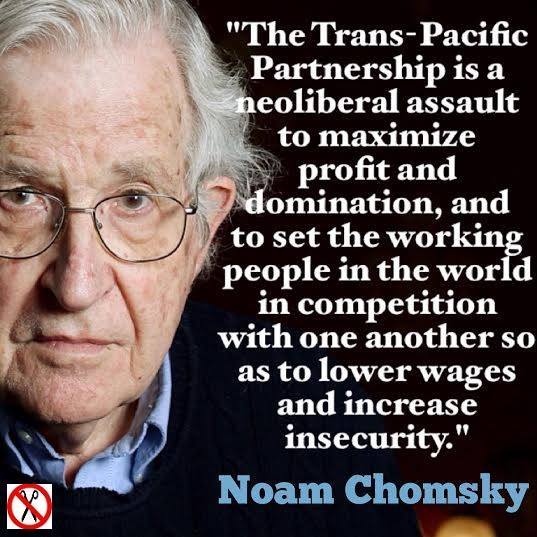
This is a trade deal NZ should NOT SIGN – The TPPA is a corporate passport to exploit the natural wealth of a nation by ‘legally’ robbing its citizens and the environment of that natural wealth

I want to point out the reason why so many politicians promise this and that before they get elected but once in power reneg on that promise – its because of the T&C of various trade deals done through membership of various organisations often in secret – to give an example …”…..Trade Minister David Parker says NZ First’s policy of taxing bottled water exports would breach various international agreements because it is discriminatory. But there is a much bigger risk that foreign investors could threaten to bring an ISDS dispute if moves to resolve water claims affect their commercial interests….”

here is another example

“…….The new government is rushing through changes to the Overseas Investment Act to restrict foreign purchases of residential housing. They admit that the law would breach the TPPA if it was passed after the agreement came into force….”

Its vital to grasp this because this is the key to understanding how policies are now made via these agreements and why voting really doesn’t make much difference once deals are done and always these deals are not done in public view but behind closed doors in secret as this trade deal reveals it – the secrecy behind it is tantamount to a betrayal of the people because it will allow corporations to steal the wealth of the people of the nation for private profit,

example … “…….The separation of cutting rights from the land was a device used by the Labour government in 1988 to allow corporatisation of the forests and separation of the land from the trees so the forests could be privatised…..”  …. this was the Roger Douglas’ cabinet.

Another example …  “…Labour and NZ First want to restore the right of NZ, and Maori, ownership of the forests. They have to change the foreign investment law before the TPPA comes into force because they can’t do so afterwards…..”…

so when you protest you are protesting against a much bigger force than you realize – politicians’ hands are tied once deals are signed.

Read it all below
27541044_10213377763015840_6200269177576196284_n

This is about the TTPA and Te Tiriti o Waitangi..

Written By Jane Kelsey

The state of play with TPPA

Ø The original Trans-Pacific Partnership Agreement was signed by the 12 negotiating parties in Auckland on 4 February 2016, in the face of a massive protest led by tangata whenua.

Ø Japan and NZ completed their domestic processes to ratify (adopt) the original agreement during 2016.

Ø In January 2017 US President Trump withdrew the US’s participation from the TPPA.

Ø The 11 remaining countries met 7 times in 2017 to rescue the TPPA minus the US.

Each country tabled a list of provisions in the TPPA that it wanted removed or suspended.

Apparently, NZ under the National government did table a list of requests, but that remains secret.

The new Labour-NZ First government, supported by Greens, only had input into these negotiations at the very end.

Labour asked other TPPA countries to suspend the right of foreign investors to sue the NZ government in offshore tribunals over new laws and policies (investor-state dispute settlement/ISDS), but it failed.

Labour did not seek to make other changes or even suspend other provisions of concern to Maori.

Ø In December 2017 in Vietnam, the TPPA-11 agreed to suspend 20 items from the original text, pending the US’s re-entry; 4 matters remained to be finalized.

Ø In January 2018 in Tokyo the TPPA 11 announced a new deal, one year to the day from Trump’s withdrawal.

Ø Canada insisted that it needed changes to protect its culture sector. Reports say it also achieved changes on automobiles, although that was not on the list. These were done through side letters that remain secret.

Ø The TPPA-11 will contain the entire old agreement. 22 of the 1000+ original provisions have been suspended, pending US re-entry, but they have not been removed.

Ø The TPPA has been rebranded the Comprehensive and Progressive Agreement on Trans-Pacific Partnership (CPTPP or TPPA-11) even though the substance is the same as the old TPPA.

Ø They intend to sign the TPPA-11 agreement in Chile on 8 March 2018.

Ø The text of what they agreed remains secret. Japanese officials say the text will not be released until after it has been signed. The National Opposition, which ran the secretive negotiations, wants the text released.

Ø In January 2018 President Trump said he would consider re-entering the TPPA, but the terms would have to be more favourable to the US than the original agreement.

Ø The process for US re-entry will require consensus. Labour says some suspended items may never be re-activated. But the US domestic political processes mean any US re-entry will inevitably require more benefits to the US, not less.

Ø The TPPA-11 will reportedly come into force after 6 of the 11 parties have ratified it by completing their domestic processes. Again, the actual text of this provision has not been released.

The new government and the TPPA

Ø Labour, New Zealand First and the Greens all wrote dissents to the majority select committee report on the TPPA and said they would not support its ratification.

Ø Labour said the economic modelling was flawed and there must be a robust cost-benefit analysis that includes impacts on jobs and on distribution, as well as a health impact assessment. Neither report has been done for the TPPA-11.

Ø Labour now claims the new TPPA-11 meets Labour’s 5 pre-conditions for change, but it does not: it provides market access for exporters (but it has no new economic analysis of net costs and benefits); it protects the Pharmac model for buying medicines (but the provisions are suspended not removed); the Treaty of Waitangi, the sovereign right to regulate and restrictions on foreign ownership of property are all protected (which they are not, see below).

Ø Winston Peters says the TPPA-11 is a very different deal from the one NZ First opposed and they will now support it. That is not true. The ISDS provisions and core protections for foreign investors that NZ First so staunchly opposed remain the same and have not even been suspended.

Ø New Zealand’s ratification of the TPPA-11 requires another round of submissions to the parliamentary select committee on which National has 4 of the 8 members, including the chair and deputy chair.

Ø If legislation is needed to implement the agreement, National has said it will vote with Labour and NZ First. The Greens remain opposed.

Ø So the parliamentary process is a foregone conclusion.
MAORI A

The Treaty of Waitangi Exception

The Treaty of Waitangi exception in the TPPA is a copy of one that was drafted in 2000 for the Singapore free trade agreement (FTA).

The same exception has been rolled over in agreements since then, without any consultation with Māori, even though today’s agreements impose much greater restrictions on what governments can do.

Prime Minister Ardern says NZ ‘has an exemption that says it is always able to legislate and act to protect its obligations under the Treaty of Waitangi and that can’t be challenged by other nations’. That is not true.

Ø The Waitangi Tribunal in the TPPA claim (Wai 2522) said the Treaty exception ‘may not encompass the full extent of the Treaty relationship’ because it only covers Crown actions that give preferences to Māori, not laws or policies that apply generally but are at least partly for Treaty compliance (water, mining, fisheries).

Ø The PM said the Tribunal found the ‘exemption provides protections for the Treaty’. That is also not true. The Tribunal found no breach of Treaty principles because the exception was ‘likely’ to offer a ‘reasonable degree’ of protection for Māori. But it did not accept the Crown’s claim that ‘nothing in the TPPA will prevent the Crown from meeting its Treaty obligations to Māori’.

Ø The Tribunal was not convinced that the exception protects Crown actions from a dispute by a foreign investor, for example on water or mining.

Ø The Wai 2522 claimants made proposals for more effective protection. These have been ignored. There has been no consultation on any stronger protection.

Ø The wording of the exception hasn’t changed in other negotiations since the TPPA. Officials say that they can’t change the wording because they tell other countries they must have this wording because it’s in all NZ’s agreements. New wording would open the text for negotiation.

Ø But New Zealand got additional new wording on UPOV 1991 at the last minute in the TPPA (see below), so it’s not true the Crown can’t demand and win different wording.

Ø Labour seems to be accepting the Crown’s advice and accepting an ‘imperfect’ Treaty protection as a trade-off for other commercial benefits it sees in these deals.

The Waitangi Tribunal claim is ongoing

Ø The Waitangi Tribunal granted urgency to the TPPA (Wai-2522) claim, but limited its scope to whether the wording in the Treaty exception provided effective protection for Māori interests. It didn’t address other parts of the claim (eg water, mining, health).

Ø The Tribunal’s time for preparing its report was cut back because the National government pushed through the legislation to implement the TPPA; once the Bill was introduced the Tribunal had no jurisdiction.

Ø The Tribunal found there was a reasonable level of active protection in the Treaty exception, but suggested there should be consultation on better protection, and it kept oversight of the UPOV 1991 issue (below).

Ø The Crown wants the Tribunal process terminated. The claimants point to a lack of good faith consultation over TPPA-11 negotiations since the Tribunal’s report and issues not addressed in the urgent hearing remain.

Ø On 30 January 2018 the Tribunal asked the parties (basically the Crown) to say by mid-February (a) when the text of the new agreement would be available, (b) what its effect would be on the Crown’s engagement with Maori on the Plant Varieties regime and adopting UPOV 1991, (c) what issues in the TPPA claim remain live, and (d) ‘when would be the appropriate time for the Tribunal to commence inquiry into the remaining substantive claims that have been filed with respect of the TPPA?

WAI 262 and the UPOV 1991 convention

Ø The TPPA required NZ to adopt the UPOV 1991 Convention that creates rights to claim intellectual property rights on plant varieties, which Wai 262 report and the Cabinet have recognized is inconsistent with te Tiriti.

Ø Legal arguments from the Wai-2522 claimants showed the Treaty exception would not protect a Crown decision not to adopt UPOV 1991, because the decision only applies to a ‘preference’ to Maori. Not adopting UPOV 1991 is not a preference to Maori.

Ø The Crown convinced the other TPPA countries to adopt an annex that allows NZ to either adopt UPOV 1991 or pass a domestic law equivalent to UPOV 1991 that complies with te Tiriti. But it has to do one or the other within 3 years of the TPPA coming into force.

Ø That obligation hasn’t changed in the TPPA-11. National and Labour didn’t try to have it suspended.

Ø The Waitangi Tribunal has retained oversight of this matter and is actively monitoring it.

Ø The claimants say MBIE’s consultation process is unacceptable and have set in train their own process for expert advice and consultation.

Foreign investors’ rights

Ø The TPPA (and earlier NZ agreements) allows foreign investors from the countries involved to challenge laws, policies and decisions of a NZ government in controversial ad hoc offshore investment tribunals (known as investor-state dispute settlement or ISDS). An ISDS tribunal can award massive damages against a government for breaching special protections the agreements give to foreign investors.
PM Ardern has called ISDS a ‘dog’.

Ø The new government tried to protect NZ from ISDS in the TPPA-11, but failed.

Ø Australia signed a side-letter with NZ not to allow their investors to use ISDS against each other. But that side-letter was in the original TPPA and in other agreements. It’s not new to Labour.

Ø The new government says some other countries will sign a similar side letter, but won’t say who. Unless all the other ten countries sign side-letters, they don’t protect NZ from the risk of ISDS disputes.

Ø A provision that allowed investors to use ISDS to enforce infrastructure contracts has been suspended (not removed); but that is marginal and doesn’t change the TPPA’s special protections to foreign investors or the ISDS process through which they can enforce them.

Ø The Treaty of Waitangi exception is unlikely to protect NZ from an ISDS case over new laws to promote compliance with te Titiri.

Ø The Waitangi Tribunal noted ‘uncertainty about the extent to which ISDS may have a chilling effect on the Crown’s willingness or ability to meet particular Treaty obligations in the future or to adopt or pursue otherwise Treaty-consistent measures.’(p.50

Ø The government points to other protections for public policy measures, but those protections don’t apply to the main rules that investors rely on in ISDS disputes.

Ø The new government has instructed officials to oppose ISDS in future agreements, which is a positive move. But that doesn’t mean it will walk away if other parties insist on it. Officials are likely to advise that any new market access for agriculture is an acceptable trade-off.

Water

Ø Trade Minister David Parker says NZ First’s policy of taxing bottled water exports would breach various international agreements because it is discriminatory. But there is a much bigger risk that foreign investors could threaten to bring an ISDS dispute if moves to resolve water claims affect their commercial interests.

Ø NZ has protected the right to adopt discriminatory measures in the TPPA-11 ‘with respect to water, including the allocation, collection, treatment and distribution of drinking water’. But it says: ‘This reservation does not apply to the wholesale trade and retail of bottled mineral, aerated and natural water.’

Ø That reservation of the right to regulate on water does not apply to the main rules that investors rely on when they bring ISDS disputes against governments.

Ø The Treaty of Waitangi exception would not stop investors challenging such measures.

Ø There is a serious risk that the government would back away from a proposed solution to Māori rights over water if MFAT or an investor from a TPPA country, says the solution would breach NZ’s obligations.

Land and forestry

Ø The new government is rushing through changes to the Overseas Investment Act to restrict foreign purchases of residential housing. They admit that the law would breach the TPPA if it was passed after the agreement came into force.

Ø In January 2018 the government also sought consultation with Maori over proposals to redefine sensitive land under the Overseas Investment Act to include forestry cutting rights.

Ø The separation of cutting rights from the land was a device used by the Labour government in 1988 to allow corporatisation of the forests and separation of the land from the trees so the forests could be privatised.

Ø Labour and NZ First want to restore the right of NZ, and Maori, ownership of the forests. They have to change the foreign investment law before the TPPA comes into force, because they can’t do so afterwards.

Ø The TPPA only allows the government to keep the categories that are subject to foreign investment vetting which exists when the TPPA comes into force.

Ø The TPPA text says the vetting applies to ‘sensitive land’. If the government wants to implement its election policy, it has to rush through these changes to the law.

Ø But if the TPPA enters into force the government won’t be able to change the investment law to address other failed treaty settlements, such as fisheries quotas, or policies like carbon credits for forests.

Ø Even if changes are made to allow restrictions on future foreign investors, any existing investors from TPPA countries could still bring an ISDS dispute claiming their rights have been breached by the new laws because they can’t get as much for selling their assets as they had expected.

‘Consultation’ and tino rangatiratanga

Claimants in Te Paparahi o te Raki (Wai 1040) have challenged the Crown’s right to negotiate international treaties without the full and equal participation of nga iwi me nga hapu.

Ø The original TPPA was negotiated in total secrecy, aside from leaks. So were the meetings after the US withdrew. National was not interested in genuine consultation with anyone, let alone recognising te tino rangatiratanga o nga iwi me nga hapu. The same secrecy continues under the new government.

Ø The Waitangi Tribunal advised the Crown to consult with Māori to make the Treaty of Waitangi exception stronger. That hasn’t happened.

Labour has kept the same exception. Labour held meetings in various cities in early December and January. But this is not a good faith dialogue: they say the TPPA-11 is the best deal they can get, no further changes can be made, and they are prepared to sign it. The ‘consultation’ can’t change anything. That’s not a Treaty partnership.

The new government says it wants to develop a ‘new and inclusive trade agenda’ that makes trade and investment work for Māori, small business, women, and address climate change, environment and regional development.

That sounds positive. But the examples it gives are clip-ons to existing agreements that don’t address, let alone override, the problems the agreements create. And they are usually unenforceable.

Labour and NZ First’s positions on TPPA and te Tiriti show that it’s businesses as usual for the Crown.

They will try to shut down the Waitangi Tribunal process, while they run consultations around the motu (eg Wellington, 12 February) to promote an agreement the majority of parliamentary parties say they will support.

Other processes to advance Titiri-based continue over UPOV 1991.

Public meetings will be held in February in

Auckland on 12th,
Wellington on 14th,
Nelson on 20th,
Christchurch on 21st
and Dunedin on 22nd.

The arguments being used to promote the agreement don’t stack up for Maori or for Aotearoa/New Zealand.

The parties that make up new government promised change. If they are going to deliver, their positions on TPPA have to change.

Professor Jane Kelsey, Faculty of Law, University of Auckland, 1 February 2018
Prof Jane Kelsey
Faculty of Law
The University of Auckland
New Zealand
J.kelsey@auckland.ac.nz


 

Click HERE for further details of the meetings

TPPA: NZ’s Treaty obligations protected with an exemption? the PM has been ‘very badly advised’ says Prof Jane Kelsey

Video From Bryan Bruce’s TV Channel

Comment: PM Adern says: “The TPP has an exemption for NZ that says NZ is always able to legislate and act in order to preserve our obligations under the Treaty of Waitangi and that can’t be challenged by other nations”.

My personal understanding is that it is corporations not nations that will challenge anything and everything they want, and we are now all aware I’m sure of how corporations basically have nations by their short and curlies. Cold comfort really. When can we ever trust a corporation? Like never? Watch The Corporation movie & see, they tell bold faced lies and their only obligation is literally to their shareholders & nobody else. Consider this, why have all their negotiations for the TPPA been conducted in SECRET? Like all the corporate council meetings these days. They’re doing/talking stuff they don’t want you to know about. Not rocket science.  EnvirowatchRangitikei

https://vimeo.com/253730472

A clip from yesterday’s filming of a crowd-funded documentary on Free Trade we are making in which Law Professor Jane Kelsey comments on a Facebook video by Prime Minister Ardern in which she assures New Zealanders that the Treaty Of Waitangi is protected from in the TPP-11 (CPTPP) Kelsey says ” the Prime Minister has been very badly advised” and Maori have much to be concerned about in this trade agreement.

TPPA “Key government regards the Treaty as an inconvenience rather than as the founding document of our nation…” Prof Jane Kelsey

Bryan Bruce, one of my favourites, an award winning documentary maker and best selling author,  updates us on Prof Jane Kelsey’s comments on TPPA ‘progress’ as it relates to Aotearoa’s founding document the Tiriti o Waitangi – visit his website, “Knowledge is Power” for further articles.
EnvirowatchRangitikei

the-full-and-final-fantasy
Te Tiriti o Waitangi – The Treaty of Waitangi, signed in 1840

That Incovenient Treaty Thing Again

Bryan Bruce

Professor Jane Kelsey says that the reason why the government suddenly announced it is fast-tracking the report date for the select committee considering the Trans-Pacific Partnership Agreement (TPPA) from the end of May to 4 May is now clear.

In a press statement released today she states:

“It gives the Waitangi Tribunal three rather than seven weeks to produce its urgent report on the claim brought by prominent Maori that the Agreement violates the Crown’s obligations under the Treaty of Waitangi”….


There’s no need for the Waitangi Tribunal to be rushed into making its decision.

As Professor Kelsey points out :

” The earliest the US Congress will consider implementing legislation is during the lame duck period after the presidential election in November.”

This shortened consideration process demonstrates ( if you were in any doubt) that the Key government regards the Treaty as an inconvenience rather than as the founding document of our nation.

And that is an insult to us all – because the thing that makes us unique in the world as a nation is that we are the people of the Treaty.

If we dishonour it – then who are we?

Read more: SOURCE

You can also read Jane Kelsey’s Press release here:
http://www.scoop.co.nz/…/government-seeking-to-stymie-repor…