
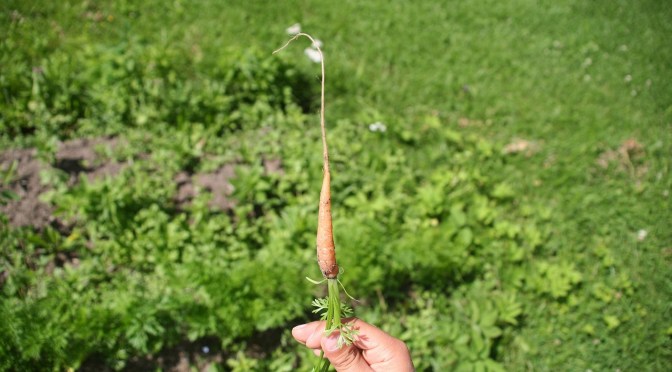
I am often asked this question by gardeners that find that some or all their plants dont make much growth if any. There are several possible reasons for that and a common one is NPK fertlisers locked up in the soil because of excessive use.
I will give an example of this and that is in regards to a man made fertiliser that became very popular because of the TV Gardening show where the Prof would be tossing handfuls of Nitrophoska Blue over his gardens like it was confetti.
Now interestingly enough (well I think it is interesting) I was the one that first introduced Nitrophoska Blue to home gardeners about 50 years ago.
How it happened was that a rose society member in Palmerston North came to my garden centre and asked if I had Nitrophoska Blue?
I didnt but ask him what he wanted it for and was told that he had heard it was a good product to give to his roses.
I told him that I would find out where it came from and get some in.
Nitrophoska was originally developed and introduced globally by the German chemical company BASF and Ravensdown became the NZ importer.
So I contacted Ravensdown and asked about obtaining a few kilos and their advise on how much should be applied to gardens and in particular roses?
Their technical person said used sparingly for general purpose and about half a tea spoon per roses once a month would be ideal.
So I started selling Nitrophoska Blue in small 500 gram bags for $2.00 each with the instructions of one half teaspoon per rose each month during growing season and 50 grams per square Metre for general garden use.
It is a inexpensive (cheap) fertiliser that only Costs about $2.00 a kilo in bulk.
Commercial growers pay currently only $1830 for a metric ton.
If applied as the Prof was doing on TV it locks up in the soil and plants get no benefit.
When people tell me that they have been use heavy rates of fertilisers I tell then to drench the soil with Magic Botanic Liquid (MBL) at 20 mils per litre of water using a watering can.
MBL unlocks the chemical fertilisers as well as the organic ones and plants then can have a feed and grow,
I have had some excellent reports from gardeners that have used the MBL in this manner one time only, the rest of the time as a 10 mils in a litre of water to spray the foliage of plants.
MBL we have found, sprayed onto plants that are sulking and not growing has kicked them into action soon after application.
Another one which has brought gardens to life is BioPhos sprinkled around gardens at 100 grams per square metre then lightly watered in and the plants take off. Likely they were lacking in phosphate.
Plants have evolved over millions of years and adapted to the conditions that they grow in.
One of which is the pH of the growing medium or soil.
Every plant has its preferred pH level and will thrive in that level which enables it to take up nutrients that are available.
If the pH is outside of the tolerance which the plant needs, it cannot take up the nutrients that are available and grows poorly no matter how much food you throw at it.
Some gardeners worry about the pH and buy inexpensive meters that are probes put into the soil to see what the pH is.
Usually the reading they get on the metre is one of too high a acidity or far too low alkaline.
This causes them panic and wanting to know how to get the pH correct for the plants they are growing.
I ask them, ‘are plants and weeds growing ok or are they poorly’ ?
The normal reply is every thing is growing ok but my pH meter is reading such and such.
I then explain to them that to obtain a true pH reading of the soil you need a pH meter that you calibrate with a Buffer solution to enable an accurate reading.
These meters range in price from $100 to over $500 and buffer solutions cost about $15 for each 250 mil solution.. a Buffer solution of 4pH for acid use and pH 10 for general use.
With a known pH buffer solution you could use a cheap pH meter and once you see what the meter reads when putting into a known pH buffer, then you know how far out of kilter the meter is.
A better and less expensive way is to obtain a spa pool pH test kit or Litmus test kit for a few dollars.
You take a small sample of soil from the area you wish to check and put it into a clean glass jar that has a lid. You fill the jar to half full with Distilled pure water.
It must be distilled pure H2O otherwise all other water may have its own pH reading.
With the lid on you shake the contents for several minuets and then put your test strip into the dirty water and compare the reading to the colour chart supplied.
In a vegetable garden growing all crops other than tomatoes and potatoes you can get a good idea as to whether you need to make the soil more alkaline or not.
To do this you plant two rows of peas about 50 cm long and 50 cm apart and with one row you sprinkle Wallys Calcium & Health along the row.
When they grow look and if the row with the Calcium & Health appears better plants than the other row then you need to apply the Calcium & Health to the garden.
If you find that the soil is too alkaline for the plants that need a more acidic growing medium then simply sprinkle Wallys Sulphur Powder over the soil to make it more acid.
Garden Lime: are not all equal in that if it is a hard lime/calcium it will take a long time to change the pH of the soil. A soft quick acting lime gives instant results.
The test is to wet thumb and fore finger and take a little of the lime powder and rub between the wet fingers.
If gritty like sand its a hard lime, if it turns to a small slurry it is soft lime.
Plants like potatoes and tomatoes need calcium but not one that makes the soil alkaline.
For potatoes best to use gypsum and for tomatoes dolomite.
Gypsum is calcium and sulphur thus pH neutral and Dolomite is calcium and magnesium and also pH neutral.
Readers will realise that I am on and on about growing your own healthy food (boring but health critical) Now it has been revealed that NZ Health has admitted “nutrient depletion caused by prescribed medications.”
WOW, You take medications prescribed for a health issue and they rob your body of nutrition and you are given no advise to off set this real problem for your overall health?
See for full story: https://envirowatchnz.com/2026/09/13/the-missing-system-what-health-nz-has-now-admitted-about-medication-induced-nutrient-depletion/
Get vital health giving sulphur back into your food chain by simply putting some of Wallys Real Blood & Bone in the planting hole of your vegetables or incorporating into soil where you sow seeds.
Have health back as we used to have in the 50’s and 60’s when Real Blood & Bone was used by market gardeners!
If you would like to watch or listen to our gardening session recorded recently by Rodney Hide and yours truly…
go to https://rcr.media/episodes/gardening-with-wally-food-shortages-and-the-future-of-gardening
Phone 0800 466464
Garden Pages and News at www.gardenews.co.nz
Shar Pei pages at www.sharpei.co.nz
Mail Order products at www.0800466464.co.nz
New Zealand Bill of Rights Act 1990. Part II of the Act covers a broad range of Civil and Political Rights. As part of the right to life and the security of the person, the Act guarantees everyone:
1The right not to be deprived of life except in accordance with fundamental justice (Section 8)
2The right not to be subjected to torture or to cruel, degrading, or disproportionately severe treatment or punishment (Section 9)
3The right not to be subjected to medical or scientific experimentation without consent (Section 10)
4The right to refuse to undergo any medical treatment (Section 11)
Furthermore, the New Zealand Bill of Rights Act 1990 guarantees everyone: Freedom of Thought, Conscience, and Religion.
This includes the right to freedom of thought, conscience, religion, and belief,
INCLUDING THE RIGHT TO ADOPT AND HOLD OPINIONS WITHOUT INTERFERENCE (Section 1)
Seize the moments of happiness, love and be loved! That is the only reality in the world, all else is folly.
Image by Henri Ollikainen from Pixabay
Discover more from Environmental Health Watch NZ
Subscribe to get the latest posts sent to your email.

A great pic if a little improbable — an anti-gravity effect? 🙂
LikeLike
Lol, true it is improbable! Hadn’t looked closely in my search for one
LikeLike