
“Clyde MacLean walked into an Auckland specialist clinic on 25 May 2023 for what was expected to be the third and final stage of a dental implant procedure. Instead, he was rushed to hospital after suffering a hypoxic brain injury caused by hypoxia and bradycardia while under sedation. He spent ten days in a coma before regaining consciousness. Today, MacLean remains paralysed and continues to struggle with speech, eating and drinking.“
From eLocal Report: Based on reporting by Brianna McIlraith for The New Zealand Herald, published by RNZ HERE.
Routine Procedure Ends In Tragedy
Clyde MacLean walked into an Auckland specialist clinic on 25 May 2023 for what was expected to be the third and final stage of a dental implant procedure.
Instead, he was rushed to hospital after suffering a hypoxic brain injury caused by hypoxia and bradycardia while under sedation. He spent ten days in a coma before regaining consciousness.
Today, MacLean remains paralysed and continues to struggle with speech, eating and drinking.
Family Still Seeking Answers
MacLean’s wife, Shareen Ali, says the impact on their family has been devastating.
While ACC accepted the injury treatment claim, the family also lodged a formal complaint with the Health and Disability Commissioner in February 2024. More than three years after the incident, they say they are still waiting to learn exactly what happened.
“The amount of impact of this incident on all our lives has been beyond any words can express,” Ali said.
She says her primary concern is ensuring that any failures are identified so the same thing does not happen to another patient.
Sedation Timeline
As part of the ACC process, the attending anaesthetist provided a detailed timeline of the procedure.
According to the records:
- MacLean arrived at the clinic shortly after midday.
- He was sedated using midazolam followed by multiple doses of propofol.
- During the procedure his oxygen saturation rapidly fell from 99 percent to 47 percent.
- Oxygen delivery was progressively increased as his condition deteriorated.
- He then developed profound bradycardia — an abnormally slow heart rate.
- Emergency treatment, including atropine, CPR and assisted ventilation, was initiated before paramedics arrived.
The report states MacLean was eventually intubated and transferred to Auckland City Hospital before later being moved to Middlemore Hospital.
Long Road To Recovery
MacLean remained in intensive care following the incident.
Although rehabilitation has helped him regain some movement, he continues to live with permanent disabilities resulting from the brain injury.
His wife has since left her employment to become his full-time caregiver.
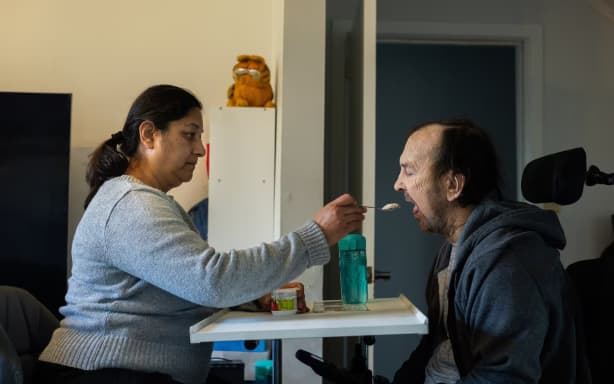
Shareen Ali has left her job to care for Clyde MacLean full time. Photo: Jason Dorday.
Complaint Supported By Expert Opinion
The family’s complaint to the Health and Disability Commissioner was supported by an independent assessment commissioned during the ACC process.
According to the complaint, specialist anaesthetist Dr Graham Roper concluded there had been “some serious procedural errors at a critical time” during the emergency response.
The complaint alleges oxygenation should have taken immediate priority when MacLean developed profound bradycardia and critically low oxygen saturation.
Independent Expert Findings
As part of Clyde MacLean’s ACC claim, specialist anaesthetist Dr Graham Roper, FANZCA Specialist Anaesthetist at Te Nikau Hospital in Greymouth, was asked to independently assess the circumstances surrounding the incident.
According to the complaint, Dr Roper concluded that the attending anaesthetist had made “some serious procedural errors at a critical time.”
His assessment stated that when MacLean developed profound bradycardia alongside critically low oxygen saturation, the immediate priority should have been restoring oxygen delivery through assisted ventilation.
“Profound bradycardia in the presence of very low oxygen saturations is an emergency indicative of cardiac hypoxia and requires immediate oxygen delivery. This needed to be the priority and MacLean needed manual ventilation with enriched oxygen.”
Dr Roper also concluded that the anaesthetist was the most qualified person in the room to provide emergency airway management and that another member of the clinical team could have prepared and administered atropine under direction.
According to the report:
“With successful ventilation and oxygenation, the heart rate may have increased without the need for atropine.”
He further noted:
“Time was lost when the anaesthetist spent time drawing up and administering medications without an alternative team member providing Mr MacLean with assisted ventilation.”
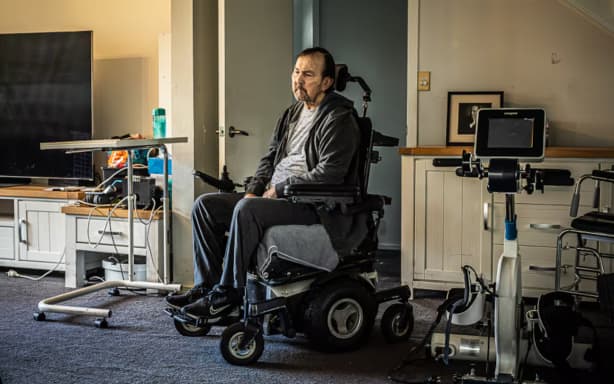
Clyde MacLean suffered hypoxic brain injury in 2023 due to hypoxia and bradycardia. Photo: Jason Dorday.
Complaint Moves Between Agencies
The family’s complaint was lodged with the Health and Disability Commissioner (HDC) in February 2024.
Following an initial assessment, the HDC referred the matter to the Medical Council in October 2024, stating the Council was better placed to assess concerns relating to the competence of an individual doctor.
However, according to Shareen Ali, the complaint has since moved between both organisations without any final resolution.
After being advised a decision was expected in February 2026, the family says that date passed without any outcome.
“It’s been three years now and we still haven’t received any meaningful explanation or a response to our complaint,” Ali said.
Clinic And Medical Council Respond
When asked whether the Auckland practice had undertaken an internal investigation or disciplinary action, the clinic’s founder told NZME:
“We have done nothing wrong and I have nothing to say regarding this matter.”
The report notes the anaesthetist involved now works at another practice.
The Medical Council said privacy and natural justice obligations prevented it from confirming whether any complaint or referral relating to an individual doctor was under consideration.
It said that where concerns arise regarding a doctor’s competence, the Council may undertake a performance assessment to determine whether professional standards are being met.
The Council also noted that complaints involving patient care may be referred between the Medical Council and the Health and Disability Commissioner depending on the nature of the issues involved.
Family Still Waiting
More than three years after what was expected to be a routine dental procedure, Clyde MacLean continues to live with permanent disabilities.
His wife remains his full-time caregiver while the family continues to seek an explanation for what happened and whether any changes are needed to help prevent similar incidents in the future.
Source
Original Reporting: Brianna McIlraith, The New Zealand Herald
Published by: RNZ
EWNZ comment: remember Midazolam was the drug of choice used on the elderly during the plandemic … said to save them, instead disappeared them forever. (Listen to undertaker John O’Looney on that topic). Also few if any survived the ventilators (hear the testimonies of hospital staff whistleblowers on that one). Leaves one feeling very uncertain about their ‘help’ doesn’t it? Please take care.
Photo Credit: pixabay.com
Note: the header image is not of Clyde Mclean, the man in this article.
Discover more from Environmental Health Watch NZ
Subscribe to get the latest posts sent to your email.

This is really disconcerting, why cant he and the public get answers after 3 years? Have reposted.
LikeLiked by 1 person
Very. Frightening for many. How safe is it to get a dental procedure going forwards?
LikeLike