Tag Archives: Waste

Are You Swallowing 5 Grams of Plastic Weekly by Doing This?

From mercola.com

Story at-a-glance

  • The world now produces 299 million tons of plastics a year, most of which ends up in oceans
  • People, on average, are consuming the equivalent weight of one credit card a week from water, seafood and other sources contaminated with plastic
  • Both tap and bottled water contain microplastics and bottled water may be worse
  • Marine life becomes entwined in plastic bags and six-pack rings and the plastic blocks their intestinal tracts. In humans, ingested plastic is thought to produce unwanted immune responses and other health problems
  • Microfibers from synthetic clothing and the practice of using sewage sludge, so-called “biosolids,” as fertilizer add to plastic pollution

Editor’s Note: This article is a reprint. It was originally published October 26, 2019.

Anyone who reads my newsletter is well aware of the growing environmental catastrophe of plastic pollution. Microplastics from artificial clothing fibers, microbeads found in personal care products, broken down plastics from bottles, fishing nets, plastic bags and biosolids spread on cropland are a human-created nightmare for our environment, particularly our oceans, waterways, marine and bird life.

Disturbingly, while lobbying groups are fighting to restrict plastic use across the nation, others are fighting those same restrictions. One such organization is the Plastics Industry Association’s lobbying arm, the American Progressive Bag Alliance, which backs legislation that would prevent local communities from addressing plastic pollution.

As reported by The Intercept,1 the bill “would make it illegal for local governments to ban or restrict bags and other single-use plastic products — one of the few things shown to actually reduce plastic waste.” Eleven other U.S. states have also “enacted similar so-called ‘bans on bans,'” the Tennessean reports.2

We’re Ingesting and Inhaling Surprising Amounts of Plastic

Recently, a situation that looked like it could not get worse, has indeed gotten worse. New research shows humans, not just marine life, are ingesting microplastics at alarming levels.

A recent study commissioned by the World Wildlife Fund and carried out by University of Newcastle, Australia, finds people, on the average, consume the equivalent weight of one credit card a week — 5 grams of plastic.3 Primary ingestion routes are from water and seafood, according to the report.

There is even more disturbing news. While many are aware that municipal wastewater treatment systems are failing at filtering out microplastics — their filtering processes were invented long before the plastic explosion — bottled water is turning out to be no safer.

A recent study by the nonprofit journalism organization Orb Media found major bottled water brands like Evian, Aquafina, Dasani and San Pellegrino contained significant amounts of microplastics.4 And research published in Environmental Science & Technology suggests people drinking only bottled water may receive more microplastics than those drinking tap water.5

Other recent research6 suggests the average person is also inhaling 11.3 microscopic pieces of plastic each hour. According to co-author Jes Vollertsen,7 “This is the first evidence of human exposure to microplastic through breathing indoor air.”

Plastic particles identified in indoor air include synthetic fibers such as polyester, polyethylene and nylon, and nonsynthetic particles composed of protein and cellulose.8

How Bad Is Plastic Pollution?

Thanks to the throwaway mentality of developed nations, and even developing nations, plastic pollution is an urgent problem. It threatens fish, birds and water including in pristine areas completely free of industrialization. The world now produces 299 million tons of plastics a year, most of which ends up in the oceans.

In fact, it is estimated that our oceans will contain more plastic than fish by weight by the year 2050.9,10 Already, plastic exceeds plankton by a factor of 6-to-1 in some ocean waters.11

In a recent documentary that I wrote about, “Hunting for Plastic,” a videotaped autopsy of a deceased sea turtle by employees of the Ocean Cleanup project showed greasy, black plastic bags and other plastic objects that had been the cause of the poor turtle’s death, retrieved from its body.

Boyan Slat, a young Dutch entrepreneur, has invented an ingenious way to clean plastic debris from our oceans and organized the very encouraging Ocean Cleanup project.

One-third of the fish caught in the English Channel and 83% of U.K shrimp contain microbeads, solid plastic particles less than 1 millimeter in size that are added to cosmetics, soap, facial scrub and toothpastes and used in pharmaceutical technology. Several countries have banned the use of microbeads in personal care products,12 but despite bans, millions of microbeads already exist in the environment and, like all plastics, will not degrade for hundreds of years.

Download this Article Before it Disappears

Download PDF

Different Types of Plastic Pollute Our Environment

There are different kinds of plastic discarded in the environment but they are all harmful. Polycarbonate, polystyrene and polyethylene terephthalate sink to the ocean floor and damage it. Low-density plastics like polyethylene, on the other hand, float and accumulate into massive floating islands of trash, such as the notorious 618,000 square-mile Great Pacific Garbage Patch between Hawaii and California.

Microplastics from widely used polyvinyl chloride (PVC) absorb carcinogenic plasticizers like bisphenol A (BPA) and bisphenol S (BPS), according to research in Science of the Total Environment,13 and BPA significantly increases the risk of breast cancer according to 2018 research in Environmental Science and Pollution Research:14

“Breast cancer is the second most common fatal cancer in women. Developing a breast cancer is a multi-factorial and hormonal-dependent process, which may be triggered by many risk factors.

An endocrine disrupting substance known as bisphenol A (BPA), that is used greatly in the manufacture of plastic products, was suggested as a possible risk factor for developing breast cancer. BPA has a strong binding affinity to non-classical membrane estrogen receptors like estrogen-related and G protein-coupled (GPER) receptors.

Based on animal and in vitro studies, results showed a link between BPA exposure and increased incidence of breast cancer. BPA has the ability to alter multiple molecular pathways in cells … Thus, the aforementioned alterations cause undesired gene stimulation or repression that increase risk of developing breast cancer.

So, restricting exposure to BPA should be considered to aid in lowering the risk of developing breast cancer.”

More Health Risks From Microplastics

Plastic pollution kills sea turtles and other marine life in several ways. They become entwined in plastic bags and six-pack rings, and ingested plastic debris blocks their intestinal tracts so they die of malnutrition. Microplastics in the ocean also develop a biological covering of algae that smells like food to fish.15 That means fish may be actively seeking out the microplastic mistaking if for food.

The harmful effects of microplastics on human health are also beginning to be revealed. According to 2019 research in Science of the Total Environment:16

“Humans are exposed to plastic debris via the consumption of seafood and drinking water, contact with food packaging, or inhalation of particles. The accumulation of microplastic particles in humans has potential health risks such as cytotoxicity, hypersensitivity, unwanted immune response, and acute response like hemolysis.

We investigated the cellular responses of secondary polypropylene microplastics (PP particles) of approximately ~20 μm and 25-200 μm in different condition and size to normal cells, immune cells, blood cells, and murine immune cells by cytokine analysis, ROS assay, polarization assay and proliferation assay …

[A] high concentration, small sized, DMSO method of PP particles stimulated the immune system and enhanced potential hypersensitivity to PP particles via an increase in the levels of cytokines and histamines.”

Microplastics in Drinking Water

As I noted earlier, wastewater treatment plants do not completely filter out microplastics. The potential of these particles for absorbing wastewater chemicals — as seen with PVC — and their small size present “unique toxicological risks for microplastics discharged” says a 2019 study in the journal Water Research X.17

And there is another, less recognized but huge source of microplastics in our waterways and drinking water: microfibers from synthetic clothing like fleece, acrylic and polyester. During washing, microfibers from these textiles are released, amounting to as much as 1 million tons a year.

Yet the Mermaids (Mitigation of Microplastics Impact Caused by Textile Washing Processes) project suggest special coatings and reformulated laundry detergents could minimize the toll of microfibers released during washing on the environment.18 Research in Water Research X confirms the role microfibers play in plastic pollution, finding more microfibers in more populated areas.19

“We demonstrate through source modeling that microplastic fiber loads in influent were consistent with service area populations laundering textiles given previously published rates of microplastic generation in washing machines.”

Microplastics Also Pollute Soil

Plastic pollution is not limited to waterways. The net amount of plastics polluting land is as much as 23 times greater than that in oceans, according to research published in Science of the Total Environment.20

Once called “sewage sludge,” — the solids left after water purification — “biosolids” are now widely used as fertilizer in the U.S. and other countries to grow crops. It should surprise no one that biosolids contain plastics, as well as PCBs, dioxins, pharmaceuticals, hormones, surfactants, heavy metals and disease-causing pathogens.

Once on the soil, weather, sun and other factors cause the plastic to fragment into microplastics. Scientists also speculate that Collembola — tiny insects in the soil — might also contribute to the problem by converting the plastic debris they consume into microplastics through their digestive processes.21

A British study of the coasts of six continents found sewage sludge, or so-called biosolids, contained an average of one particle of microplastic per liter.22 Much of the plastic load comes from clothing fibers from washing machine effluent, says research, and much of it ends up in storm drains and waterways.

What Can You Do?

While microplastics are now abundant in waterways, drinking water and seafood, there are many ways you can reduce the scourge of plastic pollution by not adding to it.

  • Avoid plastic bags (including for snacks and food storage)
  • Avoid disposable straws (reusable straws made from stainless steel, bamboo and even glass are widely available)
  • Wash synthetic clothes less frequently and when you do use a gentle cycle to reduce the number of fibers released; consider using products that catch laundry fibers in your washing machine
  • Choose a nonplastic toothbrush made from bamboo or flax
  • Avoid disposable plastic bottles; bring your own reusable bottle instead

Sources and References

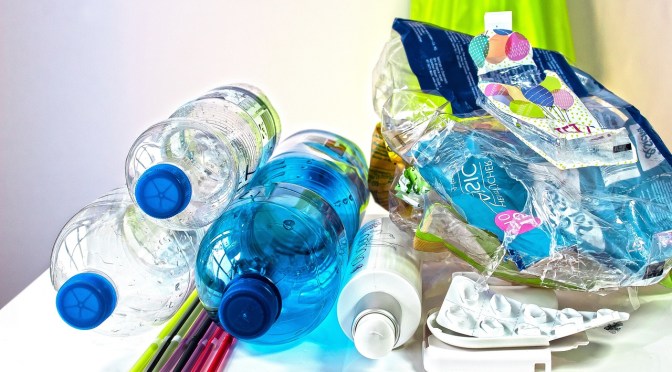
Image by Stefan Schweihofer from Pixabay
Recycled TOXIC water from sewers coming to neighborhood taps worldwide courtesy of ‘Sustainable Development Goals’

Recycled TOXIC water from sewers (Feces, Urine and Pharma Drugs) coming to your neighborhood taps for drinking, bathing, watering plants, for your pets and everything else you use water for.

Sewer water will and has been blended into reservoirs from up stream locations and goes directly into our homes, businesses, schools, restaurants, swimming pools, drinking fountains and more.

This is NOT only a California Agenda

These Plans ARE Worldwide 

https://www.sfgate.com/bayarea/article/Recycled-water-from-sewer-OK-d-for-California-12735732.php

Recycled water from sewers coming to California taps

TedAndersen

Water that once coursed through the sewer may soon make its way out of your home faucet.

New regulations approved March 6 by the State Water Resources Control Board allow treated recycled water to be added to reservoirs, the source of California cities’ municipal drinking water supply.

The regulations specify the percentage of recycled water that can be added and how long it must reside there before being treated again at a surface water treatment facility and provided as drinking water,according to the Water Board.

“This is a type of indirect potable use — it’s not treated recycle water that goes directly to someone’s house,” said Miryam Barajas at the Water Board. “It’s highly treated.”

How California plans to crack down on water waste

Barajas said San Diego is leading the state in infrastructure to begin carrying out a sewer-to-reservoir operation but the rest of the state will likely follow.

California has 36 main reservoirs and Barajas said the decision could potentially affect all of them but it is unclear how long that could take.

“The regulations are now there but the infrastructure is not,” she said.

The decision was the culmination of a two-year public review process, which included an independent scientific review and guidance by an expert panel that determined the regulations adequately protect public health. It was also the latest effort to develop uniform rules allowing for more use of recycled water to supplement existing drinking water supplies.

The State Water Board is also working onregulations for “direct potable reuse,” in which treated recycled water is added directly into a drinking water system or into a raw water supply immediately upstream of a water treatment plant. These rules are expected by2023.

Water recycling is part of the California Water Action Plan and Senate bills 918 and 322 direct the Water Board to investigate to create regulations for direct and indirect potable reuse.

The Water Boardsays it funded more than $748 million worth of water recycling projects lastyear in 2018.  

Investigations on the health issues of drinking sewer water are OVER.  

This poison water will cause illness and degrade life.  

Thisis the SDG’s – Water Action Plans adopted in your cities.  

Lookup the Sustainable Development Goals in your city.

StopTheCrime.net

How to Detox Fluoride from the Body (Reversing Fluorosis)

From thehealthyhomeeconomist.com

When people switch to drinking purified water from a comprehensive water filtration system instead of straight from the tap, they rarely consider that the toxic effects of fluoride are almost certainly still lurking within the body.

The form of fluoride added to tap water in health-altering quantities, as well as commercial products like toothpaste and your child’s fluoride treatment at conventional dentists, is a highly toxic inorganic form….a waste product of the phosphate industry. This type of fluoride also contains trace amounts of arsenic and lead. (1)

It is far different from the small amounts of naturally occurring organic fluoride in some soils from around the world.

READ AT THE LINK

https://www.thehealthyhomeeconomist.com/how-to-detox-fluoride/

Photo: pixabay.com

Eating trash … the NWO folk really care about you & your health

Thanks SeaShell for the links:

By Ice Age Farmer

DARPA is funding the creation of 3D-printed food from “mixed waste,” to be served “when traditional food is unavailable.”

#BareShelvesBiden is trending as empty shelves are found across the USA, and the LA Times promises the situation is only going to get worse.

The food supply chain is buckling under the pressure of mandates and quarantines.

What is the agenda behind this engineered shortage? Find out in this Ice Age Farmer broadcast.

READ MORE

https://www.activistpost.com/2022/01/darpa-funds-soylent-green-as-empty-shelves-in-usa-bareshelvesbiden-trends.html

Photo: Ice Age Farmer screenshot

Amidst dumping of crops, dairy farmers are being financially incentivized to quit farming

NZ was also dumping meat early on in this lockdown, because as was pointed out regarding Canada in a previous post, the authorities failed altogether to include agriculture in their essential industries. The Candian issue has now been rectified but nevertheless a blunder of great proportions. Earlier on in our lock down (NZ) with all else that was going on I personally did not notice the meat issue.

Butchers forced to give away, throw out piles of meat after ‘essential business’ mixed messages

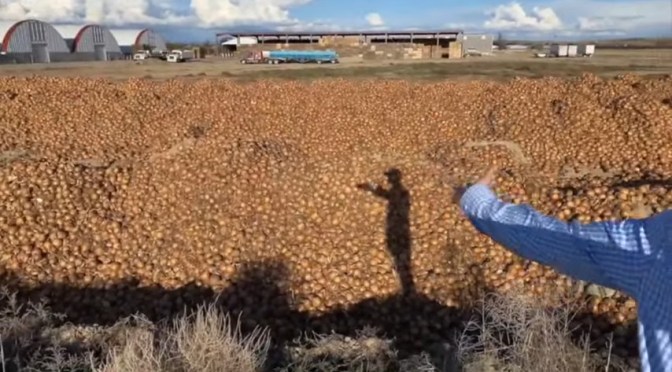
Anyhow, here is an update from further afield. Onions are being dumped in Idaho. Updates on other farming & ag industries also. This is all related, for those who say it doesn’t concern us in NZ. In case you didn’t notice we have been coerced into the global model for some decades now. Can’t have it both ways. EWR

RELATED:  You need to ask yourself why, in the midst of a food shortage, would any authority stop you buying seeds or gardening supplies?

80.3K subscribers
Crops rotting in fields. Dairy farmers incentivized to quit for good. Beef/pork processors shutting down. All by design. Spread the word and make sure everyone starts growing food, no matter how small scale — every bit helps. FULL SHOW NOTES: http://www.iceagefarmer.com/2020/04/0… SUPPORT THE SHOW: http://patreon.com/iceagefarmer http://paypal.me/iceagefarmer JOIN THE CONVERSATION: http://iceagefarmer.com/discord IAF RESOURCES: ⇒ GDD: Growing Degree Days tool: how much colder has 2019 been for you? http://iceagefarmer.com/gdd ⇒ IAF Wiki – read history, understand cycles, know what’s coming: http://wiki.iceagefarmer.com/wiki/His… ⇒ Maps from previous cycles: http://wiki.iceagefarmer.com/wiki/Str… ⇒ Crop Loss Map http://map.iceagefarmer.com ⇒ Join the email list – stay connected: http://iceagefarmer.com/mail *** SUPPORTERS – I recommend (because I use personally) *** STORED FOOD (+ more) @ MyPatriotSupply: http://iceagefarmer.com/prep FREEZE DRY YOUR OWN FOOD (like printing money, but food): http://iceagefarmer.com/harvestright BUY SEEDS @ TRUE LEAF MARKET: http://iceagefarmer.com/trueleaf EMP-proof Solar: mention IAF save $250 http://Sol-ark.com BEST CBD: http://bignuggetfarm.com 10% code: IAF2018 ⇒ More books: http://amazon.com/shop/iceagefarmer ⇒ Stored food: http://iceagefarmer.com/prep ___ LINKS: Meat processors shutting down: https://www.npr.org/sections/coronavi… Dairy farmers told to quit: https://twitter.com/IceAgeFarmer/stat… Shay Myers can’t move millions of onions: https://www.linkedin.com/feed/update/… https://www.vice.com/en_us/article/kb… https://www.npr.org/sections/coronavi… https://twitter.com/kerry_cramton/sta… https://www.msn.com/en-nz/news/other/… TYSON’s FAKE MEAT investments: https://www.tysonfoods.com/news/news-… https://www.reuters.com/article/us-he… https://www.businessinsider.com/tyson… https://www.chicagotribune.com/busine… https://www.bloomberg.com/news/articl… Gates of Hell & Agriculture: https://www.counterpunch.org/2020/03/… https://www.globaljustice.org.uk/reso…

A Wairarapa school with ZERO students remains open with TWO full & TWO part time staff at tax-payer cost of $1300 pday

From the Taxpayers’ UnionFacebook page… interesting info on this school here. Watch the video for the detail.  EWR

If you’re heading to the Tokyo Olympics you really need to watch this

Thanks to reader Helena for this link. As per usual … what you are not being told (nor ever will be). One little clue, from the video …

Two official sponsors of the games are GE who built the reactor that blew up at Fukushima .. And Atos the main PR agency for the global nuclear industry.

Another sponsor is Dow. Need I say more? And there’s plenty else to be considering on this topic, watch the video.

Published on Dec 7, 2018

SUBSCRIBED 64K

Please visit http://rense.com for news and information you’ll rarely see in the MSM! For free listening to Jeff’s live programs, go to http://www.renseradio.com/listenlive.htm Over 15,000 hours of programs with over 20,000 guests are available 24/7 in our Archives! Go here for easy, quick sign-up instructions http://www.renseradio.com/signup.htm

$2.3 mill for a banker’s advice on selling our State houses? See what else your Govt (corporation) has spent your tax money on Kiwis

Thanks to Phil Yorke for this well researched information. (For interest, I have added news links & images to some of the info, you can google any others for yourself).


“While this Government won’t do a thing to fix our housing crisis, (other than paying for beneficiaries to live in short term motels at a cost of $22 million in 7 months) we are blowing $53m to build a pavilion in Dubai to try and help the dairy industry whose product is currently polluting our rivers. Here is a refresh on what the National Govt thinks is more important than the citizens of New Zealand.

Ok, so over the last eight years what have John Key and the National Govt with the help of their supporters club (IE Maori Party, Act and Dunne) really done for the people of New Zealand?

Featured Image -- 17975

Panama Papers, tax havens , blind trusts, out of control immigration, the under funding of hospitals, schools and all other social services of New Zealand under the guise of privatisation.

New Zealanders unable to buy there own homes, 305,000 children and their families in poverty and rising,
Over 42,000 People homeless and on the rise,
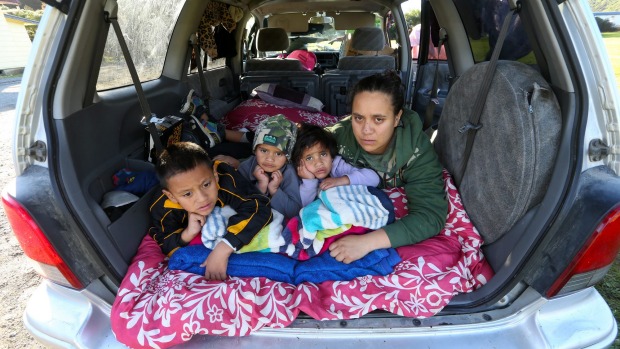
New Zealanders living in cars – garages – sheds – caravans.

1433964672061.jpg
42,000 Kiwis homeless & living in garages, cars, sheds & caravans

Granting of permits for the exploration of oil and gas in our marine sanctuaries, the selling of nearly all of New Zealand’s assets, overseas investors buying up Housing – farms – islands etc of New Zealand, Saudi sheep farmer bribes, New Zealand in over $111 billion international debt, continued broken promises including the Pike River tragedy and many others to the people of New Zealand.
A water contamination crisis,
Importation of cheap steel from China,

Tppa costs we know of;  Foreign Affairs & Trade Ministry spent over $4M on travel, several ministries were involved. This excludes Grosser’s and McLay’s costs for accommodation, meals, taxis. John Campbell suggests this is only a fraction of the costs as the OIA only gave a few of the costs. $900,000 accommodation, $800,000 meals plus taxis etc. No costs are available for any other Ministry and these are only part costs for Tim Grosser’s Ministry.

I have compiled a small list researched from Newspapers and other media outlets, including Parliament TV, of what John Key and this National Govt believe are priorities over the people of New Zealand.

$260,000 Digital sign inside MBIE (Ministry of Business Innovation & Employment)
$70,000 for a sign outside MBIE.
$380,000 new furniture for MBIE.
$140,000 sundeck for MBIE.
$24,000 fridge for MBIE.
$400 for hair straighteners for MBIE.
$78,000 two doors for parliament.
$363,000 for govt agencies to watch sky tv.
$4000 for a sign for Steven Joyce opening MBIE new building.
MBIE spent $38.9 million on external contractors and consultants
$4000 for a sign Paula Bennett’s office.
$600,000 spent on flowers by National.
$1200 taxi fares.
$4000 a night in hotels.
$80,000 for Grosser’s party in Washington
$17 million paid to a US yacht club.
$11 million paid to a Saudi sheep farmer.
$30 million tax cut for Warner bros.
$30 million tax cut for Rio Tinto.
$6 Billion NOT paid By National in to NZ super fund as part of Govt’s contribution SINCE 2008.
$4 billion tax taken from New Zealand’s super fund.
$200 million invested and lost by our superfund in an overseas bank that was under investigation for fraud before the money was invested.
$2.3 million paid to a banker to give advice to HNZ on how to sell HNZ homes.
Taxpayer paying for beneficiaries to live in short term motels at a cost of $22 million in 7 months.
$700,000 in legal fees fighting a compensation case over abuse that happened in state care.
$45 million bail out media works.
$29 million Social bond program.
$45 million Nova pay.
$27 million paid for a flag referendum that 67% of New Zealanders did not want.
$1.7 Billion bail out SCF.
$200 million lost from buying junk carbon credits.
$6.2 million spent by National for a apartment for one in Hawaii.
$11 million spent by National for an apartment for one in New York.

1435281793782.jpg.png
The $11 mill apartment purchased by the NZ Govt in New York for UN representative      Photo Credit: Stuff.co.nz

$86 million to produce new currency that is uncounterfeitable… which has been counterfeited!
$20 Billion NZDF.
$6.4 million spent for new BMWs for ministers.
Ever wondered what happened to asset sale money? That’s despite Finance Minister Bill English promising in 2011 that all revenue from the sales would be put in a Future Investment Fund to pay for “schools, hospitals, roads, rail and public transport”. Money used from asset sales … one big ticket item is our membership to the Asian Infrastructure Investment Bank which was funded as part of this year’s Budget and came in at a cost of $144M.
Another bank membership has also been paid for out of the fund. In 2014, the fund was used to pay $23 million for a subscription to the World Bank.
Computer programme for ministers.
Some of the cash was also splashed on the Prime Minister and Cabinet with investment into a document management project, Cabinet, which received $2.6M in 2012 and a further $1.8M in 2014 — a total of $4.4M.
Doing up Government House

In all, $500,000 was also allocated to the Prime Minister and Cabinet to be spent on a new Visitor Centre at Government House in 2012.

This is just a small part of the total failure of this National Govt in its responsibilities to the citizens of New Zealand and would be called corruption in other countries,

Researched by Phil Yorke
EnvirowatchRangitikei

Taranaki Regional council Wastes $85,000 fighting Media’s Exposure of their Polluting Practices

Fairly obvious who is in bed with whom here … it’s becoming such a regular occurrence with Local Government. Corporate control, corporations cooperating with corporations, duping the people that they are democracies. Democracy is a long gone mythical illusion. Check out our Local Govt Watch pages for more corruption. It’s rife now.
EnvirowatchRangitikei


8:36 am on 15 July 2016

Taranaki Regional Council spent $85,000 unsuccessfully contesting RNZ’s coverage of its oil industry waste farms – known as landfarms.

In 2013 RNZ began investigating the controversial practice of landfarming – where oil industry waste, including fracking waste, was being spread on farms in Taranaki.

Within hours of the first story airing, the council announced it was no longer allowing fracking waste to be disposed of on landfarms.

RES.Copy of 20081013_IMG-New Plymouth_0570

However, the council laid several complaints with the Broadcasting Standards Authority contesting many aspects of RNZ’s coverage of landfarming.

Documents obtained under the Local Government Official Information and Meetings Act reveal the council incurred $85,000 in legal costs to challenge the stories.

The council argued the coverage amounted to “misinformation” in “attack-style journalism” which was “of grave concern and… no service to the public”.

However, the authority found the coverage was fair and accurate and the council was “disingenuous” in claiming fracking waste had only been disposed of historically on the landfarms.

READ MORE


For more related info & links, search categories for further  articles (at left of any page). 

Please also consider liking our FB page &/or following our blog, and do spread the word on all the untruths we have been told! Use the share buttons! Speak up … your silence becomes consent.

Thank you!


EnvirowatchRangitikei

Feeding the hungry … France makes it illegal for grocery stores to waste food

Here is an article from France on the sensible recycling of food waste…

“1/3 of the food currently produced worldwide is thrown away every year.. to help prevent this travesty, France just passed new legislation banning stores from purposefully ruining food … requiring all supermarkets 400 square feet or larger to donate unsold food to charity, for animal feed, or for farming compost.”

In recent weeks we’ve had some intriguing contrasts on this front. In NZ and the UK private organizations have been redistributing waste supermarket food to the needy, then in a town in Spain, we have a Mayor of 35 years seizing food from supermarkets to redistribute ‘Robin Hood’ style, to the poor. He sees speculation in food, and rightly so, as a disgrace. Food he says, is a right. This Mayor has also put the clamps on housing speculation and folks there in Marinaleda can own their own home for $19 a month… so long as it’s never sold for profit.

“We need to rethink our values, the consumer society, the value we place on money, selfishness and individualism,” says their mayor, Juan Manuel Sánchez Gordillo.

bread-793852_1280Then in the US of America a young woman has been sacked for giving free cafeteria lunches to children who had no lunch money (see video at the link). Seventy one cities in the US have been trying to pass ordinances forbidding the donation of food to the homeless.

” … 90-year-old World War II veteran Arnold Abbott made national headlines when he got busted by cops in Fort Lauderdale, Florida twice in one week—for giving out food to homeless people. While serving a public meal on November 2, Abbott told the Sun-Sentinel, “a policeman pulled my arm and said, ‘Drop that plate right now,’ like it was a gun.”

What’s the planet coming to? Generosity being criminalized … for what? Much of the food being denied the poor is only headed for landfills anyway. Hopefully other nations will follow the lead on this and practice some civil disobedience to get the message across. It’s not as if the poor will be shopping elsewhere and affecting profits. And profits are the underlying agenda in all of this. Take an hour out and watch ‘The Corporation’ documentary. You will learn from that that profits are the bottom line for corporations. They are not about helping people and the insanity of many of them needs to be challenged. Preventing people from feeding the poor simply isn’t right.

Kaibosh eliminates food waste by feeding less fortunate

This is an inspiring report from NZ’s Campbell Live about how waste food from shops and supermarkets, still quite edible, yet destined for landfills, is gathered up and distributed to the less fortunate folks who can’t afford food. This is efficient recycling at its best … with a unique touch of kindness to boot.

vegetables-61896__180

“Earlier this year, Campbell Live covered New Zealand’s $872 million food scandal and highlighted the amount of food we waste and the food we buy to eat but never do.

As a nation, we throw away 122,000 tonnes of food per annum, just from households.

That study got us thinking, and many of you too – what about commercial food waste, uneaten food from supermarkets, cafes and restaurants?

Sadly, most of it is also dumped – but not all.

Campbell Live reporter Jendy Harper spent the day rescuing the food and feeding the less fortunate in Wellington.”

Watch TV3’s VIDEO at the link:    http://www.3news.co.nz/tvshows/campbelllive/kaibosh-eliminates-food-waste-by-feeding-less-fortunate-2015052019#ixzz3awDcGTmu

10 FLOORING FOOD WASTE FACTS

From an interesting UK site called ‘This is Rubbish’ (TiR) ….  TiR is a voluntary group started in 2009 that: 

“aims to communicate the preventable scale of food wasted in the UK, through policy research, community and arts led public events.”

They have compiled some fascinating facts and figures. Did you know for instance, that:

1. “It’s estimated that 30 – 50% of food is waste globally. 1

2. 18 – 20 million tones of food is wasted annually in the UK. 2

3. Assuming that in the UK and US 25% of food is wasted, 10% of GHG emissions from these countries come from food that is discarded. 3 ”  

(Note: follow links to article for references cited).

I’ve noticed many food outlets will donate their unsold food at the end of the day to charities who quickly pass them on to those folks they know are in need. I recall during the ’90s collecting weekly a car boot load of bread from a local supermarket for that purpose. Another area I lived in (NZ’s beautiful Bay of Plenty) local growers left two large bins of ‘seconds’ from their Kiwifruit harvests free for the taking, which ended up in homes or as stock feed. Brilliant. Then there are the folks I’ve seen recently on FB who have swap stands or free stands near their gardens to dispose of surplus and feed people who are struggling financially … equally as brilliant. If you have a fruit tree that produces more than you can use, consider placing boxes of it at your front gate for passers by to take. Sharing is caring. Your generosity will return to you. I assure you.

April 2015 014

Then closer to home, was my dear Dad who grew an enormous vegetable garden and gave most of it away … serving two purposes … he loved gardening and growing things … and also enjoyed the buzz he got from helping others. Not only did he give the produce away, he also made pickles, relishes, jams and preserves, much of which he also gave away. Having lived through a Depression and a World War he knew the art of survival and making the most what he had. Like many in his era, his shed was chock full of odds and ends to fix stuff with … that was the era that preceded our current ‘throw away’ society. Perhaps this is where the ‘throw-away-the-food’ mentality comes from? Seriously, the fix-it thing is what could drastically cut back the rubbish and recycling problem that is growing into magnanimous proportions … a topic for another post.

I confess I’m guilty of waste at times although I’ve cut that back and am more mindful of using leftovers creatively instead of biffing them. Did you know for instance, you can make apple cider vinegar or apple jelly from apple peels and cores? ? Or that you can make pickle or relish from water melon rinds?

I have a friend who said as a child they had a cook up of all the left overs one night a week. (Only what was edible of course). I guess this may (or may not?) go down well with the creative chefs however … in the bigger picture we who eat well on the planet are actually the minority. This alone causes me to be very thankful for the food I do have, and more mindful of the need to not waste it. And last but not least, to use what I save in all of this, to feed a hungry child elsewhere on the planet. We may one day need the same generosity ourselves. Our current political regime here in NZ is forgetting that fact. Something to think about.

 Read more about TiR’s fantastic site HERE

Read their food waste article HERE