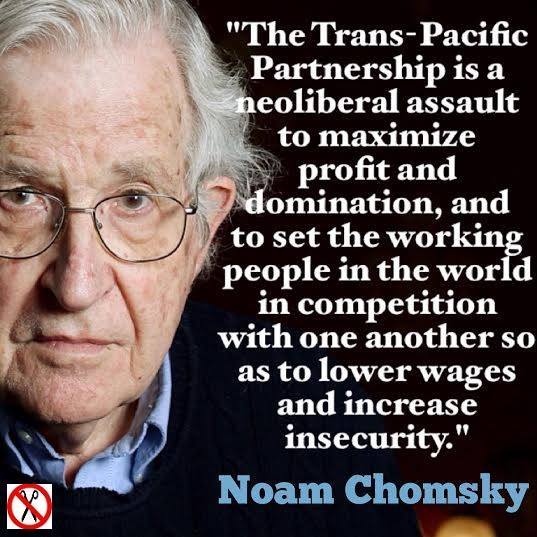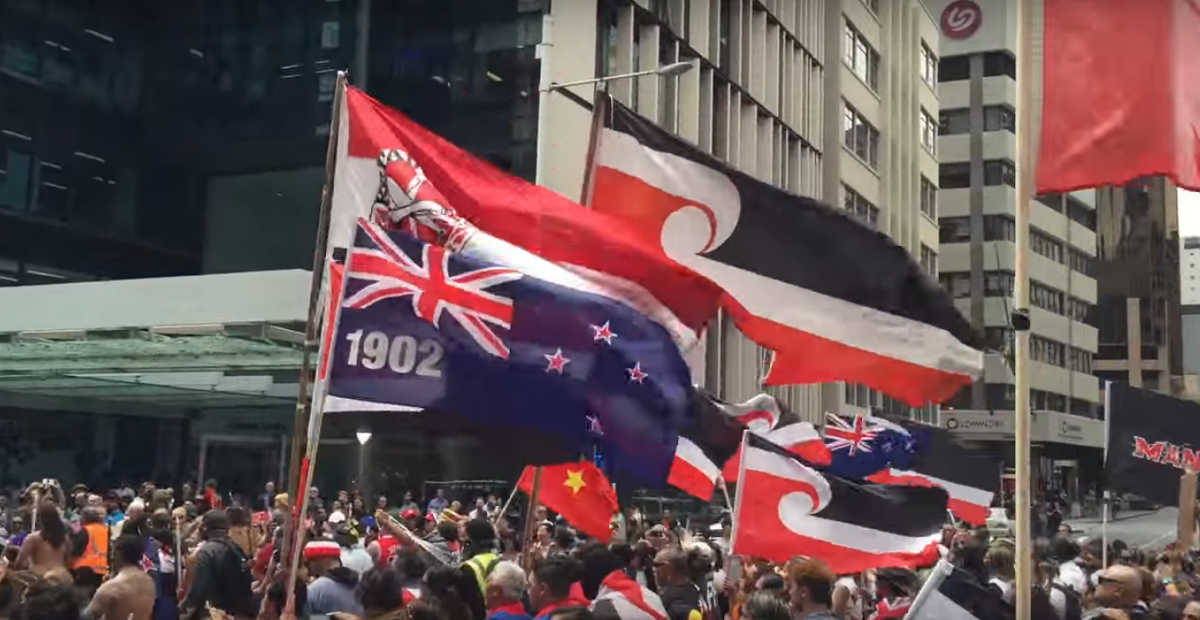
Tag Archives: Treaty partnership

The day the Treaty was first signed at Waitangi: exploring the differences in the English & te reo Māori versions (Claudia Orange)

For the info of international readers… today is Waitangi Day in NZ, the anniversary of the signing in 1840 of the Treaty of Waitangi, now a public holiday here. There’s much controversy currently  going on nation wide regarding the absence of PM Luxon at Waitangi this week (hmmm)… although denying it, it’s likely due to the Treaty Principles Bill currently before Parliament. Says he won’t approve it but allowed its introduction? And we have David Seymour present who is currently trying to change the said Treaty with his Bill, without any input from or consultation with the Crown’s signatories/partners … Māori. Smell a rat? I personally am with the deductions made by Australia’s Dr Jeremy Walker regarding Seymour’s connections to the Atlas Network.

And his proposed bill, it’s all having the desired effect, inciting racial division which, after all, has always been the ace card of empires.

He’s not being well received and IMHO rightly so. Plenty of coverage of the day on Youtube anyway if you’re curious to learn more, here’s one … and Claudia Orange here in her book excerpt explains the Treaty versions in both languages.  EWNZ


From 2021, by Newsroom
Featuring an excerpt from Claudia Orange’s book The Treaty of Waitangi / Te Tiriti o Waitangi: An Illustrated History

Governor William Hobson was caught by surprise. Summoned ashore late in the morning of February 6, he arrived in plain clothes but having snatched up his plumed hat. Several hundred Māori were waiting for him in the marquee, and several hundred others stood around outside. Many had arrived since the meeting the previous day, including some high-ranking women. Only James Busby and about a dozen Europeans had turned up, among them the Catholic Bishop Pompallier. Hobson, nervous and uneasy, more than once expressed concern that the meeting could not be considered a “regular public meeting” since the proper notice had not been given. He would not allow discussion, but would be prepared to take signatures.

On the table lay a tidily written treaty in te reo Māori – Te Tiriti o Waitangi – copied overnight on parchment by one of the missionaries, Richard Taylor. Rangatira were invited to come forward and sign. Just as Hone Heke was about to do so, William Colenso asked Hobson if he thought that the chiefs really understood what they were signing. “If the Native chiefs do not know the contents of this treaty it is no fault of mine,” replied Hobson. “I have done all that I could . . . They have heard the treaty read by Mr. Williams.”

Colenso agreed, but pointed out that it had not been explained adequately; he was afraid that they had not been made fully aware of the situation in which they would by their so signing be placed. Later the chiefs would hold the missionaries accountable, whereas their agreement needed to be “their very own act and deed”. Impatiently, Hobson brushed the protest aside, saying, “I think that the people under your care will be peaceable enough: I’m sure you will endeavour to make them so.”

The signing went ahead, while two rangatira kept up a running challenge in the traditional manner. Busby called each rangatira by name, probably from a list of those who had signed the 1835 Declaration of Independence. When each had signed, Hobson shook his hand, saying “He iwi tahi tātou.” According to Colenso this meant “We are [now] one people”, but Felton Mathew thought it meant “We are brethren and countrymen.” The expression greatly pleased the rangatira, who also shook hands with each of the official party; it was probably either Williams or Busby who told Hobson to express himself in this way. Both men must have known that the words would have a special meaning, especially for those who were Christian: Māori and British would be linked, under the guardianship of the Queen and as followers of Christ.

That afternoon, over 40 rangatira put their names or their moko on the parchment, affirming the agreement known as the Treaty of Waitangi/Te Tiriti o Waitangi. As the signing was drawing to an end, someone gave a signal for three thundering cheers for the Governor and Queen Wikitoria (Victoria). Patuone presented Hobson with a greenstone mere “expressly” for the Queen, and the meeting closed with Hobson retiring to the Herald, taking Patuone with him to dine. Colenso was left to distribute gifts – two blankets and some tobacco – to each person who had signed.

Several hundred New Zealand Company settlers had arrived in the Cook Strait region in January and February 1840. In March they had set up a form of government at Port Nicholson (Wellington) which, they claimed, derived its legality from authority granted by the local “sovereign chiefs”. The flag of an independent New Zealand, made on the company’s ship Tory, flew above the settlement, and a provisional constitution had been drawn up.

The chiefs at the left of this lithograph from the 1840s are Mananui Te Heuheu and his brother Iwikau. Mananui objected to Iwikau’s signing the Treaty. To the right is Apihai Te Kawau, who invited Hobson to set up his capital in Auckland. The image is taken from the Illustrated History by Claudia Orange.

Hearing of these moves, Hobson reasoned that the settlers were assuming powers of government that were the prerogative of the Crown. On May 21, he proclaimed sovereignty over the whole of the country: over the North Island on the basis of cession by chiefs who had signed the Treaty of Waitangi, and over the South Island and Stewart Island on the basis that Cook had “discovered” them. At this stage, Hobson held only the copy of Te Tiriti signed in the north, and one signed at Waikato Heads and Manukau Harbour. As for the South Island, he doubted that its “uncivilised” Māori were capable of signing any treaty. He had taken measures he deemed necessary under the circumstances, using Cook’s “discovery”, which his instructions had allowed him to use, if necessary.

Unaware of Hobson’s actions, Bunbury also proclaimed sovereignty: on June 5 at Stewart Island, by right of Cook’s discovery; and on June 17 at Cloudy Bay, by right of cession of the South Island by several ‘independent’ chiefs. The Colonial Office approved Hobson’s proclamations, which were published in the London Gazette on October 2, 1840. This was the only requirement at the time to validate sovereignty being acquired. Treaty meetings had continued after the proclamations; on September 3, the last signature was put on a copy of Te Tiriti, somewhere near Kāwhia, the copy not arriving back to Hobson until April 1841. 542 rangatira, among them 12 or more women of rank, had signed at about 50 meetings.

The differences between the two texts were crucial to a full Māori understanding – or the lack of it

Hobson had kept British officials informed throughout the signing process and had sent them copies of the Treaty. In October, he dispatched a final report, together with ‘certified’ copies of Te Tiriti and one English Treaty copy which was headed ‘translation’. He said nothing about any variations between the two texts, although it had already become apparent in April that there were differences in meaning, and therefore in Māori understanding of what they had agreed to. Hobson was aware of this.

The differences that affected the meaning were important:

ARTICLE 1
By the Treaty in English, Māori leaders gave the Queen “absolutely and without reservation all the rights and powers of Sovereignty which the said Confederation or Individual Chiefs respectively exercise or possess . . . over their respective Territories as the sole sovereigns thereof.”

By Te Tiriti in te reo, they gave the Queen “te Kawanatanga katoa o ratou wenua” – the governance or government of their land.

ARTICLE 2
By the Treaty in English, Māori leaders and people, collectively and individually, were confirmed in and guaranteed “the full exclusive and undisturbed possession of their Lands and Estates, Forests, Fisheries, and other properties . . . so long as it is their wish and desire to retain the same in their possession.”

By Te Tiriti in te reo, they were confirmed and guaranteed “te tino Rangatiratanga o o ratou wenua o ratou kainga me o ratou taonga katoa” – the unqualified exercise of their chieftainship – over their lands, settlements, and all their valued possessions.

ARTICLE 3
The Treaty in English extended to Māori the Queen’s “royal protection and imparts to them all the Rights and Privileges of British Subjects.”

By Te Tiriti in te reo, in consideration of the agreement to the government of the Queen, the rights and privileges of British subjects – “nga tikanga katoa rite tahi ki ana mea ki nga tangata o Ingarani” – were extended to all the Māori of New Zealand.

The differences between the two texts were crucial to a full Māori understanding – or the lack of it. Only 39  chiefs signed a copy of the Treaty in English, which almost certainly had a copy of the printed Tiriti in te reo with it to enable the missionary at Waikato Heads to read it to Māori. Apart from that, all Māori leaders signed a copy of the Māori language Tiriti, which did not convey the full meaning of the English text, especially the extent of sovereign powers. Only some would have been able to read Te Tiriti, even if they had been given the chance. Explanations at meetings with potential signatories might have helped, given that discussion was essential to Māori in the customary building of relationships; but the records that exist show negotiators did not comment on differences in meaning. Their aim was to secure rangatira agreement. The complexities of sovereignty, as they were increasingly being recognised under international law, were not brought up.

Thus the differences between the Māori and English texts laid the basis for different British (and later colonial) and Māori understandings of the agreement, and for the debate over interpretation that was to continue.

This is an edited extract from the newly published The Treaty of Waitangi / Te Tiriti o Waitangi: An Illustrated History by Claudia Orange (Bridget Williams Books, $39.99 ) available in bookstores nationwide.

SOURCE


RELATED:

Remembering why empires make treaties

Seymour’s principles of privatisation

The Atlas Network: Big oil, climate disinformation and constitutional democracy (includes Dr Jeremy Walker) From Central News UTS
Header Image by Bruno from Pixabay

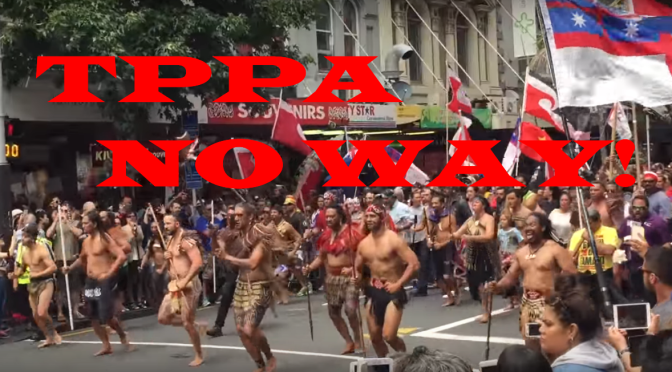
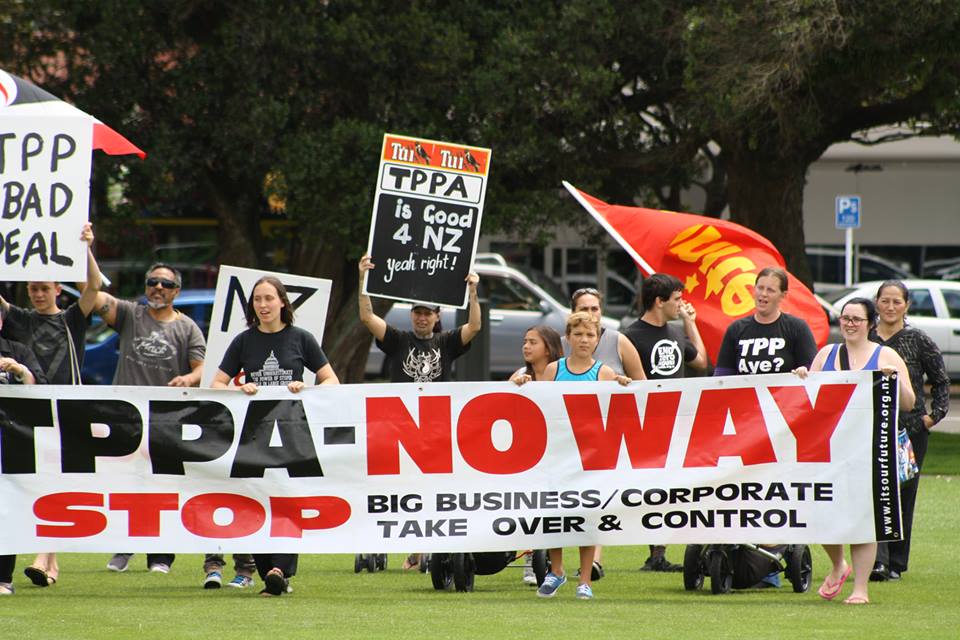
What you need to know about the ‘new’ & still secret TPPA that isn’t new & doesn’t bode well for Maori, or anybody else really except of course the corporations

Ah… this is good for you but we can’t tell you how good because it’s all been negotiated in secret and we aren’t allowed to tell you what it says but trust us Kiwis … it’s good for you … Tui anyone?


12417586_836629499776564_6975834990288359606_n

Posted by Jenese James

This is a trade deal NZ should NOT SIGN – The TPPA is a corporate passport to exploit the natural wealth of a nation by ‘legally’ robbing its citizens and the environment of that natural wealth

I want to point out the reason why so many politicians promise this and that before they get elected but once in power reneg on that promise – its because of the T&C of various trade deals done through membership of various organisations often in secret – to give an example …”…..Trade Minister David Parker says NZ First’s policy of taxing bottled water exports would breach various international agreements because it is discriminatory. But there is a much bigger risk that foreign investors could threaten to bring an ISDS dispute if moves to resolve water claims affect their commercial interests….”

here is another example

“…….The new government is rushing through changes to the Overseas Investment Act to restrict foreign purchases of residential housing. They admit that the law would breach the TPPA if it was passed after the agreement came into force….”

Its vital to grasp this because this is the key to understanding how policies are now made via these agreements and why voting really doesn’t make much difference once deals are done and always these deals are not done in public view but behind closed doors in secret as this trade deal reveals it – the secrecy behind it is tantamount to a betrayal of the people because it will allow corporations to steal the wealth of the people of the nation for private profit,

example … “…….The separation of cutting rights from the land was a device used by the Labour government in 1988 to allow corporatisation of the forests and separation of the land from the trees so the forests could be privatised…..”  …. this was the Roger Douglas’ cabinet.

Another example …  “…Labour and NZ First want to restore the right of NZ, and Maori, ownership of the forests. They have to change the foreign investment law before the TPPA comes into force because they can’t do so afterwards…..”…

so when you protest you are protesting against a much bigger force than you realize – politicians’ hands are tied once deals are signed.

Read it all below

27541044_10213377763015840_6200269177576196284_n

This is about the TTPA and Te Tiriti o Waitangi..

Written By Jane Kelsey

The state of play with TPPA

Ø The original Trans-Pacific Partnership Agreement was signed by the 12 negotiating parties in Auckland on 4 February 2016, in the face of a massive protest led by tangata whenua.

Ø Japan and NZ completed their domestic processes to ratify (adopt) the original agreement during 2016.

Ø In January 2017 US President Trump withdrew the US’s participation from the TPPA.

Ø The 11 remaining countries met 7 times in 2017 to rescue the TPPA minus the US.

Each country tabled a list of provisions in the TPPA that it wanted removed or suspended.

Apparently, NZ under the National government did table a list of requests, but that remains secret.

The new Labour-NZ First government, supported by Greens, only had input into these negotiations at the very end.

Labour asked other TPPA countries to suspend the right of foreign investors to sue the NZ government in offshore tribunals over new laws and policies (investor-state dispute settlement/ISDS), but it failed.

Labour did not seek to make other changes or even suspend other provisions of concern to Maori.

Ø In December 2017 in Vietnam, the TPPA-11 agreed to suspend 20 items from the original text, pending the US’s re-entry; 4 matters remained to be finalized.

Ø In January 2018 in Tokyo the TPPA 11 announced a new deal, one year to the day from Trump’s withdrawal.

Ø Canada insisted that it needed changes to protect its culture sector. Reports say it also achieved changes on automobiles, although that was not on the list. These were done through side letters that remain secret.

Ø The TPPA-11 will contain the entire old agreement. 22 of the 1000+ original provisions have been suspended, pending US re-entry, but they have not been removed.

Ø The TPPA has been rebranded the Comprehensive and Progressive Agreement on Trans-Pacific Partnership (CPTPP or TPPA-11) even though the substance is the same as the old TPPA.

Ø They intend to sign the TPPA-11 agreement in Chile on 8 March 2018.

Ø The text of what they agreed remains secret. Japanese officials say the text will not be released until after it has been signed. The National Opposition, which ran the secretive negotiations, wants the text released.

Ø In January 2018 President Trump said he would consider re-entering the TPPA, but the terms would have to be more favourable to the US than the original agreement.

Ø The process for US re-entry will require consensus. Labour says some suspended items may never be re-activated. But the US domestic political processes mean any US re-entry will inevitably require more benefits to the US, not less.

Ø The TPPA-11 will reportedly come into force after 6 of the 11 parties have ratified it by completing their domestic processes. Again, the actual text of this provision has not been released.

The new government and the TPPA

Ø Labour, New Zealand First and the Greens all wrote dissents to the majority select committee report on the TPPA and said they would not support its ratification.

Ø Labour said the economic modelling was flawed and there must be a robust cost-benefit analysis that includes impacts on jobs and on distribution, as well as a health impact assessment. Neither report has been done for the TPPA-11.

Ø Labour now claims the new TPPA-11 meets Labour’s 5 pre-conditions for change, but it does not: it provides market access for exporters (but it has no new economic analysis of net costs and benefits); it protects the Pharmac model for buying medicines (but the provisions are suspended not removed); the Treaty of Waitangi, the sovereign right to regulate and restrictions on foreign ownership of property are all protected (which they are not, see below).

Ø Winston Peters says the TPPA-11 is a very different deal from the one NZ First opposed and they will now support it. That is not true. The ISDS provisions and core protections for foreign investors that NZ First so staunchly opposed remain the same and have not even been suspended.

Ø New Zealand’s ratification of the TPPA-11 requires another round of submissions to the parliamentary select committee on which National has 4 of the 8 members, including the chair and deputy chair.

Ø If legislation is needed to implement the agreement, National has said it will vote with Labour and NZ First. The Greens remain opposed.

Ø So the parliamentary process is a foregone conclusion.

MAORI A

The Treaty of Waitangi Exception

The Treaty of Waitangi exception in the TPPA is a copy of one that was drafted in 2000 for the Singapore free trade agreement (FTA).

The same exception has been rolled over in agreements since then, without any consultation with Māori, even though today’s agreements impose much greater restrictions on what governments can do.

Prime Minister Ardern says NZ ‘has an exemption that says it is always able to legislate and act to protect its obligations under the Treaty of Waitangi and that can’t be challenged by other nations’. That is not true.

Ø The Waitangi Tribunal in the TPPA claim (Wai 2522) said the Treaty exception ‘may not encompass the full extent of the Treaty relationship’ because it only covers Crown actions that give preferences to Māori, not laws or policies that apply generally but are at least partly for Treaty compliance (water, mining, fisheries).

Ø The PM said the Tribunal found the ‘exemption provides protections for the Treaty’. That is also not true. The Tribunal found no breach of Treaty principles because the exception was ‘likely’ to offer a ‘reasonable degree’ of protection for Māori. But it did not accept the Crown’s claim that ‘nothing in the TPPA will prevent the Crown from meeting its Treaty obligations to Māori’.

Ø The Tribunal was not convinced that the exception protects Crown actions from a dispute by a foreign investor, for example on water or mining.

Ø The Wai 2522 claimants made proposals for more effective protection. These have been ignored. There has been no consultation on any stronger protection.

Ø The wording of the exception hasn’t changed in other negotiations since the TPPA. Officials say that they can’t change the wording because they tell other countries they must have this wording because it’s in all NZ’s agreements. New wording would open the text for negotiation.

Ø But New Zealand got additional new wording on UPOV 1991 at the last minute in the TPPA (see below), so it’s not true the Crown can’t demand and win different wording.

Ø Labour seems to be accepting the Crown’s advice and accepting an ‘imperfect’ Treaty protection as a trade-off for other commercial benefits it sees in these deals.

The Waitangi Tribunal claim is ongoing

Ø The Waitangi Tribunal granted urgency to the TPPA (Wai-2522) claim, but limited its scope to whether the wording in the Treaty exception provided effective protection for Māori interests. It didn’t address other parts of the claim (eg water, mining, health).

Ø The Tribunal’s time for preparing its report was cut back because the National government pushed through the legislation to implement the TPPA; once the Bill was introduced the Tribunal had no jurisdiction.

Ø The Tribunal found there was a reasonable level of active protection in the Treaty exception, but suggested there should be consultation on better protection, and it kept oversight of the UPOV 1991 issue (below).

Ø The Crown wants the Tribunal process terminated. The claimants point to a lack of good faith consultation over TPPA-11 negotiations since the Tribunal’s report and issues not addressed in the urgent hearing remain.

Ø On 30 January 2018 the Tribunal asked the parties (basically the Crown) to say by mid-February (a) when the text of the new agreement would be available, (b) what its effect would be on the Crown’s engagement with Maori on the Plant Varieties regime and adopting UPOV 1991, (c) what issues in the TPPA claim remain live, and (d) ‘when would be the appropriate time for the Tribunal to commence inquiry into the remaining substantive claims that have been filed with respect of the TPPA?

WAI 262 and the UPOV 1991 convention

Ø The TPPA required NZ to adopt the UPOV 1991 Convention that creates rights to claim intellectual property rights on plant varieties, which Wai 262 report and the Cabinet have recognized is inconsistent with te Tiriti.

Ø Legal arguments from the Wai-2522 claimants showed the Treaty exception would not protect a Crown decision not to adopt UPOV 1991, because the decision only applies to a ‘preference’ to Maori. Not adopting UPOV 1991 is not a preference to Maori.

Ø The Crown convinced the other TPPA countries to adopt an annex that allows NZ to either adopt UPOV 1991 or pass a domestic law equivalent to UPOV 1991 that complies with te Tiriti. But it has to do one or the other within 3 years of the TPPA coming into force.

Ø That obligation hasn’t changed in the TPPA-11. National and Labour didn’t try to have it suspended.

Ø The Waitangi Tribunal has retained oversight of this matter and is actively monitoring it.

Ø The claimants say MBIE’s consultation process is unacceptable and have set in train their own process for expert advice and consultation.

Foreign investors’ rights

Ø The TPPA (and earlier NZ agreements) allows foreign investors from the countries involved to challenge laws, policies and decisions of a NZ government in controversial ad hoc offshore investment tribunals (known as investor-state dispute settlement or ISDS). An ISDS tribunal can award massive damages against a government for breaching special protections the agreements give to foreign investors.
PM Ardern has called ISDS a ‘dog’.

Ø The new government tried to protect NZ from ISDS in the TPPA-11, but failed.

Ø Australia signed a side-letter with NZ not to allow their investors to use ISDS against each other. But that side-letter was in the original TPPA and in other agreements. It’s not new to Labour.

Ø The new government says some other countries will sign a similar side letter, but won’t say who. Unless all the other ten countries sign side-letters, they don’t protect NZ from the risk of ISDS disputes.

Ø A provision that allowed investors to use ISDS to enforce infrastructure contracts has been suspended (not removed); but that is marginal and doesn’t change the TPPA’s special protections to foreign investors or the ISDS process through which they can enforce them.

Ø The Treaty of Waitangi exception is unlikely to protect NZ from an ISDS case over new laws to promote compliance with te Titiri.

Ø The Waitangi Tribunal noted ‘uncertainty about the extent to which ISDS may have a chilling effect on the Crown’s willingness or ability to meet particular Treaty obligations in the future or to adopt or pursue otherwise Treaty-consistent measures.’(p.50

Ø The government points to other protections for public policy measures, but those protections don’t apply to the main rules that investors rely on in ISDS disputes.

Ø The new government has instructed officials to oppose ISDS in future agreements, which is a positive move. But that doesn’t mean it will walk away if other parties insist on it. Officials are likely to advise that any new market access for agriculture is an acceptable trade-off.

Water

Ø Trade Minister David Parker says NZ First’s policy of taxing bottled water exports would breach various international agreements because it is discriminatory. But there is a much bigger risk that foreign investors could threaten to bring an ISDS dispute if moves to resolve water claims affect their commercial interests.

Ø NZ has protected the right to adopt discriminatory measures in the TPPA-11 ‘with respect to water, including the allocation, collection, treatment and distribution of drinking water’. But it says: ‘This reservation does not apply to the wholesale trade and retail of bottled mineral, aerated and natural water.’

Ø That reservation of the right to regulate on water does not apply to the main rules that investors rely on when they bring ISDS disputes against governments.

Ø The Treaty of Waitangi exception would not stop investors challenging such measures.

Ø There is a serious risk that the government would back away from a proposed solution to Māori rights over water if MFAT or an investor from a TPPA country, says the solution would breach NZ’s obligations.

Land and forestry

Ø The new government is rushing through changes to the Overseas Investment Act to restrict foreign purchases of residential housing. They admit that the law would breach the TPPA if it was passed after the agreement came into force.

Ø In January 2018 the government also sought consultation with Maori over proposals to redefine sensitive land under the Overseas Investment Act to include forestry cutting rights.

Ø The separation of cutting rights from the land was a device used by the Labour government in 1988 to allow corporatisation of the forests and separation of the land from the trees so the forests could be privatised.

Ø Labour and NZ First want to restore the right of NZ, and Maori, ownership of the forests. They have to change the foreign investment law before the TPPA comes into force, because they can’t do so afterwards.

Ø The TPPA only allows the government to keep the categories that are subject to foreign investment vetting which exists when the TPPA comes into force.

Ø The TPPA text says the vetting applies to ‘sensitive land’. If the government wants to implement its election policy, it has to rush through these changes to the law.

Ø But if the TPPA enters into force the government won’t be able to change the investment law to address other failed treaty settlements, such as fisheries quotas, or policies like carbon credits for forests.

Ø Even if changes are made to allow restrictions on future foreign investors, any existing investors from TPPA countries could still bring an ISDS dispute claiming their rights have been breached by the new laws because they can’t get as much for selling their assets as they had expected.

‘Consultation’ and tino rangatiratanga

Claimants in Te Paparahi o te Raki (Wai 1040) have challenged the Crown’s right to negotiate international treaties without the full and equal participation of nga iwi me nga hapu.

Ø The original TPPA was negotiated in total secrecy, aside from leaks. So were the meetings after the US withdrew. National was not interested in genuine consultation with anyone, let alone recognising te tino rangatiratanga o nga iwi me nga hapu. The same secrecy continues under the new government.

Ø The Waitangi Tribunal advised the Crown to consult with Māori to make the Treaty of Waitangi exception stronger. That hasn’t happened.

Labour has kept the same exception. Labour held meetings in various cities in early December and January. But this is not a good faith dialogue: they say the TPPA-11 is the best deal they can get, no further changes can be made, and they are prepared to sign it. The ‘consultation’ can’t change anything. That’s not a Treaty partnership.

The new government says it wants to develop a ‘new and inclusive trade agenda’ that makes trade and investment work for Māori, small business, women, and address climate change, environment and regional development.

That sounds positive. But the examples it gives are clip-ons to existing agreements that don’t address, let alone override, the problems the agreements create. And they are usually unenforceable.

Labour and NZ First’s positions on TPPA and te Tiriti show that it’s businesses as usual for the Crown.

They will try to shut down the Waitangi Tribunal process, while they run consultations around the motu (eg Wellington, 12 February) to promote an agreement the majority of parliamentary parties say they will support.

Other processes to advance Titiri-based continue over UPOV 1991.

Public meetings will be held in February in

Auckland on 12th,
Wellington on 14th,
Nelson on 20th,
Christchurch on 21st
and Dunedin on 22nd.

The arguments being used to promote the agreement don’t stack up for Maori or for Aotearoa/New Zealand.

The parties that make up new government promised change. If they are going to deliver, their positions on TPPA have to change.

Professor Jane Kelsey, Faculty of Law, University of Auckland, 1 February 2018
Prof Jane Kelsey
Faculty of Law
The University of Auckland
New Zealand
J.kelsey@auckland.ac.nz


Click HERE for further details of the meetings