Tag Archives: Smart Phones

Your Car Tracks a LOT More Than You Think

By g.calder 
via expose-news.com

Everybody is aware of how invasive smartphone data collection is, and many know how to limit it. But very few people realise that their car is doing the same thing – sometimes even more aggressively – and with fewer legal safeguards than mobile devices. 

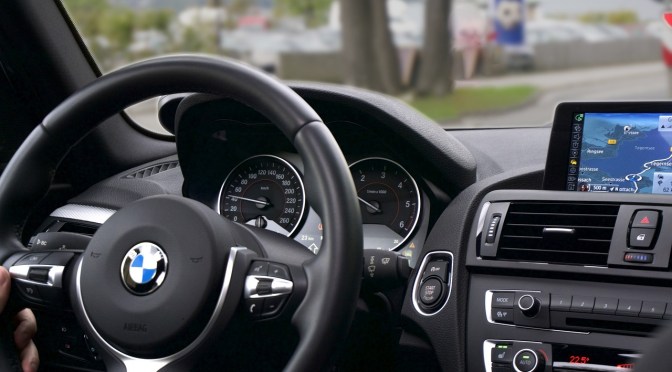
Inside, your car is a sensor farm. GPS saves your every move, cameras record facial expressions, microphones can listen in to phone calls, accelerometers record behavioural metrics, and the infotainment system stores everything from your phone. It’s a goldmine for third parties. The features that make the driving experience safer and slicker also pipe personal data to manufacturers, insurance companies, marketers and data brokers. The Mozilla Foundation even called cars the worst product category for privacy reporting that all 25 of 25 major car brands failed basic privacy tests – and some even admitted sharing data with marketing partners without additional consent. 

Here’s what’s happening, and what you can do about it. 

What Your Car Quietly Collects

Some of the data harvested by your vehicle makes sense, such as GPS data for navigation or tyre pressure monitoring for safety. Other tools keep you in lane, call emergency services, and prevent collisions, but also generate rich datasets about where you go, how you drive, and even who’s in the cabin. Precise location history, in-car microphone recordings, and driving behaviour are stored and transmitted to manufacturers, and third-party brokers. Most of this is buried in default settings and app permissions, masked as convenient connectivity to users. 

All of this was approved through the Biden Infrastructure Bill in 2021, along with the infamous vehicle “Kill Switch” that can shut down the vehicle remotely. That, too, is still in play. 

You can check exactly what data is collected by your vehicle using websites such as Privacy4Cars or VehiclePrivacyReport. 

You Can Restrict It – But There’s a Catch

Car makers can share or sell driving data and in-car collections for analytics, insurance pricing, advertising, and product development. While it’s possible to toggle certain sharing in vehicle menus, disabling some analytics also restrict features that drivers actually want such as live traffic or emergency calling options. Regaining privacy often means giving up conveniences you already paid for.  

Infotainment platforms and connected services may also have their own pipelines and policies too. The end result is a confusing patchwork where opt-outs in one place don’t necessarily carry over, and ultimate privacy can be hard to achieve. 

Why Is It Legal?

The Supreme Court in the US did rule that GPS tracking of a vehicle constitutes a search under the Fourth Amendment, which means that law enforcement must get a warrant before tracking your car. But, amazingly, that ruling only applies to government surveillance. Corporate data collection by private companies, including car makers and insurance companies, aren’t bound by the same constitutional limits. 

So, while the police need a warrant, entities profiting from your data do not. Accepting the terms and conditions at the dealership or when first using the car’s infotainment system means you’ve probably already consented to it, too. 

How Cars are More Invasive Than Phones

Smartphones collect location, Bluetooth beacons, and in-app events that can be linked to advertising ID or user accounts. App permissions, OS prompts and platform rules give tyou some visibility and control, and you can set location settings to Only While Using, revoke background access, and reset advertising IDs. But car data settings are more opaque and much trickier to navigate, with controls scattered between the dealer, the manufacturer, companion apps and more. 

Many people expect their phones to track them and have learned to simply manage those settings, which often come with clearer guidelines on when something is and is not actively monitoring their activity. Generally, people do not expect their cars to create a profile that is just as valuable – and in some cases even more actionable – for third parties. 

They Say You Can Opt Out, But It’s Not Always True

Turning off location services or clicking to opt out does not necessarily mean you’re in the clear. Independent research and investigative journalists have found that some connected vehicles continue to transmit telemetry for diagnostics, safety updates, or “system performance” even when privacy settings are disabled. 

And because the manufacturers control the software, there’s no public way to check what’s really being sent in the background. For many drivers, the only option is to trust the manufacturer’s promise – something that Mozilla’s 2023 report tells us is unwise given that every tested car brand failed basic privacy checks. 

In short, some brands’ default settings mean that the only true fix is choosing a different car. 

Final Thought

Analytics can save lives when the vehicle spots a crash, routes drivers around storms, or highlights a mechanical failure in the car. But it crosses into profitable surveillance when the same hardware also feeds businesses that create driver profiles, tailor prices, and targets individuals without clear consent. Privacy needs to be treated like a core safety feature too. Take time to audit your settings, restrict app access, wipe your data before service or sale, and make sure you know what will be recorded and sold before you buy your next car. 

Join the Conversation

Did you know how invasive car data collection can be? Have you checked settings in your own car? What else is tracking us without our knowledge? Most of us are so focused on phone tracking that we forget what else is profiling us. Add your thoughts at the link/source.

SOURCE

Photo credit: pixabay.com

Nanobots will live in our brains in the 2030s, says Google boss

Web Log: Engineering director Ray Kurzweil predicts what future holds for AI and humans

Thu, Oct 19, 2017, 07:35 Marie Boran Ray Kurzweil’s prediction rate has been rated 86 per cent accurate to date

Ray Kurzweil’s prediction rate has been rated 86 per cent accurate to date

Ray Kurzweil is director of engineering at Google but he is better known for writing best-selling books outlining the future of artificial intelligence.

He has made 147 predictions on the future of technology including the ubiquity of wearable devices and the move from desktops and laptops to smartphones and tablets. In fact, his prediction rate has been rated 86 per cent accurate.

With this in mind, fans were excited to see Kurzweil answer their questions in a live streaming interview session last week where he elaborated on his predictions.

Computer vision

Kurzweil thinks true AI will arrive when narrow fields within machine learning, computer vision and so on get broader and broader until there “won’t really be any difference between AI and natural [human] intelligence”.

“It is not an alien invasion of AI from Mars; we’re going to make ourselves smarter by merging with it,” he added. This merging will happen using nanobots, he predicts.

“In the 2030s we are going to send nanorobots into the brain that will provide full immersion virtual reality from within the nervous system and will connect our neocortex to the cloud. Just like how we can wirelessly expand the power of our smartphones 10,000-fold in the cloud today, we’ll be able to expand our neocortex.”

READ MORE

LINK: https://www.irishtimes.com/business/technology/nanobots-will-live-in-our-brains-in-the-2030s-says-google-boss-1.3259597

Image by Gerd Altmann from Pixabay

Here it comes: increased tracking & surveillance of your children in schools … remember the 5G upgrades? … surprised?

The government loves you …. protecting your health. EWR

From wired.com

When students return to school in New Albany, Ohio, in August, they’ll be carefully watched as they wander through red-brick buildings and across well-kept lawns—and not only by teachers.

The school district, with five schools and 4,800 students, plans to test a system that would require each student to wear an electronic beacon to track their location to within a few feet. The technology logs which students and teachers are in each classroom throughout the day. The hope is such technology could prevent or minimize an outbreak of Covid-19, the deadly respiratory disease at the center of a global pandemic.

READ MORE

LINK: https://www.wired.com/story/schools-surveillance-tech-prevent-covid-19-spread/

Image by elizabethaferry from Pixabay

Censorship – the first action of a criminal government

When the tyrant has disposed of foreign enemies by conquest or treaty and there is nothing to fear from them, then he is always stirring up some war or other, in order that the people may require a leader.

Plato


https://www.youtube.com/watch?v=hk5mPXW21k0&feature=share

Published on Apr 26, 2019

SUBSCRIBED 176K

“The illusion of freedom will continue for as long as it’s profitable to continue the illusion. At the point where the illusion becomes too expensive to maintain, they will take down the scenery, move the tables and chairs out of the way, then they will pull back the curtains and you will see the brick wall at the back of the theater.” – Frank Zappa

“Who controls the past controls the future, who controls the present controls the past.” – George Orwell

“I would rather have questions that can’t be answered than answers that can’t be questioned.” – Richard Feynman

“I have lived on the lip of insanity, wanting to know reasons, knocking on a door. It opens. I’ve been knocking from the inside.” – Rumi

Universal Law/sovereign law trumps all others.

1. No man or woman, in or out of government shall initiate force, threat of force or fraud against my life and property and, any and all contracts Im a party to not giving full disclosure to me whether signed by me or not are void at my discretion.

2. I may use force in self-defense against anyone that violates Law

3. There shall be no exceptions to Law 1 and 2.

TURN OFF YOUR TELEVISION! THROW AWAY YOUR SMART PHONE!

Max Igan – Surviving the Matrix – Episode 373 – American Voice Radio, April 26, 2019 – http://thecrowhouse.com
Support The Crowhouse: https://www.patreon.com/maxigan
Crypto-currencies:


Dr. Mary Redmayne to speak in Christchurch on “Raising Healthy Children in the Screenage” on August 9

“We are pleased to have the privilege of inviting you, your colleagues, family and friends, to a presentation covering one of the most pressing issues of our time: ‘screens’ and their effect on human health, wellbeing and behaviour.”

Website editor’s note: EMR Health and Safety, Christchurch have organised a public talk in Christchurch on Friday, 9 August, 2019 from 7.00 – 8.30 pm at Christchurch Rudolf Steiner School Hall, 19 Ombersley Terrace, Christchurch. For full details, please see below.

If you can help publicise this event by downloading the poster at the link below and printing it and putting it up on your work, community centre, library or church noticeboard etc. that would be appreciated by the team of volunteers who are organising this event. Thank you.

READ MORE

https://www.5g.org.nz/2019/07/23/dr-mary-redmayne-to-speak-in-christchurch-on-raising-healthy-children-in-the-screenage-on-august-9/

Follow the money – Lloyds of London Insurance won’t cover wireless radiation hazards – that includes smart meters

From rfsafe.com:

“Letter to Government from Sharon Noble – Director of Coalition to Stop Smart Meters in BC

Premier Clark, Mr. Bennett and Mr. Reimer,

RE: Lloyd’s of London excludes coverage for claims caused by exposure to non-ionizing radiation.

“Based on inaccurate information provided by ITRON, Health Canada and Dr. Perry Kendall, you have been telling people that there is no health risk due to prolonged exposure to radiation from smart meters on homes and wifi in school — this despite your having received 100s of studies by independent researchers and many letters from scientists and doctors to the contrary…

iphone-545772__180“Lloyd’s of London is one of the largest insurers in the world and often leads the way in protection, taking on risks that no one else will. Attached is a recent renewal policy which, as of Feb. 7, 2015, excludes any coverage associated with exposure to non-ionizing radiation….”

“‘The Electromagnetic Fields Exclusion (Exclusion 32) is a General Insurance Exclusion and is applied across the market as standard. The purpose of the exclusion is to exclude cover for illnesses caused by continuous long-term non-ionising radiation exposure i.e. through mobile phone usage.”….

“This means that the Province (that is we, the taxpayer) will be held liable for claims from teachers and parentscomputer-338968__180 of children suffering biological effects from wifi in schools, from homeowners exposed to RF from mandated smart meters on homes, and from employees forced to use cell phones or exposed to wifi at work…”

Read more:   http://www.rfsafe.com/lloyds-of-london-insurance-wont-cover-smartphones-wifi-smart-meters-cell-phone-towers-by-excluding-all-wireless-radiation-hazards/


Comment:

123
Marton’s central phone mast close to homes & offices

The fact that Lloyd’s will not insure you the user against the harmful effects of these devices speaks volumes. We already had the evidence but as I continually reiterate here, industry does not want you to know … that knowledge would clearly dissuade you from using their devices. The recent post here on the unfortunate UK man enduring the forced installation of a smart meter in his home (he’s now opted for no  power in preference) is disconcerting to say the least. Where has our right of choice as free citizens gone? Are we not purchasing power? Do we have no choice about how this is delivered?

If you’re new to the smart meter issue please educate yourself. Arm yourself with the correct information. Unfortunately you will not get this from your powerco. Listen to the professionals, watch the documentaries particularly ‘Take Back Your Power’. Then make informed decisions about how to protect yourself and your loved ones.

Listen to this Public Health Physician explain the health risks of wireless radiation:

EnvirowatchRangitikei