Tag Archives: Pork

Glyphosate Found in Eggs, Chicken Sold in Grocery Stores Traced to GMO Poultry Feed

Note: some years back (at least 6) I inquired of two NZ companies that produced chickens and pork, whether they fed their produce GM feed. Both replied they couldn’t rule that out as the feed was not labeled GM. EWNZ

Posted on Sep 10 2025 – by Sustainable Pulse

A scientific review in World’s Poultry Science Journal highlights the adverse health effects on avian species from exposure to the widely used weedkiller glyphosate (Roundup) throughout the process of poultry production. The herbicide enters the poultry production system through residues in genetically engineered feed, Beyond Pesticides reported.
An earlier article in Scientific Reports concludes that glyphosate’s (GLP) “widespread application on feed crops leaves residues in the feed,” while residues are “found to be common in conventional eggs acquired from grocery stores.”

In analyzing the biochemical, toxicological and ecological impacts of glyphosate on poultry, particularly chickens, the authors find a wide body of evidence linking glyphosate and its metabolite (breakdown product) aminomethylphosphonic acid (AMPA) to debilitating hazards that extend beyond mortality.

These sublethal effects include disruption of the gut microbiome and gastrointestinal disease; decreased productivity and diminished reproductive health; hepatic and kidney toxicity; growth and developmental impacts, including teratogenicity and embryotoxicity; endocrine disruption and oxidative stress; and impaired immune functions.

The effects of glyphosate, as have long been documented in the scientific literature, range from negative impacts on biodiversity and the environment to food safety risks and human health implications.

Glyphosate Box

Glyphosate Residue Free Certification for Food Brands – Click Here

Test Your Food and Water at Home for Glyphosate – Click Here

Test Your Hair for Glyphosate and other Pesticides – Click Here to Find Our Your Long-Term Exposure

Residues of both glyphosate and AMPA “have been detected in soil, crops, animal feed, poultry, and water sources, prompting scrutiny of their long-term effects,” the authors state.

They continue:

“Studies indicate that glyphosate disrupts enzymatic pathways, particularly by inhibiting the cytochrome P450 system, leading to oxidative stress, endocrine disruption, and mitochondrial dysfunction.

“It has been linked to liver and kidney toxicity, gut microbiota alterations, reproductive harm, developmental defects, and possible carcinogenicity, though regulatory agencies remain divided on its classification as a carcinogen.”

The International Agency for Research on Cancer, a part of the World Health Organization, has classified glyphosate as having cancer-causing properties, as have independent peer-reviewed scientific studies.

The ubiquitous nature of glyphosate residues throughout the environment and within organisms is a result of the widespread application of this toxic chemical in forestry, agriculture, landscaping and gardening.

Over 750 herbicides contain glyphosate as the active ingredient, and it also plays a large role in the production of genetically modified (GM) crops, “with approximately 80% of GM crops bred specifically for GLP tolerance.”

Glyphosate-based herbicide formulations contain not only glyphosate but also other inert (undisclosed) ingredients, such as adjuvants that increase toxicity.

A common adjuvant in glyphosate-based herbicide products is polyethoxylated tallow amine (POEA), which researchers have found can kill human cells, particularly embryonic, placental and umbilical cord cells.

Effects on poultry

Glyphosate residues in animal feed, as well as in water and through other exposure routes, pose risks to both animal and human health, as these residues can bioaccumulate and biomagnify throughout the food chain.

With a high reliance on corn and soybeans in the diets of poultry, GM crops are a significant source of exposure for these animals.

“The presence of GLP residues in poultry feed raises concerns about potential health effects on birds, including disruptions in gut microbiota, oxidative stress, and overall productivity,” the authors write.

They continue:

“Globally, approximately 57% of maize grain and 85% of soybean production are directed towards animal feed. Several studies have investigated the effects of feeding glyphosate-tolerant GM crops to various livestock species.

“Research has included dairy cows, cattle, and chickens, highlighting the potential impact of glyphosate residues on poultry growth performance, immune function, and reproductive health.”

Hepatic and kidney toxicity

Studies show that the kidney and liver are among the first organs to be affected by alimentary poisoning/foodborne illness. Additional research shows glyphosate residues in food can then impact various systems in animals, including the liver, intestine, kidney, and lung, as well as alter enzyme activity.

In a study of hatched chickens exposed to glyphosate alone and in Roundup shows “histopathological alterations in the kidneys and liver, along with imbalances in serum parameters and various biochemical changes in these organs, which could potentially impair their function.”

Oxidative stress

Exposure to glyphosate can induce oxidative stress and lipid, protein, and DNA damage. Previous research shows how glyphosate and AMPA are genotoxic and linked to oxidative damage.

One study shows that glyphosate increases the generation of reactive oxygen species in the liver and small intestine of chickens. Chronic exposure to products containing glyphosate in broiler breeders (stock chickens) weakens eggshells and delays embryo organ growth, with oxidative stress as the cause.

Gastrointestinal toxicity

Glyphosate diminishes the bioavailability of cytochrome (CYP) enzymes, which are crucial for metabolism, in the organs of chickens. One study shows that glyphosate specifically inhibits CYP P450 enzymes in chickens’ livers and small intestines.

Chicks exposed to glyphosate also have compromised liver function and altered lipid metabolism, further causing oxidative stress and deposits of fat in blood and liver tissues due to heightened expression of lipogenesis-related genes, as a result of its disruptive effect on cytochrome P450 enzymes.

Additional studies show disruption of the gut microbiome in livestock and poultry, where glyphosate reduces beneficial bacteria and enhances resistance in pathogenic strains.

These impacts can lead to the onset of chronic gastrointestinal diseases. In a study of the intestinal structure of chicks, glyphosate has been shown to impair the intestines, reduce antioxidant capacity, induce inflammation and cause the downregulation of genes in the small intestine.

Impact on reproduction

Previous research shows that chronic exposure to herbicides containing glyphosate can impact the survival, growth, activity and reproduction of organisms, including chickens.

study of roosters with chronic, subtoxic exposure to glyphosate shows reduced plasma testosterone and a decline in their reproductive peak.

Another study finds “significant effect on the histopathological [diseased tissue] characteristics of the rooster testes as well as sperm motility, the key determinant of rooster sperm quality.”

Additional research shows altered sperm in roosters when fed a diet containing glyphosate that leads to “metabolic disorders in the offspring, most likely due to epigenetic effects.”

Glyphosate implications for productivity and performance

Several studies have classified glyphosate-based herbicide formulations as teratogenic, causing developmental abnormalities in a fetus or embryo, and embryotoxic, causing harm or death to embryos during development.

In a study of quails, glyphosate was found to accumulate inside the eggs, causing damage to lipids (fats) in the brains of the developing embryos. This study also reveals that residues of glyphosate in food also slow plumage development and linger in eggs, muscles and livers of the birds.

Another study of chickens shows “exposure to GLP led to a significant reduction in the expression of key productivity-related genes.”

Exposure directly in the eggs of chickens to glyphosate-based herbicides induces teratogenic effects with negative effects on embryonic growth and development, as well as embryo mortality.

Changes in blood parameters, adverse effects on digestive tract development and reduced body weight are noted in chickens exposed to glyphosate.

Reproductive and developmental impacts regarding eggshell quality and embryo development are also associated with levels of both glyphosate and AMPA within egg yolk.

Yet another study shows that a decline in hatchability is associated with higher levels of glyphosate residues in feed among broiler breeders.

Regulatory deficiencies and the organic solution

Despite mounting scientific evidence that continues to link glyphosate to adverse effects in a wide range of species, current regulations fail to protect health and the environment.

The regulatory processes, such as those utilized by the U.S. Environmental Protection Agency (EPA), also ignore factors that enhance the toxicity of these already harmful chemicals, such as synergy, mixtures and inert ingredients.

“Current safety evaluations mostly concentrate on glyphosate in isolation, overlooking the synergistic toxic effects of commercial formulations and their capacity for bioaccumulation in adipose tissues,” the authors point out.

They continue:

“Furthermore, the heightened toxicity of commercial glyphosate formulations, influenced by co-formulants such as POEA, in conjunction with glyphosate’s interference with gut microbiota, cytochrome P450 enzymes, and endocrine functions, emphasises the necessity for cumulative risk assessments and long-term studies that account for species variability, bioaccumulation, and synergistic effects.”

These inadequacies in the regulation of petrochemical pesticides and synthetic fertilizers support the urgent need for the widespread adoption of safer alternatives.

SOURCE

Image by Franz W. from Pixabay

GMO feed turns pig stomachs to mush! Severe damage caused by GM soy and corn feed that in NZ is not labeled

Note Kiwis, some time back I contacted two well known local farming enterprises, one that produced pork and the other chickens. I asked both if they fed their stock GMO feed. Both sidestepped a direct answer by telling me they couldn’t rule it out because the feed is not labelled. What is the bet it’s GMO stock feed? If it weren’t both of these companies would be clambering at the opportunity to prove their produce is top of the line. But no, just ‘we can’t rule out GMOs’. Sad. Read below at naturalnews.com what GMO feed does to pigs’ stomachs, and likely yours as well. And be aware NZ approved the use of a GE bacteria pig growth hormone in 2001 & it isn’t labeled. The only way around this is to buy organic meat or go vegan. Even then with the latter you are better off to choose organic… TWNZ

The following article is from NaturalNews.com


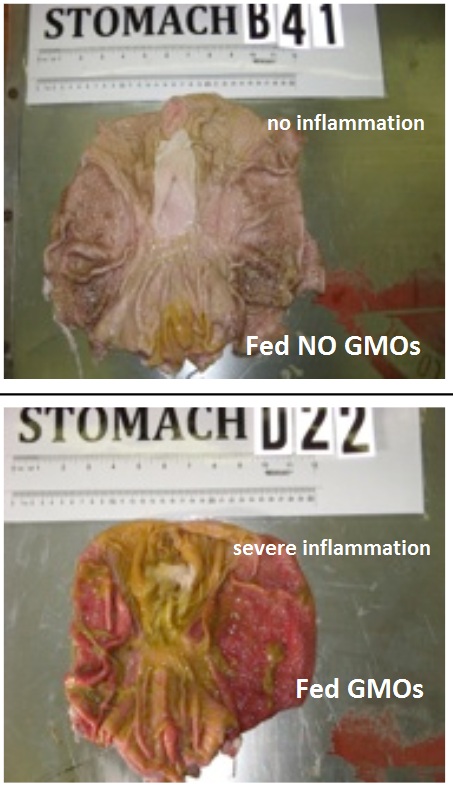
(NaturalNews) If you have stomach problems or gastrointestinal problems, a new study led by Dr. Judy Carman may help explain why: pigs fed a diet of genetically engineered soy and corn showed a 267% increase in severe stomach inflammation compared to those fed non-GMO diets. In males, the difference was even more pronounced: a 400% increase. (For the record, most autistic children are males, and nearly all of them have severe intestinal inflammation.)

The study was conducted on 168 young pigs on an authentic farm environment and was carried out over a 23-week period by eight researchers across Australia and the USA. The lead researcher, Dr. Judy Carman, is from the Institute of Health and Environmental Research in Kensington Park, Australia. The study has now been published in the Journal of Organic Systems, a peer-reviewed science journal.

The study is the first to show what appears to be a direct connection between the ingestion of GMO animal feed and measurable damage to the stomachs of those animals. Tests also showed abnormally high uterine weights of animals fed the GMO diets, raising further questions about the possibility of GMOs causing reproductive organ damage.

Proponents of corporate-dominated GMO plant science quickly attacked the study, announcing that in their own minds, there is no such thing as any evidence linking GMOs to biological harm in any animals whatsoever. And they are determined to continue to believe that, even if it means selectively ignoring the increasingly profound and undeniable tidal wave of scientific studies that repeatedly show GMOs to be linked with severe organ damage, cancer tumors and premature death.

“Adverse effects… toxic effects… clear evidence”

The study was jointly announced by GM Watch and Sustainable Pulse.

Lead author of the study Dr. Judy Carman stated, “We found these adverse effects when we fed the animals a mixture of crops containing three GM genes and the GM proteins that these genes produce. Yet no food regulator anywhere in the world requires a safety assessment for the possible toxic effects of mixtures. Our results provide clear evidence that regulators need to safety assess GM crops containing mixtures of GM genes, regardless of whether those genes occur in the one GM plant or in a mixture of GM plants eaten in the same meal, even if regulators have already assessed GM plants containing single GM genes in the mixture.”

The following photo shows one of the pig intestines fed a non-GMO diet vs. a pig intestine fed a GMO diet. As you can see from the photo, the pig fed the GMO diet suffered severe inflammation of the stomach:

Yet more evidence that GMOs damage mammals

The study adds to the weight of scientific evidence from others studies which show that rats fed a diet of GMOs grow horrifying cancer tumors and suffer premature death.

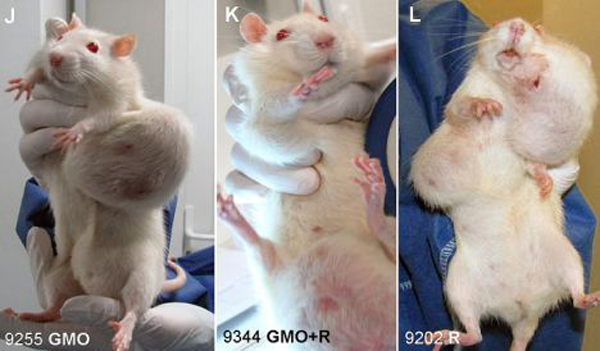
A scientific study published last year concluded that eating genetically modified corn (GM corn) and consuming trace levels of Monsanto’s Roundup herbicide was linked with rats developing shockingly large tumors, widespread organ damage, and premature death.

That study was also criticized by corporate GMO trolls who argued that scientists should not show pictures of rats with large cancer tumors caused by GMOs because the pictures scare consumers into being afraid of GMOs.

Here are some of the pictures they don’t want you to see, taken right from the public announcement of the study:

That study also found that rats fed GM corn suffered severe kidney damage as well as shockingly high rates of premature death.

Why weren’t these studies done before GMOs were unleashed into the global food supply?

The GMO biotech industry was able to escape any meaningful regulation of GMOs in the United States by (ridiculously) claiming GMOs were substantially no different from non-genetically engineered crops. “They’re all the same!” we were told. And the USDA bought it.

So how did Monsanto patent its GM corn, then? You’re not supposed to be able to patent something unless it’s uniquely different. Thus, the very fact that Monsanto has acquired patents on its GMO crop varieties is proof that the company itself believes its seeds are different.

And what’s different about Monsanto’s GM corn? It produces a deadly insecticide grown right into every kernel. That insecticide, of course, is what kills insects that try to eat the crop. And how does it kill those insects? It fatally damages their digestive systems. That same insecticide stays inside the corn even as the crop is turned into animal feed… or corn chip snacks… or flaked corn breakfast cereal.

GMOs are unfit for human consumption

This pig stomach inflammation study suddenly provides yet more credible evidence that GMOs are unfit for human consumption and may be causing severe damage to the digestive systems of both humans and mammals.

Naturally, the GMO industry and all its paid online trolls, on-the-take “scientists” and multi-million dollar P.R. machine will try to viciously attack this study from every angle. They absolutely hate real science when that science calls into question their poisonous, deadly seeds and genetic pollution.

That’s why you won’t read this news anywhere in the mainstream media — the same media that utterly discredited itself a few weeks ago when it pretended the hugely successful global March Against Monsanto never even took place.

NOTE TO THE SELLOUT CORPORATE MEDIA: You have zero credibility remaining. Virtually no one believes what you print. Everyone knows you have sold out your editorial agenda to Big Pharma, Monsanto, weapons manufacturers and the surveillance state. The reason why alternative media like GM Watch and Natural News is rising while your own numbers keep plummeting is because we print the real news that really matters on liberty, food freedom, farm freedom, health freedom and self-reliance. Maybe if you stopped intentionally lying to your readers on a daily basis while censoring important news on grassroots liberty, you might see some readers return to your publication…

Learn more:
Explanation of the key findings of the Judy Carman study:
http://gmojudycarman.org/wp-content/uploads/…

Full scientific paper:
http://gmojudycarman.org/wp-content/uploads/…

Background on Dr. Judy Carman:
http://www.gmojudycarman.org

GM Watch
www.GMwatch.org

Sustainable Pulse
www.SustainablePulse.com

Summary of the evidence against GMOs:
www.GMOevidence.com

More details on the Seralini study on GMOs and rats:
www.GMOseralini.org

SOURCE (note a video at source @ Youtube is now gone)

https://www.naturalnews.com/040727_GMO_feed_severe_inflammation_pig_stomachs.html

Your “GE-Free” NZ Govt secretly approved the use of a GE-bacteria pig growth hormone in 2001 & it’s NOT labeled!

soy-beans-968986_1920
Stock feed is commonly comprised of GE soy & corn – NZ farmers can’t rule out the possibility it’s GE as it isn’t labeled

See here how murky our clean green image is now?  Yet again we are consuming food that is not safe, with neither our knowledge nor our permission? They approved this secretly folks! How can we possibly trust these people who are charged with protecting our food supply? I posted a while back the alert that our stock is being fed GE feed. At least the business operators “couldn’t rule it out the feed wasn’t GE” as it included corn and soy, typically GE products. And the Greens have also made statements about GE feed here in NZ. If GE feed and hormone growth products are so safe why then are they being so underhanded about it all? Not rocket science is it? Vote with your wallet and don’t buy it. There aren’t a lot of options left to us as clearly they’re intent on steam rolling ahead with opening this Pandora’s box. To the peril of the public I might add.

Please share this info. Educate yourself. Search similar articles under ‘categories’ (top left of any page).

EnvirowatchRangitikei


test-214185_1280.jpg
Back in 2002 the Greens announced – “A new growth hormone made by GE bacteria has been secretly approved for use on NZ pigs, and there is no requirement to disclose its use on the label.

This growth hormone makes pigs grow by up to 20% more in the last month of their lives. The hormone Porcine Somatotropin (PST) is injected into the necks of pigs every day, for the last 30 days of their lives. Advice from the manufacturer is to inject pigs in the neck to prevent the meat being downgraded.

The hormone was approved by the Animal Remedies Board on 12 October 2001. A similar hormone for cows, bovine somatotropin, was refused approval by MAF last year because of concerns about European consumers refusing to buy hormone-treated milk and meat.

Australian officials had acknowledged there would likely be residues of the artificial hormone in pork from treated pigs.

As Sue Kedgley, spokesperson for the Green Party commented, this hormone was highly controversial and was not even approved by the FDA for use in America…”

Read More:  http://www.safefood.org.nz/news11.php


If you’re unconvinced GE food is bad for you watch this short clip interviewing Jeffrey Smith, expert on GMOs