Tag Archives: fruit trees

FRUIT TREE TIME (Wally Richards)

About this time each year; fruit tree nurseries lift the new season Delicious fruit trees out of the ground and either wrap the roots or bag them into planter bags, secured with twine as the roots have been cut.

It is very important that as soon as the tree is out of the ground the roots need to be covered and kept moist. If the bare roots are left too long they dry and the up lifted tree dies.

Every now and then I hear from a gardener that purchased a deciduous fruit tree (or ornament including roses) planted them and later in the spring the tree will leaf up and likely flower then nothing.

The reason being is the tree was already dead but had enough sap to be able leaf and flower before it ran out of steam having dead roots that cant take up moisture etc.

Like wise if you cut a branch off a flowering deciduous tree now that has flower buds on it and place the branch into a vase of water then it will flower later on when it is ready to do so.

The branch is clinically dead with enough sap and vigor to flower.

Gardeners often don’t realise that they had purchased a dead tree because it had appeared to come to life then faded.

Ideally you return the dead tree to the place you purchased it from with your docket as proof of purchase for a replacement or a refund.

Likewise when you are buying deciduous plants you must keep the roots covered and moist till planted and even then if the soil is dry then regular watering is needed.

Evergreen fruit trees such as citrus and feijoa are often available all year round but the best time to buy and plant is in the autumn/winter period as they have a new season of spring to establish before going into summer.

Citrus trees must have a free draining soil as they will died of root rot in heavy wet soils.

I have found the best way to overcome this problem is: you plant the young tree into 50 to 100 litre plastic drum or plastic rubbish tin.

You drill 50mm holes using a circular drill saw, four in the bottom and four in the sides at the cardinal points about 100mm up from the base.

You then bury the container about a third into the soil where you want it to grow.

Use compost to plant into the container along with blood & bone, sheep manure pellets or any manures available.

I personally dont like citrus fertiliser as it is acidic, harms the soil life and does not have sufficient potash in it.

There are varieties of fruit trees that suit most climates in NZ even some types of apricots that don’t require the chilling of winter as found in areas of the south island.

Some fruiting types require more maintenance than others having seasonal pests or diseases.

The most hassles free and great producers, from a fairly early age are Nashi pears and Feijoa and prior to the guava moth in the north of NZ were fairly pest free.

Nashi may in the middle of summer have some damage to the foliage from the pear slug pest which are easily controlled by sprays of Wallys Liquid Copper.

A tree ripened Nashi pear is so juicy and delicious when grown naturally.

Feijoa is another favorite of mine and there are a number of types readily available in NZ garden centres these days. Here are some examples:

Unique; (my favorite) An early season, prolific bearer of fruit from a young age.

This variety produces medium sized fruit with smooth, soft, and juicy flesh. A truly self-fertile variety.

Triumph; Produces medium to large sized oval fruits with firm skin, juicy and moderately soft flesh and an excellent sharp flavour.

Flesh somewhat gritty but with good seed-to-pulp ratio. Ripens late in the season. Good pollinator for Mammoth. Needs a pollinator. Which means you need two to have good crops.

Mammoth; Produces large, soft, round to oval fruit, with thick, somewhat wrinkled skin. The flesh is slightly gritty, and the quality and flavour are very good.

A strong growing tree of upright habit, it will grow up to 3 metres tall. Bears larger fruit with a pollinator (Triumph is a good option).

Anatoki; An early season variety with lush dark green leaves on a very attractive plant. It produces exceptionally sweet round fruit. Needs a pollinator.

The tree is quite vigorous, with large deep green foliage.

Apollo; A vigorous and productive variety that produces a medium to large oval fruit with smooth, thin, light green skin. Ripens mid to late season. Flavour very pleasant, quality excellent. This is an upright, spreading tree that will grow up to 2.5 metres tall. Semi self-fertile.

Bambina A dwarf variety, with thin edible skin surrounding sweet aromatic pulp bursting with flavour. Bambina is a good choice when planting in a pot. Self-fertile.

Wiki Tu; Producing huge fruit on a dwarf growing (2.5m), Wiki Tu is an easily managed, slow growing tree. The sweet and meaty fruit has a firm texture and good keeping qualities.

A mid-late season fruiting variety, it is partially self fertile, though is best with another variety nearby for cross pollination.

Remember Feijoa are gross feeders so a good dose of blood and bone and animal manure should be applied under the tree in the root zone in the spring.

As they start to bud up in the spring give them a monthly dose of Wallys Fruit and Flower Power till harvest.

Now here is an interesting thing in regards to stone fruit and in particular nectarines and peach both of which suffer in spring with the curly leaf disease which can reduce or completely lose the crop.

A few years ago I spoke to an elderly lady gardener who told me that see had an orchard with both nectarine and peach trees and never any curly leaf disease.

The reason being she grew them from stones (stones or seed from inside the fruit) This meant they were not grafted and grew on their own roots.

She told me also one time she purchase one each of the super dwarf nectarine and peach and planted them in her orchard. These two had bad curly leaf disease every season but it never spread to her other stone fruit trees.

My conclusion is that it is the graft that makes the trees weaker and hence the reason for being attacked.

Maybe thats the reason with grafted roses that always have problems

Also if you do plant stones or pips (from pip fruit) where they are going to grow and mature it only takes two to three seasons before they are bearing a small crop of fruit and of course they have cost you nothing.

So choose a nice fruit and plant the stone or pip which maybe similar as the parent but not exactly the same. Mark where you plant it with a stake as it may take a while for it to germinate.

Phone 0800 466464
Garden Pages and News at www.gardenews.co.nz
Shar Pei pages at  www.sharpei.co.nz
Mail Order products at www.0800466464.co.nz


New Zealand Bill of Rights Act 1990. Part II of the Act covers a broad range of Civil and Political Rights. As part of the right to life and the security of the person, the Act guarantees everyone:

1The right not to be deprived of life except in accordance with fundamental justice (Section 8)

2The right not to be subjected to torture or to cruel, degrading, or disproportionately severe treatment or punishment (Section 9)

3The right not to be subjected to medical or scientific experimentation without consent (Section 10)

4The right to refuse to undergo any medical treatment (Section 11)

 Furthermore, the New Zealand Bill of Rights Act 1990 guarantees everyone: Freedom of Thought, Conscience, and Religion.
This includes the right to freedom of thought, conscience, religion, and belief,
INCLUDING THE RIGHT TO ADOPT AND HOLD OPINIONS WITHOUT INTERFERENCE (Section 1)


DEALING WITH CURLY LEAF DISEASE IN STONE FRUIT (Wally Richards)

All too often I am asked questions about problems that have already occurred and its to late to prevent them. Its like the old saying, closing the gate after the horse has gone.

Unless you are onto it, you will miss the vital times when your efforts will be worthwhile and make a difference for that season.

We are now into July; the middle of winter and if patterns follow the past few seasons we are likely to see some good weather in August which will mean, (with the extending day light hours) things will start moving.

The following are situations for gardeners that have these problems from the past. Here is what I believe to be the best ways to handle them.

If you read my recent articles about making the soil healthy then apply that also to the following problems because healthy soil will make for healthy plants given time and in most cases.

Plants and trees etc that do not healthy and have a weak constitution, likely through breeding, should after a few seasons of effort be disposed of and replaced with another specimen that can be healthy.

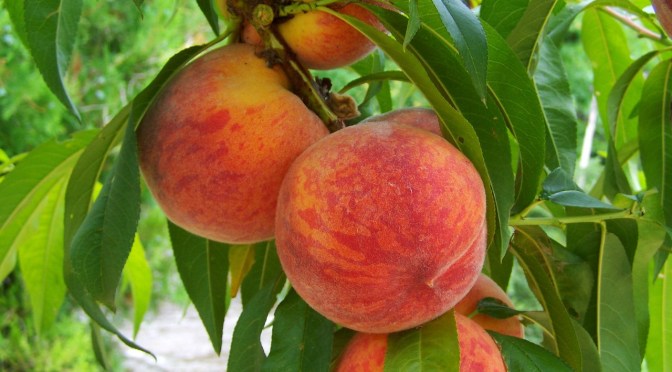
Curly leaf is a disease on stone fruit trees which effects nectarines and peaches.

The spores from the previous season are sitting waiting for the leaves to form and the right conditions to infect. The damage from last spring will lead to even more damage this spring unless you intervene.

If the damage is severe enough, not only will you not have any crop but you can also lose the tree.

I have had a few interesting talks with gardeners that have grown stone fruit directly from stones.

These trees grow on their own root stock, fruit within a couple of years or so and do not have curly leaf disease.

This means that it is the grafted varieties of stone fruit that we have problems with and the very worst ones are those dwarf specimens for curly leaf.

So what to do:

The trees and the ground under them should be sprayed with potassium permanganate at half a teaspoon per litre of water now. Add about a level tablespoon of Ocean Solids to the spray as it increases the effectiveness.

Leave for about two weeks and spray again with potassium permanganate at ¾ a teaspoon into a litre of water with 3 tablespoons of Ocean Solids, dissolved and then added to a further 10 litres of water.

Spray the whole tree and drench the soil underneath from trunk to beyond the drip line.

What we are trying to do here is kill as many spores of the disease as possible that are on the tree and in the soil under the tree.

Some years ago I suggested scattering Ocean Solids under the trees before they start to move in the spring, the information on this came from Sea90 for those familiar with that method.

I have heard some positive feed back from gardeners that have done this and they also said that if any damage starts to appear on the foliage they spread some more Ocean Solids.

Likely the sodium chloride neutralizes the spores as well as increasing the mineral uptake of the tree.

The traditional method of control is to spray the tree, once the leaves start to appear, this is done every 7 to 10 days with Wallys Liquid Copper and Raingard.

The idea here is to keep a film of copper over the leaves as they are growing to kill the spores when they land on the leaves.

‘This spray program is repeated for about 2 months. The Raingard is very important because without it the copper would wash off in rain and that is when the disease spores strike.

I have also suggested the use of Vaporgard to be sprayed over and under the foliage once a good amount of leaves have appeared without damage.

The film is also a barrier to the spores and will assist the tree to produce more energy from sunlight helping to retain a good crop of fruit.

Growing your own fruit and vegetables naturally is the answer to better health.

Codlin moth another annoying pest that spoils apples, walnuts and sometimes pears.

At this time the codlin are in cocoons, pupating waiting for the right time to emerge to mate, lay their eggs and damage your apples.

Where they are hiding is in nooks and crannies on the tree, but mainly in the soil under the tree.

What you could do at this time if you had a few chickens is netting off the area under the tree, rake the soil and put your hens in there to gobble up any cocoons they scratch out.

Next at end of July sprinkle Wally Neem Tree Granules under the tree from trunk to drip line.

What this does is create a smell from the granules breaking down that prevents the moths when they emerge to detect the apple tree above them.

They sit there waiting for the tree to come along and hopefully will be eaten by birds.

The pests are not going to emerge till the apples have set on the tree after flowering and the weather conditions are congenial.

Once the flowering has finished you can put a can with treacle in an onion bag and hang it in the tree.

This will attract the male moths, by monitoring the trap you will know when they are on the wing.

Then you can start spraying with Wallys Neem Tree Oil and Raingard every 10 to 14 days.

You dont need to spray the tree just the apples so they have a coating of oil on them when the grubs take their first bite. Once activity stops in your trap you can stop spraying.

Another alternative I discovered last season was to use crop cover wrapped around the fruiting branches and pegged with clothes pegs.

It can be taped on at the beginning of a branch, one layer only which allows sufficient light to leaves and fruit and I found not only did it keep birds from pecking the fruit it also prevented any codlin moth damage.

Psyllids on potatoes, tomatoes, tamarillos and some other plants.

A real problem pest which ideally with potatoes you plant the seed potatoes as soon as possible, protect them from frost by mounding up over foliage then once this has become impractical then use crop cover over hoops to give frost protection.

Harvest the crop about Labour Weekend or as soon as mature.

In early and out as soon as mature is easy solution. If you want a late planting use the special Quarantine cloth over the crop to prevent the psyllids getting in.

Otherwise use the cell strengthening kit which toughens the foliage so that the nymphs cannot feed.

Tomato plants are ruined by the psyllids much to the dismay of gardeners.

The idea is; to strengthen the plant’s cells so that the weak piercing-sucking mouth parts of the psyllids have difficulties piercing the strong cells of the plant and therefore cant feed and die.

REMINDER  EARLY BIRD SPRING PROMOTION COMING TO AN END

For our Early Bird Promotion till the end of July (July 31st cut off) the following applies. Neem Powder Neem Granules all sizes, 1kg, 3kg 10 kg and 20 kg 20% off the mail order web site price.

All other gardening products 15% off the marked prices but excluding bulk items such as 12.5 kilos Fruit & Flower etc.

Shipping if after discounts and excluding bulk items the order is $150 plus North Island or $200 plus South Island Free shipping for those orders.

Under those order sizes shipping at cost to you.

Often the discounts given means that you can get free shipping as the discount covers the shipping costs.

Orders must be placed on line at www.0800466464.co.nz

You cant pay on the web site and we phone you after receiving the order to give you your discounts.

Please put in the remarks place ‘Early Bird’ so I know to sort out the discounts before I phone you.

We can then take credit card details over the phone safely or email you details to do a bank transfer.

Regards

Wally Richards

Phone 0800 466464

Problems ring me at 0800 466464
Email wallyjr@gardenews.co.nz
Web site www.gardenews.co.nz

Phone 0800 466464
Garden Pages and News at www.gardenews.co.nz
Shar Pei pages at  www.sharpei.co.nz
Mail Order products at www.0800466464.co.nz

Photo: pixabay.com