

From Sustainable Pulse
Source: Le Monde, By Stéphane Foucart
A recent study confirming the herbicide’s carcinogenic potential has been the subject of fierce criticism. However, this criticism is based on flawed scientific grounds, Le Monde has reported.
The recent publication of a study indicating an increased risk of various tumors in laboratory rats exposed to glyphosate has sparked numerous comments on social media and in the press, aimed at downplaying or denigrating this research.
These results, published on June 10 in the journal Environmental Health, only confirm the conclusions of the International Agency for Research on Cancer (IARC), which estimated in 2015 that the studies available at the time provided “sufficient evidence” of glyphosate’s carcinogenicity in animals.
The attacks on this study, led by the Ramazzini Institute in Bologna, Italy, offer an exemplary array of the sleight of hand of “doubt manufacturing,” a rhetoric aimed at undermining confidence in scientific results, often used to delay or fight regulatory decisions.
“The journal is unknown, so the study is flawed.”
Eric Billy, an immuno-oncology researcher, was among the most vocal critics of the Ramazzini Institute study (which was actually an international study with authors from all over the world not just the Ramazzini Institute), which he deemed “flawed.” In a series of messages published on June 14 on his X and Bluesky accounts, which received numerous retweets, this employee of the pharmaceutical company Novartis first accused its authors of having “chosen a more lenient journal to avoid criticism,” explaining that he would have expected to read this article in the journals “Nature, Science, or Cell,” which he believes are of higher quality.
WHY IT IS IRRELEVANT
Environmental Health, published by the SpringerNature group, is actually one of the most influential journals in its field. Its citation rate places it 32nd out of 687 indexed journals covering the fields of public health, environmental health, or occupational health, according to the 2024 ranking by scientific publisher Elsevier. Prestigious journals like Nature or Science do not generally publish tests like the one conducted by the Ramazzini Institute.
“A number of reliable and high-quality toxicity studies, like the one you share with us, are published in specialized journals,” explains Meagan Phelan, spokesperson for publications published under the Science banner. “Although these are essential elements of substance assessment, these tests are not considered conceptual advances and, as such, Science does not generally publish them.”
“Exposed animals live as long as others”
The Ramazzini study did not reveal any significant difference in mortality between rats exposed to glyphosate and unexposed control rats. This point was highlighted by Mr. Billy to put the study’s conclusions into perspective. And it hit the mark: it was later reported in Le Figaro, which saw it as the “first lesson” of this work.
WHY IT’S MORE COMPLICATED
The fact that the study did not reveal any significant differences in survival rates between the two groups was not presented by the Ramazzini researchers as a result in itself. Their protocol was, in fact, designed to detect the carcinogenic potential of a product, not its effect on the animals’ survival: all of them were sacrificed two-thirds of the way through their lives, at the age of 104 weeks. Now, it’s easy to understand that if human smokers were compared to non-smokers, the mortality differences would be small if all individuals were euthanized at the age of 50.
In reality, the absence of a mortality difference between groups of animals over the duration of the test is mainly a guarantee of the quality of the study, for statistical reasons. An animal that dies prematurely will have been exposed for a shorter time to the substance tested, and the probability of tumors developing in its group will therefore be reduced. Its statistical weight in the analysis will therefore be different. A high survival rate in each group, both treated and control, guarantees the “maintenance of statistical power” of the experiment, according to the good practice guides in toxicology (maintained by the OECD).
“The chosen rodent strain is not appropriate.”
Several commentators have also criticized the Ramazzini Institute researchers’ choice of the so-called “Sprague-Dawley” rat strain. Eric Billy argues that the use of this type of rat “has already been strongly criticized by the scientific community due to an abnormally high frequency of spontaneous tumor lesions compared to other rodent strains,” recalling that this strain was used by Gilles-Eric Séralini in his famous and controversial study on GMOs.
WHY THIS IS INCORRECT
In reality, the high rates of spontaneous tumors observed in the “Sprague-Dawley” strain only concern certain sites (tumors of the mammary gland, pituitary gland, etc., found at comparable rates in the treated and control groups). Furthermore, the researchers have at their disposal an abundant literature to take into account the specific characteristics of this strain.
Not only is the “Sprague-Dawley” strain not problematic in itself, but it is the most widely used. In 2024, researchers showed that more than 55% of the 263 carcinogenicity studies of active ingredients conducted in recent years on rats used this strain. The carcinogenicity of Ruxolitinib, a drug substance marketed by Novartis, was, for example, tested on this strain. As for Dr. Séralini’s study (published in 2012, before being retracted and then republished), the choice of strain was not, in itself, among the criticisms made. As summarized by IARC experts in 2015, it was the entire protocol implemented that was criticized.
“The doses tested are unrealistic”
Like several other critical voices, Eric Billy is surprised by the high doses of glyphosate to which rats were exposed in the Ramazzini Institute study, stating that “even the lowest dose tested far exceeds actual human [dietary] exposure” and that “the other two doses are therefore a hundred and a thousand times higher than this human exposure.” The same argument and the same figure are used in Le Figaro.
WHY IT IS IRRELEVANT
This argument is frequently raised to challenge the relevance of the results of animal studies. However, millions of humans exposed for decades cannot be compared to a hundred rats exposed for 24 months. The purpose of these tests is to characterize the carcinogenic potential of substances, not to assess the risks faced by the population at actual exposure levels (sometimes much higher than dietary exposure, for people living near farms, farm workers, etc.).
In fact, the Glyphosate has already been associated with an increased risk of certain lymphomas in farmers in four meta-analyses and one pooled study—the highest levels of evidence in epidemiology. Animal studies allow us to interpret these results, suggesting that these associations are indicative of a causal link. And even if we give credence to the “too high dose” argument, the objection remains unfounded.
The Ramazzini study indeed examined the effects of glyphosate at considerably lower doses than all previous similar studies. In the seven studies selected by European authorities during their latest assessment of the herbicide molecule, the lowest doses tested were 12 to 420 times higher than in the Ramazzini study, and the highest exposures were 10 to 33 times higher.
“The route of exposure is not adequate.”
In the Ramazzini study, the animals were exposed to glyphosate through drinking water, not food. Mr. Billy maintains that this is inadequate, arguing that humans are more likely to be exposed through food.
WHY IT IS IRRELEVANT
Among the animal studies on glyphosate submitted to health authorities or evaluated by IARC, none has been deemed inadmissible because it opted for a similar exposure route. Drinking water is, moreover, considered acceptable for assessing “food or environmental chemicals, including pesticides,” just like diet, according to OECD Good Practice Guide No. 451.
This false controversy is a classic argument. In 1953, the Sloan Kettering Institute’s first work on the carcinogenic potential of tobacco involved observing the development of tumors on the shaved skin of rodents after smearing it with cigarette tar extracts. The American Tobacco Company criticized the scientists’ use of a “high concentration of smoke extracts—entirely different from the smoke a person might inhale from a cigarette,” while stating that “all scientists agree that there is no known relationship between skin cancers in mice and lung cancers in humans.”
Like the Ramazzini researchers, those at the Sloan Kettering Institute were not seeking to exactly mimic human exposure to the agent being tested (no one smears cigarette tar on themselves), but to test its carcinogenic potential.
“The number of animals is insufficient”
In his critical thread, Eric Billy makes a calculation estimating that, to achieve greater statistical robustness, the Ramazzini researchers should have used at least three times as many rats, or 160 to 220 individuals per group.
WHY THIS IS INCORRECT
Such requirements are fanciful. No chronic toxicity or carcinogenicity study of glyphosate conducted on rats has ever enrolled so many animals. All studies similar to those of Ramazzini one have included around 50 rats per group. And for good reason: this is the threshold recommended by the OECD guidance document.
“In this case, it is completely ridiculous to require more animals per group,” asserts American biostatistician Christopher Portier, former director of the US National Toxicology Program, whose work is an authority on the subject. According to this specialist, an expert witness for plaintiffs in several ongoing trials in the United States, the Ramazzini researchers “managed to demonstrate a statistically significant trend toward an increase in certain tumors in the treated animals, even though there were only 50 per group. Why would the experiment be repeated with more animals to gain more statistical power?”
In reality, it is when a statistically significant effect is not found that it is possible to argue that the number of animals is too small, and that it may be useful to increase statistical power. “The only disadvantage of having 50 rats per group, rather than 160 or 220, is ‘missing’ an effect, certainly not seeing an effect that doesn’t exist,” concludes Mr. Portier.
This article benefited from discussions with researchers at the Ramazzini Institute and critical review by three researchers (INRAE and INSERM) involved in toxicology work involving animal studies.
What is the “manufacturing of doubt”?
As science historians Naomi Oreskes (Harvard University) and Erik Conway (NASA) have shown in a landmark book (Merchants of Doubt, 2012), the “manufacturing of doubt” was developed in the 1950s by tobacco companies to deny or relativize the effects of cigarettes.
This rhetoric turns science against itself, by distorting the intellectual tools at the heart of scientists’ approaches (methodical doubt, demands for rigor, distrust of claims perceived as spectacular, etc.). It is thus very effective on members of the scientific and medical communities who do not work directly on the targeted subjects, as well as on audiences attached to rationality and the defense of scientific values, or even journalists who sometimes repeat such circulating arguments without thinking twice.
A highly effective propaganda technique, “manufacturing doubt” sometimes requires lengthy explanations to unmask, especially since it sometimes mixes legitimate criticisms with others based on untruths, misinterpretations, or simply erroneous considerations. It constitutes a toolbox constantly used for decades by a variety of industrial sectors wishing to protect their activities from any health or environmental regulation.
SOURCE LINK


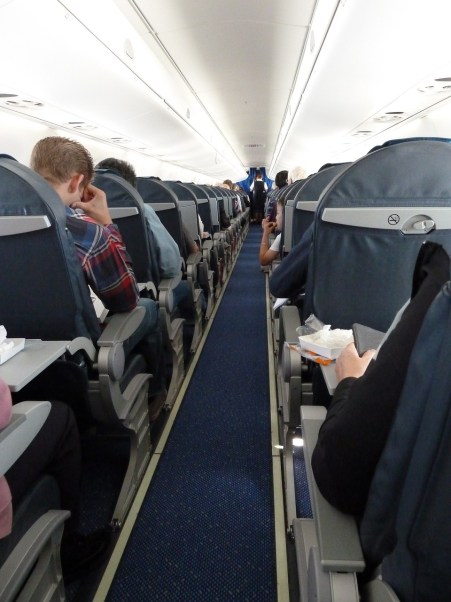 (NaturalHealth365) Aerotoxic syndrome, the term for the illness caused by exposure to contaminated air in jet aircraft, is ruining careers and claiming lives, causing the illness, permanent disability and even death of airline employees and passengers.

You must be logged in to post a comment.