Category Archives: Water

Anzac, General Freyberg and the Once Pristine Lake Horowhenua (Pt 1)

The iconic ANZAC poppy

Here is a story of pollution at its worst. ANZAC, unexpectedly this year (2015) became the avenue of discovery and the event that prompted me to write this post. A note first to non-Kiwis/Aussies, ANZAC stands for Australian New Zealand Army Corps … every 25th of April, we commemorate our brave soldiers … our parents, grandparents, aunts and uncles, brothers and sisters, who both risked and sacrificed their lives in the two World Wars.

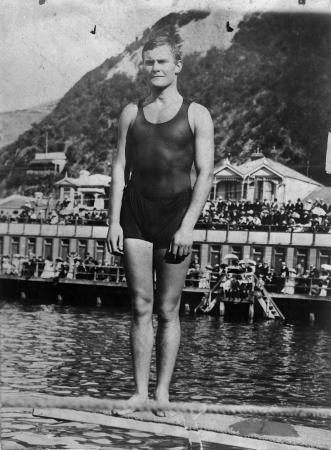
Freyberg in his youth at Oriental Bay, Wellington (NZ)
A young Freyberg at Oriental Bay in Wellington NZ

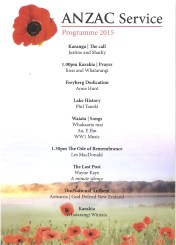
I hadn’t intended going to an ANZAC service and haven’t done since my father passed away in 2007. It brings back my deep sadness at losing him. An ad however, in the Horowhenua Chronicle, was brought to my attention by a family member about a special service to be held at Lake Horowhenua, Levin, honouring Lord General Freyberg for the centenary of  the Gallipoli landing.  My father had been his driver for four years during WWII, and Lake Horowhenua was one of the venues Freyberg had trained at in NZ as a young swimmer.  His swimming would later earn him the VC (Victoria Cross) in WWI. The Horowhenua Chronicle read:

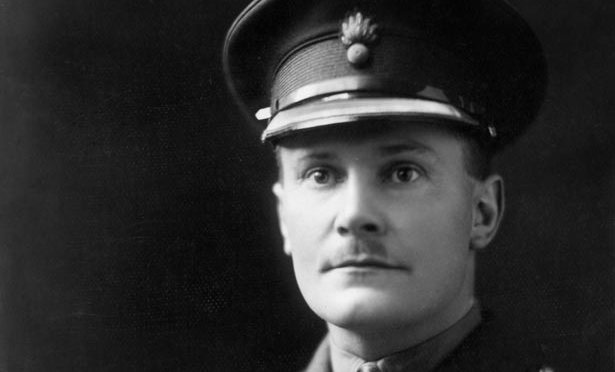
” Lieutenant General Bernard Freyberg was a dentist in Levin before World War I; by the end of the war he was a decorated hero and recipient of the Victoria Cross. He earned the first of his four Distinguished Service Order medals for a swim he undertook on the morning of the invasion of Gallipoli on April 25, 1915. In darkness, Freyberg had towed to shore a raft of flares to light as decoys before undertaking unarmed and alone a reconnaissance of the large army entrenched nearby.”

This ANZAC service was being organized by Phil Taueki (Muaupoko iwi) one of Lake Horowhenua’s owners and kaitiaki or guardian of the lake.  The original commemorative plans would have seen swimmers crossing the lake however, those plans were dropped. You will see why shortly.

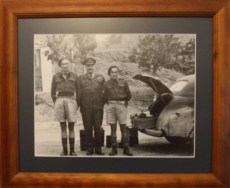
General Freyberg, his batman laurie Keucke and driver (my father) Jim Vernon
General Freyberg (centre) Corporal L. Keucke (left) and L. Sgt. J. Vernon (right)

We had no idea Freyberg had trained in Lake Horowhenua, or even that he had lived so close to our home town, only fifty or so minutes drive away. We decided to go to the service and take along with us the group photo my father treasured of the General, the General’s batman (also my father’s good friend) Laurie Keucke and himself, taken en route from Arrezzo, Rome, when they’d stopped for a ‘brew up’ and refreshments .

Lord General Freyberg

“… although it could be frightening  being on the road and always vulnerable to attack, nevertheless the General was always without fear … ” L. Sgt. James Vernon (Driver)

My father remembered Freyberg as a fearless man who already had 18 wounds at that time. His driver from El Alamein to Monte Cassino to Rimini, he said that although it could be frightening  being on the road and always vulnerable to attack, nevertheless the General was always without fear.

Freyberg apparently had a sense of humour too behind his fearsome exterior and knew the boys called him ‘Tiny’. Because his parents had emigrated from the UK to NZ when he was just a small child,  he would undoubtedly have experienced the Kiwi culture and its characteristic sense of humour growing up. For example, when staff who didn’t like the fact that Kiwi soldiers didn’t always salute them, he’d suggested they try waving instead!

“… they wouldn’t get away with that in the British Army … ” (General Freyberg)

The New Zealand guys always gave him a bit of stick too my father said. Knowing of his swimming expertise, when Freyberg and his men were getting ready to cross the Sangro River during the Italian campaign, someone called out, “Hey Freyberg, you gonna swim across?”. This was met with a tight lipped, “they wouldn’t get away with that in the British Army”, and as always with this kind of comment, a gleam in his eye.

The kind of man the Freyberg was is evident too in his posing for the group photograph. Generals wouldn’t normally be photographed I’ve been told, with that level of staff . After WW II when Freyberg visited Dad’s home town Whanganui, he’d broken rank and hugged my father when he spotted him in the parade … exclaiming how he always remembered the wonderful breakfasts he’d cooked him in the desert.  I always remember him as an excellent cook. After Freyberg’s appointment as Governor General of NZ after the war in 1946 my father and other of Freyberg’s staff I’ve heard, would call on him for a cup of tea at his home in Wellington, and every year, there would always be a Christmas card from Government House.

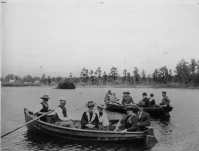
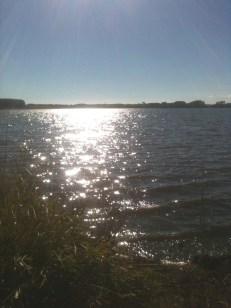
Lake Horowhenua

Lake Horowhenua, Levin, NZ

Returning to Lake Horowhenua, it turns out that the pristine lake the young dentist had trained in all those decades ago, had since been transformed  from a valuable source of income and kai (food) for Muaupoko … into a literal toilet bowl. Raw sewage had been pumped into it for two decades starting in the 1950s, and although it ceased in the 1980s, the lake has continued to be polluted to this day by effluent from both surrounding dairy farming and from local agricultural activity. The price tag to clean up the pollution and realize the dream of having swimmers cross the lake on the day was estimated by Horizons to be $2.886 million.

This story is all too familiar. Here in the Rangitikei we have our own pollution scenario, where locals have complained that the extension to Bonny Glen landfill to now nearly quintuple its size, will turn our ‘unspoilt’ district into the toilet bowl rather than the ‘grain bowl’ of the lower North Island. ‘Unspoilt’ is the featured word on our official district logo. This is clearly not true.

“Two-thirds of more than 160 monitored river swimming spots in New Zealand have been deemed unsafe for a dip”   NZ Herald  30/1/2015

Read Part 2 of this post with more on the events that transpired that ANZAC Day.

Dad 2

~ EnvirowatchRangitikei ~

More on Bonny Glen’s leachate disposal … they’re ‘chipping away’ at it

The Chronicle is reporting on the leachate. There have been more discussions regarding the ongoing treatment of this toxic runoff:  “Leachate from the Bonny Glen landfill may soon be treated on site rather than, or before, being dumped into the Marton wastewater treatment plant…”

We heard on June 12th that: “…it would still be a few months before a solution would be finalised concerning leachate…”  and that ” Bonny Glen manager Paul Mullinger …   was taking the issue “very seriously”. They are “… considering some sort of on-site treatment and did not view the issue as insurmountable”… and Deputy Mayor Dean McManaway says “It’s important we keep chipping away and not let this rest.”

Note the operative words here: “may … few months … considering … chipping away”.

It is interesting that on one side of the table, the company that managed to secure a nice loose ‘gentleman’s agreement’ to dump the toxic leachate in the first place, and contaminate our local stream to the extent RDC and Horizons seem unwilling to conduct ongoing in-stream biota surveys, concealing just how loose that agreement was … and on the other side that same company managed to effectively exclude all discussion of leachate, truck nuisance and landfill pests from the hearings altogether. And now it’s all go ahead with the consents safely in hand, still we’re required to ‘chip away’ at things. Some of us are not fooled by all this drag-the-chain rhetoric.

In the meantime, as the latest Chronicle article points out, the waste water treatment plant is still non-compliant.

Read the article here:  http://www.nzherald.co.nz/wanganui-chronicle/news/article.cfm?c_id=1503426&objectid=11465277

Will Monsanto’s Roundup Herbicide Soon Be Banned?

From Natural Society … this article recapitulates the progress so far in terms of recent mounting evidence:

“It’s not just the WHO that has raised the alarm over Monsanto’s Roundup and its devastating effects on human and environmental health. Instead, the WHO announcement was simply the most widely reported on Roundup study that we have seen. Sadly, it’s not even the most concerning.

It was back in September of 2014 that the  International Journal of Toxicology published a much more alarming piece on the dangers of Roundup entitled “Glyphosate Commercial Formulation Causes Cytotoxicity, Oxidative Effects, and Apoptosis on Human Cells: Differences With its Active Ingredient.” As you can gather from its name, the study highlighted the multitude of ways in which glyphosate is wreaking havoc on human cells…”

Read more: http://naturalsociety.com/will-monsantos-roundup-herbicide-soon-be-banned/#ixzz3auIKI6A5
Follow Natural Society: @naturalsociety on Twitter | NaturalSociety on Facebook

For an excellent overview of the research go HERE: http://www.greenmedinfo.com/toxic-ingredient/glyphosate-formulations

For more info on glyphosate go HERE: https://envirowatchrangitikei.wordpress.com/glyphosate/

KIWIS

P1150806

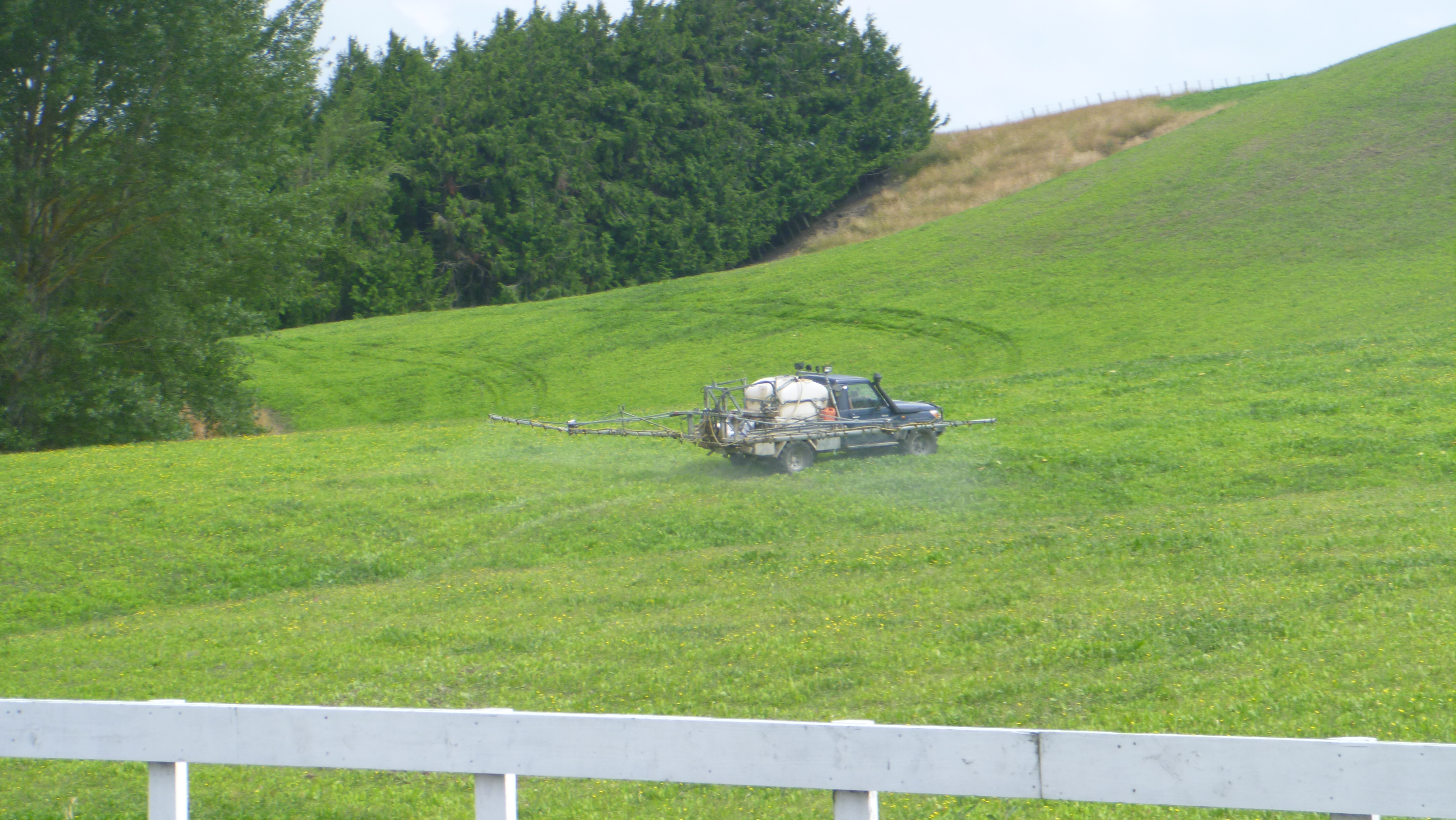
For Kiwis, remember, New Zealand is an avid user of Roundup and glyphosate. It is recommended in our Tertiary Agricultural textbooks, and touted as being completely harmless. Therefore it is sprayed liberally onto pastures and eaten by the stock headed for the market and our consumption. Hence it is found now in human urine, blood and breast milk. It is used by the keepers of our roads and public spaces in towns, by large contractors as well as small.

Educate yourself, read the data and spread the word. There are currently two petitions circulating in NZ, one for Auckland and one for the Rangitikei. I note that one may be coming for all of NZ, the better option really as it is at government level it needs addressing. Councils continue to repeat that glyphosate is government approved. In the meantime however, please consider signing the petitions and stop the ongoing poisoning of our future.

~ Envirowatchrangitikei ~

Rainwater collection being criminalized in U.S. – from Natural News

This is alarming to say the least … is it a sign of things to come? As yet New Zealanders are not prevented from collecting rainwater … and may it remain that way. On the other hand, as per my previous post, the competition here is hotting up with corporations already extracting our precious water resources and selling them abroad.

This article is from Natural News:

(NaturalNews) You might be aware that it is illegal to collect rainwater on your own property in some states, but did you know that doing so could actually land you in jail? That is exactly what is happening to Gary Harrington of Eagle Point, Oregon. He is now facing a 30-day jail sentence and fines of more than $1,500.

His crime? Harrington has been collecting rainwater in three reservoirs on his property, and the government doesn’t like it. In Oregon, all water is considered property of the state whether it flows from the tap or falls from the sky.

Learn more: http://www.naturalnews.com/049679_rainwater_collection_Oregon_government_dependence.html#ixzz3aHQJazjd

Water Wars in ‘Clean Green’ NZ?

Most people who subscribe to truth sites similar to this one will be aware that water is becoming the new ‘gold’. This was ‘prophesied’ in a sense by Maude Barlow and Tony Clarke in their book called ‘Blue Gold the Battle Against Corporate Theft of the World’s Water’ (2001), a very interesting and informative read. (The documentary of the same name is on Bitchute.)

Here in NZ recent news items have questioned ‘who owns our water?’  https://www.nzherald.co.nz/kahu/debate-who-owns-the-water/VIVM3S5TCFZ3R5M75H67ORJ3NA/
‘Nobody’,
says the current PM John Key …  and yet a Hawkes Bay bottling plant (Chinese owned) has been sold pretty cheap rights to bottle and export 900 million liters per year. While locals who wish to water their orchards are required to pay for it.  Read the explanations for this and to the average citizen they sound like gobbledy gook … citing the Resource Management Act (RMA) and spun in legal rhetoric most of us can’t understand. This is the way of big business.

NZ’s Maori King, King Tuheitia says Maori “have always owned the water.”  In August 2012, the Waitangi Tribunal found that Māori still have residual proprietary rights in water and the Crown would breach the principles of the Treaty of Waitangi if it went ahead with the sale of State owned power company share sales. Maori customary title, according to the 2003 “Ngati Apa” decision of the Court of Appeal, must be lawfully extinguished before it can be regarded as ceasing to exist. Customary rights, although not ownership in a Lockean sense, says the NZ Herald, still represent more than the relegation of Maori to being non-owners of non-ownable water. Indeed, when acquiring the land for the Crown, the Queen solemnly agreed for Maori to retain “full exclusive and undisturbed possession of their Lands and Estates Forests Fisheries and other properties which they may collectively or individually possess…”

Still it appears perfectly legal in the case of Hawke’s Bay, for the local council there to sell an offshore corporation the rights to extract large quantities, even though, as John Key argues, nobody owns it.

For the purposes of introduction here, water and one’s right to it is becoming somewhat complicated.  There are places on the planet where the powers that be have integrated into law the prohibition of collecting it for personal consumption. As insane as this may sound it is factually true. As always, follow the money trail.

Corporations are seeking to privatise our water commons for a profit (and yes it was always considered one’s right to water is sacrosanct). Exemplifying their typical avarice for more and more profits, they seek to gobble up all the water resources and rights to them it seems, and sell them back to us at exorbitant prices.

The company Nestlé is guilty of this. Whilst its chairman Peter Brabeck-Letmathe  proclaims water is a human right, the company is busily selling off drought-stricken California’s water. Nestle owns 70% of the world’s bottled water brands.

This is the way of corporations. They are seldom for the people and always for their shareholders. Separate entities with legal personhood they manage to do just about anything their shareholders wish for them to do whilst escaping accountability for any damage they incur.

A few years back in Cochabamba Bolivia, a large corporation had privatised the water and was charging around half the income of the poor to buy it off them. So oppressive did this become it ended up with riots and even loss of life to oust the corporation and return to the previous status quo.  If there is anything you should learn on this site it is that corporations are not generally kindly companies that wish to help people. (Please watch ‘The Corporation’ movie).  Any intimation from them that they wish you well is generally just rhetoric to appease you or persuade you you to buy.  This attack on the rights of people to drink the essence of life, (and it is well established that water is essential to life itself) is a huge attack on our ultimate freedoms. Fifty years ago this line of thinking would be unheard of … unthinkable. As I’ve pointed out often here, fifty years ago most households had their own water tanks to collect rainwater. That was standard practice. And yet, today it is being put to us as being right and proper that we should not be collecting it at all. We have been seriously duped by little increments that corporations can, but not we the people. Lest I be misunderstood here, I am not against water conservation. I simply believe, like most ordinary folks, that water should not be virtually given to corporations to profiteer with, at the expense of locals who need it for day to day survival.

Welcome then to the water wars. And I’ve not even touched on water pollution and our health. In the meantime, be sure to stand up for water rights wherever they are being quietly, or not so quietly, whittled away. Next we will be charged for the air we breathe. Such is life in the twenty first century. If the water wars are new to you begin by watching the documentary Blue Gold. 

Nestle Continues Stealing World’s Water During Drought

“Nestlé is draining California aquifers, from Sacramento alone taking 80 million gallons annually. Nestlé then sells the people’s water back to them at great profit under many dozen brand names.

By |

The city of Sacramento is in the fourth year of a record drought – yet the Nestlé Corporation continues to bottle city water to sell back to the public at a big profit, local activists charge. 

The Nestlé Water Bottling Plant in Sacramento is the target of a major press conference on Tuesday, March 17, by a water coalition that claims the company is draining up to 80 million gallons of water a year from Sacramento aquifers during the drought….”

Read at the SOURCE (mintpressnews.com)