
Connor and the Coroner: Sudden Death, a ‘Dilated Heart’ and Unanswered Questions
From nzdsos.com
We have read the recent media coverage and coroner’s report for Connor Garden-Bachop, a 25 yr old man who died suddenly in his sleep, in the prime of his life in June 2024, despite being a very fit and healthy rugby star.
For clarification, a coroner is a lawyer who investigates and determines cause of death based on a pathologist’s report and other information, and a pathologist is a medical doctor who conducts post mortem examinations.
The Coroner, Mary-Anne Borrowdale, noted the cause of death as “Sudden death in the context of a mildly dilated heart” with no antecedent causes, underlying conditions or other significant conditions noted. There were no alcohol or drugs involved. The Cardiac Inherited Diseases Group (CIDG) undertook genetic testing but did not find any genetic cause.
Her conclusion: “I am satisfied that Mr Garden-Bachop died of the above natural cause and that there are no suspicious circumstances attaching to his death.”
We have not seen Dr Leslie Anderson’s report. She is the pathologist who did the post mortem examination. She has noted a dilated heart but no consideration of the cause of this has been documented in the Coroner’s report. Without reading the pathologist’s report, it is not known how many samples of heart tissue were assessed, where they were taken from or what they looked like under the microscope, including whether there were subtle changes present that could be consistent with previous (symptomatic or asymptomatic) myocarditis.
As doctors who have been concerned about the government’s covid response since early 2020, in particular covid vaccinations from 2021, we have questions and comments to make about this case. We don’t know whether Connor received one or more covid vaccinations but assume he did as he continued to play rugby beyond 2021.
Covid vaccination omitted from consideration
Our experience, based on reviewing coroners’ and pathologists’ reports that have been shared with us by bereaved families, is that the covid vaccination is often not mentioned at all, or is quickly dismissed without explanation why, as not contributory or causative. This is despite, in some cases, there being unexplained abnormalities on microscopic examination of heart tissue; despite death occurring within a few days of vaccination; or despite there being no other cause of death. The Coroner’s report for Connor does not mention covid vaccination.
Myocarditis
By now it is well known that mRNA vaccination (such as that used in NZ for covid) can cause myocarditis. In fact, it seems to be the only serious adverse effect officially recognised by ACC or the Ministry of Health from the covid vaccine (despite there being many more). The original Pfizer clinical trial turned up twice as many sudden cardiac deaths in the vaccinated group, and the first safety signal appeared on first rollout overseas in December 2020.
All 4 formally recognised deaths due to covid vaccination in NZ have been from myocarditis (57 yr-old Chinese woman, 13 yr-old Wellington boy, 26 year-old Rory Nairn and 42 yr-old Amanda Smees).
It is our opinion that there are many more suddenly dead people who have likely had damage to the heart from covid vaccination – either with or without symptoms at the time – who had small areas of scar tissue in the heart that set off a sudden arrhythmia. Without rapid defibrillation some arrhythmias can cause death.
An average heart weighs 250-350 grams and tissue sampled during a post mortem would be at most a few grams, so the majority of the heart tissue is not examined under the microscope. In the case of the 13 yr old boy, newspaper reports noted that he had a “microscopic amount of myocarditis in a crucial part of his heart”. Well yes, a microscope is needed to diagnose it but it would be easy to miss small affected areas, including in the electrical conduction pathways which are often not assessed, and are indeed “microscopic” themselves.
Dr Peter McCullough
Dr McCullough, world-renowned US cardiologist, believes sudden death in a young, healthy, covid-vaccinated person with no obvious explanation should be attributed to covid vaccination and myocarditis.
He has stated: “When we see a young person now, who’s previously healthy, no antecedent illness and they suddenly die, and the two patterns are dying in sleep, typically from 3 am to 6 am or dying during sports, and by the way in both of those time periods there is a rise in epinephrine, norepinephrine (adrenaline and noradrenaline) which is probably an internal trigger for this, and there’s no suicide, there’s no drug overdose, there’s no motor vehicle accident, it is the covid 19 vaccine and subclinical myocarditis until the parents come out or the family comes out and tell us otherwise. And the family they can clear this up. If they come out and say listen, they didn’t take the vaccine, then OK we’ll lay down our concern. But let’s be conservative and assume right now that these are fatal vaccine-induced myocarditis cases.”
Dilated cardiomyopathy
From the coroner’s description of a dilated or stretched heart, is it possible that Connor had a dilated cardiomyopathy? This could be an after-effect of covid vaccine induced myocarditis. Damage to, or death of, individual scattered heart muscle cells can cause the overall heart to weaken and stretch. This could also lead to damaged electrical pathways and abnormal heart rhythms, some of which can be fatal if not rapidly defibrillated. In fact, with normal valves, myocarditis is almost certain to have occurred at some point prior in a case of sudden death with a floppy heart.
Pharmacovigilance
One of the principles of pharmacovigilance (medicine safety monitoring) used to be that if a death or adverse event followed a medical procedure, it was considered due to that procedure until proven otherwise. With a novel technology such as injection of synthetic genetic material into people, this principle should hold for many years following the medical procedure. However, it seems to have been cast aside during covid, and otherwise unexplained deaths in vaccinated New Zealanders are being attributed to ‘natural causes’.
There are formal criteria (e.g. WHO, Bradford-Hill, Naranjo) for assessing causality with regards to vaccine or drug adverse events but we have not seen these used in practice in these various cases, despite Medsafe advising adverse event reports are assessed using WHO causality criteria.
It is only moral, and legal – or used to be until the convenient amendments to the Coroner’s Act in 2023 – that a formal causality assessment be carried out by one or more experts in pharmacovigilance in cases of sudden unexpected death in vaccinated New Zealanders, including in this case.
Coroner’s amendment act
Some might remember the introduction of the Coroner’s Amendment Bill on 24 August 2022, which passed into law on 4 April 2023. This provided four changes to the coronial process:
- establishing new Associate Coroner roles
- allowing cause of death to be recorded as ‘presumed natural causes’ without investigation in certain circumstances
- allowing a coronial inquiry to be held in chambers (‘on the papers’) rather than as an inquest in a courtroom
- allowing coroners to consider cause of death and not consider circumstances of death
These changes are relevant because there is less incentive to determine a definitive cause of death if ‘presumed natural causes’ can be readily used. Allowing an inquest ‘on the papers’ means that the coroner may not hear from the appropriate people. Hearing evidence given in person with the ability to ask questions and clarify points is more likely to allow a conclusion to be reached than reading dry evidence on paper. In this case, being able to omit consideration of the circumstances means not having to address the mass coerced novel genetic injection rollout that took place in 2021 and 2022, or the potential role of NZ Rugby in imposing ‘vaccination’ requirements.
CARM/ACC (Centre for Adverse Reactions Monitoring/Accident Compensation Corporation)
As noted earlier, it is not known to us whether Connor received one or more covid vaccinations in 2021. If he did receive covid vaccines and has died suddenly, a CARM report should have been filed, even if his death was 3 years out from the medical event. It is also possible an ACC claim should be made. ACC has accepted 6 claims for fatal injury despite Medsafe only publicly acknowledging 4 deaths due to covid vaccination. ACC may assist with funeral expenses and care for dependents if a Treatment Injury claim is accepted. NZDSOS expects that future compensation will be paid to all affected New Zealanders, and people and families who have already registered a serious injection reaction may have an easier pathway.
New Zealand Rugby
NZ Rugby imposed covid vaccination mandates for its players but it is not clear whether they undertook any independent risk-benefit assessment for their players or just followed government orders. As a flagship brand of NZ Inc, the pressure on the All Blacks to lead from the front would have been immense, but the hard yards to get all rugby players and staff injected was imposed by the clubs and franchises, not the All Black management per se. As a Maori All Black and Otago Highlander, Connor would have rolled up his sleeve. As was already clear by then however, healthy rugby players were not at significant risk from covid infection but were at significant risk from heart inflammation especially, and other adverse effects from covid vaccinations.
Sean Wainui
In the case of another Maori All Black, 25 year old Sean Wainui, the coroner has yet to publish her report and it is over 4 years since his sudden death shortly following a covid jab in October 2021. A VAERS (Vaccine Adverse Event Reporting System) report from NZ has details that seem to fit with the reported details of this young man. If the report does relate to Sean, he received a covid vaccination 5 days before his death. His family have confirmed this anyway, as well as highlighting irregularities in the official investigation and media coverage of his tragic passing.
CDC ‘Split Type’: NZPFIZER INC202101587926

Other Deceased Rugby Players
Both Sean and Connor were friends and colleagues of Shane Christie, a much-admired ex-player and coach, who himself died last year in unusual circumstances. Shane was lobbying NZ Rugby on several issues, including their deaths, but there are a number of other rugby players who have died suddenly and unexpectedly in the years since the rollout of the covid vaccination. If vaccinated, how many of them have had that considered by the pathologist and coroner involved? Some are listed below.
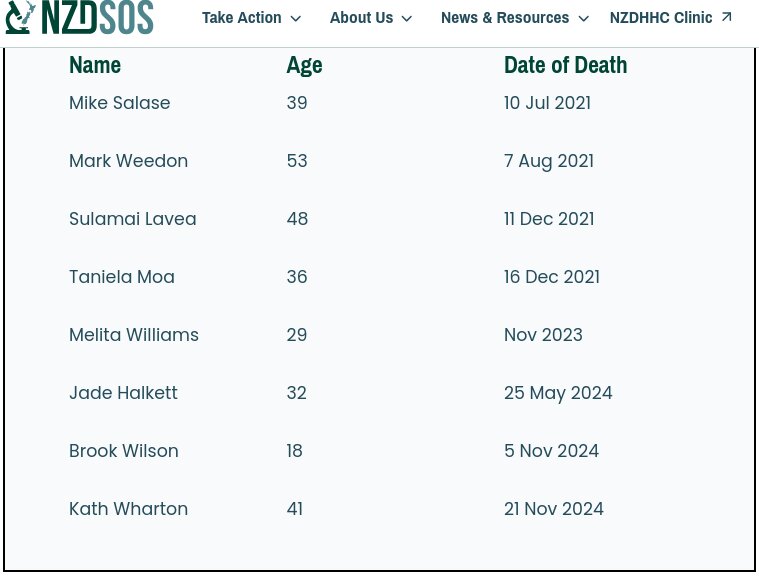
Many other young and active sports people around the world – professional and amateur – have died suddenly in unprecedented numbers since 2021. Data analyst Ed Dowd and Childrens Health Defence published one resource covering this, (Cause Unknown) and Dowd’s Phinance Technologies continues to examine insurance claims, pharmacovigilance and other data to quantify the toll on the young as well as working-age adults.
References
Below are a number of medical and scientific references demonstrating that myocarditis post covid vaccination occurs far more frequently than publicly acknowledged, can cause damage with few or no symptoms at the time, and can lead to areas of scarring which can cause arrhythmias either quickly or months or years later, some of which could lead to cardiac arrest.
1) Myocarditis Cases Reported After mRNA-Based COVID-19 Vaccination in the US From December 2020 to August 2021
Oster
This study from the CDC compared rates of new myocarditis reported to VAERS (Vaccine Adverse Events Reporting System which suffers from significant under reporting) in the first 7 days after the 1st and 2nd doses of the two mRNA injections (Pfizer and Moderna) to background rates. Published in early 2022, it shows markedly increased risk in the under 50s, strongly slanted to boys and young men. For instance teen boys age 12 to 15 had a 133-fold increase (70.73/0.53 – observed over expected cases per million doses) in risk after the 2nd dose of Pfizer.
Key point: Even if the markedly elevated risk is still considered small (by some) in absolute terms, the degree of increase points to a potent underlying pathology in action.
https://jamanetwork.com/journals/jama/fullarticle/2788346
2) A Systematic Review of Autopsy Findings in Deaths After Covid Vaccination
Hulscher
In this paper, autopsies were independently re-adjudicated in 325 cases of vaccinated people (average age 70 but including some young people) who had died shortly following their covid vaccination, on average 14 days after vaccination. 74% were found to have died directly or indirectly due to their injection.
Key point: The consistency seen among cases in this review with known COVID-19 vaccine mechanisms of injury and death, coupled with autopsy confirmation by physician adjudication, suggests there is a high likelihood of a causal link between COVID-19 vaccines and subsequent death.
3) Autopsy findings in cases of fatal COVID-19 vaccine-induced myocarditis
Hulscher
A systematic review investigating potential causal links between covid-19 vaccines and death from myocarditis using all published autopsy reports involving covid-19 vaccination-induced myocarditis up to 3 July 2023. There were 14 papers containing 28 cases and the review includes a summary of histology findings.
Most people had received a Pfizer vaccine and most had symptoms prior to death though some had no reported symptoms. The predominant mechanism of death was determined most likely to be a sudden arrhythmia such as ventricular tachycardia or ventricular fibrillation, rather than pump failure.
Autopsy findings included patchy inflammation suggesting that sudden arrhythmic death could have occurred due to a re-entrant ventricular arrhythmia.
One case was a 24 yr old male post second mRNA vaccine whose heart showed: “Scattered necrosis and fibrosis of cardiomyocytes with a perivascular pattern of inflammatory cell infiltration.”
Key Point: Autopsy findings confirm covid vaccines can damage the heart muscle cells and cause death in people with or without symptoms. Sudden unexpected death from an arrhythmia is the most likely cause of death.
https://onlinelibrary.wiley.com/doi/epdf/10.1002/ehf2.14680
The following 3 studies document that the rate of actual demonstrable heart injury is many orders of magnitudes higher than the platitudinous description of them being “vanishingly rare”.
4) Cardiovascular Manifestation of the BNT162b2 mRNA COVID-19 Vaccine in Adolescents
Mansanguan
Thai prospective study from Aug 2022. 301 adolescents age 13-18, had symptoms and lab testing assessed on days 3, 7 and 14 following second dose of Pfizer mRNA vaccine. A rate of symptomatic and subclinical myocarditis of 3.5% was ascertained in the 201 boys, although fully one third of the whole group experienced various cardiac symptoms.
Key Point: A significant percentage of adolescents (boys > girls) demonstrated myocardial injury even though asymptomatic.
https://pubmed.ncbi.nlm.nih.gov/36006288
5) Sex-specific differences in myocardial injury incidence after COVID-19 mRNA-1273 booster vaccination
Buergin
Swiss study of 777 health care workers presented at European Society of Cardiology. The workers had cardiac troponin levels (a marker of damage to the heart muscle) measured before and after 3rd Moderna mRNA shot. The rise and fall of troponin in 2.8% of individuals was adjudicated to be mRNA-1273 vaccine-associated myocardial injury. However, the large majority of participants showed a small but definite rise even if not meeting the injury criteria.
Key Point: A similar proportion (2.8%) to the above Thai study showed measurable myo- or peri-carditis. But note, a far greater percentage of people having the mRNA booster showed subtle biochemical evidence of heart injury.
https://onlinelibrary.wiley.com/doi/10.1002/ejhf.2978
6) Cardiovascular safety signals in Israeli adolescents following COVID-19 Vaccination: Evidence from an unprocessed FOIA dataset
Ophir
This is a new report using previously undisclosed surveillance data from Israel, which, like NZ, administered predominantly Pfizer covid vaccines. It shows that cardiovascular adverse effects, including myo- and pericarditis were more common than admitted (or would have been expected) in teenagers and occurred at similar rates in females and males, and after both doses, including beyond three weeks after the second dose.
Despite the adverse event data covering a four year period from Dec 2020 to Dec 2024, nearly all (98%) of the adverse cardiovascular events in the 12-16 year olds occurred in the time window between June 28 and August 8, 2021, almost immediately following the beginning of the rollout to this age group.
Key Point: Cardiovascular damage in young Israelis was more common than the public was told during the vaccine rollout, and data indicating a serious safety signal was withheld.
The following 3 studies also point to a very high incidence of silent cardiovascular damage following the mRNA jabs.
7) Assessment of Myocardial 18F-FDG Uptake at PET/CT in Asymptomatic SARS-CoV-2–vaccinated and Nonvaccinated Patients
Nakahara
Japanese radiology study comparing glucose uptake in cardiac muscle in 700 covid-19 vaccinated versus 303 un-vaccinated individuals without cardiac symptoms having PET/CT scans for other reasons. An increased uptake is a sign of mitochondrial failure as healthy cardiac muscle burns fat preferentially. When compared with non-vaccinated patients, asymptomatic patients who received their second vaccination 1–180 days prior to imaging showed strongly increased myocardial glucose uptake on PET/CT scans.
Key Point: There were indicators of silent heart strain/damage in most of the vaccinated people.
https://pubmed.ncbi.nlm.nih.gov/37724969
8) Applying spectral analysis to the arterial pulse to discriminate cardiovascular side effects following administration of Moderna’s mRNA-1273 vaccine
Chen
This study assessed the radial artery (wrist) pulse waveform of 203 people before and approximately a week after receiving a Moderna mRNA vaccine. The pulse waveforms are sensitive markers of blood vessel health used in early heart disease detection. The researchers found 91% of participants had experienced cardiac, vascular, or combined cardiovascular side effects, and statistically significant post-vaccination changes in pulse-wave indices were detected in participants who reported cardiac or vascular side effects.
Key point: An important indicator of abnormalities in structure and function of the cardiovascular system – the elasticity and compliance with which the heartbeat is received by the arteries – was found to be very common in the mRNA-vaccinated cohort.
https://www.sciencedirect.com/science/article/abs/pii/S0014299925010234
9) Observational Findings of PULS Cardiac Test Findings for Inflammatory Markers in Patients Receiving mRNA Vaccines
Gundry
In this abstract, multiple protein biomarkers related to future cardiovascular risk were assessed before and after covid vaccination in 566 patients. Taken together the biomarkers can be used to calculate a risk score. This study showed that the overall risk score went from an average of 11% to 25% among the 566 patients.
The authors concluded that the mRNA vaccines increase several markers considered to denote inflammation in the endothelium (lining of blood vessels) and T cell infiltration of cardiac muscle.
Key point: There was biochemical evidence of damage to the lining of blood vessels in asymptomatic people post-mRNA vaccination.
https://www.ahajournals.org/doi/10.1161/circ.144.suppl_1.10712
Reviews and Case Studies
10) Myocarditis-induced Sudden Death after BNT162b2 mRNA COVID-19 Vaccination in Korea: Case Report Focusing on Histopathological Findings
Case study of post mortem findings in a 22 yr old Korean man who had symptoms 5 days post Pfizer vaccine then died shortly afterwards. He had 35 sections of heart tissue examined which showed changes associated with myocarditis including death of single heart muscle cells without associated inflammation.
Key Point: Myocarditis can be limited to sections of the heart and cause small areas of scarring that could set off an arrhythmia. Extensive, rather than limited, sampling of the heart may be needed to make a diagnosis.
https://pmc.ncbi.nlm.nih.gov/articles/PMC8524235
11) COVID-19 Vaccination and Cardiac Arrhythmias: A Review
This review looks at various cardiac arrhythmias that can occur after administration of a covid-19 vaccine (including mRNA vaccines) and notes numerous possible pathophysiological (disease-causing) mechanisms. One such mechanism is residual myocardial scarring causing later life-threatening ventricular rhythm disturbance.
Key Point: Post-vaccination scar tissue (fibrosis) in the heart muscle can set off a later arrhythmia including a fatal ventricular rhythm.
https://link.springer.com/article/10.1007/s11886-023-01921-7
12) Ventricular tachycardia from myocarditis following COVID-19 vaccination with tozinameran (BNT162b2, Pfizer-BioNTech)
Lin
A previously healthy 26 yr old male developed ventricular tachycardia (a potentially fatal heart rhythm if not defibrillated) 18 days after his second Pfizer mRNA covid vaccination. He had NOT experienced the symptoms typical of myocarditis (chest pain, palpitations, shortness of breath) prior to the arrhythmia but had noticed reduced exercise tolerance with fatigue. While in hospital he had a defibrillator implanted and had a biopsy at the same time which showed “focal hypertrophy of cardiomyocytes, with interstitial fibrosis”, in other words scarring, causing the remaining muscle cells to have to work harder. The authors concluded “both myocardial inflammation and subsequent myocardial scarring can be milieus for ventricular arrhythmias. At the time of our patient’s presentation, the inflammatory phase of myocarditis would have passed. This initial inflammation, however, resulted in residual myocardial scarring.”
Key point: Myocarditis with scarring can occur with minimal symptoms, with the scar tissue being a focus for a later, potentially-fatal arrhythmia.
13) Myocarditis after SARS-CoV-2 infection and COVID-19 vaccination: Epidemiology, outcomes and new perspectives
Mead
This comprehensive narrative review paper considers findings from clinical trial data reanalyses, post-marketing surveillance, large observational studies, and other diverse research sources to build a broad picture of post-vaccine myocarditis. It confirms that mRNA covid vaccination can damage heart muscle cells either in the presence or absence of symptoms and those damaged heart muscle cells can be replaced by scar tissue which can be a focus for potentially fatal abnormal heart rhythms at a later time.
“Unlike skeletal muscle, cardiac muscle displays a limited capacity for regeneration following injury. Instead of regenerating functional myocytes, damaged cardiac tissue is replaced by fibrotic scar tissue, which is permanent. This structural remodeling disrupts the electrical and mechanical integrity of the myocardium, increasing the risk of arrhythmias and contributing to a higher likelihood of premature death over the individual’s lifetime.” P20-21/43
Key Point: Myocarditis is more widespread than initially announced and can have varied clinical presentations ranging from mild and quickly resolved to rapidly fatal, to a cause of sudden death months or years after the original event.
14) Long-term outcomes of myocarditis and pericarditis following vaccination with Comirnaty (Pfizer/BioNTech COVID-19 vaccine)
Hanlon
This much-delayed New Zealand publication looked at people who developed myocarditis following their Pfizer vaccine. Unfortunately, it did not assess subclinical (silent) myocarditis, or post mortem pathology reports, or look at otherwise unexplained sudden deaths. The authors did acknowledge that myocarditis could cause sudden unexpected death.
Key Point: Myocarditis was much more widespread than New Zealanders were initially led to believe, and many people remained significantly symptomatic past the 6 month duration of the study. Sub-clinical or asymptomatic myocarditis was not studied.
15) Cardiovascular Assessment up to One Year After COVID-19 Vaccine–Associated Myocarditis
Yu
This research letter evaluated the cardiovascular outcomes at up to 1 year in a small (40 people) sample of adolescent patients diagnosed with COVID-19 vaccine–associated myocarditis in Hong Kong. Impairment of heart function and persistence of scarring in a significant subset of patients was observed with up to 1 year of follow-up.
Key Point: Not all myocarditis is mild or quickly resolved and more studies are needed to follow up longer than one year.
https://www.ahajournals.org/doi/epub/10.1161/CIRCULATIONAHA.123.064772
16) COVID-19 vaccination-related myocarditis: a Korean nationwide study
Cho
This study reviewed 480 cases of vaccine-related myocarditis in Korea during 2021 to determine the nationwide incidence and clinical outcomes. They found myocarditis was more common in males, under age 40 and following mRNA vaccination. There were eight sudden cardiac death cases only confirmed as due to myocarditis by autopsy.
Key Point: Sudden cardiac death attributable to myocarditis is a potential complication of covid-19 mRNA vaccination especially in individuals who are ages under 45 years. It may only be diagnosed by careful autopsy.
https://pmc.ncbi.nlm.nih.gov/articles/PMC10290868
17) Risk stratification for future cardiac arrest after COVID-19 vaccination
McCullough
This paper reviews evidence linking covid-19 vaccines to cardiac arrest where unfortunately the majority of victims have had no prior clinical evaluation. The authors propose a comprehensive strategy for evaluating cardiovascular risk following vaccination, in the best attempt to detect abnormalities before sudden cardiac death. This approach aims to identify individuals at higher risk of cardiac events after covid-19 vaccination and guide appropriate clinical management.
The following paragraph from the article might be very relevant to Connor’s situation:
“Small patches of myocardial inflammation, edema, or fibrosis may not be detectable by axial slices on cardiac MRI or autopsy. Thus, the heart may appear normal on post-mortem examination and the final report may indicate death due to “natural causes” in a healthy patient with no antecedent disease. We believe these cases likely represent previously silent subclinical myocarditis and cardiac fibrosis which serves as the substrate for re-entrant ventricular tachycardia that degenerates to ventricular fibrillation and asystole in patients that do not receive prompt defibrillation.”
Key point: In the view of the lead author (a cardiologist and epidemiologist), the size of the risk and clear mechanistic understanding now available call for a preventative strategy, targeting particularly healthy-appearing boys and young men in an effort to assuage the clear increased risk of sudden death.
https://www.wjgnet.com/1949-8462/full/v17/i2/103909.htm
18) mRNA Toxicity
This is an expert book describing the various ways the mRNA covid vaccines can damage the human body. The following sections are relevant to vaccine induced myocarditis.
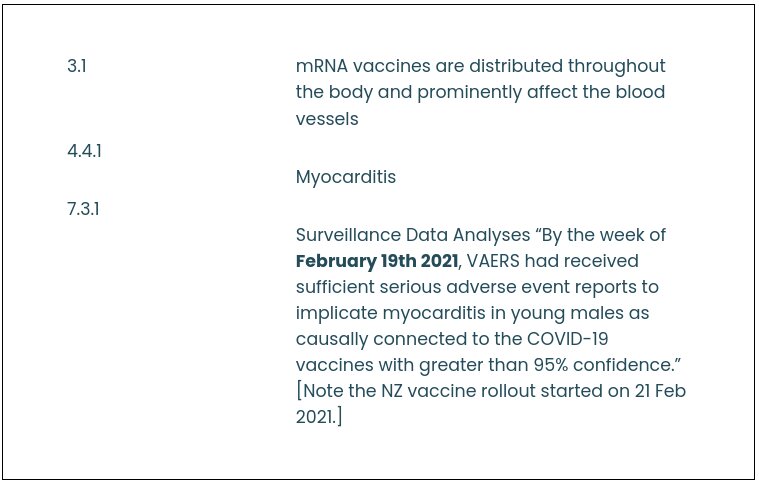
Key Point: There is much evidence regarding how covid mRNA vaccination can cause damage to blood vessels and the heart. This book notes that the histopathological picture of vaccine-induced myocarditis can be very variable.
Conclusion
There were changes in Connor’s heart (dilated or stretched) that have not been explained in the Coroner’s Report and we believe that the potential role of covid mRNA vaccination should be formally considered using standard pharmacovigilance criteria to assess for causation.
We have listed evidence that myocarditis is a well-recognised and widespread adverse effect of covid mRNA vaccination that may or may not have symptoms. It can cause residual scarring, which may be very subtle, providing a focus for later arrhythmia which has the potential to be fatal, as well as a future epidemic of heart failure – all to add to the similarly under-acknowledged surge in cancer incidence and progression already apparent.
We concur strongly with Dr McCullough above that we must be proactive in preventing possible catastrophic cardiac events in our young, such as talented rugby professionals Connor Garden-Bachop and Sean Wainui. The covid mRNA jabs must be stopped, along with all others using the same platform.
Photo Credit: nzdsos.com
Discover more from Environmental Health Watch NZ
Subscribe to get the latest posts sent to your email.
