
From Dr Suneel Dhand
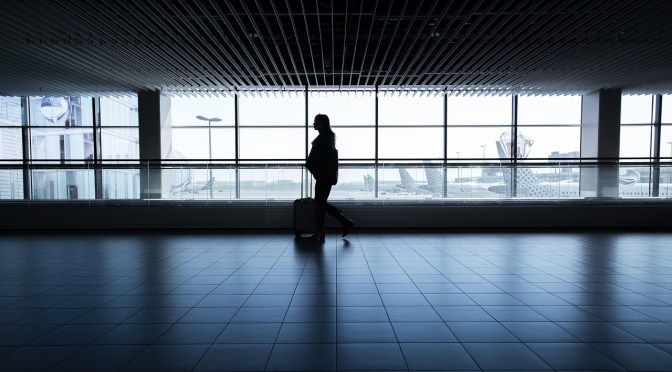
This week I had an experience that really drove home how crazily impersonal our world is becoming. I was at the airport, ready for an international flight—excited, optimistic, the usual sense of anticipation that frequently comes with travel. But what should have been a smooth start quickly turned into a frustrating reminder of how much we’ve lost in the name of “progress.”
I don’t know about you, but I absolutely hate not being able to deal with people anymore. Give me the good old days— when you’d arrive at the airport, greeted by a warm smile at check-in. A friendly agent would hand you your boarding pass, take your bag, maybe even wish you a good trip. That small but meaningful human interaction started your journey on the right note.
Not anymore.
These days, you’re greeted by machines. Cold, unfeeling screens that demand you scan, tap, and print your way to a boarding pass. I’d had some trouble checking in online, so I went up to what looked like a help area—only to be told there was no manual check-in counter anymore. “You can use the kiosk, sir,” the agent said, “but if you have trouble, there’s a staff member nearby who can assist.”
Fair enough, I thought. It’s annoying and the “staff member nearby” seemed busy and preoccupied.
After wrestling with the machine— which, for reasons known only to it, didn’t want to check me in initially— I finally got it to print my boarding pass and bag label. Then I had to drag my suitcase to another spot and personally scan and load it onto a conveyor belt. And mind you, I’m fairly tech-savvy! It wasn’t straightforward at all. Eventually, a staff member did appear to make sure the bag went through. That was the only moment of human contact in the entire process.
Barely an interaction.
It’s clear the philosophy is: check-in, print passes, load your own large bag— click button to send to airplane.
It would have been so much easier with a real person at a check-in desk. Someone who could have sorted it out in seconds, offered a smile, and sent me on my way feeling cared for—not just processed.
But this is the way everything is going.
You’ve seen it at grocery stores too—fewer cashiers, more self-checkout machines. Some people don’t mind, but there’s no denying we’re losing something deeper here: connection, empathy, the simple feeling that another human being is there to help you.
Let’s call it what it is: this is a total loss of human interaction.
Don’t get me wrong. I’m no Luddite! You’re reading this newsletter right now— and you watch my videos— because of modern technology. Tech can be amazing when used wisely. But we’ve crossed a line. Convenience has taken priority over humanity. Efficiency has replaced empathy.
And this is what really worries me: the same thing is creeping fast into healthcare.
Healthcare, by its nature, is one of the most personal fields there is. When you’re sick, anxious, or scared, you don’t want to be “processed.” You want to be seen, heard, and understood. But look at what’s happening:
- Online portals are replacing conversations with your doctor.
- Chatbots answer questions once handled by nurses.
- AI algorithms are determining which patients get appointments or tests first.
- And some clinics even encourage patients to do self-checks of vitals and symptoms before a doctor ever lays eyes on them.
This conveyor-belt mentality might make spreadsheets look efficient— but it’s destroying the essence of medicine. Healing doesn’t come from screens or software. It comes from human beings who care enough to listen, to look you in the eye, to truly understand your story.
Machines can process data, but they can’t offer reassurance. They can’t pick up subtle cues in your voice or expression. They can’t show compassion.
And if we lose that human touch, we lose the heart of healthcare itself.
The same goes for society at large. Every time we automate away an interaction, we erode something fundamental about being human. Progress isn’t just about speed—it’s about meaning.
So here’s my plea: let’s not sleepwalk into a world that’s frictionless but soulless. Let’s hold on to what makes life feel real— the eye contact, the shared laughter, the empathy. Technology should make our lives better, not emptier.
Because at the end of the day, no app, no kiosk, no chatbot will ever replace a warm smile that says: I’m here to help you.
Best Regards,
Dr. Suneel Dhand
Personal website: www.drsuneeldhand.com
Ojais Wellness USA: www.ojaiswellness.com
Ojais Wellness UK/Europe: www.ojaiswellness.co
Image by Rudy and Peter Skitterians from Pixabay
Discover more from Environmental Health Watch NZ
Subscribe to get the latest posts sent to your email.

This is the worst thing that Suneel can find to be distressed about?
Lucky Suneel.
LikeLiked by 1 person
I guess to the awake ones like yourself this is nothing, true. There are some though who have no idea. I like Suneel as he’s at least showing up the white coats for what they are(n’t).
LikeLike
well, i’m thinking of the people in Gaza, Afghanistan, Ethiopia, half of Africa, sleeping rough in cities……
LikeLiked by 1 person
hmmm… who won’t of course be reading this old blog : )
LikeLike
Waaaagghh you’re right !!!
I’ll go out of my way, and tell them:
Don’t go flying on aeroplanes. It’s uncomfortable.
LikeLiked by 1 person
When you do, show them this https://markcrispinmiller.substack.com/p/why-vaccination-has-made-flying-so?publication_id=383085&post_id=176264755&isFreemail=true&r=2k1u9v&triedRedirect=true&utm_source=substack&utm_medium=email
LikeLike
Perhaps that lack of customer service is related to paracetamol not just dulling pain, but empathy too. The profit motive is everything now. The worst is “health” via flow charts! Even dying in a hospital is a “pathway” nowadays.
LikeLiked by 1 person
Profits, yes. Hospitals are not the safest of places that’s for sure…
LikeLiked by 1 person