
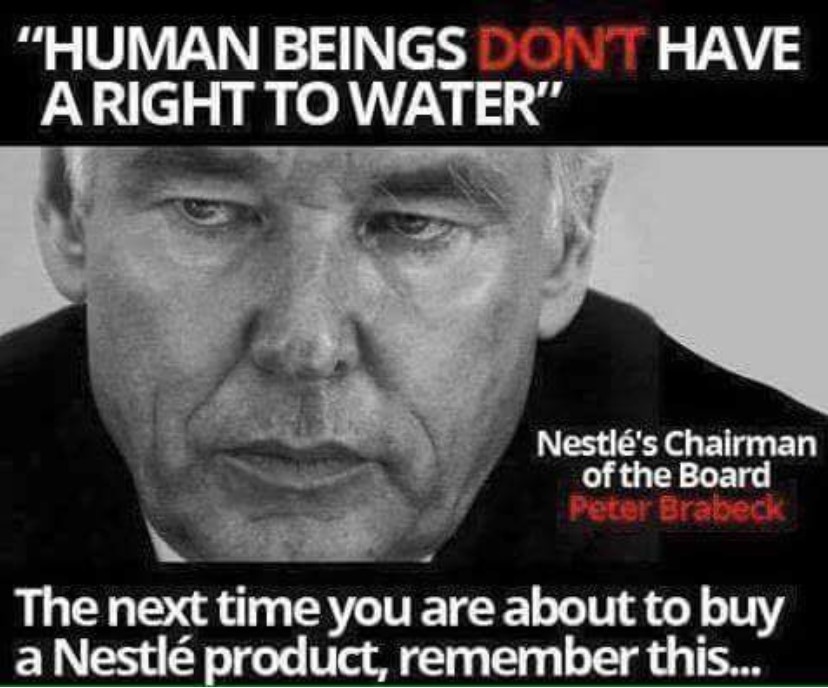
On topic with Christmas shopping in full swing. One to boycott is Nestlé whose ‘good neighbour’ policy deems that human beings don’t have a right to water. You can read more articles on Nestlé here. It features in the article below also.
The article below is from ethicalconsumer.org
History of Successful Boycotts
These examples of successful boycott calls show the big impact this campaign tactic can have.
Campaigners have long used boycotting as a tactic to help them achieve their goals. It’s helped create progress around issues like racial justice, human rights and fair treatment of other animals.
This list contains examples of companies changing their practices following a boycott campaign. However, it’s worth noting that companies rarely confirm whether their decisions to change their activities were a direct result of campaigners’ efforts.
Historical boycotts
Boycotting as a campaigning technique has a long history.
One of the earliest examples of a successful campaign was the boycott in England of sugar produced by slaves. In 1791, after Parliament refused to abolish slavery, thousands of pamphlets were printed encouraging the boycott. Sales of sugar dropped by between a third and a half. By contrast sales of Indian sugar, untainted by slavery, rose tenfold in two years. In an early example of fair trade, shops began selling sugar guaranteed to have been produced by ‘free men’.
Perhaps the most famous boycott was against South Africa in opposition to the apartheid. South African exiles and their supporters called for a boycott of products from South Africa in 1959 – in protest against the racial segregation enforced by white colonial politicians and discrimination and violence against Black people in the country. The boycott initially focused on fruit and vegetables, but later targeted chains like Marks & Spencer and Next – causing some companies to pull South African products from their shelves. For the next 35 years, the boycott was a central part of the anti-apartheid campaign. After decades of grassroots organising – as well as pressure from international leaders – apartheid was ended in 1994.
The Alabama bus boycott is another famous historical example. In 1955 Rosa Parks refused a bus driver’s order to leave a row of four seats in the “colored” section and move to the back of the bus after the white section had filled up. Her defiance sparked a successful boycott of buses in the area, with residents instead carpooling, riding in Black-owned cabs, or walking, some as far as 20 miles. It caused the bus company’s profits to crash, as dozens of public buses stood idle for months. The company lost between 30,000 and 40,000 bus fares each day during the boycott.
Recent examples of successful boycott campaigns
The boycotts listed below are presented in reverse chronological order, with the most recent first.
Sabra boycott success – November 2024
In the US, the brand Sabra hummus was owned 50/50 by PepsiCo and The Strauss Group. The Strauss Group is Israel’s second biggest food company and according to the Palestinian Boycott, Divestment and Sanction (BDS) movement it “provides financial support to the Israeli Defense Forces. Palestinian rights campaigners called for a boycott of Sabra since at least 2011. In November 2024 following an intensified period of campaigning against the brand, it was announced that The Strauss Group was selling its stake in Sabra, leaving PepsiCo as the sole owner of the Sabra hummus brand.
This appears to be a significant milestone/ partial boycott campaign success. However, PepsiCo also owns Sodastream which is subject to a BDS boycott too. It’s worth noting that in the UK Sabra was not owned by Sabra/PepsiCo, but instead by Osem Ltd, an Israeli company which is ultimately owned by Nestle. As Nestle faces several boycott calls, Sabra hummus still features on our list of active boycotts.
AXA boycott success – August 2024
The Stop AXA Assistance to Israeli Apartheid coalition called for a boycott of AXA over its investments in Israeli banks and Elbit Systems (Israel’s largest weapons manufacturer) since at least 2019. According to the BDS movement, over 10,000 people and 230 organisations have signed the pledge to boycott AXA. Among the campaign’s activities include holding an AXA Global Day of Action on 25 April 2022, seeing supporters globally contacting AXA Customer Services to demand the company end its complicity in Israeli apartheid.
On 21 August 2024 the Stop AXA Assistance to Israeli Apartheid coalition shared the news that AXA had sold its investments in all major Israeli banks and Elbit Systems, Israel’s largest military company. While a major milestone for the campaign, it continues to call for a boycott of the company until it fully divests from other complicit companies, and as such AXA still features on our list of active boycotts.
Barclays boycott success – June 2024
Barclays invests over £1bn in arms companies supplying Israel with weapons and military technology. The company’s sponsorship of major music festivals including Download, Latitude, and Isle of Wight was cancelled in June after protests by artists and fans. A spokesperson for Barclays told the Guardian, “Barclays was asked and has agreed to suspend participation in the remaining Live Nation festivals in 2024.
Pret boycott success – May 2024
According to the UK activist organisation Palestine Solidarity Campaign (PSC), in 2022, coffee chain Pret signed a franchise agreement with Israel-based companies and committed to opening 40 stores in Israel over the next decade. In 2024 PSC threatened a boycott of Pret, arguing that “to invest in Israel as it conducts a genocide in Gaza and operates a system of apartheid over all Palestinians was unjustifiable and reprehensible.”
In June 2024 the Grocer reported that Pret has gone back on this agreement, worth millions of pounds, and would not open stores in Israel. Pret cited as the cause for its cancellation of the contract “ongoing travel restrictions” preventing it from conducting the checks and training needed to set Pret up in a new market.
Baillie Gifford boycott success – May 2024
Scotland-based investment firm Baillie Gifford was dropped as a sponsor by multiple arts and literary events in May over concerns that its activities are linked to Palestinian human rights abuses. In 2023 the firm was listed as one of the top 50 European investors in illegal Israeli settlements. Baillie Gifford has investments in companies linked to the Israeli state and illegal settlements, including a travel company, construction company, and US tech company that has Israeli subsidiaries.
Over 700 authors, from Naomi Klein to Sally Rooney, signed a statement by Fossil Free Books (FFB) demanding that Baillie Gifford cease its investments in fossil fuels and companies that profit from “Israeli apartheid, occupation and genocide” and calling for a boycott of the company until that happened. The company’s sponsorship of several literary festivals including the Hay Festival, Edinburgh International Book Festival, and book festivals in Borders, Wimbledon, Cheltenham, Cambridge, Stratford, Wigtown, and Henley festivals were cancelled.
Russia boycott success – April 2024
The Russia boycott gained faster brand buy-in than perhaps any boycott campaign in history. To date, over 1,000 brands have curtailed operations in Russia, from Airbnb to Blackrock and Sainsbury’s.
Following the Russian invasion of Ukraine, on March 7th 2022 Ukrainian President Volodymyr Zelensky called for an international “boycott of Russian exports, in particular the rejection of oil and oil products from Russia.” Subsequently, Ukraine’s Culture Minister called for a boycott of Russia in December 2022. The Yale School of Management continues to track companies that are still operating in Russia.
Twitter/X boycott success – January 2024
Twitter/X has lost half its advertising revenue since Musk’s takeover in 2022, with over 500 advertisers stopping spending on the platform. In 2022, the coalition ‘Stop Toxic Twitter’, composed of around 60 organisations, wrote an open letter asking Twitter’s top 20 advertisers to “cease all advertising on Twitter globally” while the platform failed to take the increase in harmful and inaccurate content seriously, for example by moderating more thoroughly to reduce the amount of these posts on the site.
Read more about other boycott calls of X/Twitter and Tesla.
Puma boycott success – December 2023
The Boycott Puma campaign was launched by Palestinian athletes in 2018 after 200 Palestinian sports clubs sent a letter to the company urging it to end its sponsorship of the Israel Football Association (IFA). The IFA includes teams based in illegal Israeli settlements on Palestinian territories. In December 2023, Puma announced it would not renew its sponsorship of the Israeli Football Association. According to the BDS movement, “Over the course of the 5-year campaign, groups around the world participated in numerous global days of action and occupied PUMA offices and shops. Sports teams, athletes, artists, ended contracts with PUMA and retailers removed its products from their stores… We thank the many groups around the world that worked tirelessly and relentlessly to force PUMA to end its complicity with Israel’s apartheid regime and in its Gaza genocide.”
Read more about the Puma / Israel boycott in our article.
Klook boycott success – August 2023
Global travel company Klook published an animal welfare policy and committed to no longer selling tickets to circuses, shows, performances and photo experiences that featured animals. This followed a boycott campaign by the organisation World Animal Protection (WAP) over the sale of ‘cruel’ wildlife attractions by companies including Klook. WAP said “Though the policy is not perfect, this is a huge win toward ending wildlife cruelty in the tourism industry!”
G4S boycott success – June 2023
The BDS campaign against G4S was launched by Palestinian prisoners’ rights and human rights organisations in 2012. G4S provided services to prisons that held Palestinian political prisoners without trial, who were subject to torture. It also provided various types of services or support to illegal Israeli settlements, the apartheid wall, the Israeli military and police academy.
The campaign pressure led to high profile divestment from G4S by the Church of Sweden, the United Methodist Church, the world’s largest philanthropic organisation Bill and Melinda Gates Foundation, a Kuwaiti investment fund, UN agencies, trade unions, universities, restaurants and more.
In 2016 G4S divested from Israel’s prison system, military checkpoints and illegal settlements which campaigners say was a result of this pressure. It still however held shares in Policity, Israel’s police academy. G4S finally made the commitment in June 2023 to sell these shares, and the BDS movement claims this was linked to pressure from shareholders about Palestinian human rights.
House of Fraser boycott success – October 2022
According to animal rights group Peta, House of Fraser decided to ban the sale of fur across all its brands including Flannels and Sports Direct in October 2022. The campaign group had called for a boycott of the brand, which used fur including from racoons and rabbits, since 2020. Four Paws UK and Humane Society International also supported the campaign, and examples of campaign activities include activists singing “12 Days of Cruelty” outside a store front at Christmas and over 150,000 people calling on the company to drop fur.
Pillsbury boycott success – June 2022
General Mills (which owns brands including Pillsbury) announced it was selling its stake in a company based in an illegal Israeli settlement. The campaign group American Friends Service Committee (AFSC) called for a boycott of Pillsbury in 2020 due to its operating in the Israeli settlement of Atarot, and the UN named the company in its list of companies in violation of Palestinian rights in February 2020.
Air France boycott success – June 2022
Animal rights campaign group Peta announced that Air France would ban the transport of monkeys as soon as its existing contract ended, following a campaign that spanned 10 years. Peta began the boycott call in 2012, and it continued up until 2022 when Air France was the only known major European airline still shipping monkeys to laboratories for experimentation, on journeys that could last over 30 hours.
The campaign involved demonstrations around the globe, on-flight protests, discussions with the company’s leadership, shareholder activism, disruption of executives’ speeches, and bold advertisements like billboards at airports. Celebrities from Dr Jane Goodall to Peter Gabriel got behind the campaign.
MORE BOYCOTTS AT THE LINK
Header image credit: Jakayla Toney on Unsplash

You must be logged in to post a comment.