https://www.bitchute.com/embed/xYDnJa8NAVB2/
Download Interview Transcript Download my FREE Podcast Video Link
Story at-a-glance
- LEDs emit nonanalog light that typically has excessive blue frequencies. Regular exposure, especially after sunset, will contribute to worsening of sleep and an increase in disease
- When using LEDs, you might end up with increased cellular damage and decreased repair and regeneration
- You have cells in your retina responsible for producing melatonin, which regenerates the retina during the night. If you use LED lights after sunset, you reduce the regenerative and restoring capacities of your eyes, raising your risk for macular degeneration, a leading cause of blindness
- LED light can exacerbate chronic disease of all kinds by promoting mitochondrial dysfunction and suppressing energy production in your cells
- LED light, including that from electronic screens, suppresses melatonin production, thereby disrupting sleep, which also has far-reaching health consequences
Editor’s Note: This article is a reprint. It was originally published January 30, 2019.
The amount and quality of light you’re exposed to every day can have an enormous impact on your health. The healthiest light, of course, is natural sunlight, which has a number of benefits beyond the making of vitamin D in your skin. Unfortunately, most of us spend very little time outdoors during the daytime, thereby missing this important health component.
What’s worse, most have replaced their incandescent light bulbs — which most closely resemble full spectrum analog natural sunlight — with energy-saving light-emitting diode (LED) lights, which have a number of detrimental biological effects.
LEDs emit a large amount of aggressive blue light that generates high amounts of reactive oxygen species (ROS) and oxidative stress, and are devoid of near-infrared light that would help counteract some of that damage.
Here, I review some of the top dangers of LED lights, and provide guidance for how to remediate these issues to protect your health. Above, I’ve also included my October 2016 interview with Dr. Alexander Wunsch, a world class expert on photobiology, in which he reveals the hidden dangers of LED lighting that most people are completely unaware of.
The main problem with LEDs comprises two aspects: First, they emit excessive amounts of blue wavelengths, which are embedded in other wavelengths and therefore invisible to the naked eye and, second, their spectrum lacks the counterbalancing healing and regenerative near-infrared frequencies. They have very little red in them, and no infrared, which is the wavelength required for repair and regeneration.
When you are exposed to these higher amounts of blue light frequencies they catalyze excess ROS formation that contributes to biologic damage. So, when using LEDs, you end up with increased cellular damage and decreased repair and regeneration. The end result, as one would expect, is a higher risk for chronic disease and an impaired ability to heal.
Danger No. 1: LED Lighting Deteriorates Vision
As mentioned, virtually all LED lighting bulbs have no near-infrared frequencies to balance their blue light frequencies. The near-infrared frequencies are especially valuable for healing and affect your health in a number of important ways. In your eyes, near-infrared helps priming your retinal cells for repair and regeneration.
In addition, LEDs emit an excess of digital blue light, that in combination with a deficiency of the near infrared frequencies, generates ROS. Taken together, this explains why LEDs are so harmful for your eyes in particular.
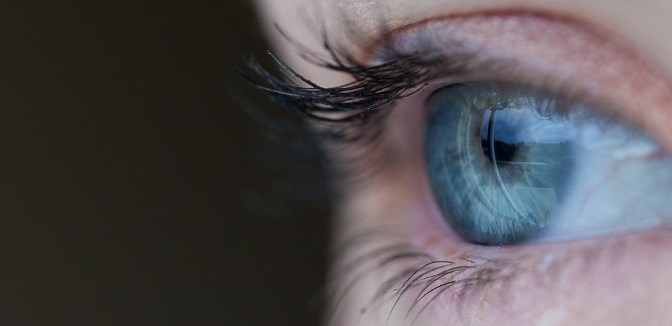
You probably know that blue light in the evening reduces your melatonin production in your pineal gland. But you also have cells in your retina that are responsible for producing melatonin in order to help regenerate your retina during the night.
If you use LED lights after sunset, you reduce the regenerative and restoring capacities of your eyes. Needless to say, with less regeneration you end up with degeneration. In this case, the degeneration can lead to age-related macular degeneration, which is the primary cause of blindness among the elderly.
Lack of sunlight exposure during the day has also been implicated in the massive rise in myopia (nearsightedness).1 Sunlight releases dopamine in your retina, slowing the growth of your eye and therefore possibly slowing the elongation of the eye and changes to your sight.2
Blue light also reduces your production of melatonin which, beyond impeding sleep, also increases your risk of insulin resistance, which also raises your risk of myopia.3
Danger No. 2: LED Light Exacerbates Chronic Disease
Importantly, LED light affects your mitochondrial function and may exacerbate health problems rooted in mitochondrial dysfunction, including metabolic disorder and cancer.
Chromophores are molecules that absorb light. There’s an optical tissue window ranging from 600 to 1,400 nanometers, which means it is almost completely covered by the near-infrared part of the light spectrum. This optical tissue window allows the radiation to penetrate an inch or more into bodily tissues.
Chromophores are found in your mitochondria and in activated water molecules. In your mitochondria, there’s also a specific molecule called cytochrome c oxidase that is involved in the energy production within the mitochondria. Adenosine triphosphate (ATP) — cellular energy — is the end product.
ATP is the fuel your cells need for all of their varied functions, including ion transport, synthesizing and metabolism. Your body produces your body weight in ATP every day. And, while you can survive for several minutes without oxygen, were all ATP production to suddenly stop, you’d die within 15 seconds. This is why lighting is so important.
Light is a sorely misunderstood and overlooked part of the equation for biological energy production, specifically at the mitochondrial ATP level. Since the cytochrome c oxidase is responsible for an increased production of ATP, the cell has a better supply of energy, which allows it to perform better, and this is true no matter where the cell resides.
This means liver cells with more ATP will be able to detoxify your body more efficiently; fibroblasts in your skin will be able to synthesize more collagen fibers and so on, because ATP is crucial for all cellular functions.
The key take-home message here is that your body’s energy production involves not just food intake. You also need exposure to certain wavelengths of light in order for your metabolism to function optimally. This is yet another reason why sun exposure is so vitally important for optimal health, and why LED light bulbs are best avoided.

Download this Article Before it Disappears
Danger No. 3: LED Light Impedes Your Sleep
LED light, including that from electronic screens, also suppresses melatonin production, thereby disrupting sleep, and this too can have far-reaching consequences for your health. Light-sensitive cells in your eyes track blue light, which in turn triggers different processes in your suprachiasmatic nucleus, a small region in your brain’s hypothalamus.
Among them is relaying to your pineal gland the news that when there is a lot of blue light, the production of melatonin should stop to facilitate wakefulness. Under normal conditions, as the sun sets and blue light decreases, production of melatonin increases, which helps you fall asleep.
However, if you’re exposed to unopposed blue enriched LED light, especially if it is bright, in the evening this sequence is interrupted, resulting in sleep problems. Indeed, research4 confirms that “blue light from LEDs elicits a dose-dependent suppression of melatonin in humans.”
Looking at a tablet for even two hours in the evening is enough to suppress your body’s natural nighttime rise of this hormone,5 and research6,7 shows using an electronic device within one hour of bedtime can delay falling asleep for more than an hour.
Another study8 that compared melatonin profiles in individuals exposed to standard room light (<200 lux) versus dim light (<3 lux) found exposure to room light before bedtime shortened the time of elevated melatonin levels by about 90 minutes.
That means it may take you an extra hour and a half before you’re sleepy enough to fall asleep once you’re in bed. Combine room light and electronic displays right before bed and it’s easy to see how sleep may remain elusive for hours on end.
Most of us enjoy watching TV in the evening as a form of relaxation before bed. I certainly do and watch many great Netflix documentaries. The key here is most TVs can’t filter out blue light, but if you use a computer monitor as your TV screen you can use Iris; simply install the blue light filtering software on your computer. This will allow you to safely watch TV at night without suppressing your melatonin.
For Optimal Health, Address Your Daily Light Exposure
The good news is that you can remedy all of these health dangers by modifying your light environment and resynchronizing your body to the natural cycles of light and dark. Here are four key considerations:
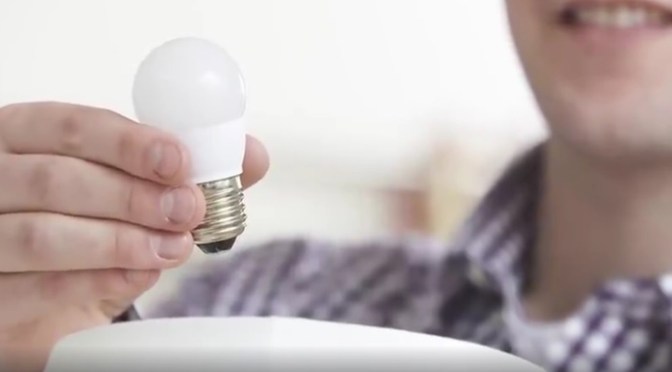
1. Replace LEDs in key areas with incandescent light bulbs — While LEDs are indeed more energy efficient, the price you pay in terms of your health far outweigh such cost savings.
In areas where you spend most of your time during the day and evening, such as your kitchen, dining room, living room and office, swap out your LEDs for regular incandescent light bulbs, and leave the LEDs for areas such as hallways, closets, garage and porch, where your exposure to them is minimal.
The key here is KEY areas. You do NOT need to replace all the LED bulbs in your home, only the ones you use all the time. In my case that is my kitchen, bedroom and bathroom. All the other rooms have LEDs that are virtually never turned on, but when they are turned on and someone forgets to turn them off, not much electricity is wasted.
2. Get bright, natural light exposure during the day — Light intensity is important, as it synchronizes your master body clock, comprised of a group of cells in your brain called the suprachiasmatic nuclei. These nuclei synchronize to the light-dark cycle of your environment when certain wavelengths of light enter your eyes.
To get good sleep, you need properly aligned circadian rhythms, and step No. 1 is to make sure you get a sufficient dose of bright light exposure during the daytime. Your pineal gland produces melatonin roughly in approximation to the contrast of bright sun exposure in the day and complete darkness at night.
If you’re in darkness all day long, your body can’t appreciate the difference and will not optimize melatonin production. Ideally, to help your circadian system reset itself, get at least 10 to 15 minutes of light first thing in the morning. This will send a strong message to your internal clock that day has arrived, making it less likely to be confused by weaker light signals later on. Then, around solar noon, get another “dose” of 30 to 60 minutes’ worth of sunlight.
3. Avoid blue enriched light at night — Melatonin acts as a marker of your circadian phase or biological timing. Normally, your brain starts progressively increasing the hormone melatonin around 9 or 10 p.m., which makes you sleepy. Somewhere between 50 and 1,000 lux is the activation range within which light will begin to suppress melatonin production.
However, wavelength is also important. Red and amber lights will not suppress melatonin while blue, green and white lights will. So, be sure to avoid the blue light wavelength after sunset. This includes artificial light, and light emitted by electronics such as your TV, computer and other electronic screens.
There are a number of ways to avoid blue enriched light in the evening depending on your lifestyle and personal preferences, including the following suggestions. You can also learn more by reviewing my 2014 interview with researcher Dan Pardi.
• Turn off or dim all lights after sunset, and avoid watching TV or using light emitting electronics for at least one hour before bedtime (ideally two hours or more).
• After sundown, shift to a low-wattage bulb with yellow, orange or red light if you need illumination. A salt lamp illuminated by a 5-watt bulb is an ideal solution that will not interfere with your melatonin production.
• If using a computer, smartphone or tablet, install blue light-blocking software like Iris,9 or use amber colored glasses that block blue light.10 Studies11,12,13 have confirmed that when using blue-blocking glasses,14 people produce as much melatonin as they do in dim light, even if they’re in a lit room or using light emitting technology.
Other studies15 have shown that people using blue-blocking glasses had major improvements in both sleep quality and mood. Shift workers who use them before bedtime (i.e., in the morning when it’s bright out) also report improved sleep.16
4. Sleep in darkness — Once it’s time to go to sleep, make sure your bedroom is as dark as possible. Exposure to room light during sleep has been shown to suppress melatonin by more than 50%,17 but even a small amount of light can decrease your melatonin. Simply closing your eyes is not enough as light can penetrate your eyelids.
If blackout shades are too great an investment, a sleep mask can do the job for far less money. Also keep in mind that digital alarm clocks with an LED display could have a detrimental effect, so either swap out your clock, or cover the display.
Alternatives include a sun alarm clock, which wakes you up by gradually increasing the intensity of light, thereby simulating sunrise, or a talking alarm clock,18 designed for the visually impaired.
Sources and References
- 1 Ophthalmology May 2016;123(5): 1036-1042
- 2 Nature March 18, 2015; 519(7543): 276-278
- 3 Harvard Health May 2012, Updated August 13, 2018
- 4 J Appl Physiol (1985) 2011 Mar; 110(3):619-626
- 5 Appl Ergon. 2013 Mar;44(2):237-240
- 6 BMJ Open 2015; 5:e006748
- 7 Huffington Post February 4, 2015
- 8, 17 J Clin Endocrinol Metab. 2011 March; 96(3): E463–E472
- 9 Iris Blue Blocking Software
- 10, 14 Amazon.com, Uvex Skyper Blue Light Blocking Computer Glasses S1933X
- 11 Applied Ergonomics 2013 Mar;44(2):237-240
- 12 Journal of Pineal Research August 2006: 41(1); 73-78
- 13 Journal of Clinical Endocrinology and Metabolism, doi: 10.1210/jc.2004-2062
- 15, 16 Chronobiology International 2009 Dec;26(8):1602-1612
- 18 Amazon.com LS&S Extra Large Button Talking Clock
Photo: mercola.com screenshot