Tag Archives: Governments

How the modern corporation was invented in England – a power grab to this day

From declassifieduk.org

The joint-stock corporation is an economic instrument which, in its modern form, was established in England—and it was here, too, that the company became unleashed from the state and began a power grab which continues to this day.

During a period of rapid commercial growth in 16th century England, the Muscovy Company was granted a charter by Queen Mary Tudor in 1555, giving it a monopoly over trade routes to Russia. 

The company had recently been founded by various London merchants and its governor was Venetian explorer Sebastian Cabot. 

At the time, companies needed a charter from the Crown to operate, and this licence for operations was time-limited and subject to the caprice of the King or Queen. It was not a right to form a corporation then, it was a privilege. 

Chartered companies were organised as partnerships or guilds, which were owned by closed groups such as families or associations of businessmen. 

But the Muscovy Company popularised what would prove a revolutionary innovation: it was able to raise enough money to finance the long journey to Russia by selling tradable shares. 

“Joint-stock” companies, as they became known, was a new concept in English law.

The corporate form has existed as far back as the Roman Republic, and likely before. Despite coming to rule much of the world, the Roman Republic always had a small bureaucracy. One of the major reasons was its use of private businesses, in the form of societas publicanor

These ancient economic instruments were recognised as an entity separate from its owners and had shares representing ownership interests. 

The form developed further with the advent of modern banking with the House of Medici in Renaissance Florence, which saw the birth of what we now call a holding company

But the modern corporation, as we understand it, really began its journey in 16th century England with Muscovy’s joint-stock model. It was not a coincidence it so decisively took off then: it proved particularly well suited to the grand voyages of the so-called Age of Discovery

Age of Discovery

In 1498, Portuguese explorer Vasco da Gama had sailed around the Cape of Good Hope at the southern tip of Africa and arrived in India. 

The journey marked the beginning of a new era in European history, when navigators set out on voyages around the world seeking new and exotic riches to be sold back home. 

The joint-stock model allowed businesses to sell stock in their companies to investors, who would pay in cash up front in return for a slice of future profits down the line. 

At the time, these trading companies had high up-front costs in terms of preparing their ships and missions. The profits from their long trips, meanwhile, were far from being immediately realised. If they came at all, they may be banked possibly years down the line: many of the voyages involved going half way around the globe and back again. 

The joint-stock company ushered in a new era of global commerce. It was this model that propelled the signature corporation of the next 200 years, the East India Company, to global power. Founded on New Years Eve of 1600, it was given a charter by Queen Elizabeth I that gave just over 200 men control of a trading territory that covered a majority of the earth.

Limited Liability

But as chartered companies expanded their empires around the world, there was a constraint on the corporate form that was holding it back from realising its true potential. This was the legal concept of unlimited liability, which meant owners of companies were liable for losses incurred by the company. 

At the opening of the 19th century there was a strong push in the business community to introduce limited liability, which would restrict the losses incurred by investors only to the capital they had invested. 

Unlimited liability was proving a restriction on firms ability to raise capital. Business leaders argued that if British dominance was to be maintained it would have to introduce limited liability into law. The UK government, meanwhile, was worried about losing business to foreign countries where limited liability had been enacted.

Prominent liberals like John Stuart Mill were also arguing that limited liability would open up the world of business to the poor because it would lower their risks. 

Legislation was introduced incrementally. The Limited Liabilities Act of 1855 explicitly allowed for limited liability for British corporations for the first time. The Joint Stock Companies Act of 1856 added to this, allowing business to obtain limited liability with “a freedom amounting to a licence”.

This, slightly modified, was subsumed into the more sweeping Companies Act of 1862. Almost 25,000 limited liability companies were incorporated between 1856-62. In the three years following the 1862 Act, new issues averaged £100m a year.

Commercial laws

In the 19th century Britain’s economy was the most important in the world, and efforts to free the corporate model, which was driving much of its growth, continued apace. 

A major force behind the changes was the advent of the railway, which required huge amounts of capital upfront to design and build the new networks. The Liverpool-Manchester line was established in 1830 and was the world’s first regular passenger railway. By 1830, chartered joint-stock companies had built 2,000 miles of track.

Another restriction on the corporate form which was soon dispensed in this period was with the need to get a charter from the Crown or parliament to operate. The Joint Stock Companies Act of 1844 allowed companies to become incorporated by a routine act of registration rather than having to obtain permission from the state. This effectively unleashed the corporations from any kind of direct state control. 

The company form developed in Britain as a result of legislative reforms, responding to technological innovation and expanding corporate empires. But the changes established in 19th century Britain, and the debates surrounding it, have coloured the institution ever since. The limited liability public companies we see now are not much different to the model finalised in that period. 

By the end of the 19th century, in Britain, this new economic instrument had reached close to its final form and was basically independent of the state. It was the first autonomous institution in many centuries, creating a rival power centre to the government, which has now become arguably more powerful. 

Britain was the pioneer in setting companies free from state control. From there, they have cannibalised the state that created it in the UK, but also around the world. 

Silent Coup: How Corporations Overthrew Democracy is out this month from Bloomsbury Academic.

Read related posts at the link:

SOURCE BELOW

Image by jorono from Pixabay

Western governments globally are working towards locking down their people – (Lawyer Sue Grey with Tim Lynch at greenplanet FM)

Most New Zealanders are unaware that their country is being hijacked – and by default, they actually voted for this, thinking the Government would take care of their interests, because … “it is kind”, however, this is not necessarily the case.

In this interview of Sue Grey, lawyer from Nelson who has also researched Health issues and has a degree in biochemistry, we learn that things are definitely not as they seem. She has been an activist on the battle front over the last decade endeavouring to bring transparency to so many of the issues that now are bearing down on us and now – totally surround us.

https://www.ourplanet.org/greenplanetfm/sue-grey-our-country-and-democracy-have-been-hijacked-our-freedoms-and-assets-being-rapidly-eroded

A brief history of false flags &amp how they’ve started wars throughout history (Corbett)

A brief history of false flags

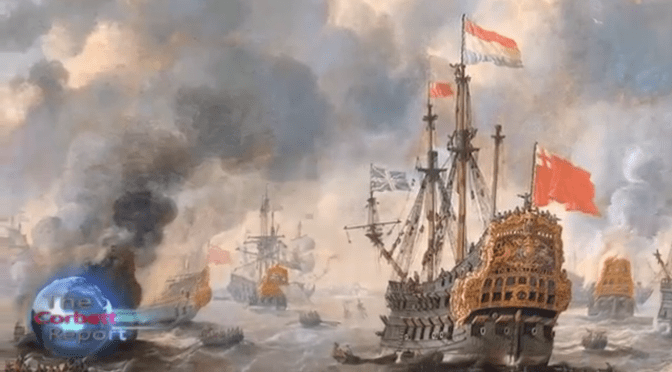
In naval warfare, a “false flag” refers to an attack where a vessel flies a flag other than their true battle flag before engaging their enemy. It is a trick, designed to deceive the enemy about the true nature and origin of an attack.

In the democratic era, where governments require at least a plausible pretext before sending their nation to war, it has been adapted as a psychological warfare tactic to deceive a government’s own population into believing that an enemy nation has attacked them.

In the 1780s, Swedish King Gustav III was looking for a way to unite an increasingly divided nation and raise his own falling political fortunes. Deciding that a war with Russia would be a sufficient distraction but lacking the political authority to send the nation to war unilaterally, he arranged for the head tailor of the Swedish Opera House to sew some Russian military uniforms. Swedish troops were then dressed in the uniforms and sent to attack Sweden’s own Finnish border post along the Russian border. The citizens in Stockholm, believing it to be a genuine Russian attack, were suitably outraged, and the Swedish-Russian War of 1788-1790 began.

READ MORE

LINK: https://www.corbettreport.com/a-brief-history-of-false-flag-terror/

(Video) UK: Retired Scotland Yard Detective Explains that Children’s Care Homes Are Used for Pedophilia and Organized Child Sex Rings

from needtoknownews

UK: Jon Wedger, a retired police detective who served with Scotland yard for 27 years and specialized in pedophile rings, reveals how police protect politicians, celebrities, and other powerful people who commit pedophilia. [Child sex abuse is a political strategy that creates a means to control politicians and judges through blackmail. It has become a standard method of operation at the highest levels in almost all governments of the world, which is why it is so difficult to get governments to clean it up.] GEG

https://www.youtube.com/watch?v=H9TscJsVKp4&feature=emb_logo

Summary by JW WIlliams

Police veteran Jon Wedger explains in this in-depth interview the conspiracy of cover-ups that come from the top when the names of prominent people are discovered. He says that care homes, residential homes for children who have been separated from their families, were the source of sexual abuse and rape, and led to prostitution, drug abuse and other crimes. He was removed from a number of positions after uncovering child sex abuse, because police in top positions are complicit or covering up for politicians, celebrities and other powerful people.

He was warned by the chief superintendent that child prostitution ran so deep with people who were connected that, if he continued to pursue the issue, he would lose his job, his house, and his children. After Wedger blew the whistle on police cover-ups, he was bullied and threatened.

Wedger investigated the child-protection industry and discovered the lucrative business of privately run care homes that can pay owners over $2,500 per child per week. He says the abuse and prostitution in the care homes is an organized-crime operation involving high-ranking police and politicians. Wedger says the kids are being picked up from the care homes, abused, and then returned after the weekend. 80% of trafficking is within the family or those who have been given parental authority over the children. Sexual assault on children happens in all racial groups. All religious institutions have a problem with pedophilia but are protected by law enforcement. There is only a 2% prosecution rate on child prostitution.

Currently, Wedger works with victims of abuse, campaigns for police whistleblowers and helps victims put cases back together after police cover them up. Victims have identified Edward (Ted) Heath, Britain’s Prime Minister from 1970 to 1974, as a sexual abuser of young boys from care homes, showing that abusers can reach the loftiest positions, in spite of (or perhaps because of) their crimes.

This is a long interview but , if you want to know what it’s like in the real world of vice and human trafficking high in government, you cannot find a better source than this.

SOURCE

https://needtoknow.news/2019/10/uk-retired-scotland-yard-detective-explains-that-childrens-care-homes-are-used-for-pedophilia-and-organized-child-sex-rings/?fbclid=IwAR3rX7gjQ61pS–PSyXWP5Ar4EcO_ZKhWxtQlKb7mc7v8nc7u9DDFYc_h0E

The biggest Bank heist ever!

(For video description scroll to bottom of page)

Here is some enlightening weekend viewing. Learn why our respective nations have undergone such radical changes in recent decades. The oldies among us will tell you this. Things are not as they were.

New Zealand has changed dramatically since the late ’80s when the new neo liberal economic policies called Rogernomics set in. We are now the reapers of that earlier Government’s folly, and paying a price. Where once we had full employment and no debt, we are now in debt … big time (climbing $27 million per day) and subject to the control of big business. Borrowing millions per week to stay afloat? Our grandparents must be turning in their graves. That was the unfortunate ‘NZ Experiment’ that sold us down the river, and with our assets now going … going … gone, we no longer enjoy the sovereignty we once had. They sold off our family silver as it were under the fancy name of ‘privatization’. (A new term, note, that gives a professional air and shifts the focus off what is really happening). We were told it was to pay our national debt but we are now more in debt than ever … it clearly hasn’t worked. Our country is now a corporation registered with the Securities and Exchange Commission (SEC) and our government departments likewise. There is your clue. Corporations have one bottom line: PROFITS.

As an early NZ settler of colonial times stated:

The whole and entire object of everyone here is making money, the big fishes eating the little ones (‘The Rich List’, G Hunt p 29)

So ‘filthy lucre’ if you like was uppermost back then as well … the driving motive for expansion to other shores was not as we’ve been led to believe … to bring civilization and Christianity … these were merely by-products.

With this corporatisation everything began to operate on a business model, and instead of people with related background experience matching the kind of government department they served, we saw people appointed with purely business skills.  Their focus became figures and profitability, not people, so social service and health departments were required to predict their costs in advance based on historical data. Quite a feat when dealing for instance with child abuse.  Government departments were subjected to restructuring (the new catch word given to the changes … known also in other countries by other names like ‘structural adjustment’) and told it was so they could all work smarter. In fact, where I worked at the time, I likened it to musical chairs. When the music stopped there were less bums on seats in the office. And the music kept playing, and the seats kept disappearing. The folks on the ground inherited more work from their now absent colleagues, and the CEOs inherited fatter salaries to ensure (I suspect) the new status quo remained. It was a classic case of smoke and mirrors and happened across the board. Friends of mine in other professions complained of being buried in mountains of new paper requirements, the face of their jobs completely changing, and leaving less time for people.

So now we see evidence of this business model everywhere, with their whole raison d’etre being profits, while the memory of a caring welfare state is becoming more and more elusive by the year. In rural communities it still sticks out like a sore toe because it clashes with their longtime ethic of community and caring.

On that note, as you ponder on the origins of our (and many other countries’) demise into the debt abyss … grasp an overview of the root cause of these problems in ‘The Biggest Bank Heist Ever’. It is all about making money, the big fishes eating the little fishes. Remember, it is a mythical illusion that all can succeed under capitalism. Wakefield himself of the NZ Company openly stated that they would keep the price of land high enough so that not all could own any (1).

References

(1) Miller J (Early Victorian New Zealand) p 4


Video Description

Video info: “The award winning documentary ‘Inside Job’ [2011 | US] by the veteran crusader, Charles Ferguson is the most insightful and illuminating amongst a number of such attempts that deal with the global financial crisis, which is wrecking lives and economies across the world to this day.

The reason is that it successfully challenges the myths and lies surrounding the root causes of the crisis and tells us exactly how and why it happened, in a simple and straightforward way that anyone can understand.

IsuruFoundation® highly recommends this great film to anyone who wants to know why we the public are paying with our lives for the treacherous shenanigans of the filthy rich and the powerful.”