

EWNZ comment: do review our glyphosate pages at the main menu. I looked at this topic in the Rangitikei during 2013-2016, attempting to switch the council’s weed control to steam. At the end of the day, it appears that councils NZ wide prefer to use poison … surprised? Comfortably in bed with Agrichem.
“Millions of pounds of glyphosate were approved, defended, and sprayed worldwide on the basis of a paper we now know was fundamentally compromised and scientifically invalid.“
In a long-overdue move, Regulatory Toxicology and Pharmacology has formally retracted the landmark 2000 glyphosate “safety” review by Williams, Kroes, and Munro — a paper Monsanto and global regulators have relied on for decades to assert that Roundup poses no carcinogenic risk to humans.
Crucially, the Editor-in-Chief confirms that Monsanto employees likely secretly wrote substantial portions of the paper, despite never being listed as authors or acknowledged — a revelation uncovered through U.S. litigation.
The retraction states that the article’s integrity has collapsed entirely, citing undisclosed corporate authorship, omitted carcinogenicity data, financial conflicts of interest, and a complete failure by the surviving author to respond to the journal’s investigation.
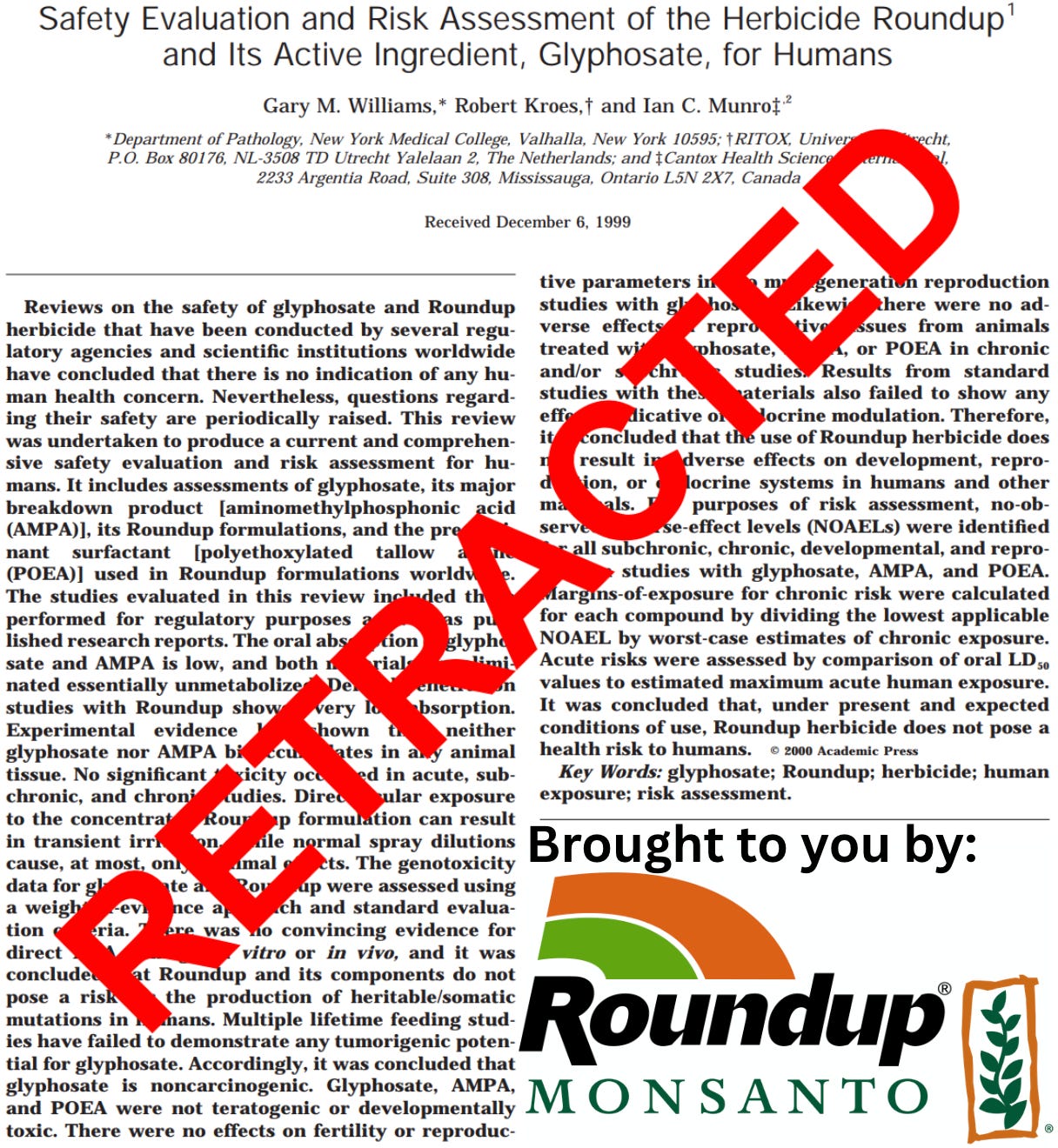
THE RETRACTION
1. Based almost entirely on Monsanto’s unpublished studies
The review’s “no cancer risk” conclusion relied solely on Monsanto-generated data. Even worse, the authors ignored multiple long-term mouse and rat carcinogenicity studies that already existed at the time — including multi-year toxicity studies showing tumor signals. None were incorporated.
2. Evidence of ghostwriting by Monsanto
Litigation records revealed that Monsanto employees secretly co-wrote portions of the paper, despite never being listed as authors or acknowledged. This alone violates the most basic principles of scientific integrity.
3. Undisclosed financial ties
The authors appear to have received direct compensation from Monsanto for producing the paper — again undisclosed, again violating journal standards.
4. Misrepresentation of authorship and contributions
By hiding Monsanto’s role, the paper created the illusion of independent scientific evaluation — even as corporate employees shaped the conclusions.
5. Regulatory capture revealed
This paper heavily influenced global risk assessments — including U.S. EPA, WHO/FAO, and Health Canada evaluations — setting the tone for “glyphosate is safe” messaging for more than two decades.
While I am strongly opposed to politically motivated retractions and scientific censorship, this retraction was unquestionably warranted. The integrity failures were not ideological — they were structural, factual, and undeniable.
And the independent evidence that has emerged since 2000 only underscores how dangerous that original “all clear” truly was.
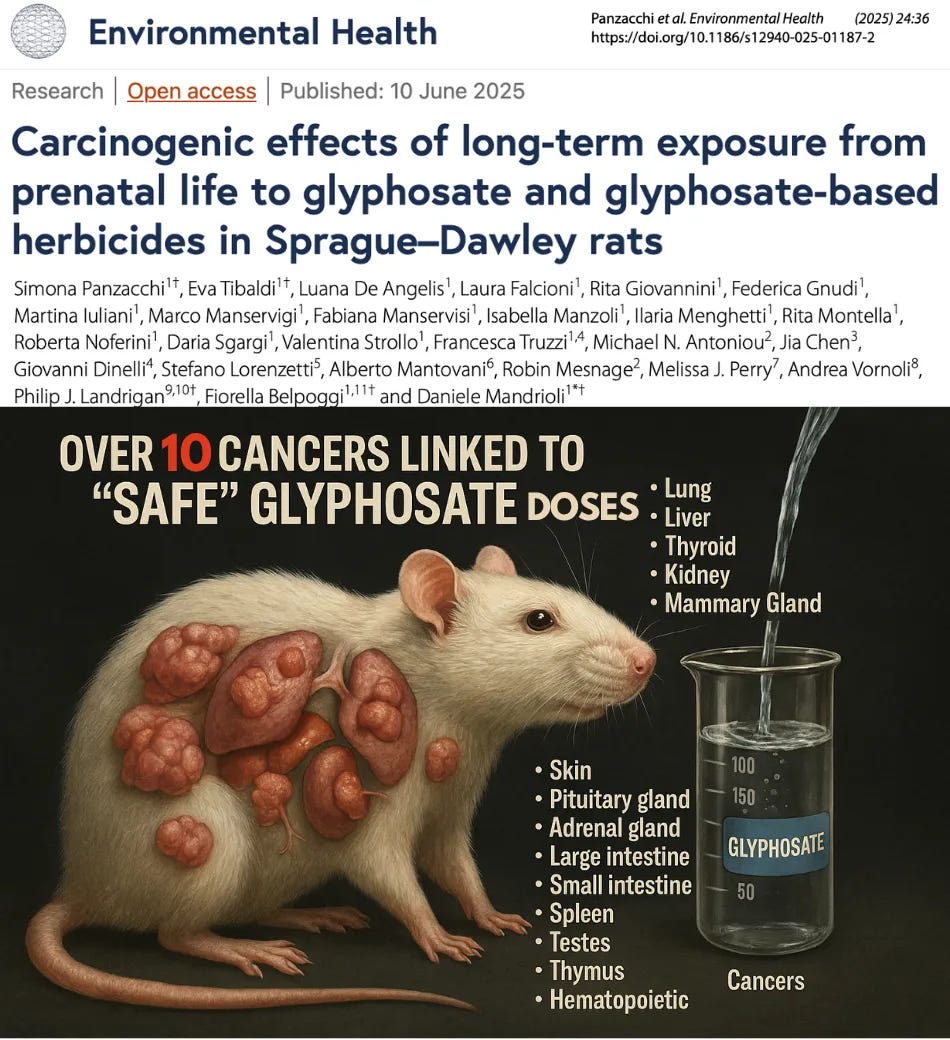
A recent controlled animal study demonstrated that glyphosate and Roundup can induce rare, aggressive, and fatal cancers across multiple organs — even at doses considered “safe” by U.S. and EU regulatory thresholds. These findings directly contradict the original review’s core conclusions.

World’s Top Herbicide Linked to Over 10 Distinct Cancers at “Safe” Doses in Landmark Study
Nicolas Hulscher, MPH
Jun 17
Zhang et al found a statistically significant association between glyphosate exposure and increased risk of non-Hodgkin lymphoma in humans. Their 2019 meta-analysis pooled data from over 65,000 participants across six studies—including more than 7,000 NHL cases—and reported a 41% increased risk of non-Hodgkin lymphoma among those with the highest glyphosate exposure:
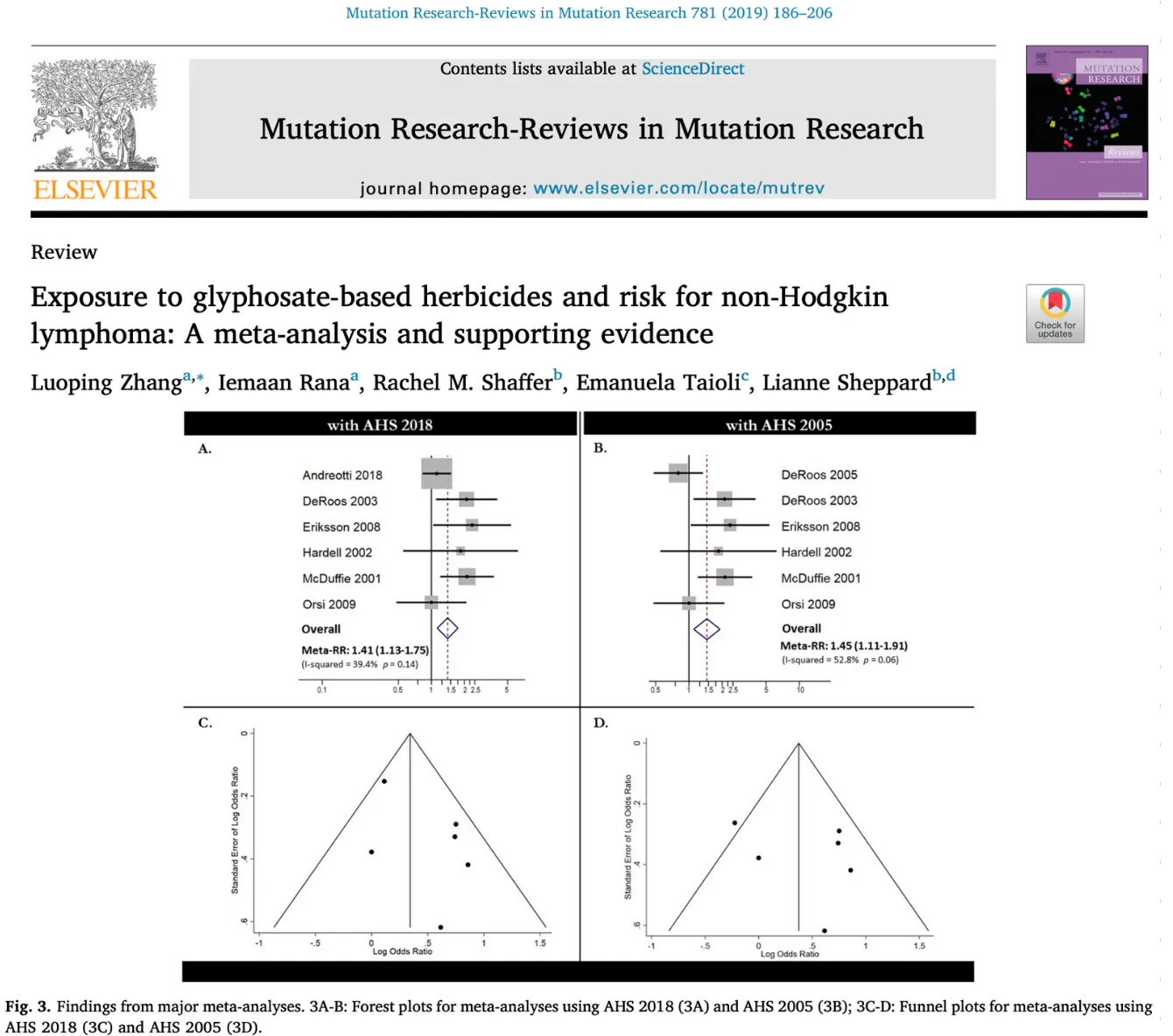
In other words, independent science was pointing to serious cancer risks while Monsanto’s fraudulent ghostwritten review was actively minimizing them.
Millions of pounds of glyphosate were approved, defended, and sprayed across the world on the basis of a review that we now know was fundamentally compromised and scientifically invalid.
The collapse of this paper is not just a correction, it is an indictment of an entire regulatory era built on deception.
Epidemiologist and Foundation Administrator, McCullough Foundation
Support our mission: mcculloughfnd.org
Please consider following both the McCullough Foundation and my personal account on X (formerly Twitter) for further content.



You must be logged in to post a comment.