
From Wisner Baum
Pursuing Justice on Behalf of Our Clients for Nearly 40 Years
Founded in Los Angeles, California in 1985, the law firm of Wisner Baum has earned a reputation for breaking new legal ground, holding major corporations accountable, influencing public policy, and raising public awareness about important safety issues. Our trial experience across a broad range of practice areas includes over $4 billion in verdicts and settlements.
What is Paraquat?
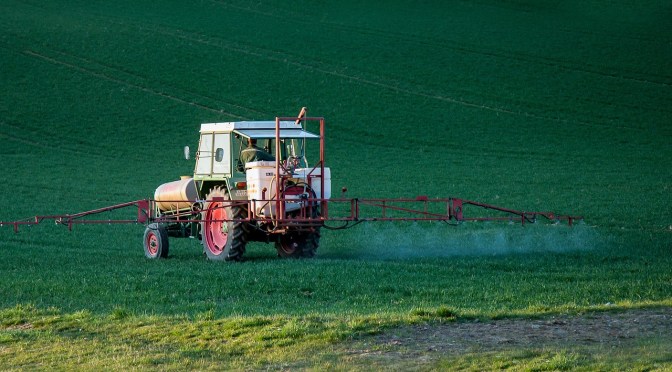
Paraquat dichloride is a non-selective, broad-spectrum herbicide used primarily to kill weeds and grass. Austrian chemist Hugo Weidel and his student, M. Russo, discovered paraquat in the 1880s. Roughly 50 years later, scientists Michaelis and Hill discovered the chemical’s redox properties and named the compound methyl viologen. Scientists discovered the chemical’s weed-killing properties in the late 1950s.
Commercially introduced in 1962 as Gramoxone, paraquat quickly became a top-selling herbicide despite numerous studies linking the herbicide to wide-ranging health issues. The rise in paraquat use coincided with the surge in no-till farming in the U.S. and worldwide.
Common Paraquat Products
Syngenta and Chevron are two of the largest paraquat producers. Some of the most common paraquat products include:
- Blanco
- Bonedry
- Cyclone SL 2.0
- Devour
- Firestorm
- Gramoxone
- Helmquat 3SL
- Para-Shot 3.0
- Paraquate Concentrate
Common Paraquat Side Effects
Research shows that paraquat exposure is dangerous, even at low levels. Paraquat side effects depend on the amount, route, and duration of exposure to the herbicide and the person’s overall health. The herbicide enters the body via:
- Skin: Contact or penetration of the skin, mucous membranes, and other epithelial tissues (including the mouth, nose, trachea, and conducting airways, particularly where cuts, abrasions, rashes, sores, or other tissue damage are present).
- Inhalation: Spray droplets enter the nose or mouth.
- Ingestion: The liquid chemical is swallowed.
Acute Exposure – Paraquat Poisoning
According to the United States Environmental Protection Agency (EPA), “one small sip [of paraquat] can be fatal, and there is no antidote.” In general, people who accidentally or intentionally ingest paraquat may experience any of the following symptoms:
- Acute kidney failure
- Coma
- Confusion
- Heart issues
- Liver failure
- Lung scarring
- Muscle weakness
- Pulmonary edema
- Respiratory failure possibly leads to death
- Seizures
While these cases are rare, paraquat poisoning may also occur via skin contact or inhalation. This report out of China highlights the potential for paraquat poisoning via skin absorption, and this report highlights the potential for paraquat poisoning via inhalation.
Paraquat Parkinson’s Disease Link
The body of scientific research linking paraquat and Parkinson’s disease (often referred to simply as “PD”) has continued to grow in recent years. Several studies have concluded that exposure to paraquat increases the likelihood of developing Parkinson’s disease and that the effect is dose-dependent. The research suggests that farmworkers and pesticide applicators are more at risk of developing Parkinson’s disease. People who live near fields and other areas where paraquat is heavily used may also be more at risk for PD.
READ MORE AT THE SOURCE
Discover more from Environmental Health Watch NZ
Subscribe to get the latest posts sent to your email.
